



Quick Answer
Enduro MTB is a mountain biking style focusing on technical and fast descents. You climb accessible routes (sometimes with help) to descend challenging trails, combining skill and adrenaline. In Cusco we have routes like Yuncaypata, the most popular among locals with Inca roads, jumps, and ramps; El Brujo, technical descent from 14,108 feet (4,300 meters) with natural rocks; and Huayllarcocha, with the best city views.
Enduro mountain biking Cusco represents the perfect middle ground for cyclists seeking adventure beyond the pedaling marathons of cross-country, but without downhill’s exclusive focus on descents. In Cusco, this discipline takes on a completely new dimension. The region’s dramatic elevation changes, diverse terrain ranging from technical rocky sections to flowing singletrack, and year round riding conditions create an ideal playground for enduro enthusiasts.
Want to tackle one of the most enduro technical trails in the Sacred Valley? Discover our day tours in Cusco designed for riders seeking real enduro in the Andes.

Enduro in Lares, where the effort earns the reward and the mountains never feel small.
What is Enduro Mountain Biking?
Enduro MTB is a mountain biking discipline combining timed descent stages with untimed climbing or transfer sections. Unlike pure downhill races where cyclists are transported to the top, enduro requires you to pedal uphill under your own power although these climbs don’t count toward your final time.
Did you know…?
The format originated in European motorcycle racing and crossed into mountain biking in the early 2000s. The discipline standardized around 2013 when the Enduro World Series launched, establishing rules and formats that defined modern enduro.

Enduro World Series – Official Website
What distinguishes it?
What distinguishes enduro is bike setup and riding style. Enduro bikes typically feature 150-170mm suspension travel more than trail bikes but less than downhill bikes. This allows cyclists to pedal uphill efficiently while still having enough suspension to handle aggressive descents.
Why Cusco is Perfect for Enduro MTB?
Cusco’s geography creates natural enduro terrain that would cost millions to replicate artificially. The city sits at 11,155 feet (3,400 meters), surrounded by peaks reaching 13,123-16,404 feet (4,000-5,000 meters). This topography means massive vertical descents are easily accessible some trails drop more than 2,953 feet (900 meters) in a single run. The elevation you gain on climbs translates directly into extended, sustained descents that can last 30-45 minutes of continuous riding.
Trail density around Cusco rivals established mountain biking destinations. Peru Biking Tours has developed and mapped over 20 distinct routes suitable for enduro. Popular zones include the Sacred Valley area, Chinchero plateau, and mountains above Sacsayhuamán.
Essential Trail Zones for Enduro in Cusco
Sacred Valley Descents
Sacred Valley provides some of Cusco’s most intense enduro terrain. Trails descend from peaks at 13,123-14,436 feet (4,000-4,400 meters) to the valley floor at 9,514 feet (2,900 meters), creating sustained descents with 3,281-3,937 feet (1,000-1,200 meters) of vertical drop. The Pumamarca and Huchuy Qosqo routes are particular favorites, combining ancient Inca roads with purpose built singletrack.
These descents require strong technical skills expect sustained rock gardens, tight switchback corners, and sections where line choice significantly impacts speed and safety. The reward is descent duration; committed cyclists can stay on the bike for 45-60 minutes of continuous downhill. Most cyclists access these trails via vehicle transport to the starting point, conserving energy for demanding descents.
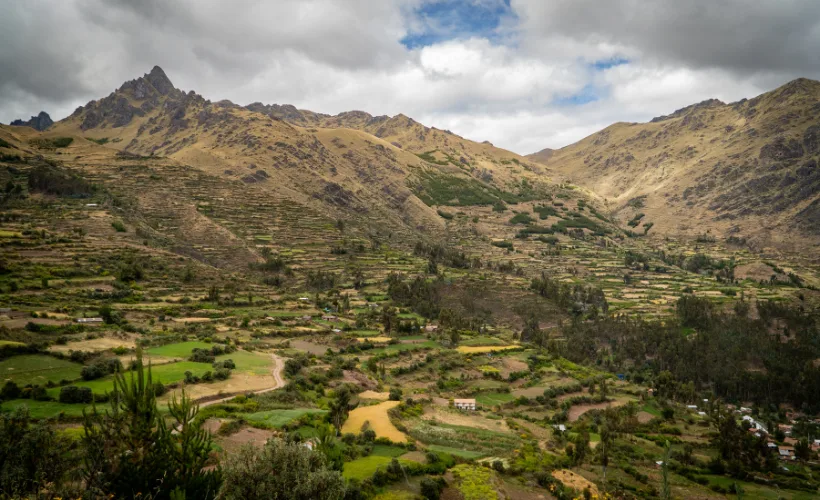
Lamay opens wide here, a big valley view that makes every pedal stroke feel worth it.
Enduro MTB Lamay, Cusco
Considered the Sacred Valley’s most technical descent, this enduro route offers pure challenge. Starting from Andean heights to deliver a sustained and demanding descent, with rocky sections, tight corners, and committed passages demanding total concentration. Varied terrain and constant gradient test cyclist skill in a spectacular setting, culminating in the picturesque town of Lamay. It’s an intense and rewarding experience, designed for experienced pilots seeking the limit.
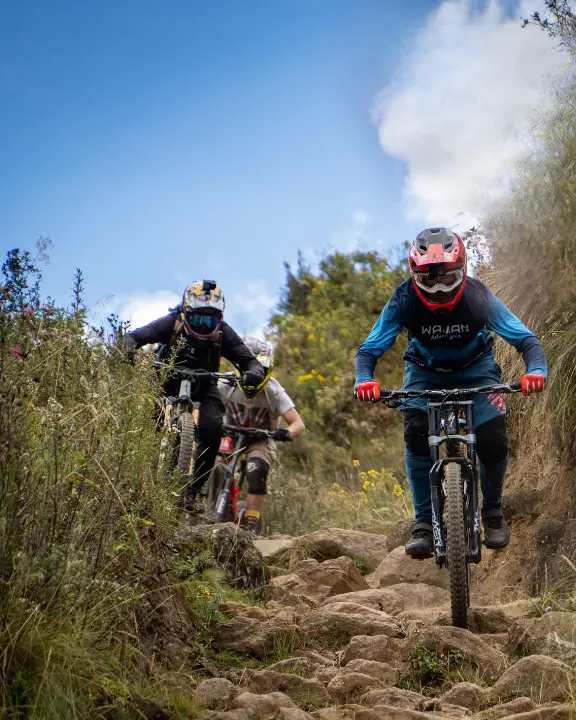
Rock garden in Lamay, where momentum and precision decide if you float through or fight the bike.
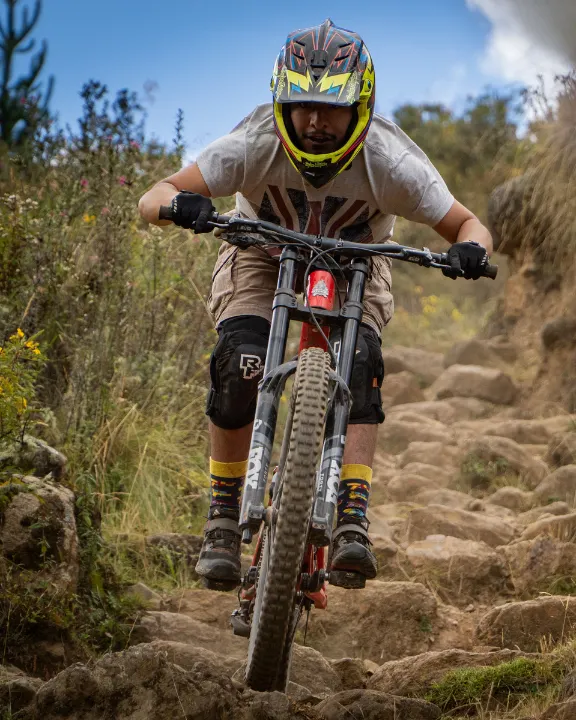
Close up on the stone step section in Lamay, where the bike stays stable only when your technique is clean.
MTB Adventure in Cusco: Lomo Fino and El Brujo
This day route is a favorite among cyclists seeking technical and varied experience without going too far from Cusco. The route begins with 4×4 vehicle transport ascending panoramic roads, offering first spectacular views of the Vilcanota range and Sacred Valley. This transfer not only saves energy but allows accessing altitudes above 13,123 feet (4,000 meters), where the real adventure begins.
The descent by stages:
- The Lomo Fino singletrack marks the descent’s start with fluid and fast terrain, ideal for warming up and gaining confidence. As you descend, the landscape changes from high Andean grasslands to areas with more vegetation and compact soil.
- The transition to El Brujo sector introduces more technical character: here the trail narrows and rocky sections appear, committed passages over loose rock and tight corners demanding precision and total bike control. The perfect combination between speed and technique defines this section.
Enduro MTB Yuncaypata and Huayllarcocha
The Enduro MTB Yuncaypata and Huayllarcocha route in Cusco is a downhill experience combining open landscapes with fast and technical descents. Starting in the high Andes, the trail descends rapidly down steep slopes and natural singletrack, offering wide corners, natural jumps, and rocky sections demanding control and agility. With panoramic views of Sacred Valley and Cusco, this route is ideal for cyclists seeking pure adrenaline and technical fun in an unmatched high altitude setting.
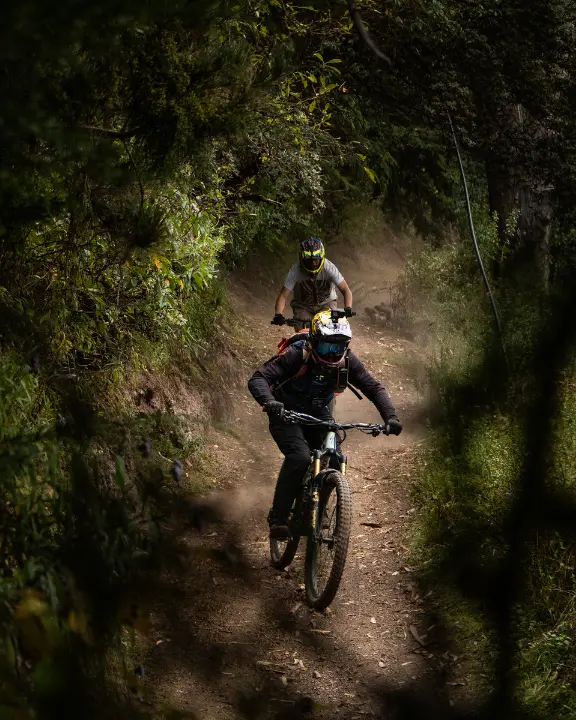
Leading through the tight trees in Lamay, where the trail narrows and every second demands full attention.
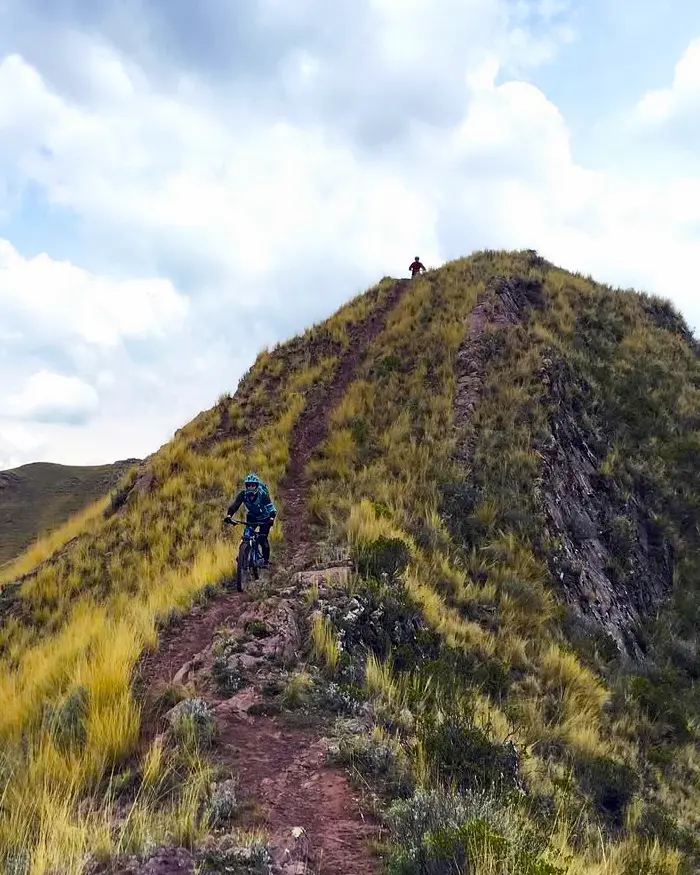
The descent line combines compact sections with irregular sectors of rock and loose dirt.
Difficulty Levels and What to Expect?
Enduro MTB in Cusco spans a wide difficulty range, but the altitude factor affects all levels. Here’s what cyclists at different experience levels can realistically expect:
| Level | Who is it for? | Typical zones / routes | Distance | Total time | Key features |
| Beginner (Initial enduro) | Cyclists with MTB base, new to enduro | Lower Chinchero, gentle Sacred Valley trails | 8-12 miles (13–19 km) | 2–3 hrs | Short descents (492–787 ft/150–240 m), manageable technique, escape routes and conservative pace |
| Intermediate | Cyclists comfortable on black at sea level | Sacsayhuamán, standard Sacred Valley routes | 12-18 miles (19–29 km) | 3–5 hrs | Moderate rock gardens, roots, 1-3 foot (30–90 cm) drops, off camber corners |
| Advanced / Expert | Experienced cyclists | Cusco expert trails | 15-25 miles (24–40 km) | 4–7 hrs | Exposure, large rock gardens, steep technical climbs, 30 minute descents |
Best time of year for enduro in Cusco
The dry season from May to September represents peak conditions for enduro mountain biking in Cusco. During these months, trails receive minimal rain, surfaces remain firm and fast, and weather patterns are predictable. June, July, and August offer the most consistent conditions you can plan multi day riding trips confidently that weather won’t interrupt plans.
The wet season from November to March presents challenges but remains rideable for experienced cyclists. Trails become muddier, especially in forested sections and areas with clay soil. Technical features become more demanding when wet roots and rocks get slippery, requiring different line choices and more cautious speeds. However, the landscape becomes dramatically green and you’ll often have trails completely to yourself.
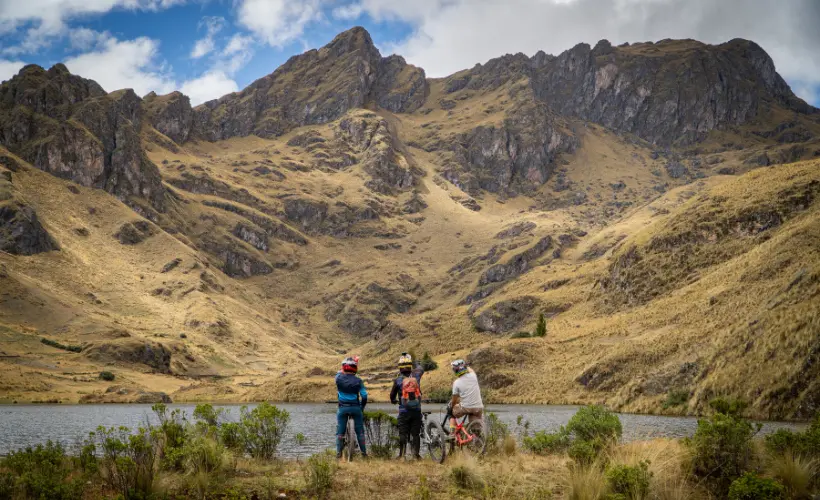
A quick stop at the lagoon in Lamay, where the peaks feel close and the ride plan comes together.
Essential gear and preparation
Bike Setup
Purpose built enduro bikes are ideal but not mandatory. Trail bikes with 130-150mm travel can handle most Cusco trails, though they’ll feel less capable on more technical descents. Downhill bikes are overkill and make climbing unnecessarily difficult. Key setup considerations: tubeless tires prevent flats on rocky terrain, a dropper seatpost is essential for navigating steep descents, and reliable disc brakes matter more at altitude where long descents generate significant heat.

Large disc brakes are part of the ideal bike and setup.
Tire choice significantly impacts performance. In dry season, semi-slick or light tread patterns maximize speed on packed dirt. During wet season, aggressive tread with widely spaced knobs provides better mud clearance and grip. Tire pressure requires adjustment the combination of rocky terrain and altitude means most cyclists run 0.1-0.2 bar lower than sea level setups.
Protection and Safety Gear
Carry a quality multitool, spare tube or tubeless repair kit, tire levers, and a pump or CO2 cartridges. Mechanical problems in remote locations are serious situations basic repair knowledge and proper tools can mean the difference between a minor inconvenience and a long walk at altitude.
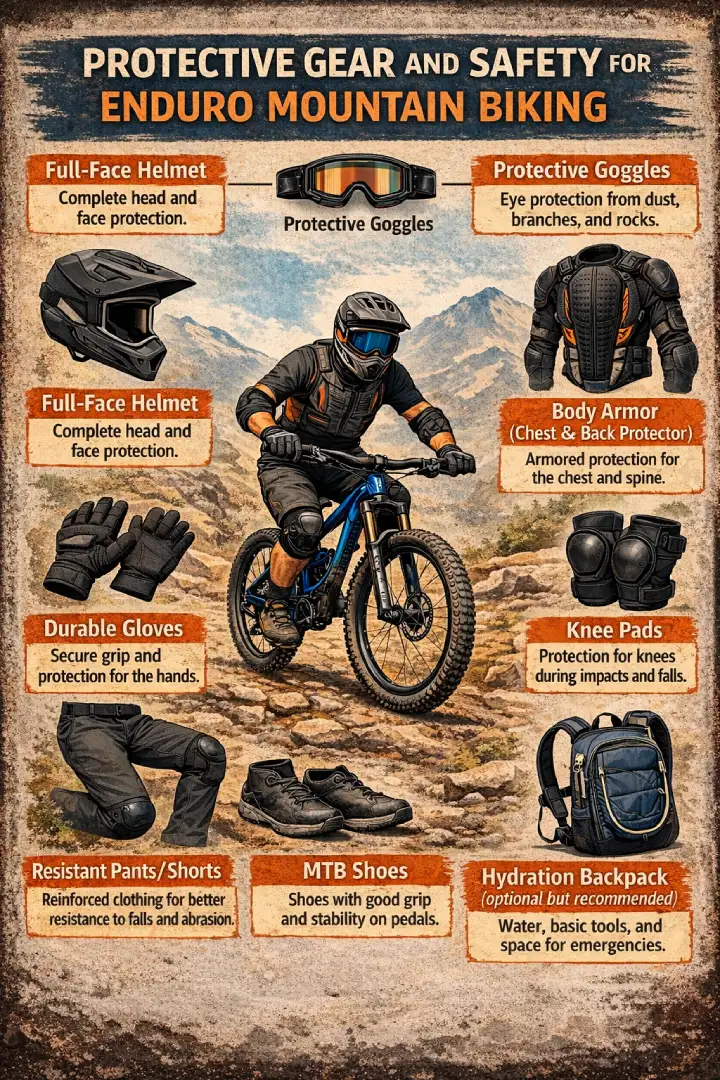
Essential safety kit for mountain bike Enduro riding with maximum protection.
Clothing Layers
Cusco’s altitude creates unique weather challenges. Mornings start cold (39-50°F/4-10°C), midday warms up (64-75°F/18-24°C), and temperatures drop rapidly in shade or if clouds arrive. A layering system works best: moisture wicking base layer, insulating mid layer for early starts, and a packable wind/rain shell that fits in a hydration pack.
Sun protection deserves emphasis. The thinner atmosphere at 10,827+ feet (3,300+ meters) provides less UV filtering than sea level. Sunscreen (SPF 50+), lip balm, and covered skin prevent burns that feel deceptively mild during riding but become painful hours later.
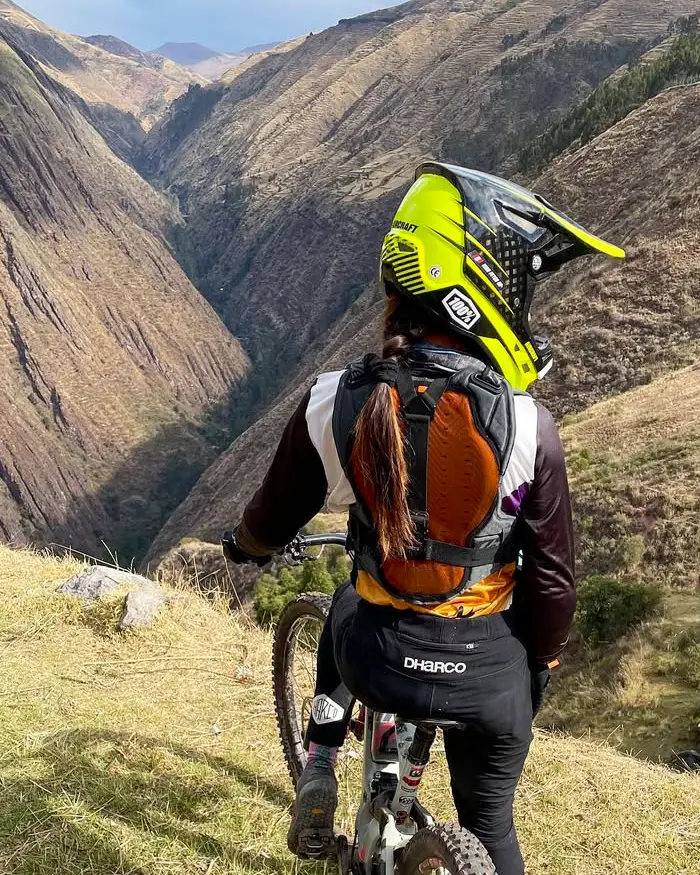
The setting conveys a feeling of altitude, silence, and connection with nature.
Altitude Adaptation
Arriving in Cusco and immediately attempting challenging enduro rides is a mistake. The body needs 2-3 days minimum to begin altitude adaptation. Spend the first days doing easier rides, visiting lower elevation sites, staying well hydrated, and avoiding alcohol. Even after adaptation, performance will be reduced compared to sea level accept this rather than pushing too hard and risking altitude sickness.
Hydration requirements increase at altitude. Drink 50% more water than normal riding conditions would require. Electrolyte supplements help maintain performance during long rides. Many cyclists notice normal nutrition needs adjustment eating becomes less appealing at altitude, but maintaining calorie intake during rides prevents bonking on extended climbs.
Thousands of travelers have trusted Peru Biking Tours to live unforgettable experiences in the Andes.
Your safety first
Routes adapted to your level, expert local guides and full support at all times.
Without worrying about anything
We take care of all the logistics so you can just focus on enjoying the scenery.
Authentic routes in Cusco
Experience the Sacred Valley in a real way, at your own pace, with access to the best trails.
Quality equipment
High-end enduro bikes, helmets and protective gear for all levels.
Plan your MTB experience in Cusco
MTB Day Tours in Cusco
If you want to explore MTB routes with the right logistics, local support, and suitable trail selection, check out our MTB Day Tours in Cusco.
Multi-Day MTB Tours
For more comprehensive experiences that connect several valleys and high mountain routes, discover our multi-day MTB Tours.


