In Cusco, beginner MTB routes should prioritize lower altitude (ideally under 10,499 ft / 3,200 m), wider roads, and short 2–4 hour rides to reduce fatigue and altitude risk. Expert routes can start above 11,483–13,123 ft (3,500–4,000 m) and include technical singletrack, stairs, and exposure. If you’re unsure, start one level easier for the first 2–3 days.
Understanding the difference between MTB routes for beginners vs experts in Cusco is fundamental to enjoying the experience safely. Here, a poor route choice can translate into excessive fatigue, altitude problems, or simply not having a good time. Conversely, choosing correctly allows you to enjoy the landscape, improve skills, and experience the trip with confidence.
Choosing between beginner-friendly trails or expert-level descents in Cusco? Our day tours are designed for riders who want authentic enduro adventures in the Andes, always smoother when you match your skill level to the right route.
Beginner vs Expert in Mountain Bike: Equipment and Technique Differences
Checklist: choose the right MTB route level in Cusco
If you’re a beginner in MTB terrain: choose routes with wide visibility, minimal exposure, and low technical features (no stairs, no tight switchbacks).
If you’re new to altitude: start below 10,499 ft (3,200 m) and keep rides to 2–4 hours.
If you struggle with long descents: avoid 40+ minute sustained downhills until you confirm brake control and endurance.
If you’re an expert rider: pick technical singletrack only after 2–3 acclimatization days and confirm gear + protection.
Rule of thumb: first 2–3 days in Cusco = pick one level easier than at home.
How to honestly evaluate your cycling level?
Before talking about routes, it’s important to define levels realistically since in Cusco, altitude and terrain change the perception of difficulty.
Beginners
In MTB, a beginner isn’t someone who has never ridden a bike, but someone who:
Has little or no experience on mountain trails
Prefers wide and predictable roads
Doesn’t feel comfortable with technical descents or exposure
In Cusco, even simple routes can feel more demanding due to altitude (9,842–12,467 feet/3,000–3,800 meters).
MTB beginners
Important note:
Beginner doesn’t mean you don’t know how to ride a bike. It means technical mountain biking isn’t your regular activity.
Experts
Expert cyclists usually:
Have prior experience in technical MTB
Control descents well, tight corners and irregular surfaces
Handle comfortably on descents and can read terrain quickly to adjust lines on the fly
For this group, Cusco offers long, technical routes with large elevation changes that take advantage of Andean geography.
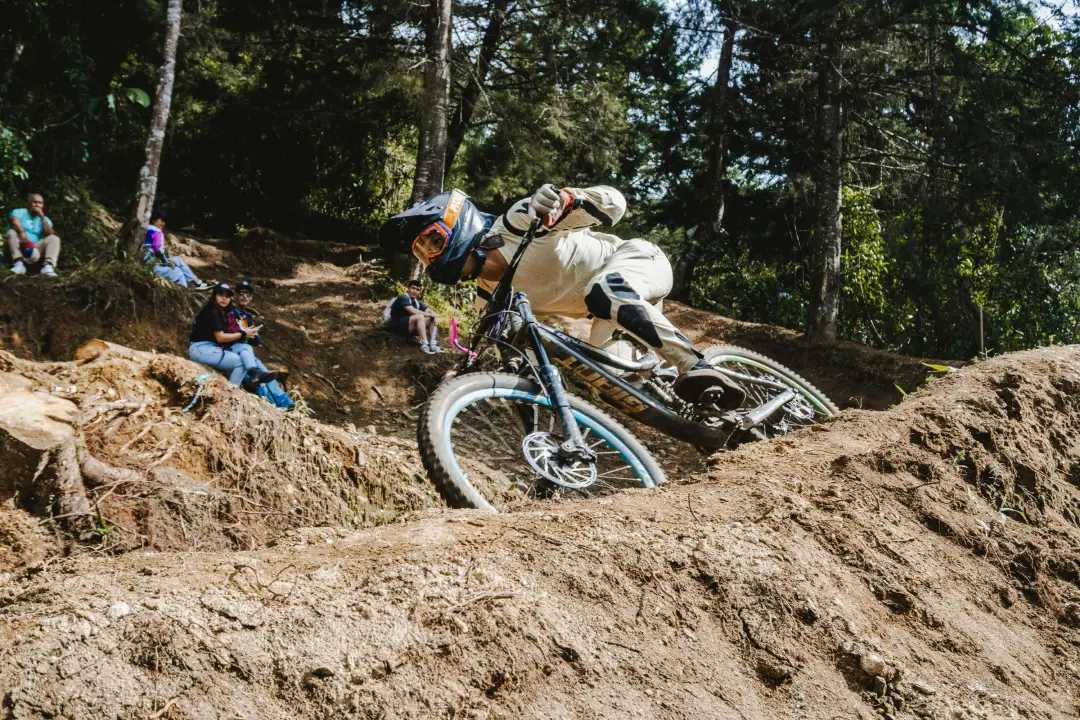
Ciclista Experto en Downhill: Técnica Profesional en Terreno Lodoso de MTB
beginners vs experts – which one is you?
Want to ride downhill in the Sacred Valley without worrying about logistics, access points, or safety?
At Peru Biking Tours, we run downhill routes with expert local guides, quality enduro bikes, and full mechanical support.
Accessibility: many routes are less than an hour from the city.
This allows designing both gentle and demanding experiences without changing regions.
MTB routes for beginners vs experts in Cusco:
BEGINNERS
🚴
CHINCHERO – MORAY – MARAS
Classic Route
CUSCO
Distance
18.6 miles (30 km)
Altitude
10,827–12,139 ft (3,300-3,700 m)
Elevation Drop
1,312 ft (400 m) descent
Duration
3-4 hours
Terrain Type
70% dirt
WHY IT WORKS?
Mostly descending profile from Chinchero toward Maras, less cardiovascular effort. Stops at Moray and salt mines for photos and recovery.
WHAT TO EXPECT?
Wide roads with good visibility, minimal vehicle traffic, Andean mountain landscape with terraced cultivation fields.
🚴
PISAC – URUBAMBA
Sacred Valley
CUSCO
Distance
13.7 miles (22 km)
Altitude
9,186–9,842 ft (2,800-3,000 m)
Elevation
656 ft (200 m)
Duration
2.5-3 hours
Ideal For
Families
WHY IT WORKS?
Lower altitude than Cusco (9,186–9,842 feet/2,800-3,000m) reduces cardiovascular impact. Mostly flat road following the valley, no steep climbs.
WHAT TO EXPECT?
Views of Urubamba River, snow capped mountains in background. Passes through giant corn, quinoa, and bean fields. Pisac artisan market (Sundays and Thursdays).
EXPERTS
🏔️
LARES INCA TRAIL
Technical High Mountain
CUSCO
Distance
11.2 miles (18 km)
Starting Altitude
13,825 ft (4,214 m)
Elevation Drop
-4,216 ft (-1,285 m)
Duration
7-8 hours
Pedaling
+794 ft (+242 m)
TERRAIN TYPE
Ancestral singletrack, rock gardens, Inca stairs, switchbacks, sections of Inca Flow (natural flow on historic terrain).
WHY IS IT FOR EXPERTS?
Requires stair technique, singletrack with exposure (side drops), stream crossings, loose rocks. Challenging navigation: finding the correct line among pastoral trails.
WHAT TO EXPECT?
Technical briefing + bike and protection check. Fast sections alternating with precision sections. Passages through high Andean communities with llamas/alpacas.
⚡
YUNCAYPATA + HUAYLLARCOCHA
Downhill Combo
CUSCO
Total Distance
~6.2 miles (~10 km) (combined)
Yuncaypata DH
3.4 miles (5.5 km)
Altitude
~12,303 ft (~3,750 m)
Elevation Drop
-1,522 ft
Profile
75% descent
WHY IS IT FOR EXPERTS?
Yuncaypata: Steps, ramps, roots, jumps and berms/off camber. Huayllarcocha: Fast and fluid, demands precision at speed (corner entries/exits).
WHAT TO EXPECT?
Eucalyptus, fast sections, roots and steps (Yuncaypata). Very flowy trail near Puka Pukara and Temple of the Moon. Ideal for multiple runs – close and simple access.
ADVANTAGE
Perfect for riders wanting to repeat runs and ride at pace. Two different styles in one day.
Beginner vs Expert: quick comparison table
Aspect
Beginners
Experts
Ideal altitude
< 10,499 ft (< 3,200 m)
11,483–13,123 ft (3,500–4,000 m)
Terrain
Wide roads
Technical singletrack
Duration
2–4 hrs
4–6 hrs
Risk
Low
Medium–high
Specific gear by level
For Beginners
To guarantee a smooth and safe experience Peru Biking Tours includes basic gear: trail or cross-country bike with front suspension (100-120mm), standard certified helmet, and air pump/multi-tool.
What you should bring: Full finger gloves (protect in minor falls that are common), sunglasses with UV400 protection, SPF 50+ sunscreen, and small backpack with 2 liters of water. Layered clothing: technical shirt, light waterproof jacket, comfortable pants or shorts for pedaling.
What you don’t need: Knee pads, elbow pads, or full body protection are unnecessary on beginner routes and only add weight/heat. You also don’t need clipless shoes; flat pedals with rubber sole shoes work perfectly.
For Experts
Premium operators for expert routes offer: enduro or all-mountain bikes (140-160 mm suspension front/rear), dropper post, high power hydraulic brakes, and tubeless tires with sealant to reduce flats.
What you should bring: Knee and elbow pads are highly recommended on technical routes. Gloves with knuckle protection. Hydration pack of 3 liters minimum. GPS or offline navigation app with downloaded maps. Personal repair kit: extra tube, patches, multi-tool, quick chain link.
Consider investing in: MTB shoes with clipless system if you use them regularly. Glasses with interchangeable lenses (clear for fog, dark for sun). Enduro helmet with greater rear coverage. Back protector for routes with significant exposure.
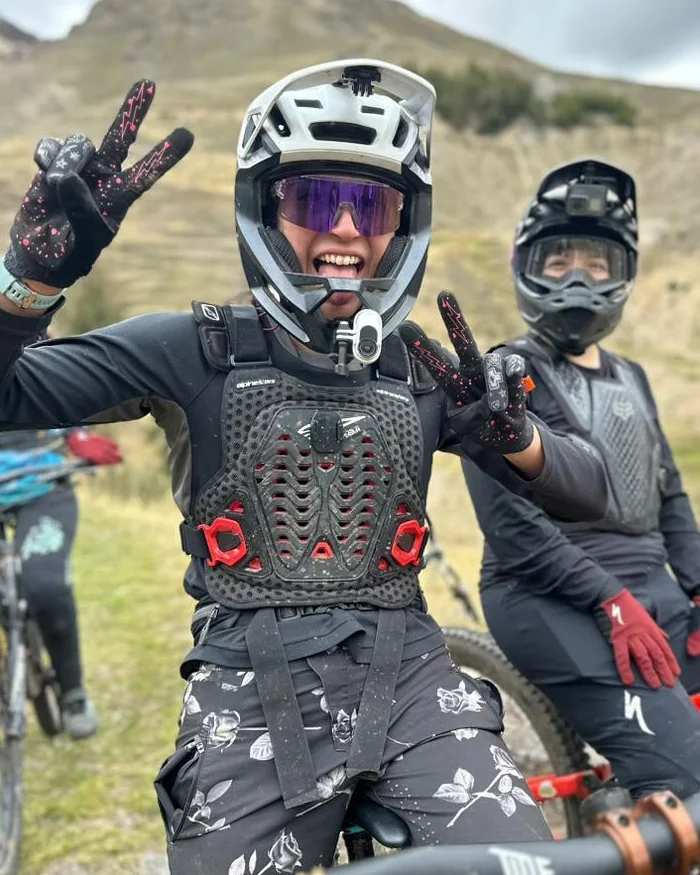
Helmet on, basics covered, Cusco rides begin with safety.
Two riders, one pause, high altitude air and big Cusco views.
Common Mistakes to Avoid
⚠️
MISTAKE #1
Overestimating Your Level Out of Ego
CUSCO
THE PROBLEM
I’ve seen dozens of experienced cyclists from Colorado or California assume Cusco’s “intermediate” routes will be easy. Altitude is the great equalizer.
✓ SOLUTION
Start conservative. Choose a route one level below your normal ability during the first 2-3 days. You can always increase difficulty.
⚠️
MISTAKE #2
Not Acclimatizing Properly
CUSCO
THE PROBLEM
Doing Abra Málaga (starts at 14,160 ft/4,316m) on your second day in Cusco is a recipe for disaster. Acute altitude sickness is real and can be dangerous.
✓ SOLUTION
Minimum 2-3 days acclimatization before routes over 13,123 ft (4,000m). During acclimatization: hydrate (2-3 liters/day), avoid alcohol, sleep well, and do gentle walks.
⚠️
MISTAKE #3
Going Solo on Remote Routes
CUSCO
THE PROBLEM
Expert routes like Lares-Calca cross areas where there’s no cell coverage for hours. A serious fall, multiple flat, or major mechanical problem can become a real emergency.
✓ SOLUTION
Expert routes always with certified guide or minimum in group of 3+ experienced riders. Carry a satellite emergency device (InReach).
Thousands of travelers have trusted Peru Biking Tours to live unforgettable experiences in the Andes.
1
Your safety first
Routes adapted to your level, expert local guides and full support at all times.
2
Without worrying about anything
We take care of all the logistics so you can just focus on enjoying the scenery.
3
Authentic routes in Cusco
Experience the Sacred Valley in a real way, at your own pace, with access to the best trails.
4
Quality equipment
High-end enduro bikes, helmets and protective gear for all levels.
If you want to explore MTB routes with the right logistics, local support, and suitable trail selection, check out our MTB Day Tours in Cusco.
⛰️
E-bikes Tours
Curious how altitude impacts your e-bike in Cusco? Our E-Bike tours are designed for riders who want authentic enduro adventures in the Andes.
Frequently Asked Questions about MTB routes beginners vs experts Cusco
How many days do I need to acclimatize before doing MTB in Cusco?
For beginner level routes below 12,467 feet (3,800 m), 1–2 days of light acclimatization are usually sufficient. For expert routes above 13,123 feet (4,000 m), at least 3–4 days are recommended. During acclimatization do gentle activities like walking around Cusco, visiting museums, and maintaining good hydration.
Which route is best for my first MTB day in Cusco?
The Sacred Valley route – Pisac to Urubamba (13.7 miles/22 km) is ideal for the first day: low altitude (9,186–9,842 feet/2,800–3,000 m), mostly flat terrain and low risk. As a shorter alternative, Yuncaypata–Sacsayhuamán (7.5 miles/12 km) works well for a half day experience near the city.
Can I do expert routes without a guide?
Legally yes, but it’s highly inadvisable. Routes like Lares–Calca or Salkantay cross areas without cell coverage and with complex navigation. Guides provide safety, first aid, and mechanical resolution. If you decide to go without a guide, carry satellite GPS, offline maps, and ride in a group of at least 3 experienced riders.
Are beginner routes boring for intermediate cyclists?
Not necessarily. Routes like Chinchero–Moray–Maras stand out for their cultural and scenic value: Inca terraces, ancient salt mines, Quechua communities, and spectacular Andean views, beyond technical difficulty.
What do I do if I feel sick from altitude during the ride?
Stop immediately and notify the guide. Symptoms of acute altitude sickness include intense headache that won’t subside, nausea or vomiting, severe dizziness, disorientation, or extreme fatigue. Treatment is to descend as soon as possible. Don’t try to “tough it out”: it can worsen rapidly.
What's the minimum skill level for Abra Málaga?
Abra Málaga requires intermediate–advanced level: solid brake control on long descents (4+ hours), quick terrain reading, experience sharing road with vehicles, and prolonged muscle endurance. Prior MTB experience of at least 15–20 outings is recommended. Not suitable for recent beginners.
Do tours include lunch or should I bring my own food?
Depends on operator and duration. Half day tours usually DO NOT include lunch, only snacks and water. Full day tours generally DO include lunch (box lunch or local experience). Confirm when booking and, if not included, carry 500–700 extra calories for long routes at altitude.
Are there specific routes for families with children?
Yes. Pisac–Urubamba is ideal for families with children from 10 years who know how to ride a bike. It’s mostly flat, moderate altitude, and with attractive cultural points. Some operators adapt Chinchero–Maras with slower pace. For younger children, consider e-bike tours.
Can I combine different route levels in one week?
Yes, and it’s most recommended. A 7 day example: Day 1–2 acclimatization without MTB, Day 3 beginner route (Pisac–Urubamba), Day 4 rest or culture, Day 5 intermediate route (Moray–Ollantaytambo), Day 6 expert route (Abra Málaga), Day 7 recovery. This progression maximizes safety and performance.
I studied Tourism and I enjoy writing about travel destinations and experiences with a keen eye for detail. I'm committed, I like challenges, and I take my work seriously. I also enjoy reading and writing because they help me learn, organize my thoughts, and constantly improve.