


Quick Answer:
Mountain biking terms are practical trail language. Knowing words like singletrack, berm, rock garden, drop, and switchback helps you understand guide warnings, choose safer lines, and react faster on descents. This glossary explains the most common MTB terms with simple examples so you can ride with more confidence—especially on technical terrain like Cusco and the Sacred Valley.
The technical language of cycling isn’t just a matter of style; it’s a practical tool for safety and communication on the mountain. Knowing these mountain biking terms will help you understand warnings from your riding companions, buy the right gear, and above all, enjoy the MTB experience more.
New to MTB lingo in Cusco? Our day tours are designed for riders who want authentic enduro adventures in the Andes—always smoother when you understand key terms like singletrack, berms, and drops before hitting the trails.
Why is it important to know Mountain Biking terms?
Imagine arriving at your first group ride and the guide says: “The singletrack has good berms at the start, but at the end there’s a pretty technical drop, so activate the dropper before the descent.” And you nod confidently while inside you have no idea what they just said. That’s why knowing what a “dropper” is or identifying a “singletrack” allows you to make informed decisions.

Beginner cyclist wondering about mountain biking terms
Trail Basics: Understanding the Path
1. Singletrack (Single lane trail)
A singletrack is a narrow trail where only one bike fits at a time. Literally “single track.” It’s not a wide forest road, not a dirt path shared with cars; it’s a narrow line snaking between trees, rocks, or mountain, designed specifically for cyclists or hikers.
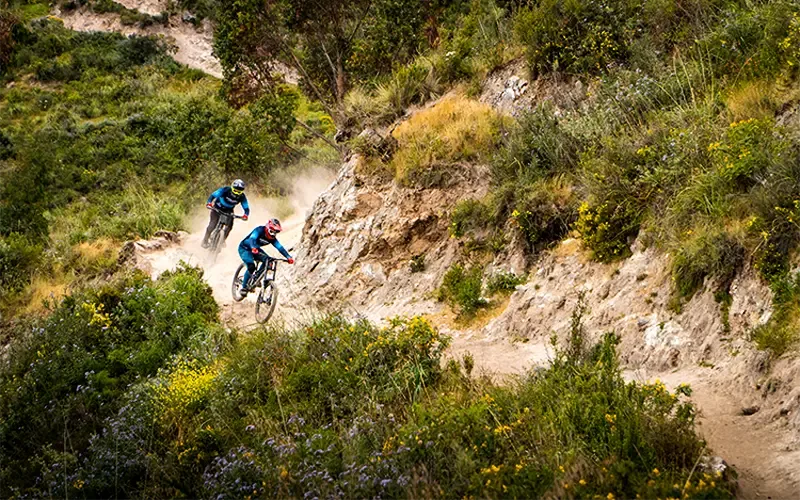
Adrenaline and speed kicking up dust on the mountain descent.
2. Berm or Peralte (Built up dirt on outer edge)
A berm is an outward banked turn, built with dirt or wood. It acts as a wall allowing you to maintain speed without drifting outside the trail, even on loose terrain.
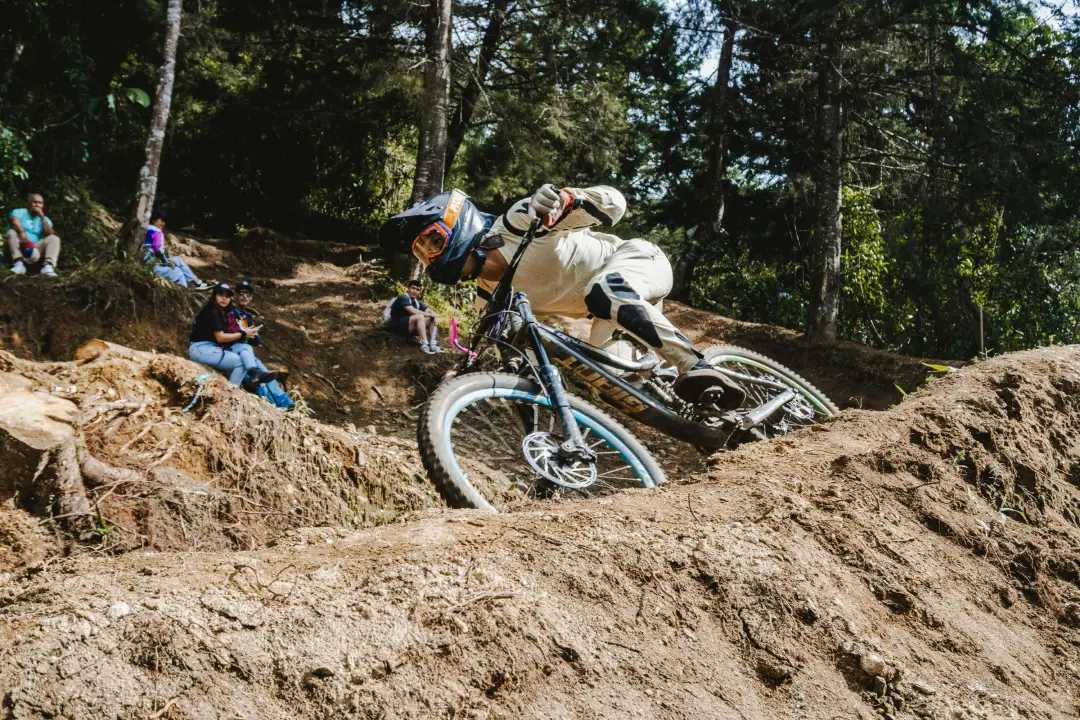
Ciclista Experto en Downhill: Técnica Profesional en Terreno Lodoso de MTB
3. Rock Garden
It’s a trail section covered with rocks of different sizes. Can be natural or built to increase technical difficulty. They’re one of the most common and technical obstacles. When these rocks cover an extensive section of the path.
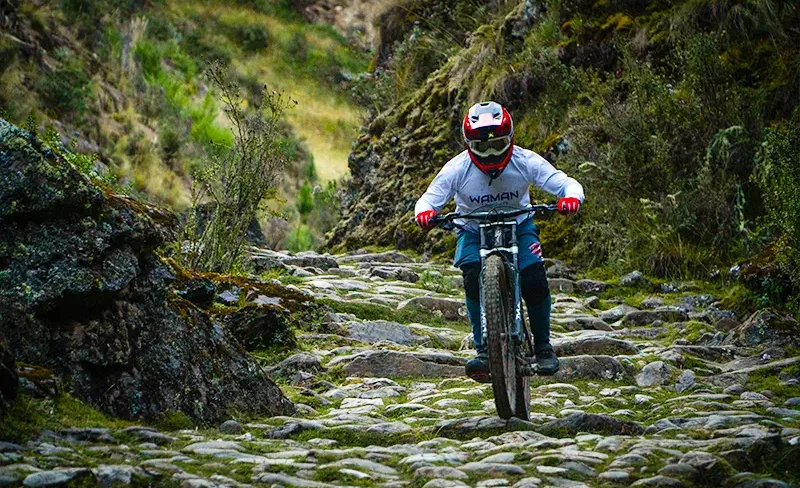
Conquering the ancient stone trails of the Andes with adrenaline and precision.
4. Flow (State of grace on the bike)
Refers to trails designed to maintain momentum, with smooth turns and few obstacles forcing you to brake hard. Route section designed to be fluid and fun, with smooth curves and small jumps. It’s ideal for beginners.
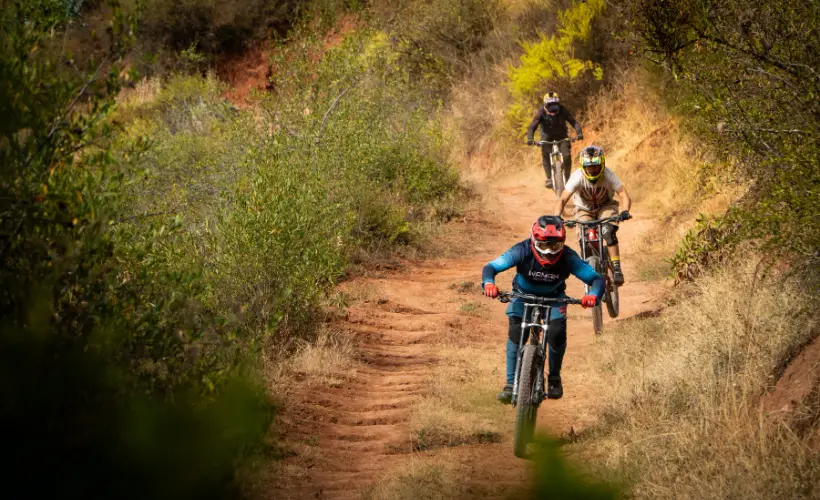
Lamay singletrack turns into a tight ribbon, and the rider train stays locked in from the first corner.
5. Switchback (Tight turns)
It’s a very tight zigzag turn, generally 180 degrees, common on mountain routes and trails with steep grades. They make climbing more manageable and reduce terrain erosion caused by water that would run straight down.
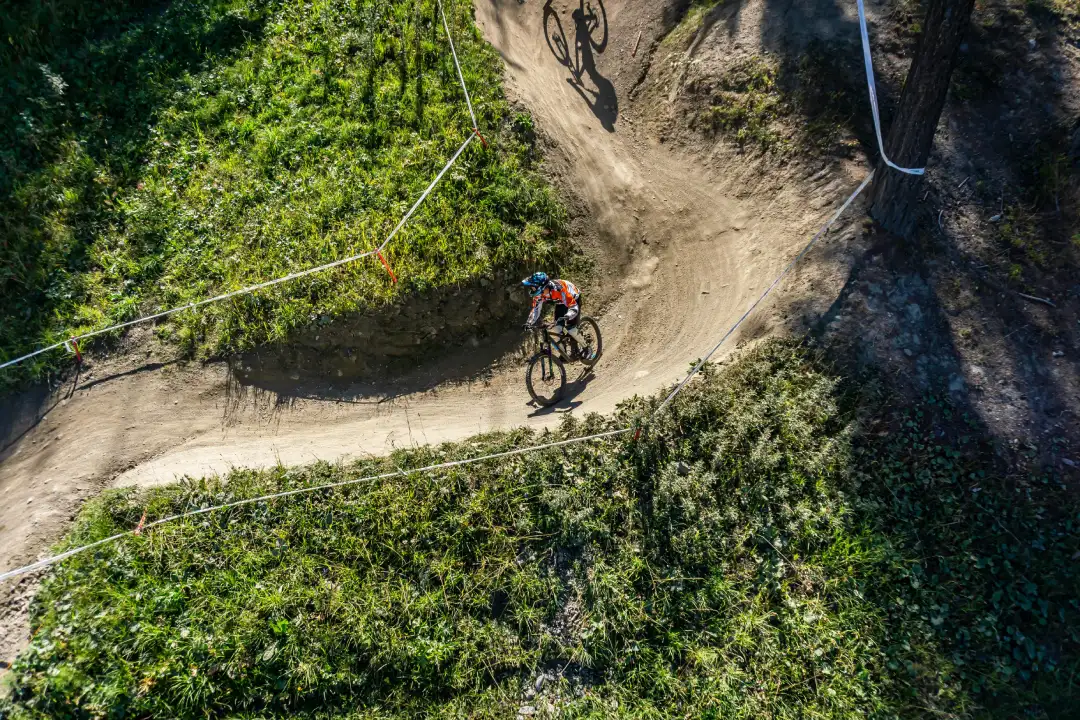
Mountain Biker Riding a Switchback Berm
6. Loam (Topsoil)
It’s dark, moist soil rich in organic matter offering exceptional grip. When loam has perfect moisture (generally after light rain), it’s the dream soil type for every cyclist.
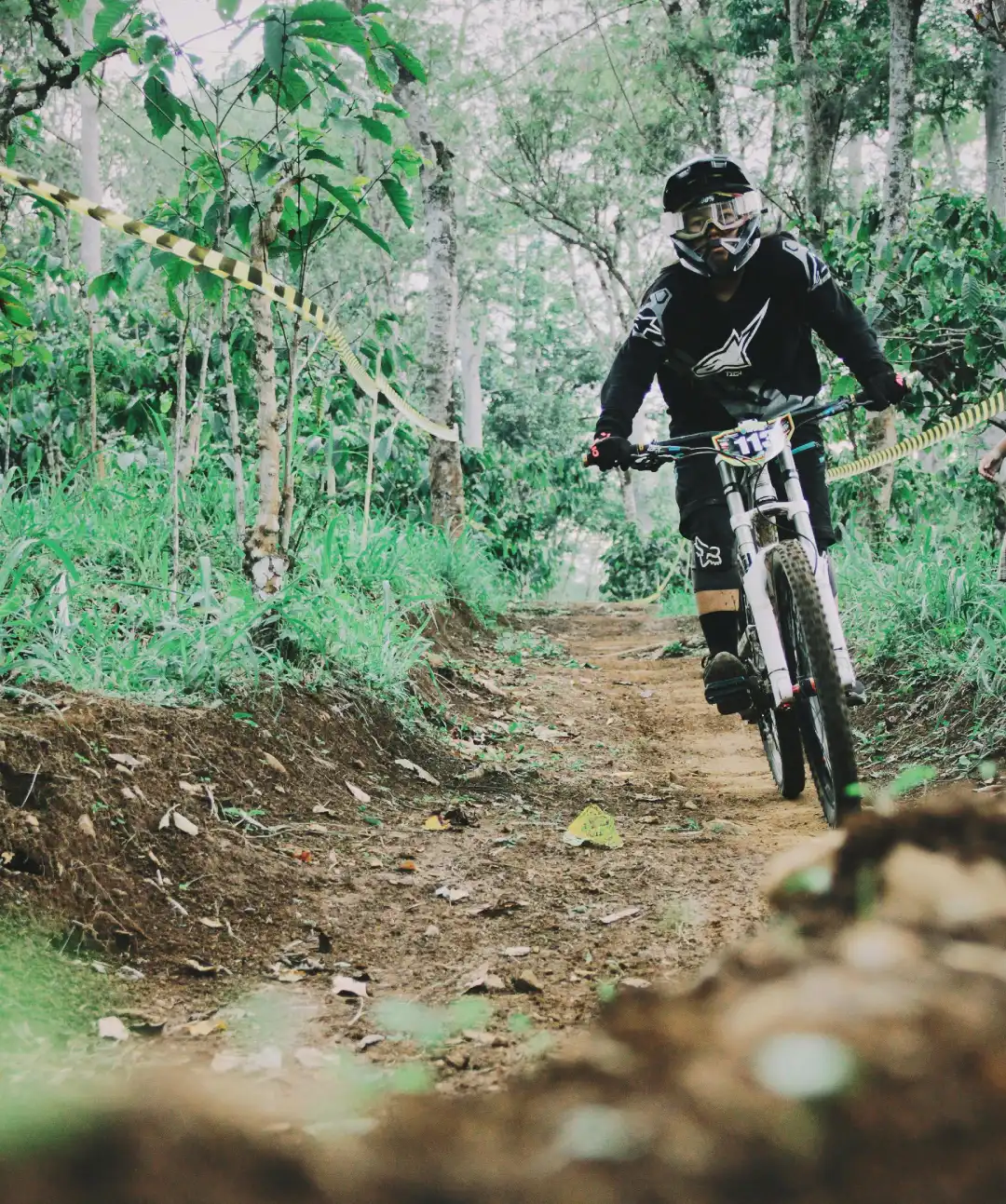
Downhill Rider on a Loam Forest Trail
Features + technique (bike handling)
7. Drop (When terrain disappears under your wheel)
A drop is a sudden descent in terrain, the path “falls” abruptly creating a step, like a short fall; which makes the entire bike fly and land lower down.
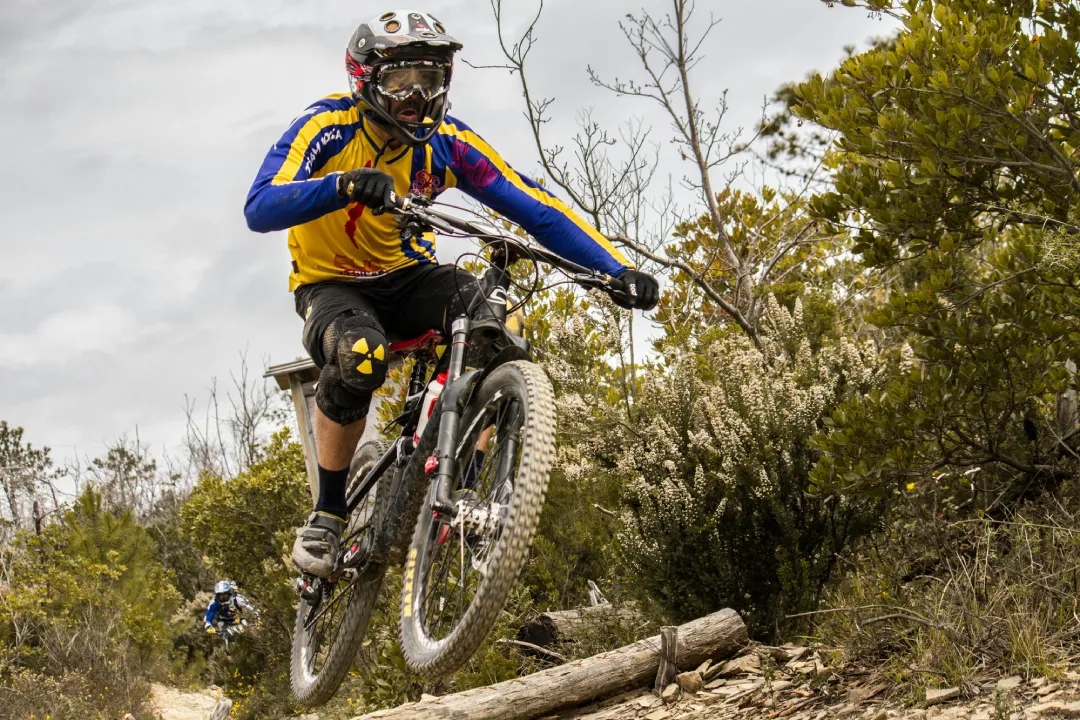
Ciclista de downhill saltando en sendero rocoso
8. Grip (Traction)
Grip is the traction your tires have on terrain. Comes directly from English and the MTB community adopted it without translation. The more grip you feel, the safer and faster you can ride. Loss of grip is one of the main causes of crashes.

9. Endo (maneuver or accident)
An Endo occurs when you lift the rear wheel and balance on the front, either from hard braking or as a maneuver to turn in very tight spaces. When involuntary (The Crash) and controlled (The Technique), an endo can be one of the most spectacular crashes or a demonstration of great skill and bike control.
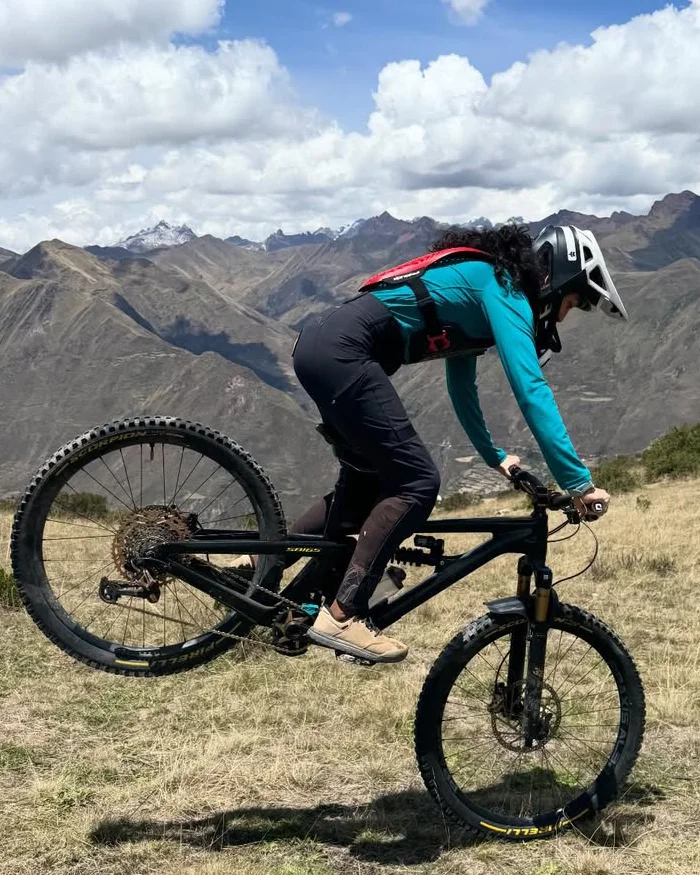
Panoramic views, technical posture, Cusco trails keep calling.
10. Bunny Hop (literally rabbit jump)
It’s the technique allowing you to lift the bike off the ground and jump without needing a ramp or edge. It’s a useful movement when obstacles appear on trail, like logs or rocks.
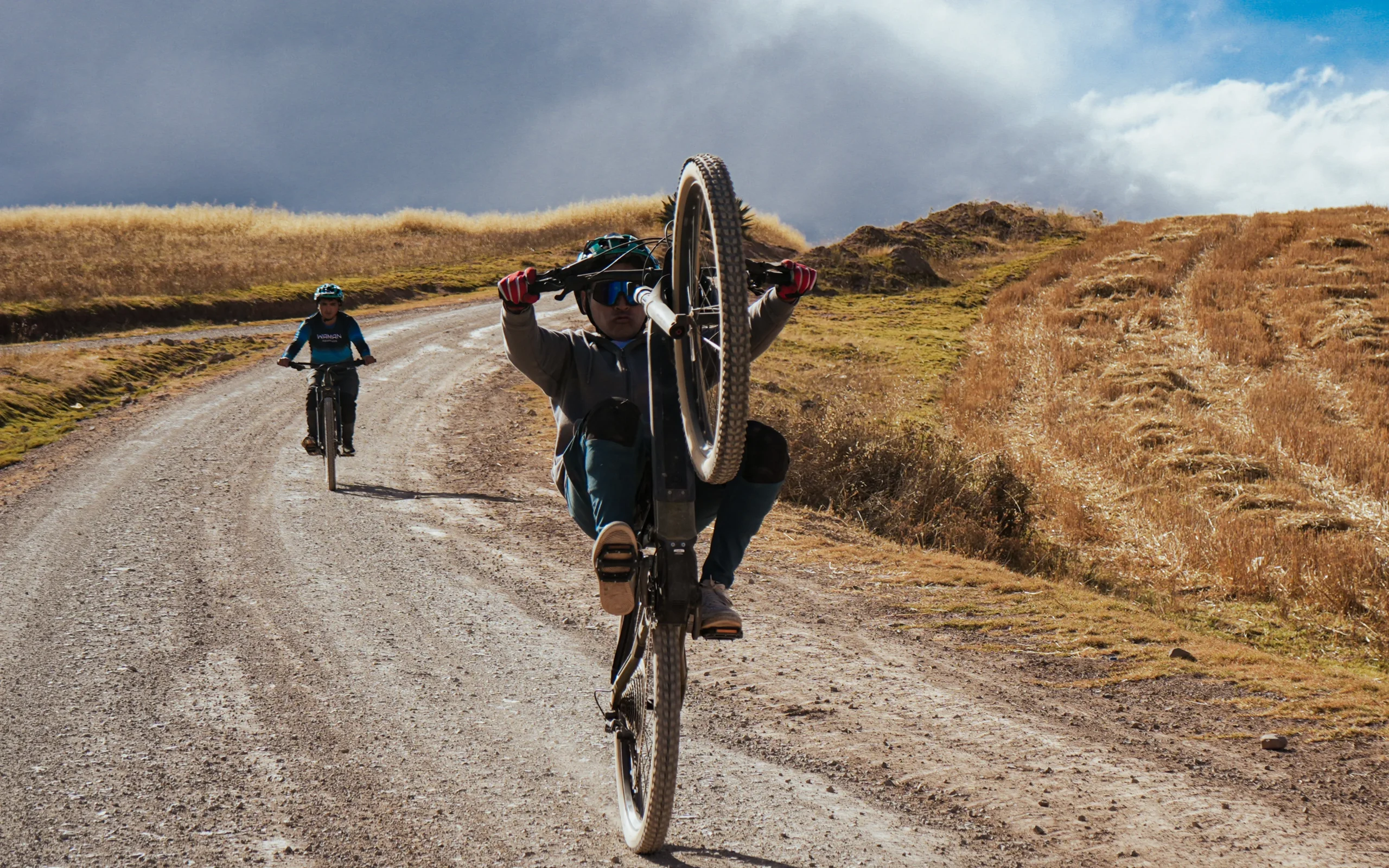
No traffic, just curves and calm, ride the Andes your way.
Quick checklist before your first ride
- Singletrack: narrow trail—ride controlled, stay aware of riders ahead.
- Berm: banked corner—look through the turn and keep momentum.
- Rock garden: rocks—relax arms, brake before, choose a clean line.
- Drop: sudden step-down—shift weight back and keep eyes forward.
- Switchback: tight turn—slow in, look to exit, avoid locking brakes.
- Dropper post: lower saddle before descents for control.
Practical tips
- Learn before traveling: familiarize yourself with these terms to better understand routes.
- Ask your guide: don’t hesitate to request clarifications during the tour.
- Use the vocabulary: practicing it will help you remember and feel more confident.
Ready to test that grip and conquer the Andes’ best switchbacks? Thousands of travelers have trusted Peru Biking Tours to live unforgettable experiences in the Andes.
Your safety first
Routes adapted to your level, expert local guides and full support at all times.
Without worrying about anything
We take care of all the logistics so you can just focus on enjoying the scenery.
Authentic routes in Cusco
Experience the Sacred Valley in a real way, at your own pace, with access to the best trails.
Quality equipment
High-end enduro bikes, helmets and protective gear for all levels.


