


Quick Answer:
Altitude in Cusco (3,400 m / 11,152 ft) affects several MTB components. Air suspension becomes stiffer because external pressure drops, brake systems can feel spongy if air bubbles expand, and tire pressure may feel harder than usual. Riders usually lower suspension pressure slightly, recheck tire PSI, and inspect brakes before riding high altitude trails.
Understanding how altitude affects MTB components in Cusco is essential before riding trails above 3,400 meters (11,152 ft). At high elevation, lower atmospheric pressure changes how suspension, brakes, and tires behave. Knowing these adjustments can prevent mechanical problems and make your ride safer.
Wondering how altitude impacts your MTB setup in Cusco? Our day tours are designed for riders who want authentic enduro adventures in the Andes always safer and smoother when you understand how suspension, brakes, and tires respond at high elevation.
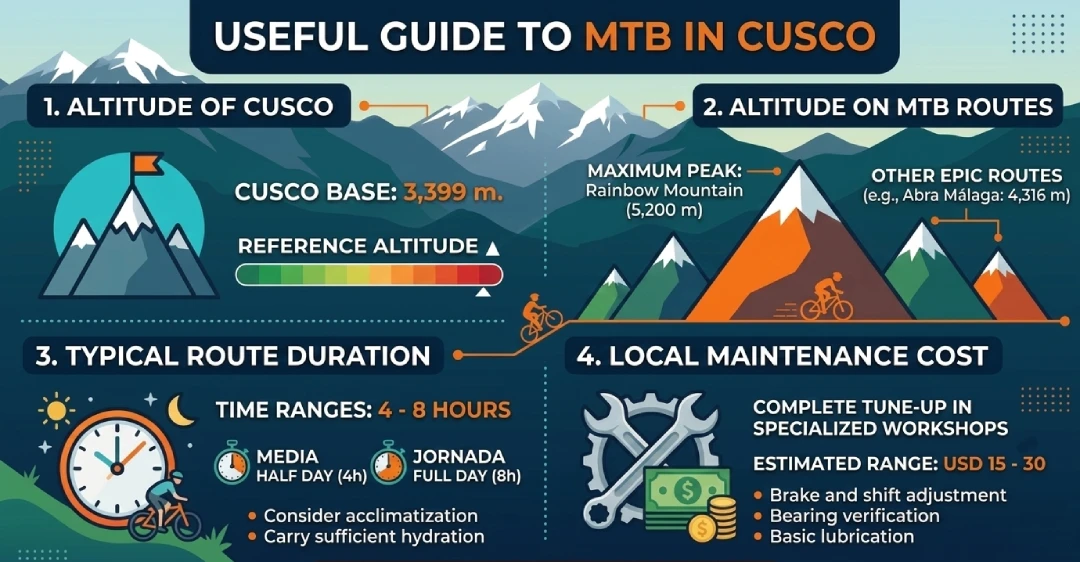
MTB Guide for Cusco
Understanding how altitude affects MTB components is the difference between enjoying a smooth descent through Sacred Valley or facing mechanical failure in the middle of nowhere.
Why does altitude affect mountain bike performance?
Understanding which MTB components are affected by altitude in Cusco is the difference between enjoying a smooth descent through Sacred Valley or facing mechanical failure in the middle of nowhere.
-
- Low atmospheric pressure
- Temperature changes
- Dusty conditions
- Long descents
1. Suspension: The Most Visibly Affected Component
Air suspension experiences the most notable and best documented changes with altitude. Both your front fork and rear shock are air chambers depending on the difference between internal and external pressure.
- The Problem: With less external pressure in Cusco, your suspension will feel “harder” or more progressive than normal. It’s like you’ve added extra air pressure without touching the pump.
- The Adjustment: It’s vital to make an adjustment as soon as you arrive. You’ll probably need to release 3 to 5 PSI to recover your usual SAG.
- Tip: check SAG and adjust according to your weight and altitude.
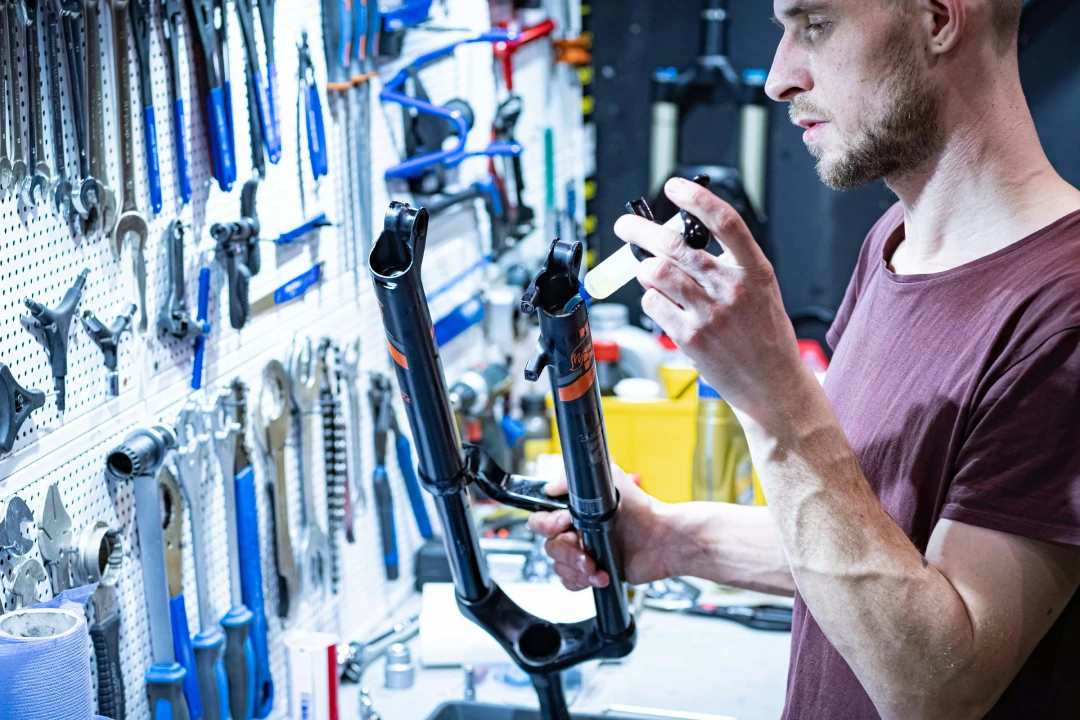
Suspension Service: Fork, Oil, and Seals
What you notice when riding:
- Stiffer suspension on initial compression: The first 20-30% of shock feels firmer. Your 25% sag at sea level can drop to 20-22% in Cusco with same absolute pressure.
- Less sensitivity to small impacts: Small rocks and roots the suspension absorbed smoothly now transmit more vibration.
- Suspension holds better in mid zone, the good thing about this is bike moves less when pedaling and doesn’t sink as much on medium bumps. If you like descending fast on steep terrain, you’ll feel bike responds much better and gives you more confidence.
2. Hydraulic Brakes and Altitude
This is perhaps the most critical point for safety. Hydraulic brake systems are closed circuits, but they’re not perfect.
- Air Expansion: If there are microscopic air bubbles in the system (you don’t notice at sea level), these will expand at altitude, making lever feel spongy or, worst case, brake loses power.
- Boiling Point: Brake fluid (especially DOT) has a lower boiling point at altitude. On long Cusco Urban Downhill descents, this can cause heat-related brake fade much sooner than expected.
- Tip: use larger diameter rotors and check pads before each route.
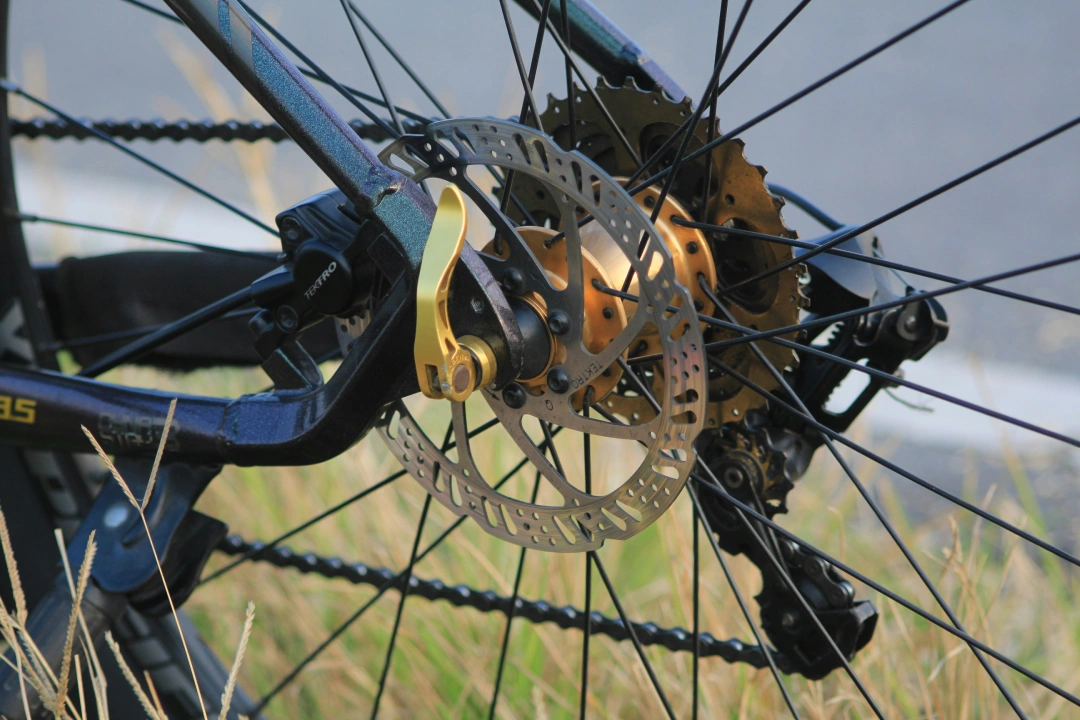
Mountain bike disc brake system
Specific symptoms:
- If you notice lever sinks much more than normal before bike starts braking, or feel when squeezing it’s “spongy” instead of firm, you have this problem. It’s like squeezing a sponge instead of a solid brake.
- Sometimes brake works well and feels firm, but other times feels soft or fails. This usually happens especially when bike has been sitting a long time, for example, overnight. It’s a sign something’s not right inside the system.
- If you notice that pumping lever several times in a row, brake momentarily recovers strength, it’s a clear symptom. Though it seems fixed, problem will reappear shortly. This happens because pumping moves air bubbles but doesn’t eliminate them.
3. Tires: More or less pressure?
Your tires are the first contact point and suffer the same phenomenon as suspension.
- Real Pressure vs. Read Pressure: With less atmospheric pressure pushing tire from outside, your tire will feel stiffer. If you maintain your usual 25 PSI, you might feel bike bounces too much on rocks, like on routes in Sapantiana neighborhood.
- Re-check after first ride: Pressure can change with tire temperature (heating from friction on long descents).
- Tip: maintain 25-30 PSI on MTB, dropping a bit for loose terrain.

MTB Drivetrain: Cassette, Chain, and Shifting
How to notice?
- Tires feel like rocks: You’ll feel bike slides easily over loose rocks or roots because rubber isn’t gripping ground, just passing over it.
- Uncomfortable and harsh ride: You’ll notice every trail imperfection in your hands and arms because tire won’t cushion anything; instead of absorbing vibrations, it transmits them directly to you, making the ride much more tiring.
- Bike skids on climbs: When trying to climb difficult terrain, tire needs to “hug” obstacles for traction. If overinflated, instead of gripping, it’ll bounce against rocks or steps, making wheel skid and lose momentum.
4. Drivetrain and Chain Lubrication
Though drivetrain isn’t affected by air pressure, high mountain climate does influence.
- Dry Air and Dust: Cusco is extremely dry during cycling season (May-October). A “wet lube” chain lubricant will attract all trail dust, creating an abrasive paste destroying your cogs.
- Tip: lubricate with high mountain specific oils and check shift adjustment.
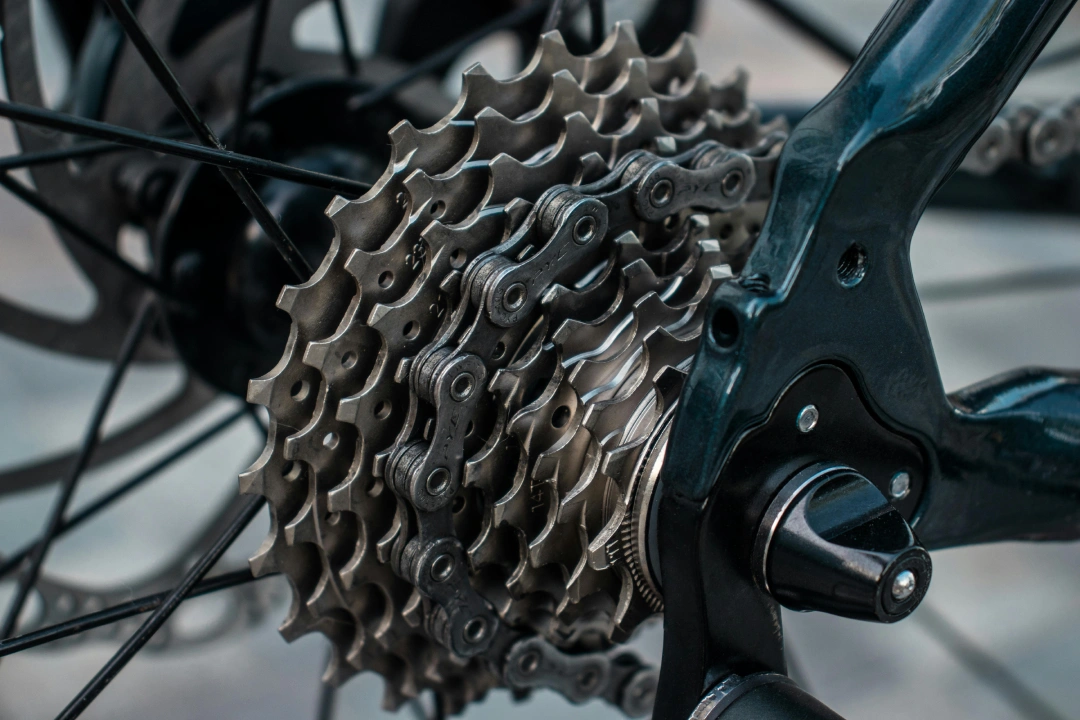
A clean drivetrain means smoother shifting.
Useful Tips
- Dirt and dust act like sandpaper on your bike components. That’s why don’t wait for usual weekly cleaning; in these conditions, it’s necessary to clean chain and shifters every 2 or 3 outings. If you let grime accumulate, you’ll wear entire system much faster.
- Choose correct lubricant (Wax or Dry): For dry and dusty terrain, it’s vital to use “Dry” type lubricants or Wax based (“Wax”).
- If using bike almost daily, take a minute each week to look at rear cog teeth (cassette) and front chainring. If teeth start looking very sharp (like shark fins), means they’re worn and could break chain.
Common MTB mistakes when riding at altitude
- Not adjusting suspension after arriving
- Using wet chain lubricant in dusty conditions
- Overinflating tires on rocky trails
- Ignoring brake lever feel before long descents
Recommended Setup adjustments before first Cusco ride
Here’s a checklist of proactive adjustments you should make upon arriving in Cusco, before your first outing.
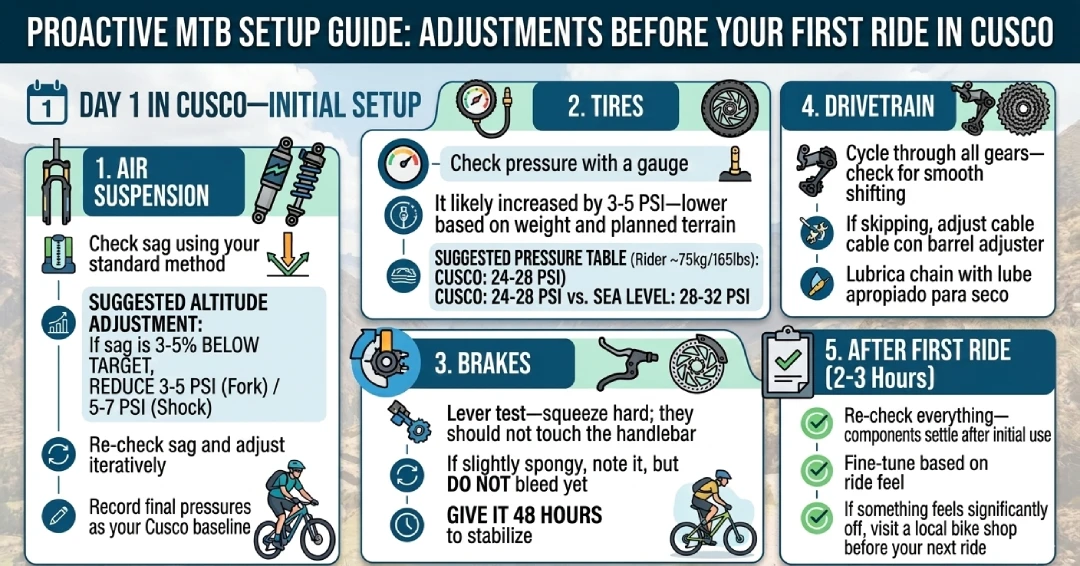
MTB setup infographic for Cusco with a checklist: air suspension sag, tire pressure adjustment, brake test, drivetrain check, and a recheck after the first ride.
Riding in Cusco is an incredible experience, but altitude changes how your bike behaves. Small adjustments to suspension, brakes, tires, and drivetrain can make a huge difference in safety and comfort. Before your first ride, take a few minutes to check your setup and adapt your bike to high altitude conditions.
This guide is based on experience riding MTB routes in Cusco and the Sacred Valley, where altitude regularly exceeds 3,400 meters (11,152 ft).
Thousands of travelers have trusted Peru Biking Tours to live unforgettable experiences in the Andes.
Your safety first
Routes adapted to your level, expert local guides and full support at all times.
Without worrying about anything
We take care of all the logistics so you can just focus on enjoying the scenery.
Authentic routes in Cusco
Experience the Sacred Valley in a real way, at your own pace, with access to the best trails.
Quality equipment
High-end enduro bikes, helmets and protective gear for all levels.
Plan your MTB experience in Cusco
MTB Day Tours in Cusco
If you want to explore MTB routes with the right logistics, local support, and suitable trail selection, check out our MTB Day Tours in Cusco.
Multi-Day MTB Tours
For more comprehensive experiences that connect several valleys and high mountain routes, discover our multi-day MTB Tours.


