


Quick Answer
Sacred Valley downhill MTB routes are natural descents on active rural roads, not bike park style trails. You will want an intermediate to advanced skill level, solid technique on loose terrain, and a plan for the altitude at about 11,500 to 13,100 feet (3,500 to 4,000 meters). Conditions change by season, there are no mechanical lifts, and the ride feels authentic but demanding. If it is your first time here, the smartest move is to go with a local guide.
If downhill calls your name, bbut you want to experience it in a real place and not inside a bike park, these Sacred Valley downhill MTB routes are for you. Here you ride active rural roads and historic trails, with natural elevation drops that run from the high Andes down to the valley floor.
Ready to take on one of the Sacred Valley’s most technical downhill routes? Our Cusco day tours are crafted for riders chasing the true enduro experience in the Andes.
In this guide you will learn what these routes are like, what the terrain feels like, what skill level you need, how altitude changes the way you ride, and the minimum setup that helps you stay in control and ride with confidence.
What are Sacred Valley downhill MTB routes
These Sacred Valley downhill MTB routes are mountain descents built around riding mostly downhill, using the big natural elevation difference between high Andean ridgelines and the valley floor.
-
Real routes, not purpose built bike tracks
They were not made for mountain biking. Many are rural roads, community connectors, and farm routes that people still use every day. -
Natural terrain that keeps changing
There are no built features and no daily maintenance. Conditions shift with season, weather, and local use. -
A more authentic travel experience
You ride through a living valley, sharing the trail with communities, grazing animals, and daily activity, so good judgment and respect matter.
Where is the Sacred Valley and how it connects to Cusco
The Sacred Valley of the Incas is in the Cusco region, just northeast of Cusco city, stretching along the Urubamba River. Cusco sits around 11,152 ft (3,399 m), and many downhill routes start even higher before dropping toward towns, farm areas, and the valley floor.
Geographically, the valley is surrounded by high mountains and Andean passes that create long natural elevation drops, ideal for downhill routes. Many descents begin in high zones you reach by vehicle, then follow historic rural roads down into the valley.
For downhill, this location works so well because it combines three key advantages:
- Quick access from Cusco, which makes logistics easier for travelers.
- Long continuous elevation loss, so you can do big descents without mechanical lifts.
- Active rural roads that deliver a truly local ride in a living, culturally rich landscape.
Why these routes feel different from a bike park
Unlike a traditional bike park, the Sacred Valley has no lifts, no standardized trail signage, and no daily trail shaping. These roads were built to connect communities, support grazing, and reach agricultural fields, not for recreation.
In a bike park, trails are designed for bikes. You get clear lines, marked difficulty, built jumps, shaped berms, and terrain prepared for repeating laps all day.
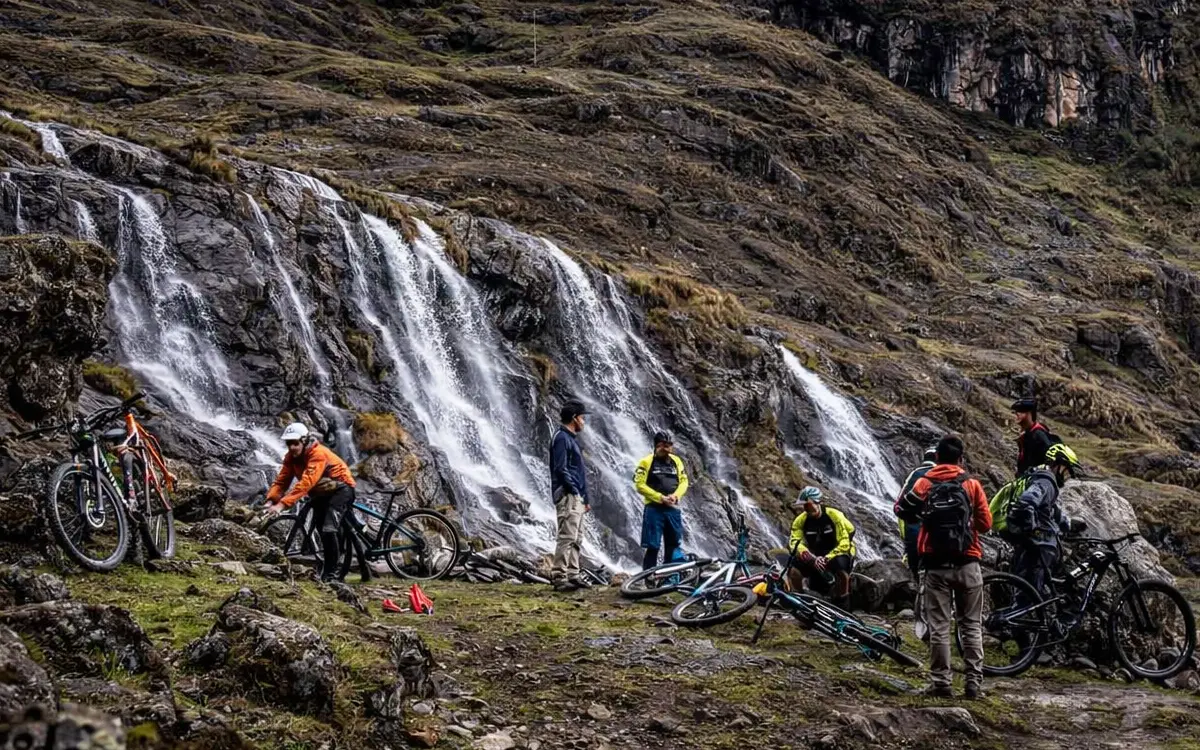
Rock and water lines, pure Andean riding.
What the terrain is like on Sacred Valley downhill MTB routes
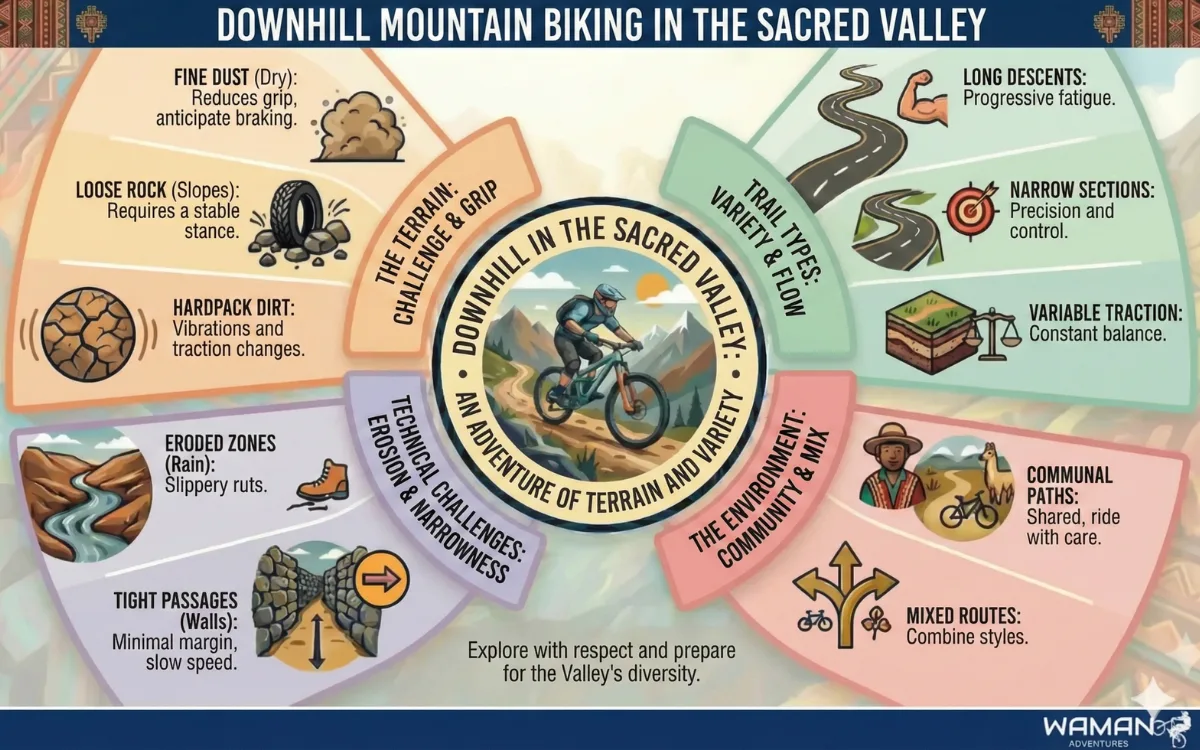
Fine dust in the dry season
During the dry months, fine dust is common, especially in corners and high traffic sections. It reduces side grip, so you need to brake earlier and enter turns with more control.
Loose rock and gravel on open slopes
On exposed, steep sections you will find loose rock mixed with gravel. These areas demand a stable stance and constant trail reading to avoid sudden slides.
Hard packed dirt on rural roads
Some community roads have more compact ground. They can feel easier, but they often bring constant vibration and sudden traction changes when hard pack meets loose sections.
Eroded sections from seasonal rain
In the rainy season, water creates ruts and natural steps. Even days after rain, some rocks can stay slick, so you need more control than you expect.
Narrow passages between stone walls and farm terraces
Many descents pass through tight sections bordered by walls or terraces. The margin for error is small, so it is smarter to slow down and keep a clean line.
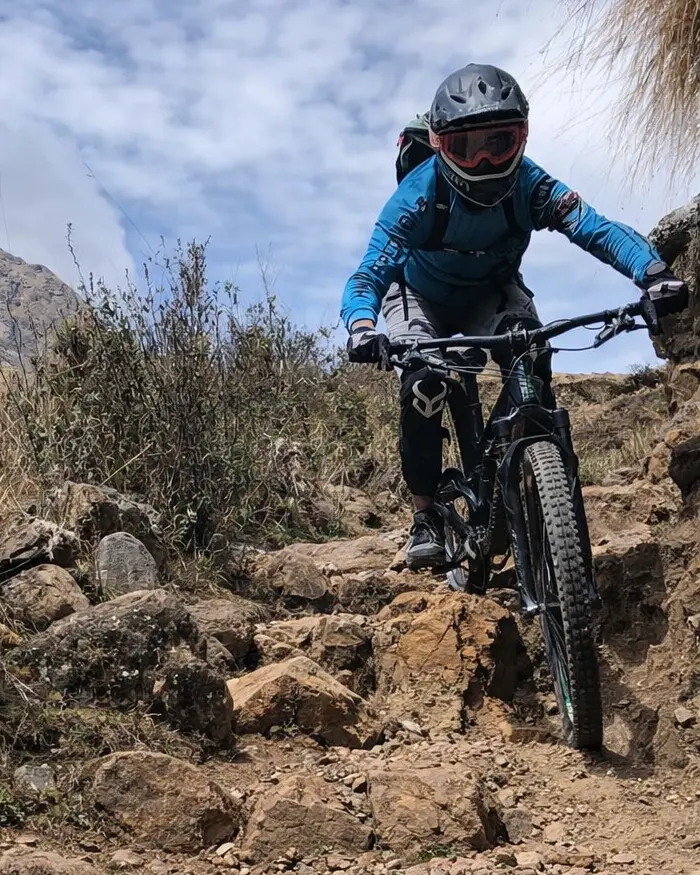
Real downhill, no bike park, just raw terrain.

Downhill riding blends into the Andean landscape, combining big elevation loss, technical terrain, and spectacular views.
What kinds of routes you will find
On Sacred Valley downhill MTB routes, you will ride a mix of styles like these:
Long, continuous descents
These routes stack a lot of vertical drop without major breaks. The main challenge is not one single feature, but fatigue building in your hands, forearms, and legs.
Tight trails with sharp turns
Many trails run through narrow corridors between stone walls, farm terraces, or steep slopes. You need anticipation, speed control, and precise line choice because there is not always room to correct mistakes.
Open slopes with changing traction
In open mountain sections, the surface can shift between fine dust, gravel, and loose rock on hard base. The bike can break traction quickly unless you stay centered and keep braking controlled.
Rough community roads
Many routes follow rural roads used daily. Expect potholes, ruts, natural steps, and sudden surface changes. These roads are shared with locals, grazing animals, and sometimes farm vehicles, so you must ride alert and respectful.
Mixed routes with constant changes
It is common for a single descent to blend several styles. You might start fast and open, drop into tight technical sections, then finish on a wider community road.
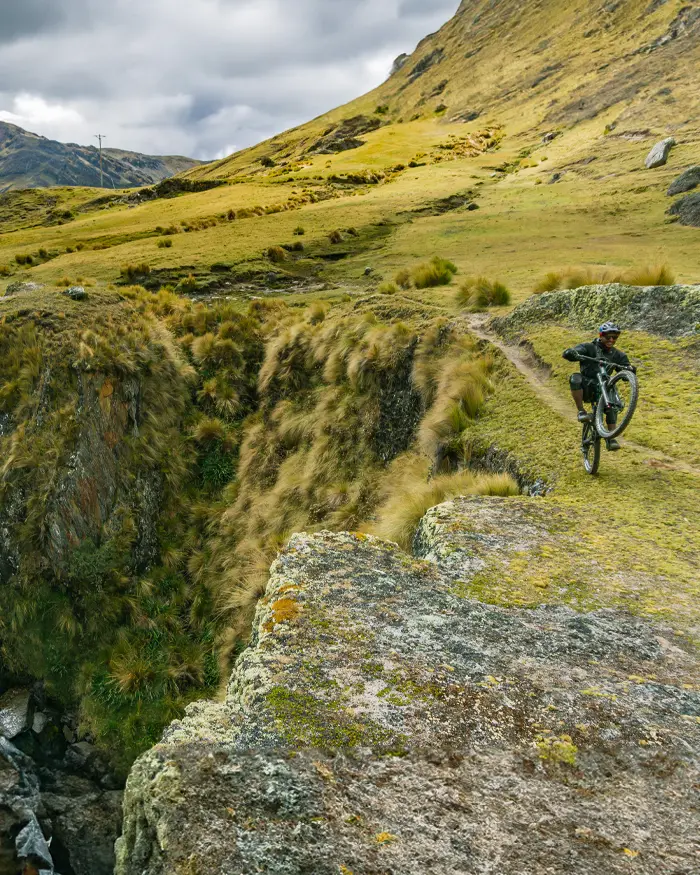
A thin ribbon of trail above the ravine.
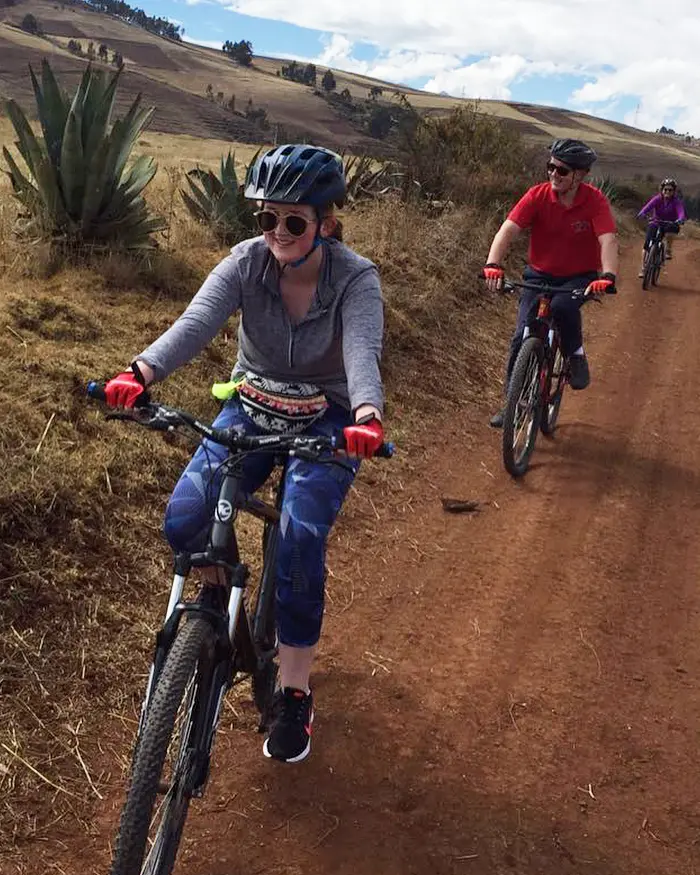
Group flow on a rural dirt road through open Andean landscapes.
Recommended skill level: how to know if you are ready
You do not need race level skills, but you do need a solid foundation riding natural, unbuilt terrain. Before you ride here, be realistic about your experience. It helps if you have:
- Experience riding mountain bike outside of bike parks.
- Good braking control and body position on long descents.
- The ability to adapt to constantly changing traction.
Keep in mind:
On narrow sections, your priority is a stable line and control, not speed.
Altitude, weather, and fatigue: what travelers often underestimate
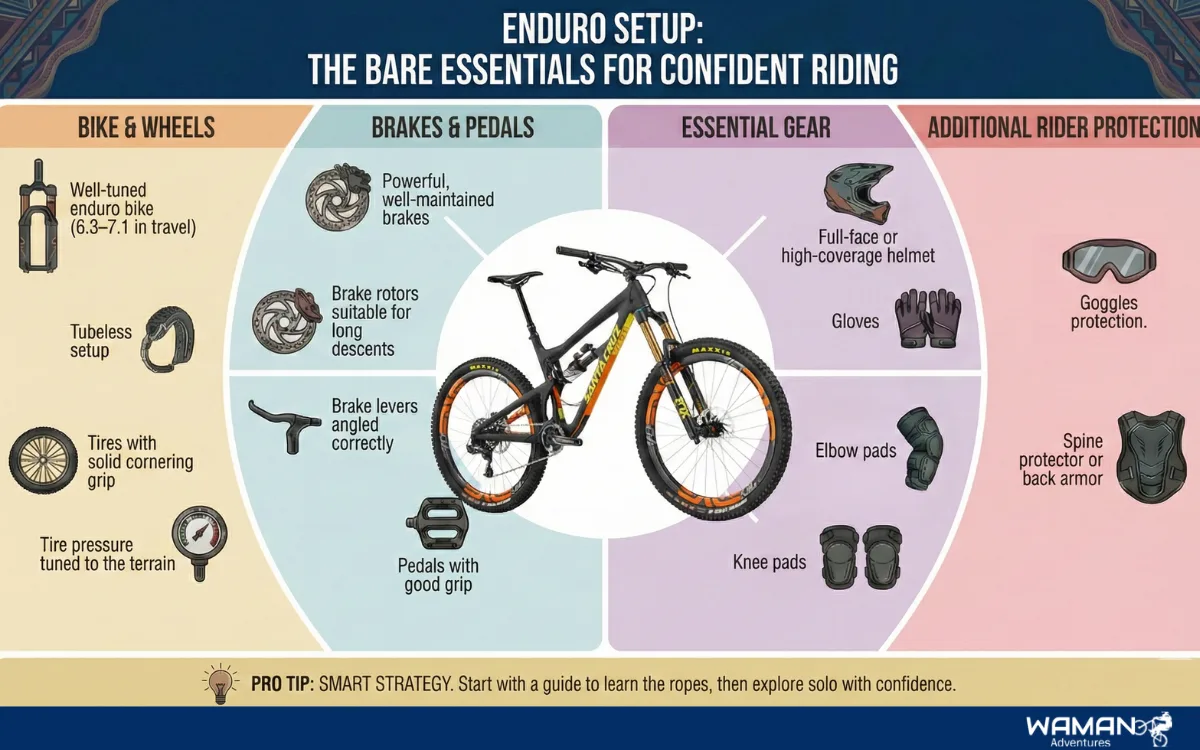
Bike, setup, and protection: the minimum to ride with confidence
Consider the following:
- A well tuned enduro bike with about 6.3 to 7.1 in of travel (160 to 180 mm)
- Powerful brakes in excellent condition
- Brake rotors appropriate for long descents
- Tires with solid cornering grip
- Tubeless setup
- Tire pressure adjusted to the day and terrain
- Brake levers set at a comfortable angle
- Pedals with reliable traction
- A full face helmet or a helmet with strong coverage
- Gloves
- Knee pads
- Eye protection
- Elbow pads
- Back protector or spine protection
Should you ride with a local guide or go on your own?
For many travelers, riding with a local guide makes a big difference:
How to combine downhill with sightseeing
A big advantage of the Sacred Valley is that you can:
- Ride in the morning, when weather is usually more stable.
- Do cultural sightseeing in the afternoon.
- Visit traditional markets, like Pisac, after your ride.
- Explore Sacred Valley towns between ride days.
- Visit archaeological sites without rushing.
- Alternate downhill days with cultural days for better recovery.
Sacred Valley downhill MTB routes are more than a simple descent. They are a way to ride the Andean landscape on rural roads that still connect daily life across the valley. If you are still deciding which route fits you, what setup to bring, or how to ride more safely, Peru Biking Tours can help you build the right experience with a local guide, practical recommendations, and solid logistics. Contact us at +51 946 459 491 and start riding the Sacred Valley with more control and confidence.
Thousands of travelers have trusted Peru Biking Tours to live unforgettable experiences in the Andes.
Your safety first
Routes adapted to your level, expert local guides and full support at all times.
Without worrying about anything
We take care of all the logistics so you can just focus on enjoying the scenery.
Authentic routes in Cusco
Experience the Sacred Valley in a real way, at your own pace, with access to the best trails.
Quality equipment
High-end enduro bikes, helmets and protective gear for all levels.
Plan your MTB experience in Cusco
MTB Day Tours in Cusco
If you want to explore routes like Lamay Sapacto with the right logistics, local support, and suitable trail selection, check out our MTB Day Tours in Cusco.
Multi-Day MTB Tours
For more comprehensive experiences that connect several valleys and high mountain routes, discover our multi-day MTB Tours.


