


Quick Answer
Cusco delivers truly authentic technical enduro on natural high mountain terrain about 9,843 to 13,123 ft, not in bike parks. Expect long descents with loose rock, erosion, and constantly changing traction. You will need real prior experience, a properly dialed enduro bike, and time to acclimatize. The dry season (May to September) is more predictable, while the rainy season demands stronger technique. A local guide is highly recommended for navigation, safety, and trail reading.
If you are chasing truly technical enduro, Cusco will surprise you. Here you ride through big mountains, deep valleys, and rural trails that have existed for centuries to connect communities, farming areas, and grazing land.
Want to tackle one of the most technical trails in the Sacred Valley? Discover our day tours in Cusco designed for riders seeking real enduro in the Andes.
In this post, I’ll show you why Technical Enduro Trails in Cusco feel so unique, what the terrain is really like, how high altitude affects your technique and focus, and what you need in terms of bike setup, gear, and preparation to ride safely and enjoy it.
Why Cusco feels different for technical enduro
Cusco combines high mountain terrain, deep valleys, and a network of historic rural roads made to link Andean communities, agriculture, and grazing routes. That is why enduro here feels raw, unpredictable, and demanding. You are riding living trails that shift with season, weather, and daily local use.
In these mountains, you cannot rely on perfect conditions: altitude, steep grades, and long descents force you to stay composed, keep strong body position, and read the trail constantly. In one run you may move through high grasslands, packed dirt, dry season dust, loose volcanic rock, and rain cut sections where the margin for error gets tight fast. Early trail reading and smart speed control are what let you ride with precision.
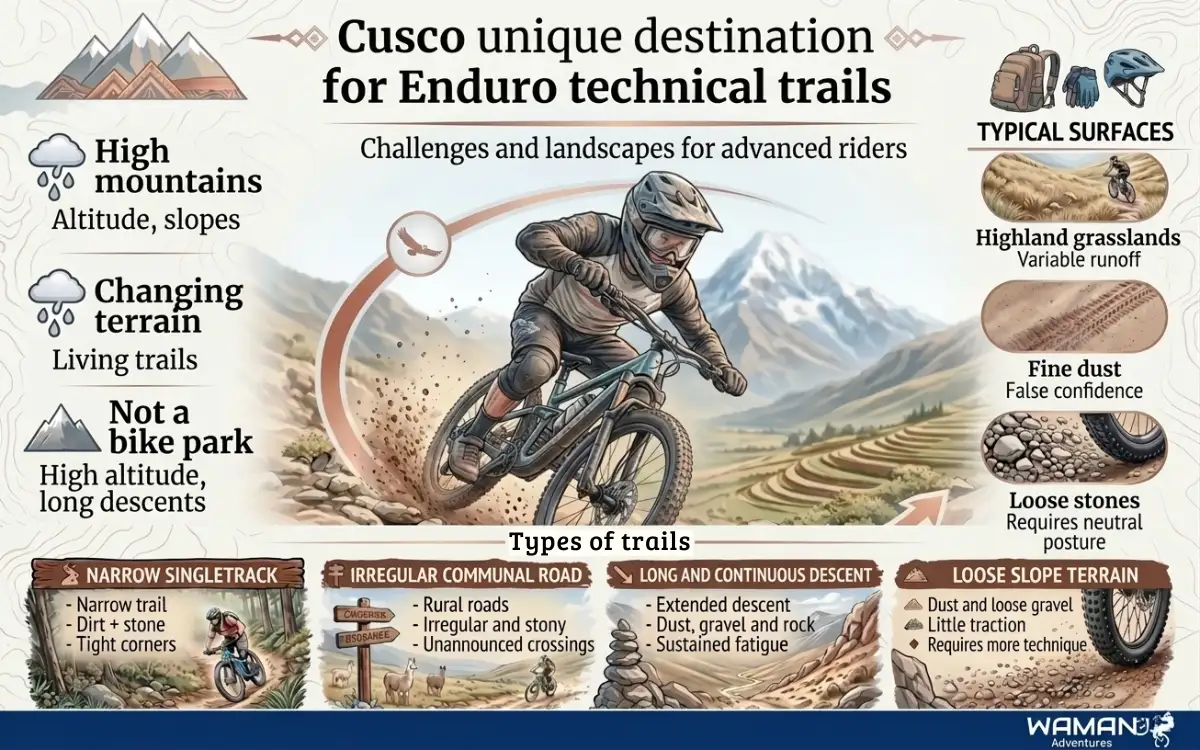
High altitude terrain and raw lines, why Cusco feels made for technical enduro.
What riding Technical Enduro Trails in Cusco actually means
It means taking on natural high mountain routes where the challenge is not designed for bikes, it comes straight from the Andes. These trails often combine:
- Tight switchbacks and narrow lines.
- Loose rock in different sections of the descent.
- Natural steps shaped by the terrain itself.
- Rain eroded segments from seasonal storms.
- Constant traction changes that force continuous trail reading.
Pro tip
In loose turns, look through the exit and ease off the brake slightly before the apex. Traction improves when the wheel is rolling, not when it is skidding.
Andean terrain, altitude, and real world riding conditions
Required skill level and experience
Technical Enduro Trails in Cusco are not built for beginners. You will have a better and safer experience if you have:
Real mountain riding experience
Natural trails outside bike parks, where the terrain is not shaped or maintained for bikes.
On one descent you can hit dust, gravel, rock, erosion, and hardpack back to back.
Control on long descents
A short drop is not the same as a long descent where fatigue shows up near the end.
Tight corners and loose surfaces
Brake control, a neutral stance, and the ability to correct small slides without panicking.
Confidence on loose ground
Fine dust, gravel, and loose dirt are common here, so you need composure and consistent control.
Physical and mental endurance
Most routes sit between 9,843 and 13,123 ft (3,000 to 4,000 m). Strength helps, but endurance keeps you sharp.
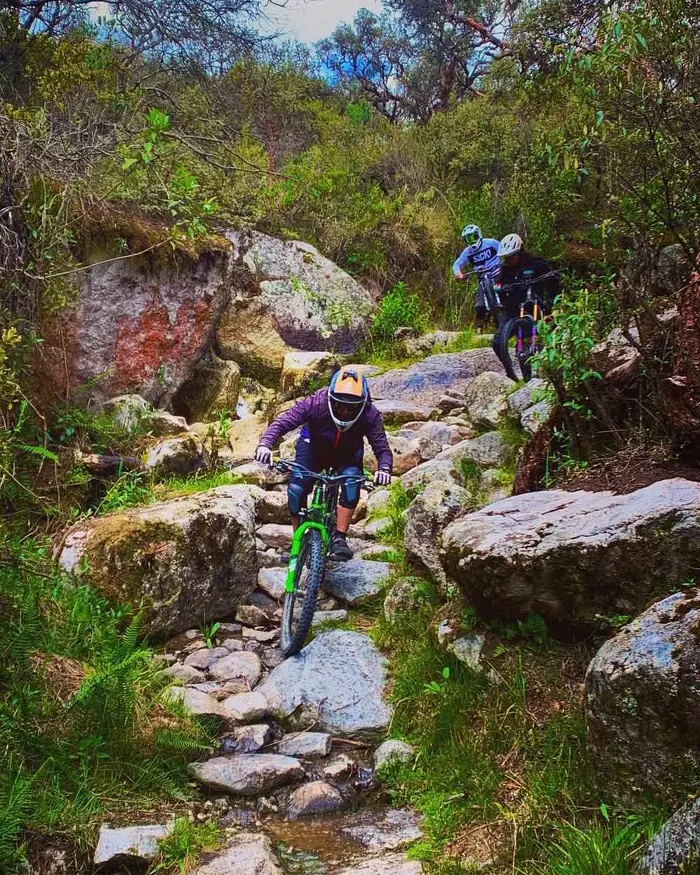
Rock steps demand precision, smooth braking, and full control.

Technical enduro in Cusco comes down to balance, posture, and clean control.
Types of technical enduro trails you will find around Cusco
Cusco and the surrounding valleys offer a mix of trail styles that local riders and visiting enduro travelers come for, including:
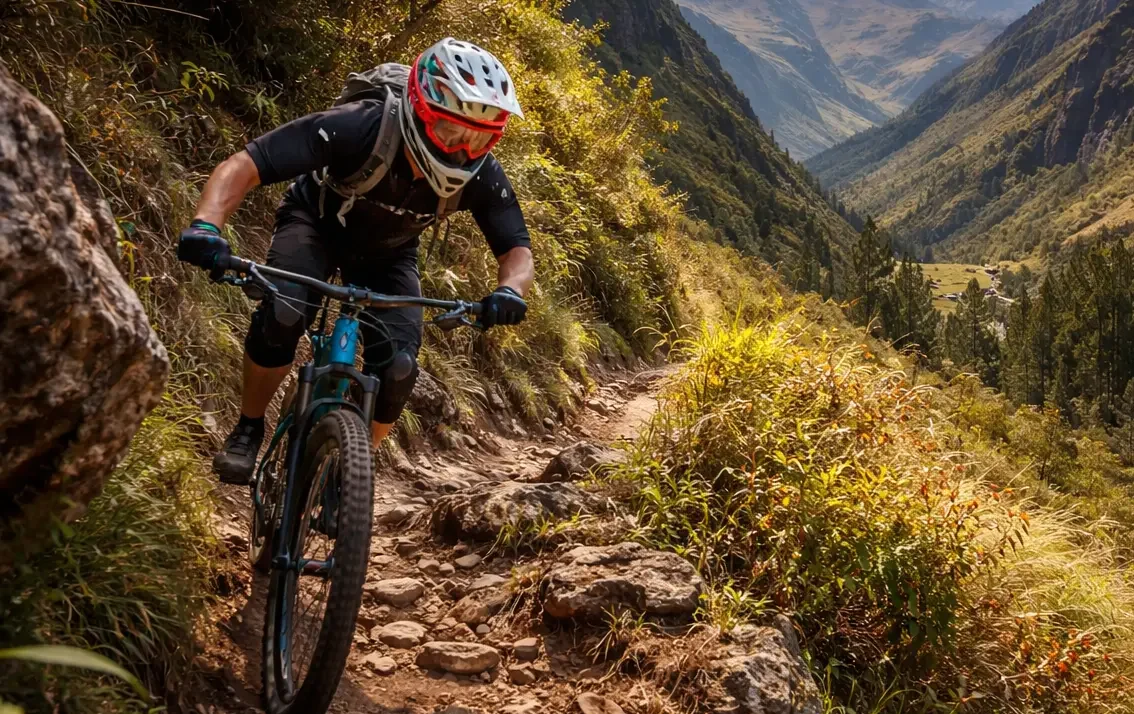
Rock steps demand precision, smooth braking, and full control.
✅
Key things before you ride
⏱️ Acclimatization:
Plan at least 1 to 2 days in Cusco before demanding rides (Cusco is 11,155 ft / 3,400 m).
🚴 Bike:
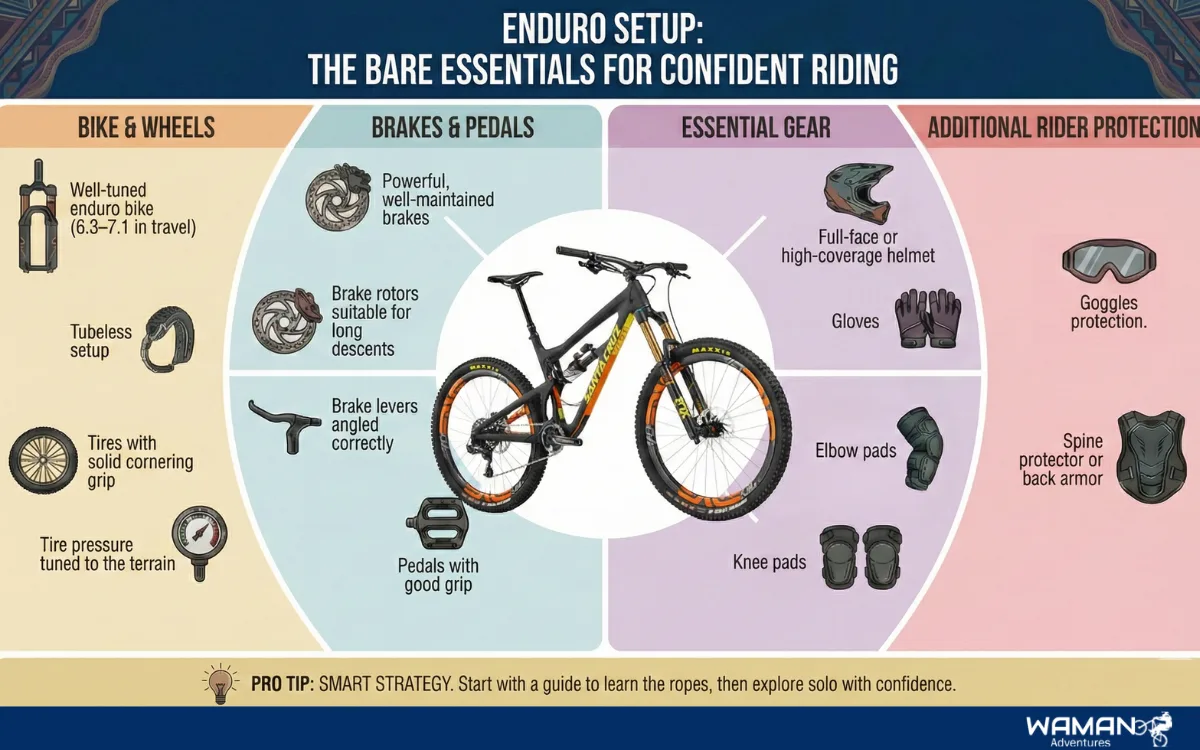
Enduro bike with 6.3 to 7.1 in (160 to 180 mm) travel, powerful brakes, and tubeless strongly recommended.
👤 Guide:
Highly recommended for a first visit (safety, navigation, and trail reading).
📅 Season:
May to September is drier and more predictable; November to March is wetter and more technical.
💪 Preparation:
Cardio base plus real experience on long natural descents.
🗺️ Navigation:
Offline GPS plus downloaded maps (signal is limited in many areas).
Recommended bike setup and gear
Your bike setup and personal gear are not minor details here, they are a core part of safety and performance. The mix of altitude, long descents, natural terrain, and fast changing conditions demands a careful approach. For Technical Enduro Trails in Cusco, here is what matters most:
The right bike
An enduro bike gives you stability and control on long descents, natural steps, and eroded lines. In Cusco, where trails are not built or maintained for bikes, you feel that difference immediately.
Powerful consistent brakes
You want strong brakes that are properly bled, with pads in good shape. Many problems happen when riders drag the brakes for too long, so beyond equipment, use pulse braking to keep grip and stay in control.
Tires and tubeless
Choose tires with reliable side grip and tougher casings. Tubeless is strongly recommended because it reduces flats, lets you run lower pressure, and improves traction.
Suspension tuned for the Andes
If your suspension is too stiff, you lose grip. Too soft, and you fatigue faster. A balanced tune helps you absorb impacts, keep the wheels tracking the ground, and save energy on long descents.
Best time of year for technical enduro in Cusco
Is a local guide worth it for technical enduro in Cusco
In most cases, yes. A local guide helps with:
Safety and respect on technical routes
The trails you ride here are rural and used daily by local communities. Safety is not only about skill, it is also about awareness and respect. Watch for:
- Locals walking or working along the road.
- Grazing animals (sheep, cows, llamas) that can cross without warning.
- Farm vehicles or rural transport on narrow sections.
Did you know
Dry season dust can hide loose rock and make the surface look more stable than it really is.
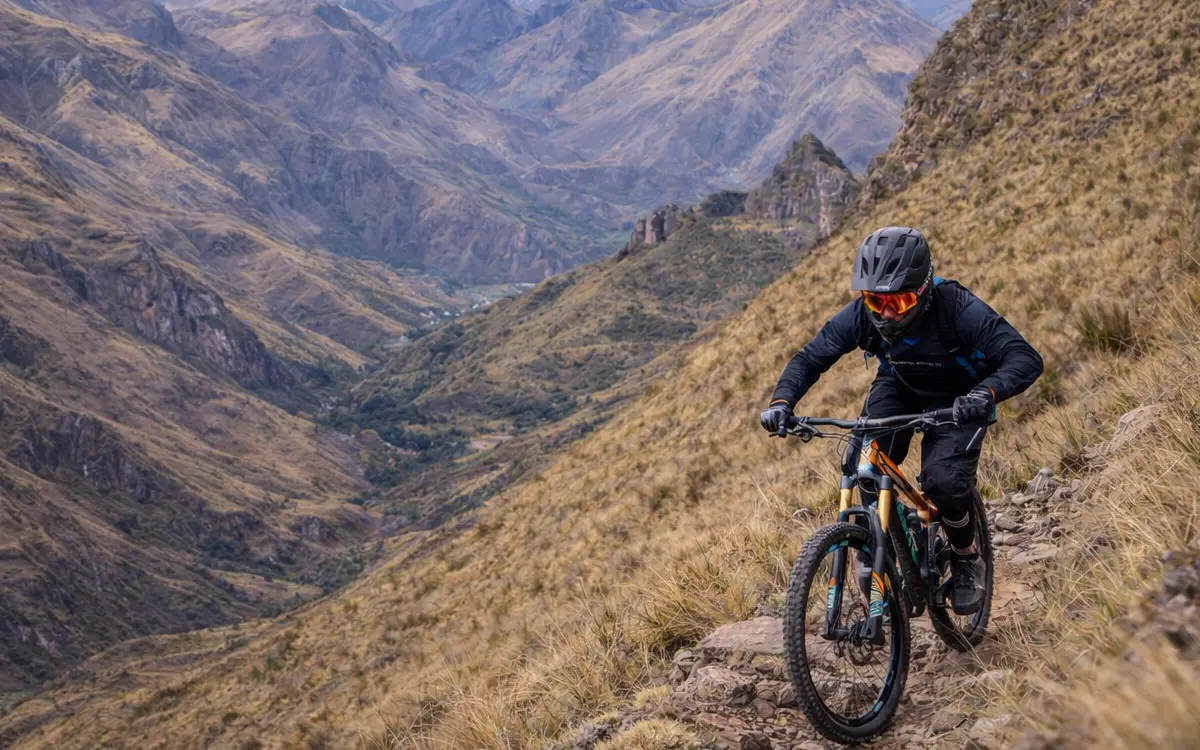
Focused riding on a raw, natural trail with big mountain views.
Cusco enduro is real riding on real roads
In Cusco, enduro happens on natural terrain and rural roads that are still actively used, not on trails built only for bikes. Do not expect lifts, technical signage, or daily maintenance. Here the mountain, the season, and everyday local use set the rules. That is exactly why it feels more authentic and more demanding, and why you need to read the trail and manage your pace the entire time.
Cusco is true enduro: high mountains, living trails, and terrain that can change in seconds. That is why Technical Enduro Trails in Cusco demand consistent trail reading, pace control, and solid technique. Want help choosing the right route for your level? At Peru Biking Tours, we’ll guide you toward the best option so you can ride with confidence. Message us at +51 946 459 491 and let’s plan your trip.
Thousands of travelers have trusted Peru Biking Tours to enjoy unforgettable experiences in the Andes.
Your safety comes first
Routes adapted to your level, expert local guides, and full support at every stage.
No need to worry about a thing
We take care of all the logistics so you can focus entirely on enjoying the scenery.
Authentic routes in Cusco
Experience the Sacred Valley in a real way, at your own pace, with access to the best trails.
High quality gear
High end enduro bikes, helmets, and protective gear for every level.
Plan your MTB experience in Cusco
MTB Day Tours in Cusco
If you want to ride routes like Lamay Sapacto with the right logistics, local support, and the right trail selection, check out our MTB Day Tours in Cusco.
Multi Day MTB Tours
For more complete experiences that connect multiple valleys and high mountain routes, discover our Multi Day MTB Tours.


