


Quick Answer
In Cusco, reading the trail is your best safety net. How do you read MTB terrain in Cusco? Do not stare at the ground, stay ahead. Look about 15 to 30 ft forward, read the color and texture (dust, loose gravel, rock, or mud), and choose your line before you arrive. These are real, shared local trails, not a manicured bike park, so control your speed early. Anticipate what is next and you will ride smoother, safer, and more confident.
Hitting the trails in Cusco can look simple on paper, but here you are not riding a “perfect” bike park. You are riding natural roads and real mountain paths where the surface can change in seconds and the altitude feels very real. That is exactly why How to Read MTB Terrain in Cusco is one of the most valuable skills you can bring to a new destination. In this guide, you will learn what to look for and how to prepare so your ride feels smoother, more controlled, and far less surprising.
Want to master the art of reading Cusco’s MTB terrain? Our day tours are designed for riders who aim to pick safer lines, ride smarter, and enjoy authentic enduro adventures across real Andean trails.
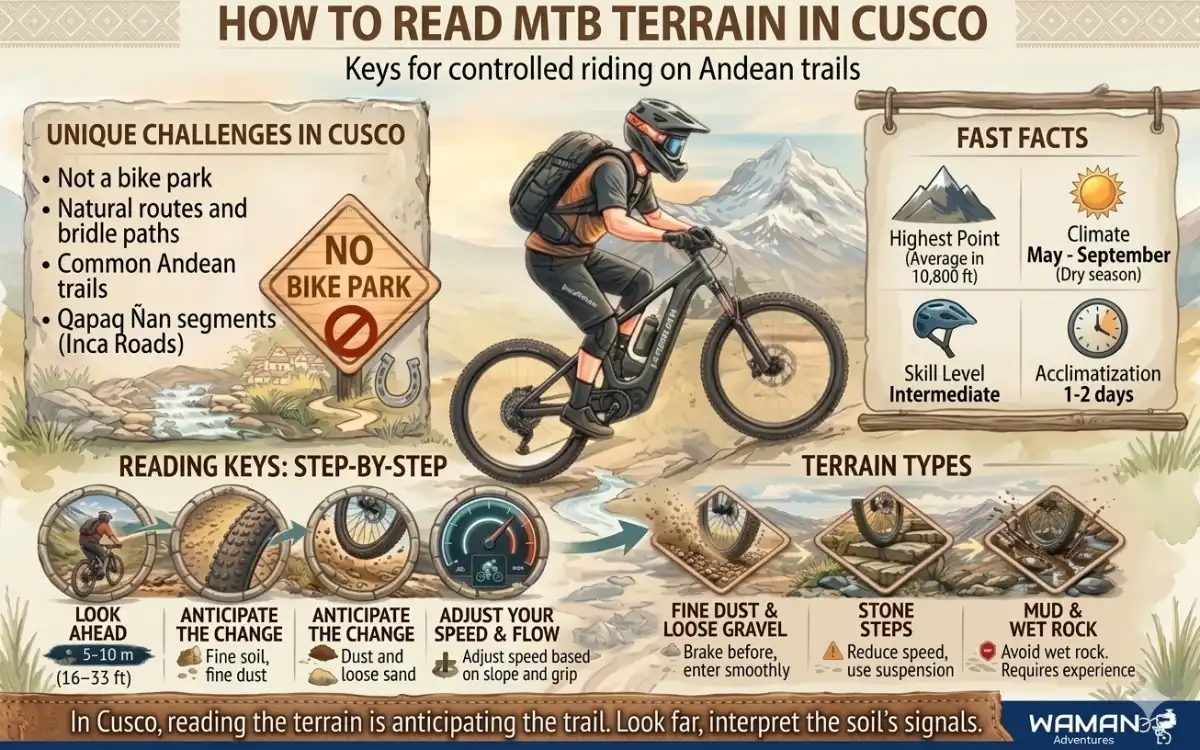
📋 Quick facts
What it really means to read terrain in mountain biking
In Cusco, reading terrain is not just watching the dirt. It is anticipating what is next and making the smart move before the trail forces your hand. Most routes here are not purpose built MTB trails. They are natural roads, community paths, and older trail segments. To ride them well, focus on three things:
- Read fast surface changes: in a short stretch you can go from firm dirt to loose gravel, fine dust, rock, or a steeper pitch.
- Read the trail shape: notice when a corner tightens, the grade increases, or a hidden stone step appears. The rule is simple: set your speed early, not once you are already in the problem.
- Account for outside factors: altitude can slow reaction time, fatigue shows up sooner, and weather can switch quickly. Build that into your plan from the start and you will ride with more control.
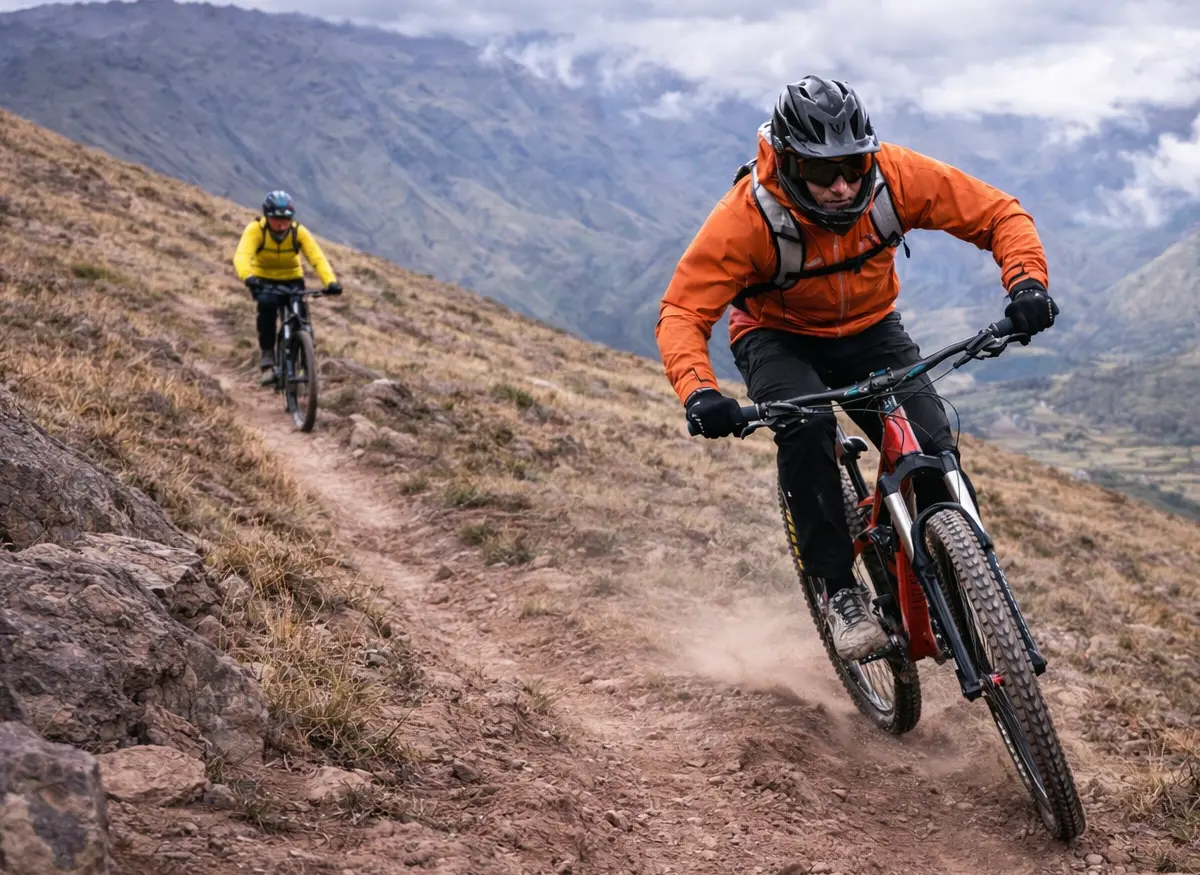
Loose dirt or hard pack, read it before the drop.
Why MTB terrain in Cusco feels different from other destinations
Cusco feels different from many popular MTB destinations in the United States because the trails were not built for mountain bikes. Many routes are living community paths or older roads that locals, hikers, and animals still use. That means the surface is more natural, less predictable, and sometimes shared, so awareness matters as much as skill.
Altitude is the other big difference. Cusco sits above 10,800 ft (3,300 m), and many rides climb higher. At that elevation, you fatigue faster and focus can dip, especially right after you arrive.
Andean weather adds another layer. You can get strong sun early, cold wind up high, then sudden rain or hail. When you ride expecting that variability, you make safer decisions.
Did you know?
Many stone steps in Cusco were designed for drainage and foot travel, not bikes, so they can push your front wheel sideways if you enter slightly off line.
Types of MTB terrain you will find in Cusco
Cusco mountain biking terrain is varied, natural, and constantly changing, even within a single descent.
Fine dust and loose gravel
Common in dry season. Dust sits on top of hardpack and can create a false sense of grip, especially in corners and under braking.
• Brake early and stay smooth into turns.
Stone steps
Frequent on older routes and community trails. Step heights vary and can appear with little warning.
• Set your speed before and keep a stable stance.
Mud and wet rock
Typical in rainy season. The ground softens and rock gets slick. Some sections turn more technical and others can feel overwhelming for newer riders.
• Slow down and avoid wet rock if you are new.

El rider lleva casco y Red dirt, loose rock, and a confident drop into the next switchback., concentrado en elegir la mejor trayectoria en cada metro.
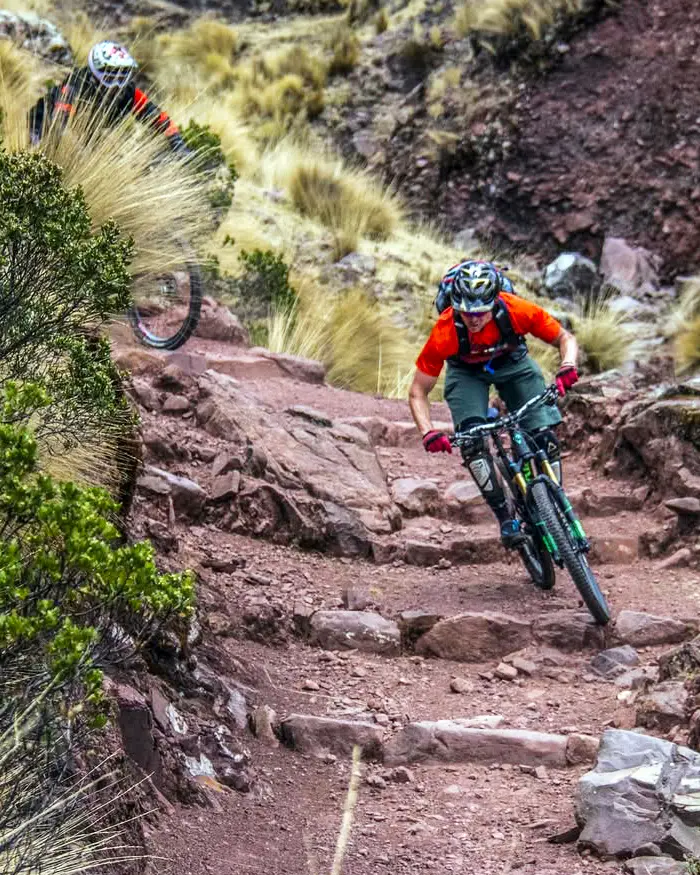
Precision over speed, rock step ups and loose stones that test your line choice on an Andean trail.
How to read terrain while riding: simple visual cues
Reading terrain while you ride is a visual and mental skill you can train. It is not about guessing. It is about looking early, noticing simple signals (color, texture, and trail shape), and adjusting before you need to panic brake. In Cusco, where the ground changes quickly, this is how you stay smooth, pick safer lines, and ride with confidence.
🔭 Step 1: Look ahead
Look 16 to 33 ft (5 to 10 m) ahead, depending on speed.
Do not lock onto your front wheel. If you do, you react late and ride abruptly.
🎨 Step 2: Read color and texture
Color and texture give you fast clues about compact dirt, loose dust, or wet surfaces.
A good rule: darker often means more stable, lighter often means less traction.
⚡ Soil color code (read it in 2 seconds)
🟦 Dark or gray: more compact and stable. Better grip.
🟨 Light or beige: dust or loose sand. Lower traction, especially in corners.
🟥 Reddish and wet: clay dirt. Very slick when it rains.
⚫ Dark gray with shine: wet rock. Brake before it, not on it.
Dry season vs rainy season: how terrain reading changes
Warning:
Even light rain can make rock extremely slippery within minutes.
Best areas near Cusco to practice reading MTB terrain
If your goal is to learn to read terrain without diving straight into long, high consequence descents, these areas are popular because they offer varied surfaces, repeatable sections, and a straightforward progression by level.
🏛️ Archaeological Park (Sacsayhuamán and nearby sites)
A classic ride close to town (Sacsayhuamán, Q’enqo, Pucapucara, and Tambomachay). Ideal for practicing terrain reading with smoother transitions and more manageable lines.
✅ You practice: looking ahead, spotting surface changes, and braking before the section.
🌿 Yuncaypata (north of Cusco)
A go to zone near Cusco with a wide road option that works for newer riders, plus optional technical sections if you want to level up. Altitude is about 10,643 to 12,467 ft (3,244 to 3,800 m).
✅ You practice: line choice, control on dust and gravel, and steady progression.
🏞️ Huayllarcocha (local singletracks)
A local singletrack zone (Huayllarcocha 1 and 2). Many rides start high around 12,467 ft (3,800 m) and flow back toward the city on natural trail.
✅ You practice: singletrack reading and control when traction drops.
🏞️ South Valley (Tipón)
A strong option for steady XC and trail style terrain reading. Some rides in this area mention about 15.5 miles (25 km) at an intermediate difficulty.
✅ You practice: pacing, mixed terrain reading, and anticipation without riding at your limit.
Pro tip:
If you are building confidence, pick the easiest version of a route and repeat the same section 2 to 3 times. Repetition teaches faster than chasing new trails every day.
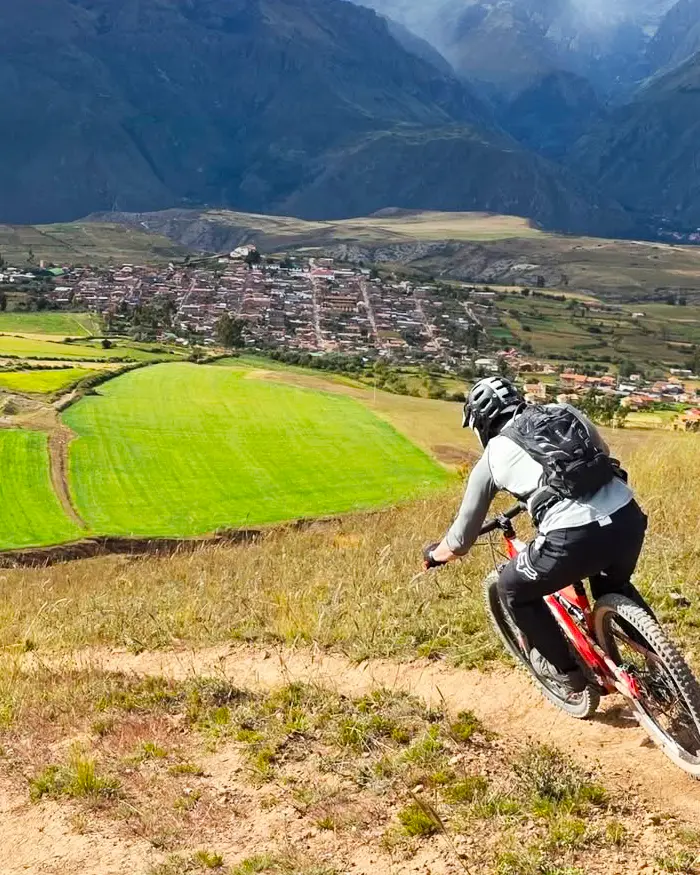
Dusty speed, smooth corners, and pure flow when the trail opens up.

Centered stance and light hands when traction disappears.
Common mistakes tourists make when reading terrain in Cusco
Cusco is an incredible place to ride, and the variety is exactly what catches visitors off guard. You can go from firm dirt to dust, gravel, or rock in just a few yards, and altitude can dull reaction time sooner than people expect. Most mistakes come from reacting late instead of setting up early. Here are the common ones, plus the simple fixes.
⚠️Common mistakes (and how to fix them)
- Staring at your front wheel: lift your eyes and read the exit of the section, not just the entry.
- Braking hard on loose ground: brake earlier on a straight, then enter the turn lighter.
- Riding the same pace as at home: Cusco changes fast, take a few minutes to recalibrate traction and speed.
- Underestimating altitude: keep the first rides conservative, reaction time and focus can drop.
What to bring to handle MTB terrain in Cusco
- Safety: certified helmet, gloves, and eye protection; knee pads (and elbow pads if you want them).
- Traction: tires that work on dust, gravel, and rock, plus tire pressure adjusted to the day.
- Weather: layers, a buff, and a light wind shell.
- Hydration and sun: water plus sunscreen and sun protection.
- Unexpected issues: basic tools, essential spares, and a personal first aid kit.
- Comfort: a light pack or MTB waist pack.
Is it better to ride with a guide to learn terrain reading in Cusco?
If this is your first time in Cusco, riding with a local guide is often the safest and quickest way to learn. A good guide reads the day, how traction changes by season, where the hidden hazards tend to show up, and how to pace the ride at altitude. That kind of local detail is rarely on maps, and it changes over time.
Read the trail, choose a smarter line, and enjoy Cusco safely
When you learn to read terrain, you ride with more confidence, anticipate surface changes earlier, and lower your crash risk. In Cusco it matters even more because conditions change quickly, and many routes pass near communities and shared paths, so it is also about riding with respect.
Mastering How to Read MTB Terrain in Cusco is worth it because it turns a tense ride into a controlled one. If you are not sure where to start or which routes fit your level, at Peru Biking Tours we can help you choose the right ride. Contact us at +51 946 459 491 and make your Cusco MTB day feel smooth, safe, and memorable.
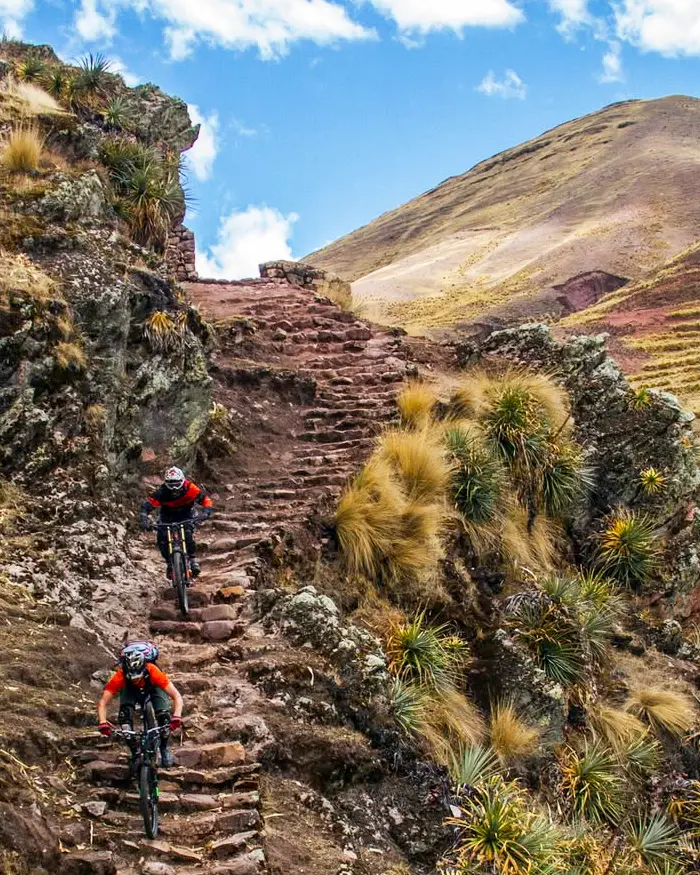
Stone steps, tight control, and trust in your braking all the way down.
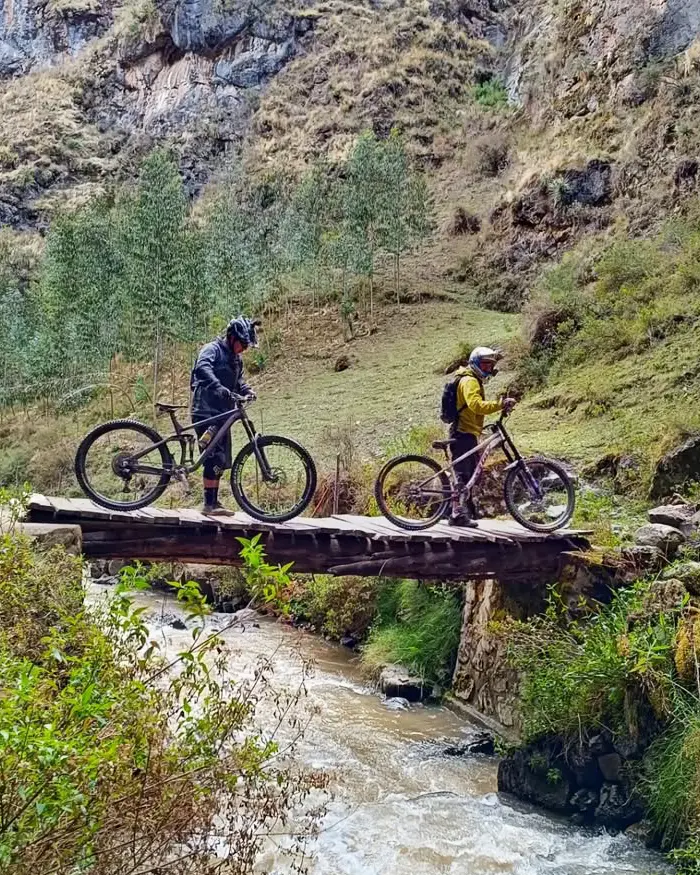
usty speed, smooth corners, and pure flow when the trail opens up.
Thousands of travelers have trusted Peru Biking Tours to live unforgettable experiences in the Andes.
Your safety first
Routes adapted to your level, expert local guides and full support at all times.
Without worrying about anything
We take care of all the logistics so you can just focus on enjoying the scenery.
Authentic routes in Cusco
Experience the Sacred Valley in a real way, at your own pace, with access to the best trails.
Quality equipment
High-end enduro bikes, helmets and protective gear for all levels.
Plan your MTB experience in Cusco
MTB Day Tours in Cusco
If you want to explore MTB routes with the right logistics, local support, and suitable trail selection, check out our MTB Day Tours in Cusco.
Multi-Day MTB Tours
For more comprehensive experiences that connect several valleys and high mountain routes, discover our multi-day MTB Tours.


