


Quick Answer
Yes, you can MTB in Cusco without a guide, but it depends on more than just knowing how to ride. The real deciding factors are clear route information, your true fitness and technical level, and access to reliable maps or GPS tracks. In a destination like Cusco, where many routes are rural, shared, and less predictable, the safest approach is often to ride with a guide first, then go solo once you understand the terrain, access points, and exit options.
Mountain biking can look simple, but riding solo in Cusco takes more than basic bike skills. Navigation, weather, cell signal, and trail conditions can change the day quickly. That is why many travelers ask, Can You MTB in Cusco Without a Guide? This guide explains what to evaluate, what to pack, and how to ride more safely on your own
Thinking of riding Cusco’s trails on your own? Our day tours are designed for riders who want the safety, flow, and authentic enduro experience of the Andes without the guesswork.
Can you mountain bike on your own as a tourist
Yes, it is absolutely possible. In many destinations it is common, especially where there are bike parks, clear signage, and well documented routes.
The difference shows up when the destination is more real than touristic. If trails are not marked, conditions change often, or you share the route with local communities, livestock, or vehicles, riding solo requires stronger judgment, better planning, and more decision making while you are on the move.
If you only have a few days, one wrong turn or time lost searching for the true access point can cost you the best part of the ride. That is why viability depends on three things: the terrain, your technical level, and your ability to navigate. When those are solid, the experience can be fantastic. When they are not, it gets complicated quickly.
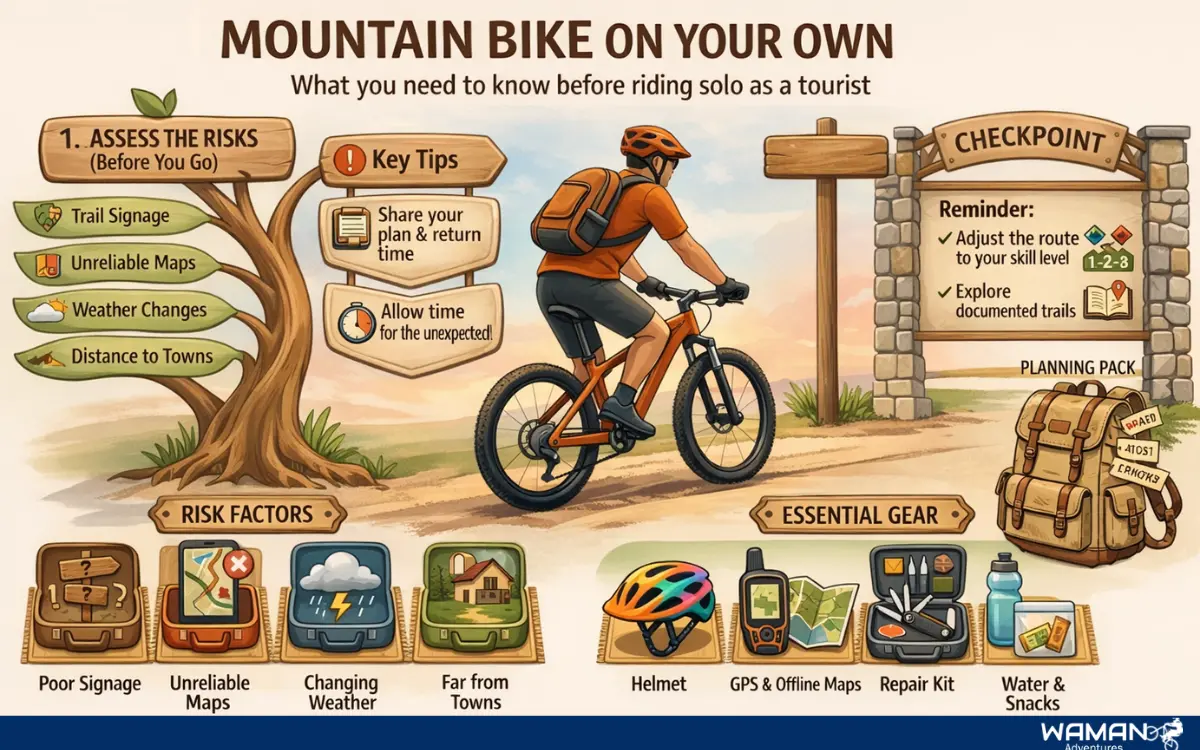
Why travelers want to ride on their own?
Riding without a guide appeals to a lot of travelers because it feels free, more flexible, and easier to plan. Most of the time, the decision comes down to three simple reasons.
- Freedom and control: choose your start time, set your pace, change the route, and stop whenever you want.
- Budget: save money on a guide and use it for lodging, transportation, or more riding days.
- Trust in digital info: GPS tracks, apps, reviews, and videos can make it feel like the route is clearly documented and navigating will be easy.
Keep in mind:
Your phone is your map, but it is also your emergency plan. If the battery dies, you lose both.
What riding without a guide really means in a new destination?
Riding solo in a new place is about much more than following a track. The real difference is understanding how the destination works on the ground and anticipating what a GPS will not tell you.
What you are really taking on
- The real terrain, not just the map: a trail can be rougher, looser, or more overgrown than it looks in an app.
- Exits and connections: many descents do not finish where you expect, and the return can be long, with no transport nearby and far from populated areas.
- Weather and microclimates: in the mountains, conditions can change by zone, and generic apps do not always reflect that.
- An emergency plan: if you crash, have a mechanical, or miss a turn, you need to know how to get help and where to exit, because there may be no signal and no one close.
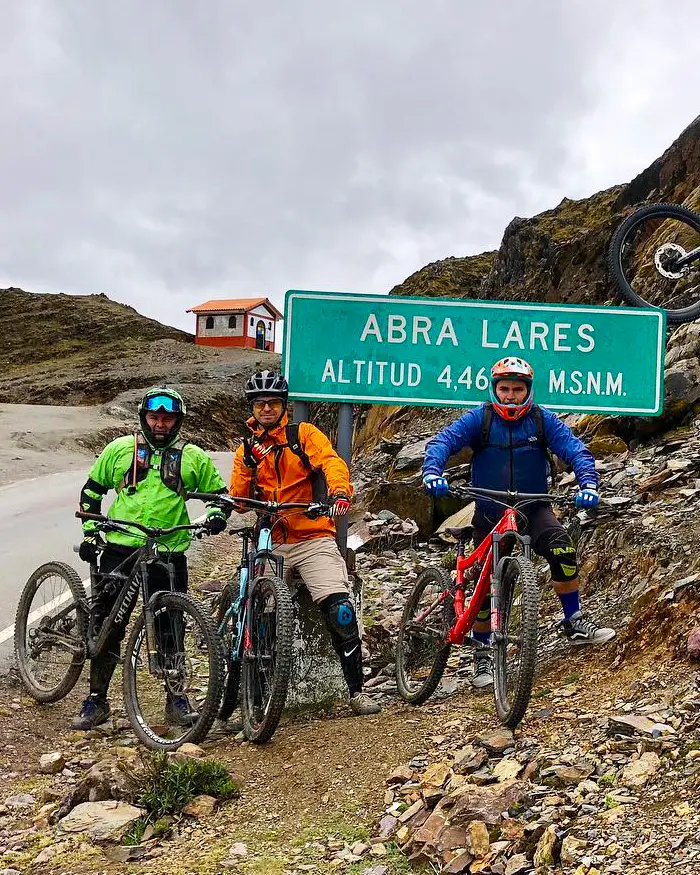
From Abra Lares, riders begin a mountain biking experience that links the high Andean puna with the lower valleys.

Steep high mountain descent with snow peaks in sight.
Key factors to decide if riding on your own makes sense
How clearly the routes are marked
The clearer and more consistent the signage, the easier it is to navigate without outside support. In many rural areas, routes are not marked and rely on local references, which can be confusing if you are new to the region.
Reliable maps and verified tracks
Updated maps and trustworthy tracks reduce navigation mistakes. Still, trails can change over time due to erosion, agricultural use, or temporary detours that do not always show up in apps.
How close you are to towns and people
Riding near communities makes it easier to ask for help, find water, or handle surprises. On isolated routes, even small issues can mean long waits or a long walk before you find support.
Terrain difficulty and how remote it is
If you are dealing with technical trails, erosion, or very remote zones, you need more experience and better preparation. The more isolated the environment, the higher the risk if something goes wrong.
Weather and sudden changes
Weather can completely reshape a ride, rain that makes trails slick, strong wind, or sharp temperature swings. Knowing local patterns helps you plan smarter and make better calls on the day.
Language and communication
Being able to communicate with locals makes it easier to confirm directions and ask for help. If there is a language barrier, simple situations can become harder than they need to be.
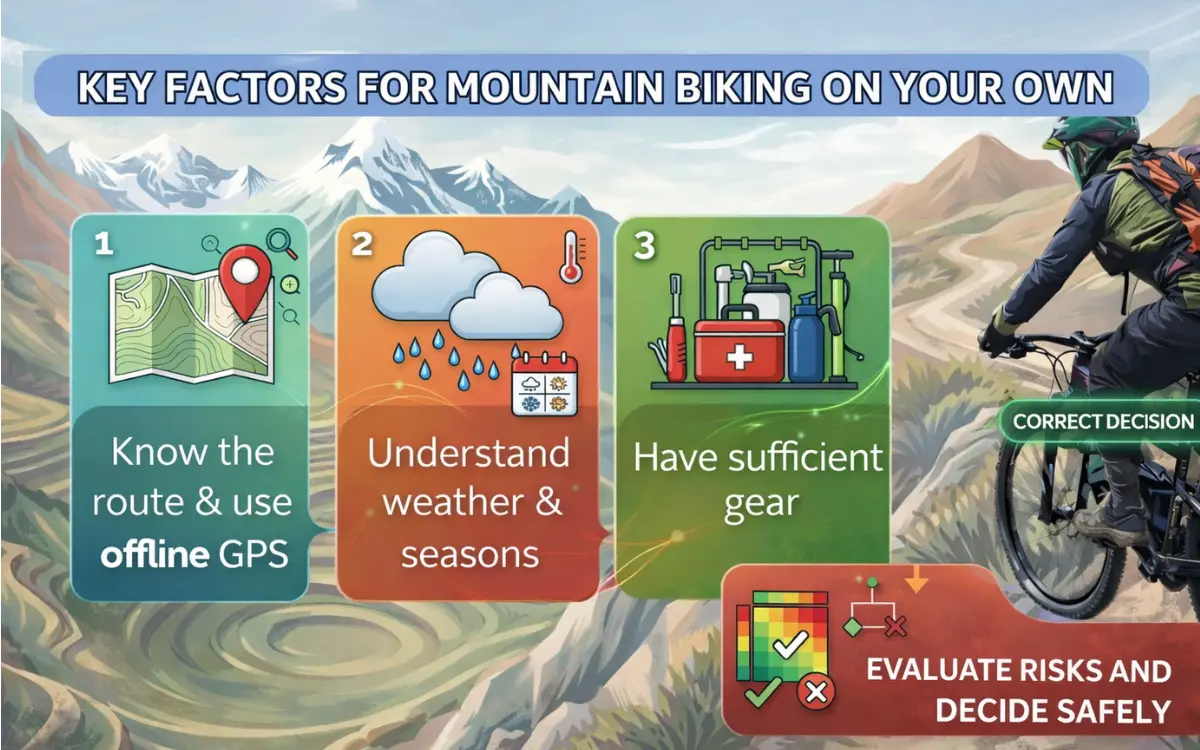
Offline maps, a reliable GPS, and updated tracks are essential. Many routes change due to rain, local work, or agricultural use. Relying only on apps, without local context, is one of the most common reasons riders lose the route. Navigation is often the biggest challenge when you ride alone.
Pro tip:
Mark three key points on your map: the true start, the true finish, and one safe mid exit point.
Fitness and skill level you need to ride on your own
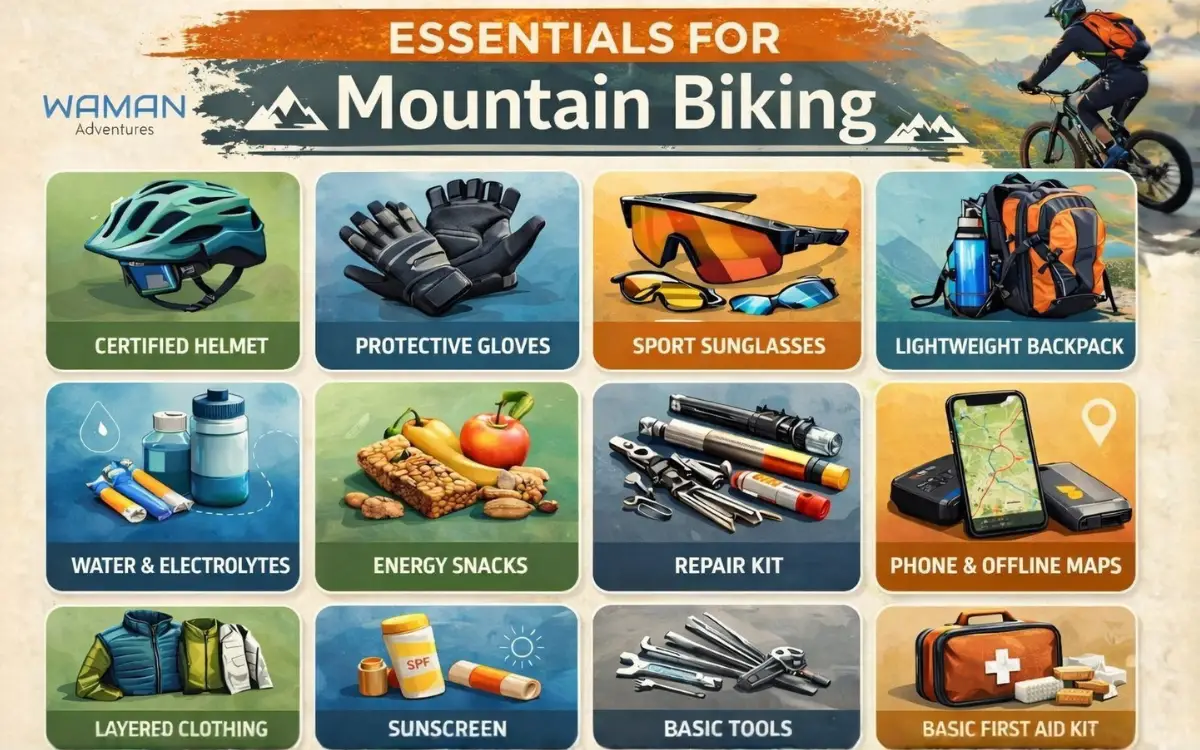
What to pack if you decide to ride on your own
- Certified helmet
- Mountain bike gloves
- Protective eyewear
- Enough water and electrolytes
- Energy snacks and extra food
- Basic repair kit and multitool
- Mini pump or CO₂ cartridge
- Phone with offline maps
- External battery pack
- Layered clothing, light and warm
- Windbreaker or light rain jacket
- Sunscreen
- Lip balm with SPF
When riding on your own makes sense and when it does not
Riding on your own vs riding with a guide what makes sense when you travel
Riding with a guide reduces uncertainty because someone else handles logistics, route choice, and trail reading. That means you use your time better, which matters a lot when you only have a few days or you are riding somewhere new.
Can you MTB in Cusco without a guide? Yes, especially if you pick clear routes and you are strong with navigation. But if the area is rural, changeable, or poorly marked, the smarter move is often to start with a guide first so you learn access points, exits, and how the routes really work. If you are not sure which option fits you or which trails to choose, Peru Biking Tours can help you plan so you ride safer and get more out of your trip.
Plan your MTB experience in Cusco
MTB Day Tours in Cusco
If you want to explore MTB routes with the right logistics, local support, and suitable trail selection, check out our MTB Day Tours in Cusco.
Multi-Day MTB Tours
For more comprehensive experiences that connect several valleys and high mountain routes, discover our multi-day MTB Tours.


