


Quick answer
Mountain biking in the Sacred Valley gives you a genuine way to explore rural roads and natural trails, with traditional farmland, scenic viewpoints, and real contact with Andean communities. The area offers scenic, approachable routes for active beginners, intermediate rides with bigger elevation changes and more varied terrain, and more technical sections for riders who want a tougher challenge. Areas like Pisac, Maras and Moray and Urubamba stand out for easy access, a lower altitude than Cusco, and the chance to pedal between villages, crop fields, and wide open Sacred Valley landscapes.
Mountain biking in the Sacred Valley is a refreshing, authentic way to explore its rural backroads. You ride natural trails, pass through working farmland, and experience Andean culture up close. In this guide, you will find everything you need to plan your ride, from the most recommended routes and zones to the fitness level you need and the best time of year to pedal.
Want to tackle one of the most technical trails in the Sacred Valley? Discover our day tours in Cusco designed for riders seeking real enduro in the Andes.
Mountain biking as an active cultural experience
Mountain biking in the Sacred Valley goes far beyond the athletic side of it: you ride through traditional agricultural landscapes, pass small Andean communities, and reach natural lookouts with wide views of the valley and the mountains around it.
As you follow rural trails used by local residents, you see more clearly how geography and daily life still shape the rhythm of this place. That mix of effort, nature, and human connection makes every route feel authentic and meaningful.
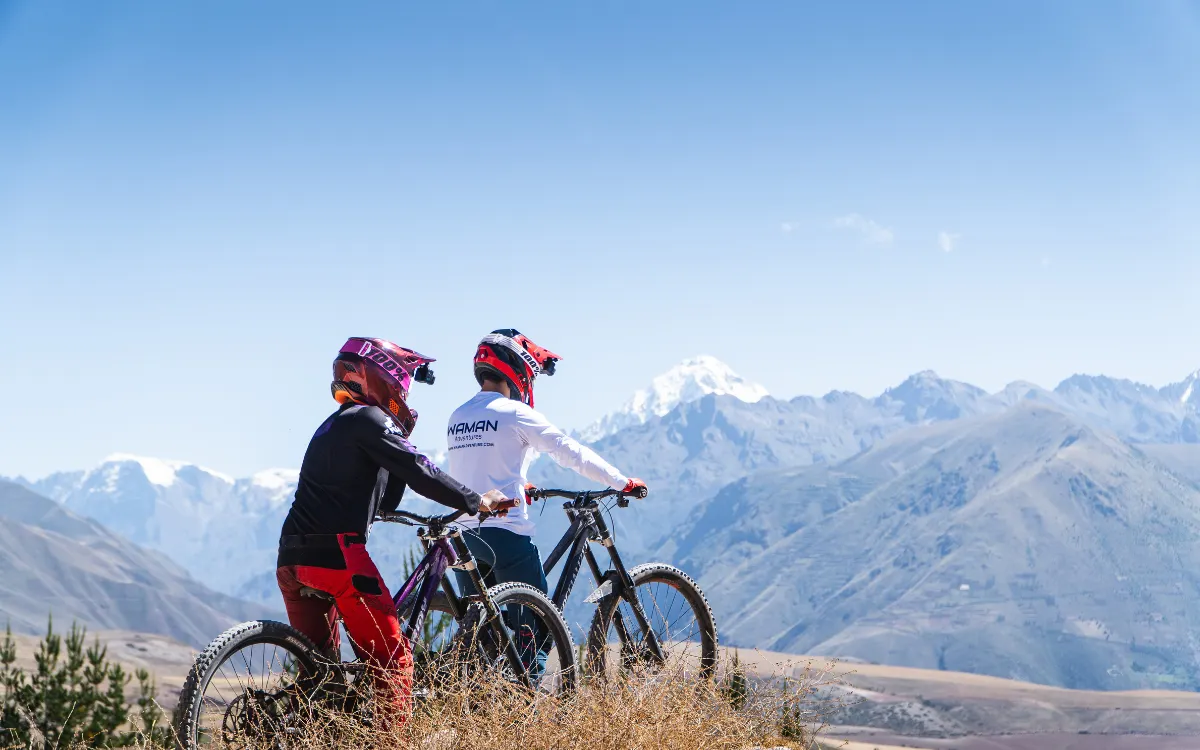
Take a breath at a Sacred Valley viewpoint, then get ready for the real natural trails.
Why the Sacred Valley is ideal for mountain biking
The Sacred Valley of the Incas is one of Peru’s best places for mountain biking, thanks to its mix of rideable terrain, a more comfortable elevation, solid connectivity, and a one of a kind cultural landscape.
Compared with Cusco city, you’ll be riding at a lower altitude, which makes it easier to acclimatize and pedal comfortably. The valley also combines wide open plains, gentle hills, side valleys, and farm roads that create smooth, varied routes, linked by rural trails used by local communities, with less traffic and a much calmer feel.

Expert tip:
Read the terrain ahead, since some agricultural roads can shift surfaces suddenly.
Geography and altitude of the Sacred Valley
The Sacred Valley’s geography is defined by a balanced mix of open valleys, gentle hills, side mountains, and rivers, especially the Urubamba River, which runs through the entire region.
This natural layout lets you ride continuous, flowing routes that work perfectly for mountain biking, since you can link rural trails, agricultural roads, and natural sections without abrupt terrain changes.
As for altitude, you are, on average, below the city of Cusco, which reduces the physical impact of lower oxygen levels. This more moderate elevation helps you acclimatize and makes the experience more accessible and comfortable, especially if you have just arrived in the region.

Clear skies and strong visibility create ideal conditions to enjoy the ride.
Types of mountain biking routes in the Sacred Valley
In the Sacred Valley you will find a wide range of mountain biking routes, built for different experience levels and different travel goals. Thanks to its diverse geography and its network of rural roads and natural trails, you can choose calmer rides or routes with a bigger technical challenge.
Routes vary not only by difficulty, but also by terrain type, elevation change, and overall pace, so you can pick the experience that best matches your fitness, the time you have, and the kind of adventure you want.
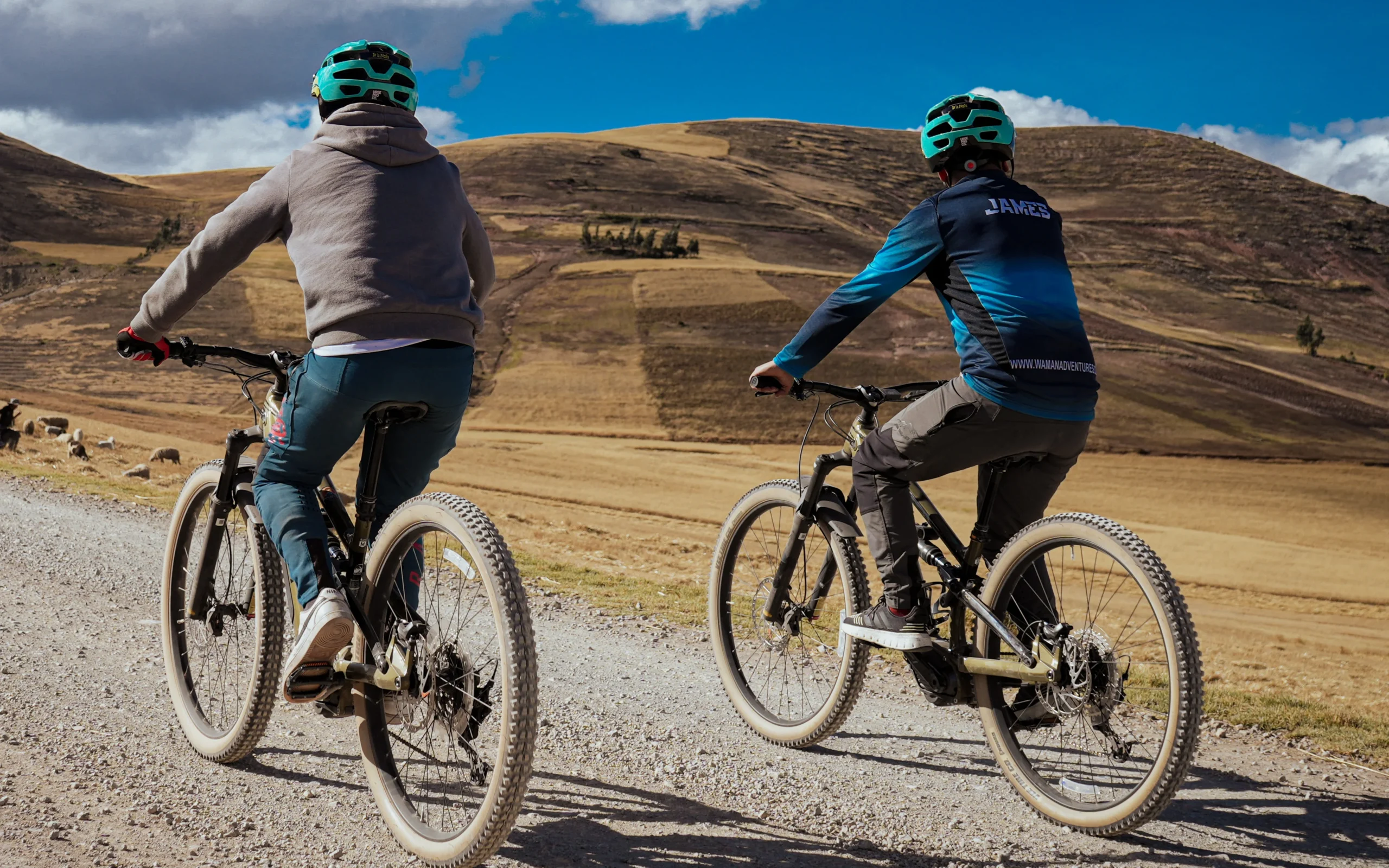
Cyclists roll through a scenic stretch that captures the spirit of mountain biking in the Sacred Valley.
Main zones for mountain biking in the Sacred Valley
The Sacred Valley of the Incas holds some of the best zones for mountain biking, thanks to its open geography, its network of rural roads, and its strong cultural roots.
Each area of the Sacred Valley offers a different kind of ride, both in difficulty and in setting. Some are ideal for travelers looking for scenic, approachable routes, while others bring bigger elevation changes and technical challenges, matching different levels and riding styles.
| Zone | Main features | Terrain type | What makes it special |
| Pisac and surroundings | Panoramic trails and open hillsides. | Rural roads and dirt trails. | Wide valley views and accessible half day routes. |
| Maras and Moray | Traditional agricultural areas and historic roads. | Mostly flowing terrain with gentle elevation change. | Rural scenery, crop fields, and proximity to cultural sites. |
| Urubamba and nearby communities | Routes that connect towns and small farm plots. | Lightly trafficked rural roads. | Big panoramic views and a higher physical demand. |
| Rural connectors between communities | Higher zones with open views. | Trails with greater elevation change. | A more authentic feel, fewer tourists, and a sense of remoteness. |
What a typical mountain biking day in the Sacred Valley looks like
Practical snapshot
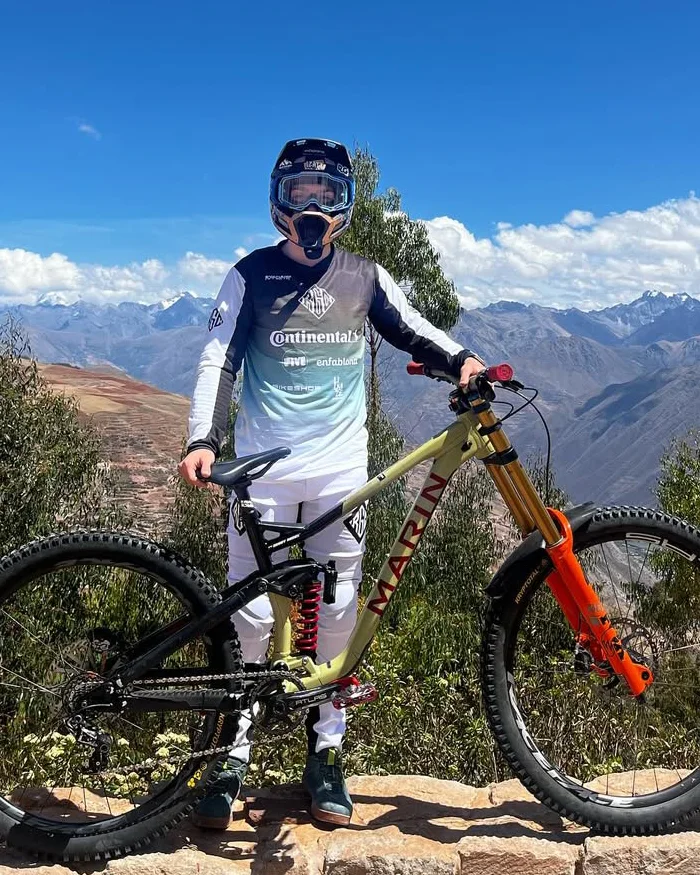
Mountain biking in the Sacred Valley adapts to different levels.
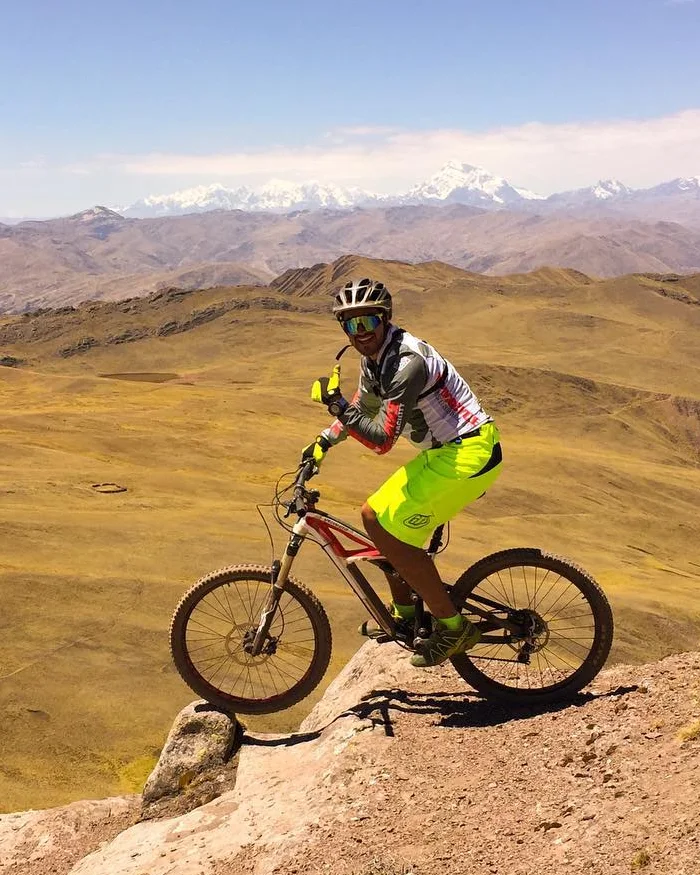
Riding here brings a sense of adventure, freedom, and a direct connection with Andean nature.
Recommended fitness and experience level
Real requirements
Warning:
If it is your first time in the destination, choose a progressive route and prioritize control and technique before speed.
What to bring for mountain biking
To enjoy mountain biking in the Sacred Valley with comfort and safety, bring the right gear. Weather can shift throughout the day, and routes mix rural roads with natural trails.
Even though many tour operators offer bike rentals and basic equipment, it is smart to confirm in advance what is included and what you should bring yourself, especially if you have personal preferences or specific needs.

You can see a descent ready bike with disc brakes and platform pedals.
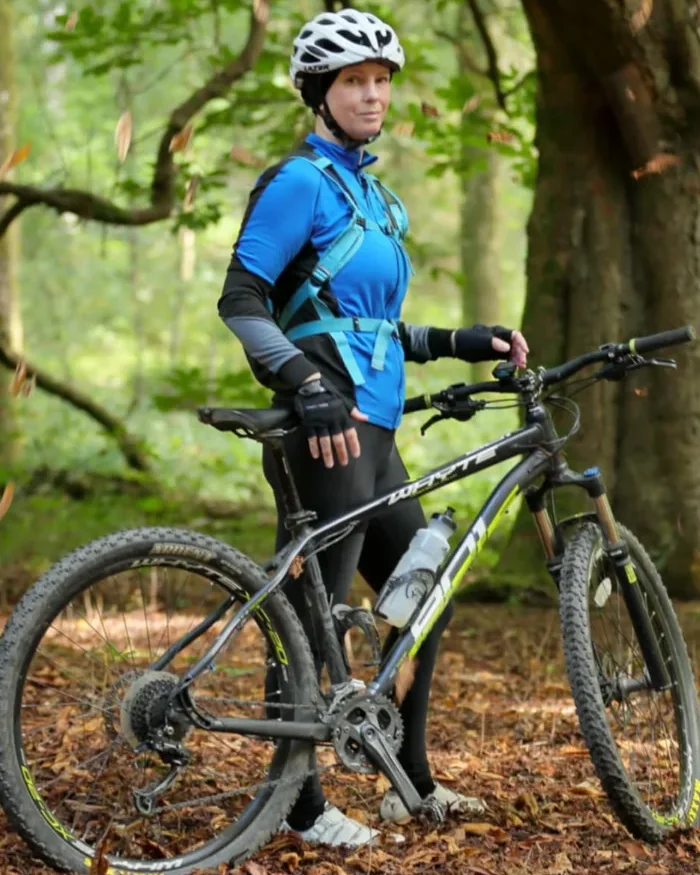
The image shows a woman wearing a helmet, gloves, and a hydration pack, ready for a mountain biking route.
Best time of year to ride
Andean weather breaks down mainly into a dry season and a rainy season, and each one brings different riding conditions.
The dry season is the most recommended, since roads stay firmer and the weather is more predictable, which helps you control the bike and feel more comfortable throughout the ride. The rainy season, on the other hand, turns the landscape greener and more photogenic, though some trails can become slick and require more technique and extra caution.
Warning:
Not all rural roads are clearly marked; riding with a guide reduces risk and improves the experience.
What kind of traveler mountain biking in the Sacred Valley is best for
This experience is for you if you enjoy outdoor movement, value natural scenery, and want a real connection with Andean culture beyond the usual tourist circuits.
It is an excellent option if you want to combine moderate physical activity, nature, and culture in one route. It is not only about pedaling, it is about traveling rural roads, observing daily life in Andean communities, and experiencing the Sacred Valley at a different pace that feels calmer and more intentional.
Mountain biking in the Sacred Valley is an authentic way to connect with the Andean landscape, its cultural routes, and local life. If you want to do this safely and with a well organized plan, Peru Biking Tours offers guided routes matched to your expectations, comfort, and level. It is time to discover the Sacred Valley by bike; contact us at 946 459 491.
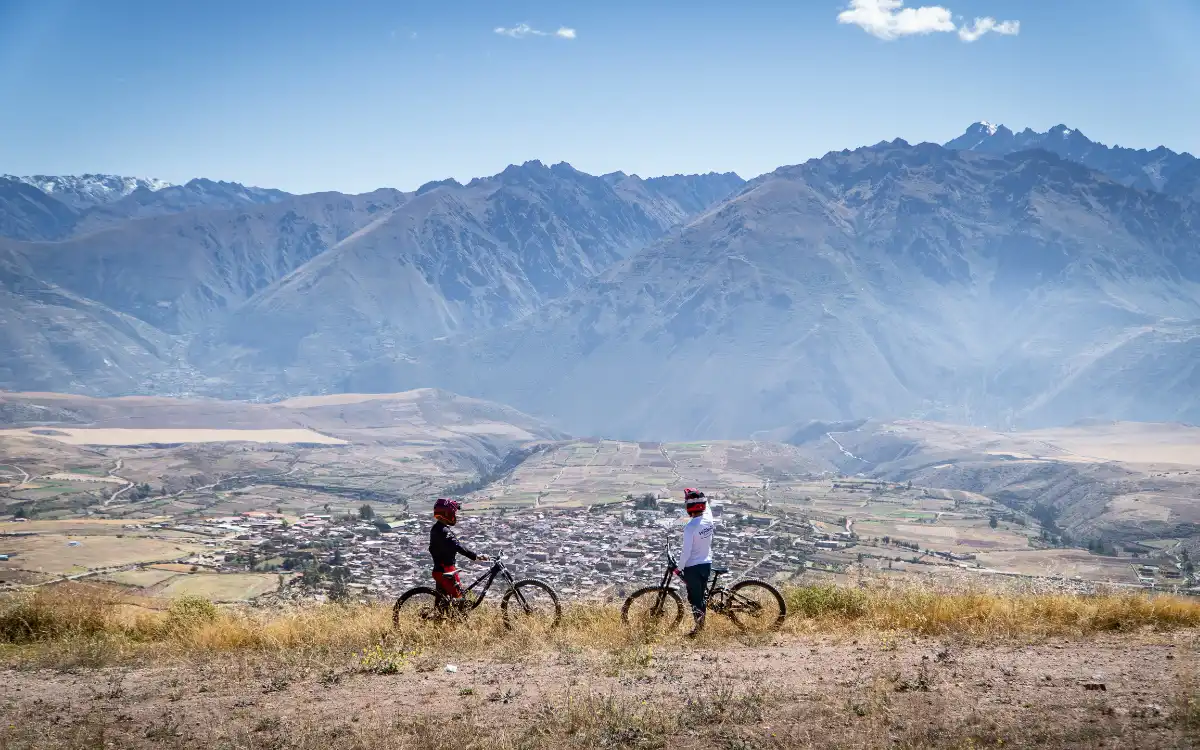
The calm before the drop in Maras: the view is huge, and the descent is even bigger.
Thousands of travelers have trusted Peru Biking Tours to enjoy unforgettable experiences in the Andes.
Your safety comes first
Routes adapted to your level, expert local guides, and full support at every stage.
No need to worry about a thing
We take care of all the logistics so you can focus entirely on enjoying the scenery.
Authentic routes in Cusco
Experience the Sacred Valley in a real way, at your own pace, with access to the best trails.
High quality gear
High end enduro bikes, helmets, and protective gear for every level.
Plan your MTB experience in Cusco
MTB Day Tours in Cusco
If you want to ride routes like Lamay Sapacto with the right logistics, local support, and the right trail selection, check out our MTB Day Tours in Cusco.
Multi Day MTB Tours
For more complete experiences that connect multiple valleys and high mountain routes, discover our Multi Day MTB Tours.


