


Quick Answer
Downhill in Cusco is a mountain biking modality involving technical descents through high mountain trails. It requires solid skill, brake control, and respect for the natural environment and the populations inhabiting the area. This modality is appropriate for riders with intermediate or advanced experience seeking a genuinely Andean adrenaline experience.
Downhill in Cusco is a way to experience in three hours what would normally take days of trekking. Cusco offers some of South America’s most impressive bike descent routes, with elevation drops exceeding 9,842 feet (3,000 meters) vertical and landscapes ranging from snow capped to tropical in a single day.
Want to tackle one of the most technical trails in the Sacred Valley? Discover our day tours in Cusco designed for riders seeking real enduro in the Andes.
What is downhill?
Downhill, also known as descent, is one of mountain biking’s most intense modalities. It consists of descending mountains and steep hills at high speed, facing roads full of obstacles like rocks, roots, jumps, and technical curves, where control and skill make the difference.
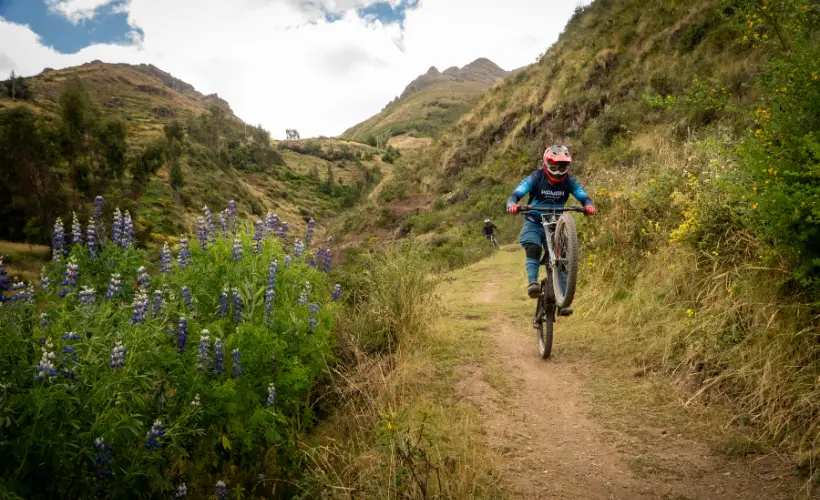
Lamay flow feels perfect here, a dirt path framed by wildflowers where speed stays smooth and controlled.
Why is downhill in Cusco unique?
- Cusco isn’t a conventional descent cycling destination. Andean geography creates conditions you won’t find anywhere else in the world. The combination of extreme altitude, drastic ecological changes, and original Inca roads generates an experience that goes beyond simple sport.
- The region concentrates three key advantages: accessibility from the city (30–90 minutes to starting points), established tourism infrastructure, and routes that work practically year round. Unlike other destinations, here you don’t need multi day expeditions to access good descents.
- Downhill routes in Cusco take advantage of roads built during the Inca empire, jungle penetration highways, and lightly traveled mountain trails. This variety allows both absolute beginners and experienced cyclists to find their ideal level on the same operating day.
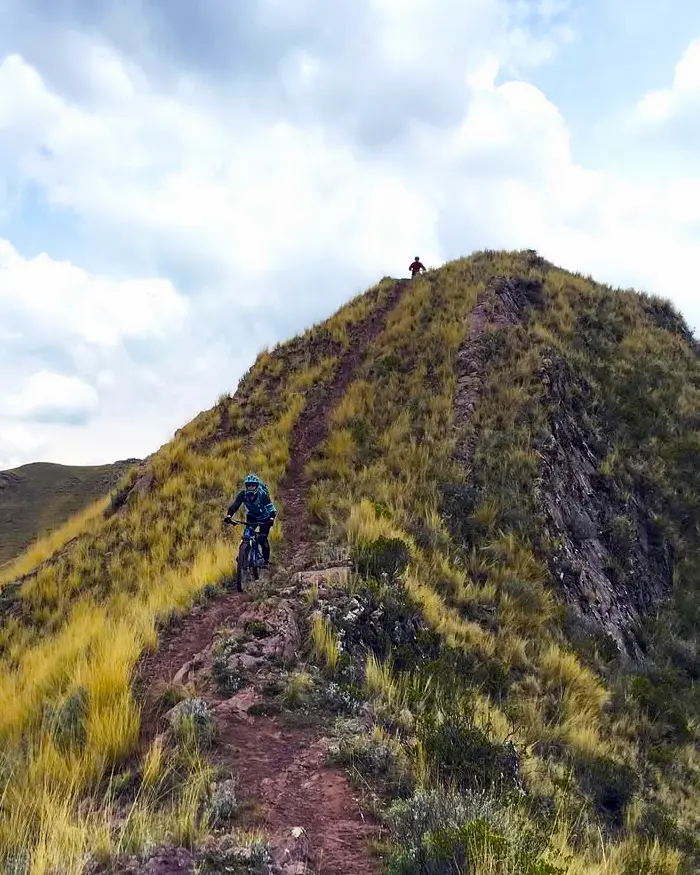
Descent on a singletrack in the mountains
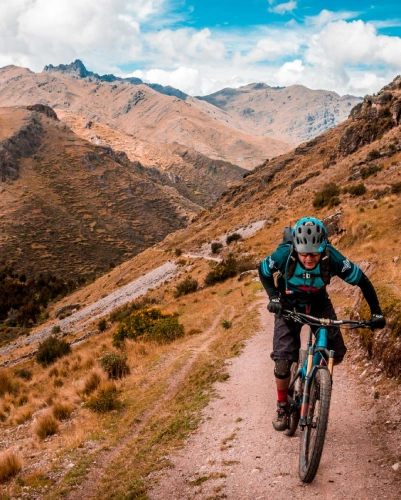
Cycling Routes in the Cusco Andes
Best Downhill routes in Cusco
Downhill Route Yuncaypata
It’s a mountain bike downhill route located in the hills surrounding the city of Cusco, just minutes from the historic center. It’s a natural trail descending from high rural areas toward the city, crossing Andean landscapes and dirt roads used by local communities.
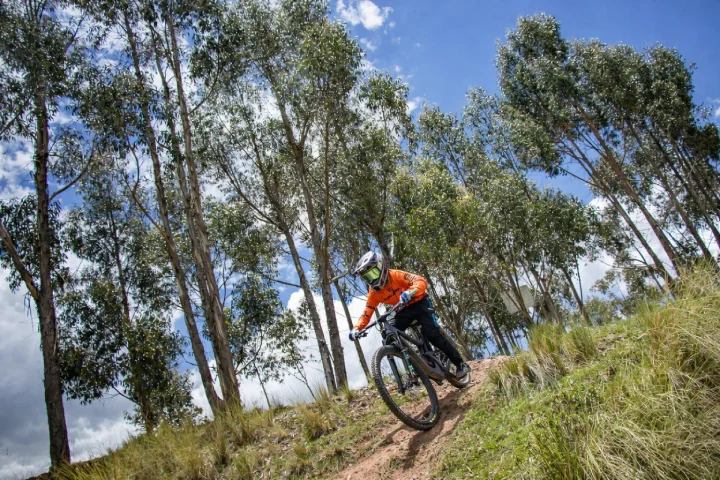
Downhill in Yuncaypata Cusco: MTB Route with Eucalyptus Forest
Expert tip:
Ideal for intermediate riders who already control braking, posture, and line choice, and want to level up without entering extreme terrain.
Downhill Route Huayllarcocha
It’s a smooth and continuous descent trail, located near the city of Cusco, in a quiet natural environment with lagoons and open areas. It’s one of the most accessible routes for those wanting to try downhill at altitude for the first time, without going too far from the city.
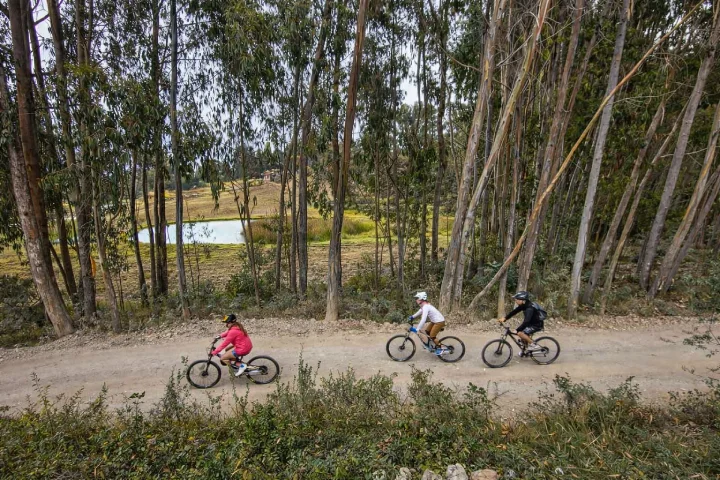
Huayllarcocha Downhill Route: Mountain Biking Next to Lagoon in Cusco
Expert tip:
Perfect as warm up, for basic–intermediate riders, or as first downhill experience in Cusco.
Downhill Route Maras
It’s a downhill route in the Sacred Valley of the Incas, near the traditional town of Maras, famous for its salt mines. The route descends through agricultural fields and open trails, with wide valley views, and is a very popular option among travelers seeking to combine biking, landscape, and local culture.
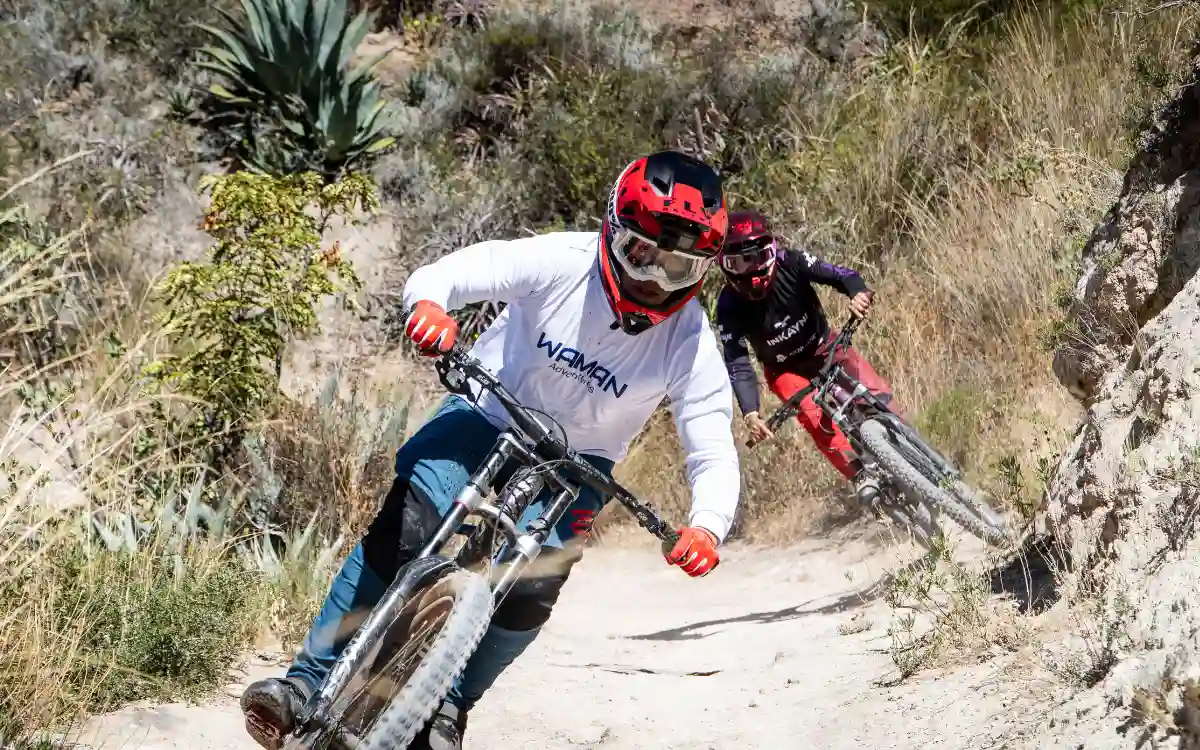
Downhill route in the sacred valley
Expert tip:
It’s not a brutal or extreme trail; its strength lies in flow, continuity, and the feeling of natural speed.
Why is it worth doing?
- Proximity to Cusco: starting points are a few minutes away by vehicle, without long transfers.
- Maximum downhill, minimum time: good amount of elevation drop in short routes.
- Logical combination: Huayllarcocha works very well as warm up and Yuncaypata as main descent.
- Ideal for tight schedules: complete downhill experience without sacrificing an entire travel day.
How to choose the right route?
The decision depends on four main factors: cycling level, altitude acclimatization, adventure expectations, and current physical condition.
- If it’s your first day in Cusco: Choose Sacred Valley-Urubamba, which starts at 12,400 feet (3,780 meters), more manageable and with flatter routes.
- If you have mountain biking experience: Routes like El Brujo or Lares offer the most complete experience and the most technically satisfying descent.
- If traveling with family or different levels: Moray-Maras-Urubamba works well because it allows those who don’t want to pedal completely to take the support vehicle on certain sections without missing cultural points.
Preparation and necessary gear
Appropriate clothing makes the difference between enjoying or suffering. For Abra Málaga you need a layer system: thermal shirt, fleece, and windbreaker jacket for the start (it’s cold at 14,272 feet/4,350 meters), but be prepared to remove layers progressively until you’re down to a t-shirt at the end.
- Full face helmet
- Knee and elbow pads (essential on technical routes)
- Long gloves for better grip and protection
- Light windbreaker jacket (mornings are cold even in dry season)
- Small backpack (10–15 L) for extra layers and personal items
- 1–1.5 liter water bottle
- Sunglasses with UV protection
- SPF 50+ sunscreen (UV radiation is approximately 25% more intense than at sea level)
- Energy snacks: bars, dried fruit, or chocolate
- Cash (50–100 soles) for tips or purchases in local communities
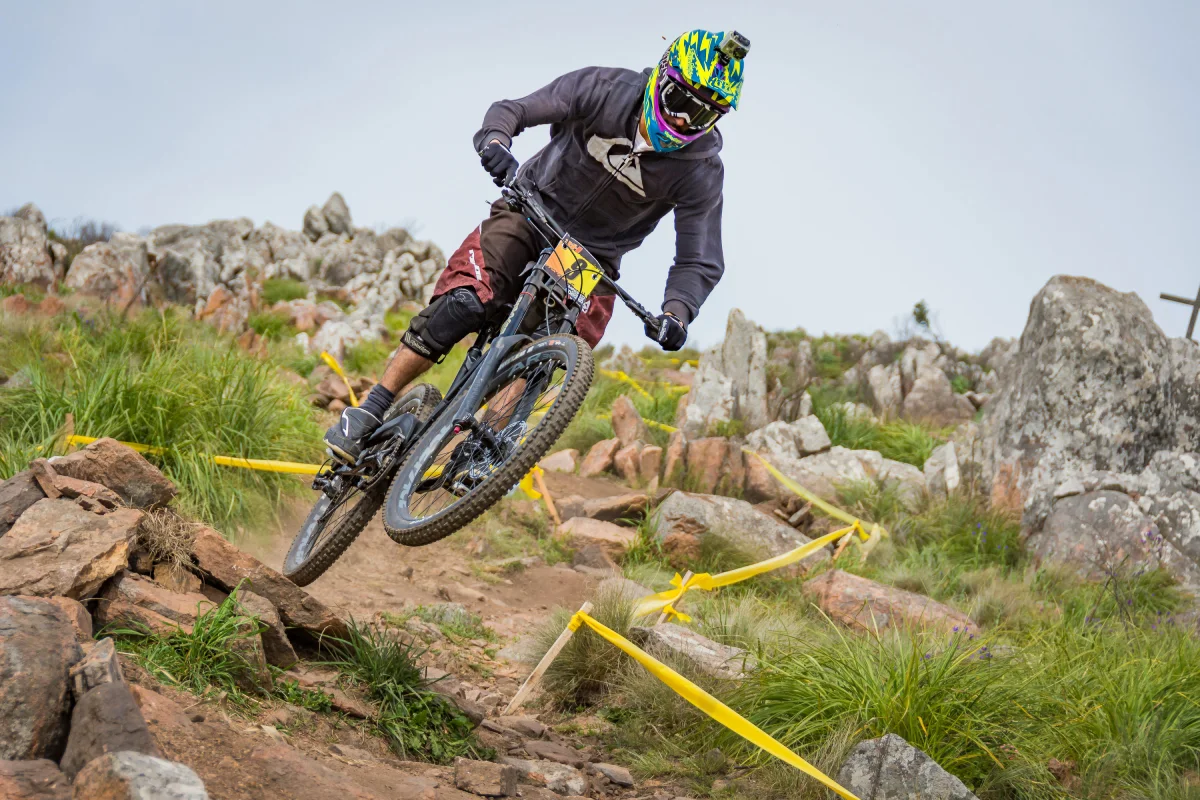
Mountain Biking – Enduro Racing
Practical safety tips
Downhill at altitude presents specific challenges. Your reflexes are 10–15% slower above 11,483 feet (3,500 meters) due to decreased brain oxygenation. This means you need to anticipate situations with more time than usual.
| Key Aspect | Safety Recommendations |
|---|---|
| Speed control | On long descents, control is more important than speed. Use both brakes simultaneously (60% rear brake, 40% front brake) and avoid braking abruptly inside curves. |
| Vehicle traffic | Always stay in your lane, signal with your hand before any maneuver, and assume drivers haven’t seen you until confirming otherwise. Local guides adjust departure times to avoid peak traffic hours. |
| Altitude and physical effort | Although it’s a descent, the body works constantly maintaining position, braking and concentrating, which generates significant energy expenditure. Hydrate with a sip every 15 minutes and consume light foods every hour. |
| What to do in case of accident | Professional operators have insurance and emergency protocols. The most common injuries are scrapes and bruises from low speed falls, which are usually easily treated. |
Best time to do downhill in Cusco
The best season for MTB in Cusco is the dry season as it offers clear skies and ideal conditions. The key lies in preparation, so choose routes suitable for the season, pack specific gear, and adapt your mindset to the powerful Andean environment. We recommend reading our article (LINK TO COMPLEMENTARY SEASONS BLOG about Cusco’s climate month by month and how it affects adventure activities, where we analyze temperatures, rains, and real route conditions.
Downhill + Other Activities
Many visitors integrate downhill into multi day Cusco itineraries. The most logical combinations consider altitude, physical fatigue, and transportation logistics.
Day 1: Arrival in Cusco, walk through downtown (gentle acclimatization)
Day 2: City tour or Sacred Valley without intense physical activity
Day 3: Downhill, Yuncaypata and Huayllarcocha (acclimatization completed)
Day 4: Machu Picchu
Day 5: Downhill MTB Maras (already acclimatized, maximum performance)
The most famous bike trails in Cusco ordered by difficulty level are:
| Level | Difficulty (colors) | Routes |
| Advanced – Extreme | Black Diamond & Double Black Diamond | El Brujo, El Pastor, Enduro Lucre, Zapatón, Santa María, Urban Downhill, Cusco – Sacred Valley Connection via Huchuy Qosqo |
| Intermediate – Advanced | Blue & Black Diamond | Yuncaypata, Huayllarcocha, Broggy, Desmuelada, Salkantay Pueblo, Urban Downhill, Santa María Classic, Cusco – Sacred Valley Connection |
| Amateur – Intermediate | Green & Blue | Corao Forest, Inca Cárcel, Huayllarcocha, Cusco Loop, Cusco – Sacred Valley Connection |
Plan your MTB experience in Cusco
MTB Day Tours in Cusco
If you want to explore routes like Lamay Sapacto with the right logistics, local support, and suitable trail selection, check out our MTB Day Tours in Cusco.
Multi-Day MTB Tours
For more comprehensive experiences that connect several valleys and high mountain routes, discover our multi-day MTB Tours.


