


Quick Answer
MTB Huayllafara Trail is a 100% natural enduro/downhill descent in Lamay, with no groomed lines or man-made jumps. Expect big Sacred Valley views, fast, flowy sections, and technical terrain packed with rocks, natural steps, roots, and blind corners over roughly 5 miles (8.13 km). You’ll want solid intermediate-to-advanced bike handling: controlled braking, smart line choice through rock gardens and step-downs, and confident riding on narrow singletrack
From the first pedal stroke, the MTB Huayllafara Trail puts you face to face with the Andean mountains without filters or compromises. Clean, thin air fills your lungs while ancient stones crunch under your tires, and an endless view of the Sacred Valley unfolds before you, taking your breath away just like the altitude. This isn’t a trail built to please everyone; it’s an ancient path that challenges every line you choose, every technical decision you make on your bike, every fiber of your experience as a mountain biker.
Ready to take on one of the Sacred Valley’s most technical downhill routes? Our Cusco day tours are crafted for riders chasing the true enduro experience in the Andes.
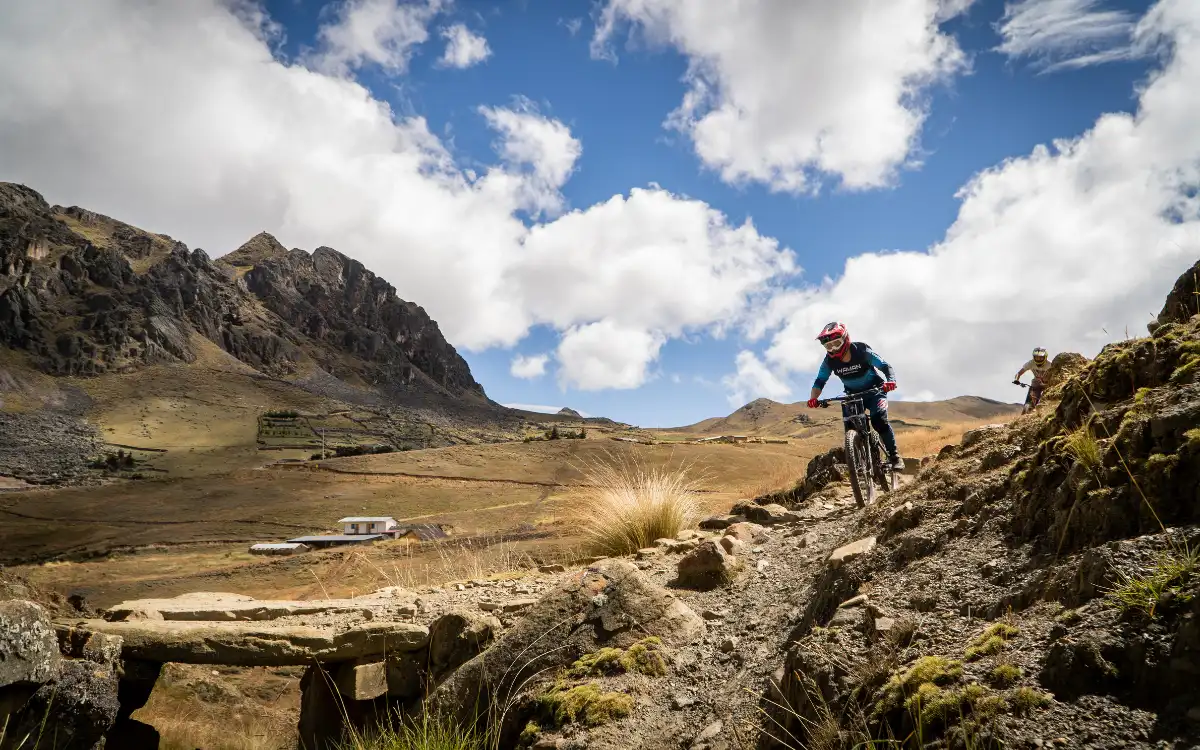
Technical descent in Lamay, where every stone tests your control.
What is the MTB Huayllafara Trail?
The MTB Huayllafara Trail represents one of the best-kept secrets of the Sacred Valley, a complete singletrack and downhill route in Cusco. It offers one of the most authentic Andean mountain biking experiences available in Cusco. This unaltered trail keeps the character of the original terrain intact, following ancient paths used by local communities for generations.
Unlike modern bike parks with their artificial jumps and smoothed lines, Huayllafara trail is pure territory. Every stone, every root, every natural berm has been shaped by centuries of Andean climate and traditional use. It’s a true high-altitude enduro that respects the mountain as it is, without artifices or modifications that alter its wild essence.
Where is it Located and How to Get There?
The trail is located in the Lamay district, Calca Province, in the heart of Peru’s Sacred Valley. Its position can take you through three distinct Andean ecosystems in a single descent: open highlands with panoramic views, technical middle sections shaped by ancient rock, and denser native forest that demands maximum concentration.
Access from Cusco (about 90 minutes total)
- First stage – Paved road (50 minutes): Take the main route toward the Sacred Valley, passing through the towns of Coya and Calca. The landscape gradually shifts from the hills around Cusco to the agricultural terraces of the valley. Cross the bridge over the Vilcanota River toward Lamay, where the real adventure begins.
- Second stage – 4×4 track (40 minutes): After the bridge, turn onto a steep dirt track that climbs through community grasslands. This section typically requires a 4×4 vehicle, as the gradient can reach roughly 15–20% in several stretches. The landscape opens up progressively until you reach the trail’s starting point.
Important:
You may need to coordinate access with local communities. A GPS device with the route preloaded is essential, as there’s no official signage and mobile signal is not available for most of the route.
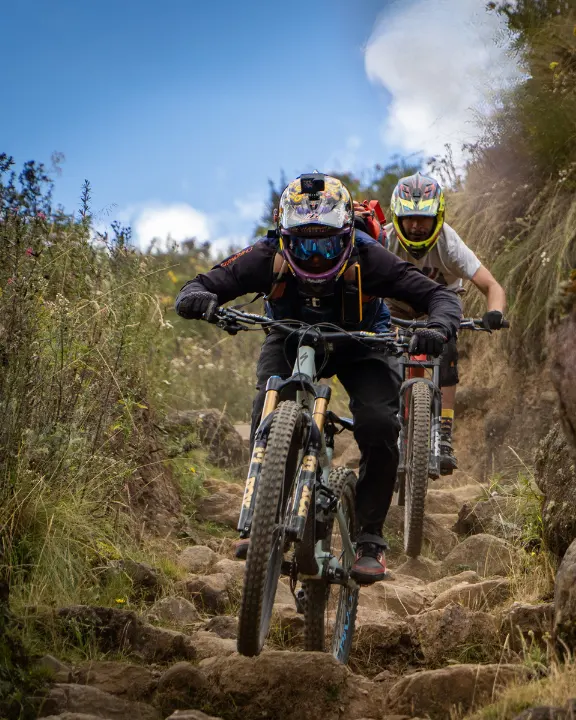
The rider train hits Lamay’s rocky steps, one after another, staying smooth where most people would brake too hard.
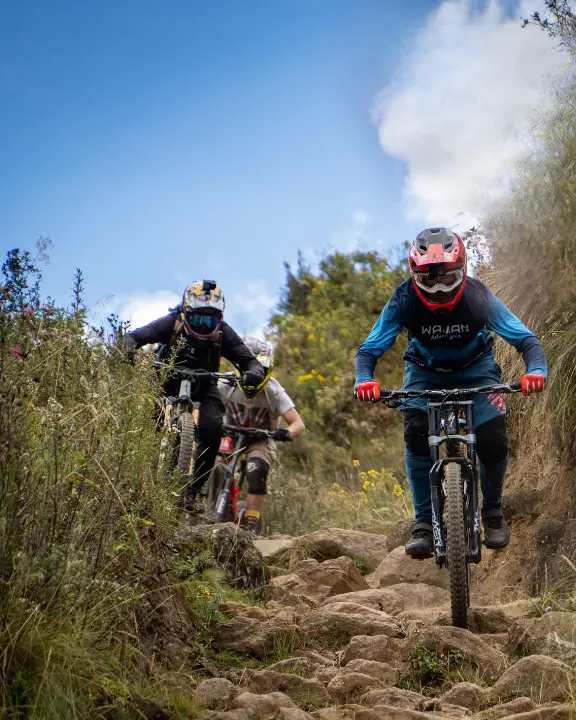
Rock garden in Lamay, where momentum and precision decide if you float through or fight the bike.
What Makes the MTB Huayllafara Trail Unique?
The MTB Huayllafara Trail stands out for its authenticity, terrain diversity, and deep cultural connection. Along the trail, you enter a landscape that maintains its original essence, from ancient Inca stonework to natural formations created by centuries of Andean erosion. You won’t find artificial elements; each section challenges the rider with impressive technical variety, from fast sections to rock gardens and forest stretches with roots and blind corners.
The route begins with fast flow and panoramic views, ideal for building confidence, but the altitude begins to take effect. Then, the trail enters a technical zone with natural stone steps and challenging curves. In the final section, the terrain narrows in a native forest, with exposed roots and tight turns, demanding total concentration until the very end.
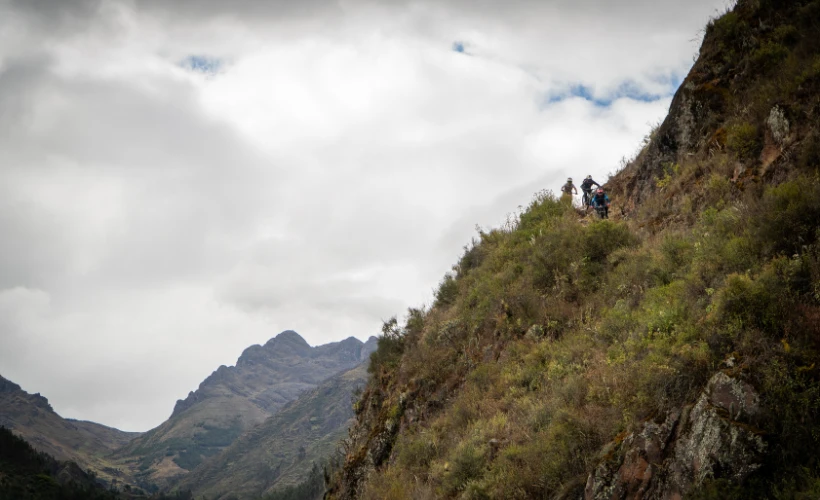
Cliffside riding in Lamay, where the trail stays narrow and exposed.
Detailed Route Description
Key Points of the Route
| KM | Point | Description |
|---|---|---|
| 0.0 | Andean Viewpoint | Views of the mountain range and the descent entrance. |
| 3.5 | Imperial View | A full panorama of the Sacred Valley. |
| 6.9 | Technical steps zone | Section with shaded curves and dense vegetation. |
| 8.1 | Dry crossing | Right turn before the finish. Use caution in this area. |
Recommended Equipment
- Enduro or downhill full suspension bike (160 mm or more).
- Full-face helmet, protective goggles, knee pads, elbow pads, and gloves.
- Spare tube, multi-tool, at least one liter of water (34 fl oz), energy snack, and windbreaker.
Safety and Precautions
- No mobile signal on the trail.
- It’s essential to carry a GPS device and load the route on Strava or Komoot.
- Not recommended to ride alone; ideal to go with a guide or group.
- Special attention on blind corners, exposed roots, and rural crossings.
Weather Considerations
Dry season (May-October):
- Stable conditions and compact terrain
- Higher risk of dehydration
- Dusty sections that reduce traction
- Minimal water crossings
Wet season (November-March):
- Slippery surfaces especially in forest
- Deeper and more technical water crossings
- High risk of landslides
- Completely avoid during active rain
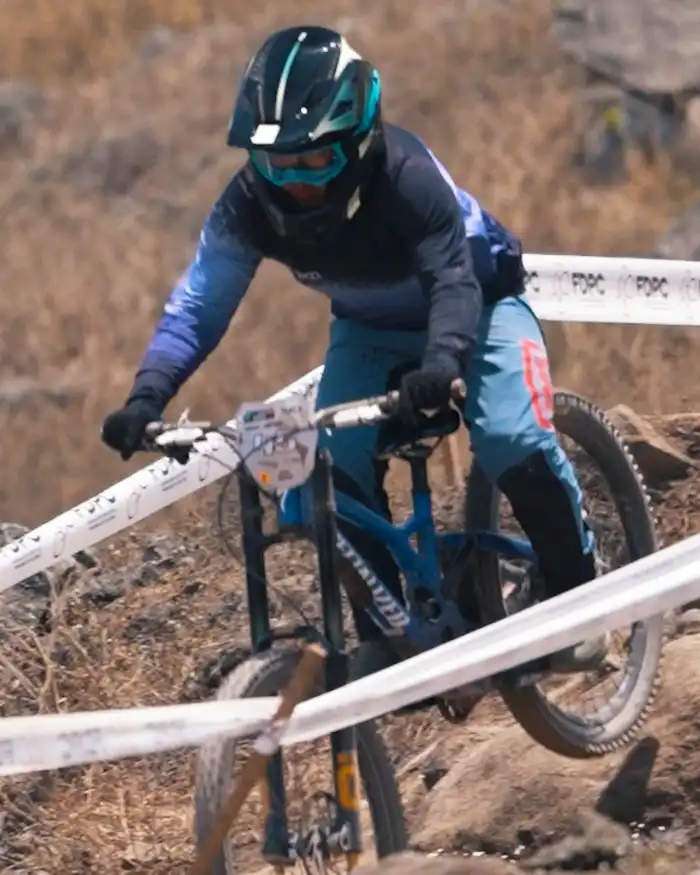
Rocks, dust, and precision, every drop in Cusco writes its own story.

Pedaling the ancestral roads, Cusco feels timeless out here.
Comparison with Other Sacred Valley Trails
Huayllafara trail vs Maras trail
- Huayllafara: More technical, natural, and challenging. Requires advanced mountain bike skills.
- Maras: Better signposted, more accessible for intermediate level, combines cycling with salt flats visit.
Huayllafara trail vs Moray trail
- Huayllafara: Pure descent without distractions, maximum technical challenge.
- Moray: Combines archaeology with cycling, includes climbs, less technical demand.
Huayllafara trail vs Ollantaytambo trail
- Huayllafara: Natural experience without modifications, higher technical difficulty.
- Ollantaytambo: More urban routes, easier access, less physical commitment.
Digital Resources and Documentation
Useful Links
- Strava Route: View segment and times
- GPX Download: GPS file
- POV Video: GoPro of complete descent
- Photo Gallery: Best shots of the route
Must-Have Photo Points
- Km 0: Panoramic view of the Vilcabamba Range
- Km 3.5: Ancestral terraces of the Sacred Valley
- Km 6.9: Action shots in the dense forest
- Km 8.1: Water crossing with valley background
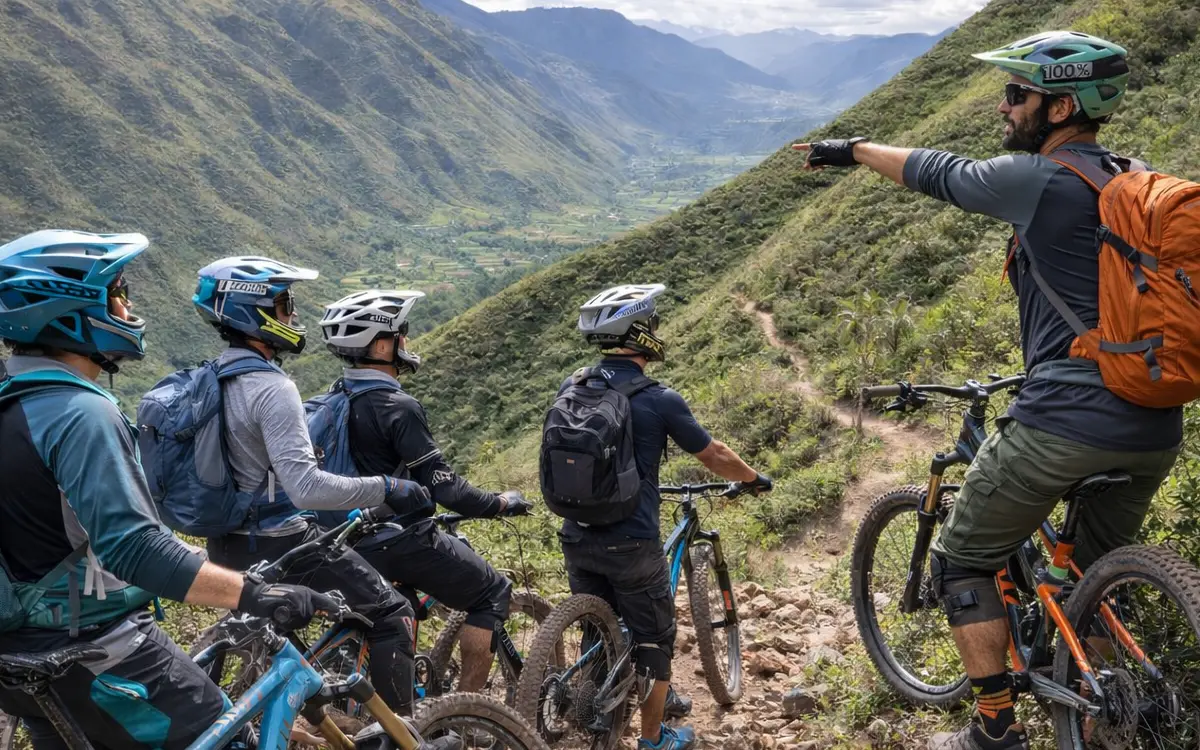
In vast, technical Andean terrain, a guide keeps the group moving smoothly and safely.
Ready for the Purest Descent in the Sacred Valley?
The MTB Huayllafara Trail isn’t for everyone, and that’s precisely its value. It’s for cyclists who seek authenticity over comfort, challenge over ease, deep connection over superficial experience. It’s for those who understand that the best trails aren’t built, they’re discovered and respected.
Every pedal stroke on Huayllafara trail is a dialogue with the Andean mountain, every curve a lesson in humility, every view a reward earned with effort and technique. Here there are no tricks or shortcuts; just you, your bike, and 8 kilometers of pure sacred territory waiting to test you.
Riding Huayllafara is respecting the mountain and honoring its ancient paths. Live the most authentic Andean mountain biking experience, care for the ancestral environment, and leave your technical mark without altering the sacred trail that has connected communities since immemorial times.
Plan your MTB experience in Cusco
MTB Day Tours in Cusco
If you want to explore routes like Lamay Sapacto with the right logistics, local support, and suitable trail selection, check out our MTB Day Tours in Cusco.
Multi-Day MTB Tours
For more comprehensive experiences that connect several valleys and high mountain routes, discover our multi-day MTB Tours.


