



Quick Answer
Mountain biking in Cusco is defined by open, natural routes and farm access trails, far from the polished perfection of a bike park. Here you tackle descents of 3,280 feet (1,000 meters) on ever changing terrain, with higher physical demands because oxygen is thinner above about 11,152 feet (3,399 meters). It is the right fit if you prioritize technical adventure and trail reading over lift served comfort.
Mountain biking in Cusco takes you across open natural terrain and ancient connector trails, far from artificial circuits. High altitude, living culture, and the technical skill required to read constantly changing surfaces shape the experience. This breakdown helps you decide if this demanding environment suits your riding style.
Comparing Cusco’s MTB terrain with other destinations? Our day tours are designed for riders who want authentic enduro adventures in the Andes, always smoother when you understand the technical guide to trails, terrain, and riding styles across regions.
Mountain Biking in Cusco: Terrain and Seasonal Conditions
The raw technical riding experience in these mountains comes from navigating active agricultural paths, rather than purpose built bike parks. The surface feels alive, shifting from hardpack to loose gravel within a few yards depending on the weather and local foot traffic.
This unpredictable terrain forces you to prioritize trail reading, making navigation and line choice just as critical as your downhill technique.
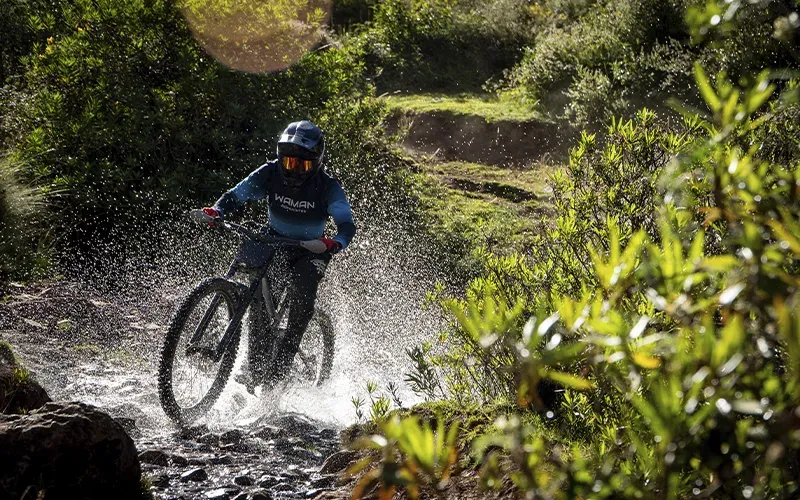
An adventurous mountain biker wearing a full face helmet and goggles splashes through a water crossing at speed on a rugged dirt trail.
The Sacred Valley and High Andean Routes
While the Sacred Valley links rural communities via technical farm trails, the higher routes push you over towering mountain passes above 13,123 feet (4,000 meters).
This vast landscape, paired with thin air and serious exposure, demands total logistical self sufficiency since you will encounter zero services or shelters midway down a descent.
The Reality of Mountain Biking in Cusco: The Draw vs. The Demands
We break down why this destination stands out and what real preparation you need to ride it safely:
| The Draw | The Technical Reality |
| Massive descents and living terrain Plunging vertical drops exceeding 3,280 feet (1,000 meters) across a wild mix of gravel, loose rock, and natural trails that shift daily. |
Trail reading and navigation Expect zero bike park style signage. You create your own line, requiring absolute self reliance and deep respect for community gates. |
| Geographic scale Mountain passes reaching above 13,123 feet (4,000 meters) and wide open landscapes devoid of modern development. |
Managing altitude and weather The thin high altitude air drains your stamina quickly. Acclimate for two days, stay hydrated, and always pack a wind shell, as mountain weather flips in minutes. |
| Distinct seasons Pick your riding style: blisteringly fast descents during the dry season or unbeatable grip (“hero dirt”) during the rainy months. |
Targeted protection Dry season dust (“fesh-fesh”) requires sealed eyewear. Rainy season mud patches demand smooth, highly precise braking. |
| Living culture and logistics You share the trails with local Andean shepherds. Food and transportation costs remain incredibly affordable compared to global destinations. |
Remote safety You ride far off the grid without cell service. A solid evacuation plan, specialized repair tools, and a basic first aid kit remain strictly mandatory. |
When should you travel for mountain biking in Cusco?
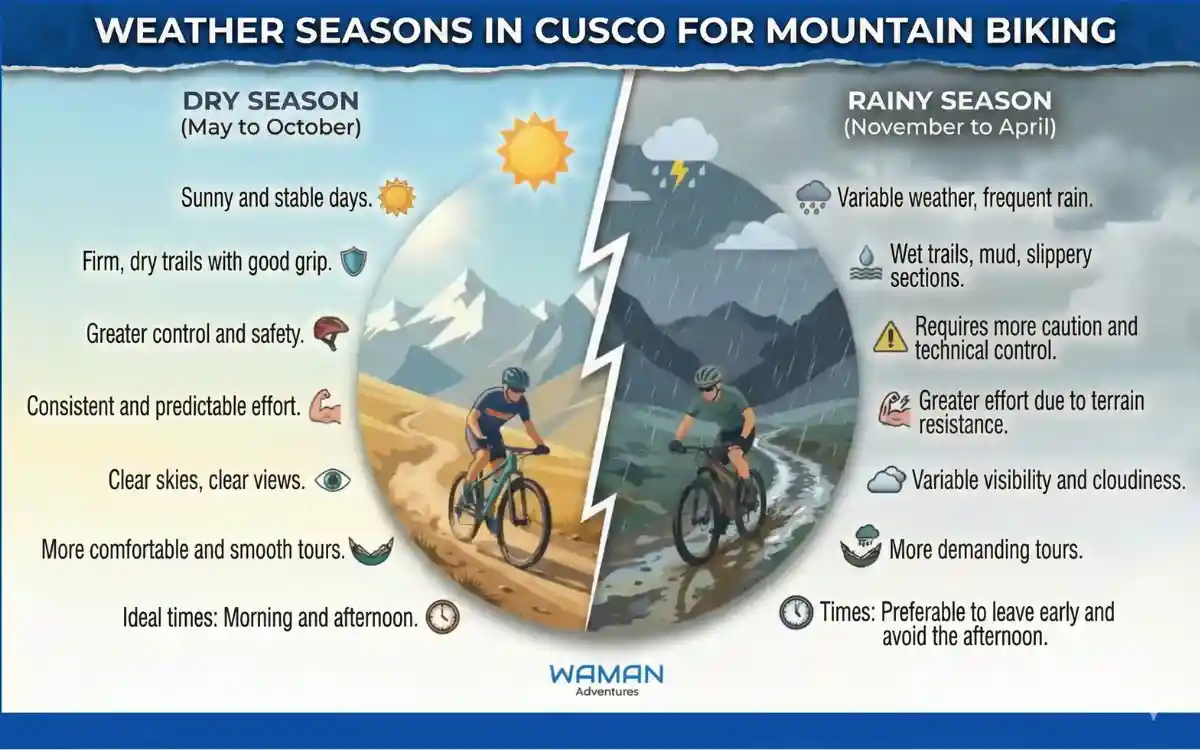
Know the seasons in Cusco before you book: dry months bring faster riding conditions, while rainy months demand heightened caution and brake control.
Your choice ultimately comes down to your preference for dust versus mud. Here are the two primary weather windows:
- Dry Season (April to October): Speed and clear visibility dominate, but the ground loosens into fine dust (“fesh-fesh”), demanding solid drift control. Ideal for downhill and enduro riders chasing fast times and predictable logistics.
- Rainy Season (November to March): The landscape turns vibrant green, and compacted soil offers incredible grip, though you must navigate low cloud cover and spotty mud patches. Ideal for E bike and trail riders, as assisted traction powers you through heavy terrain, putting pure exploration first.
Mountain Biking in Cusco Compared With International Destinations
Mountain biking in Cusco vs. 3 global destination styles
We compare the technical and logistical realities against standard industry benchmarks:
| Factor | Cusco Open Routes | Bike Parks | Desert and Alps |
| Terrain | Dirt, gravel, natural steps, and living community trails. | Berms, jumps, clearly marked lines, and daily maintenance. | Exposed rock, hardpack sand, or slick roots (depending on the zone). |
| Altitude | Base 11,152 feet (3,399 meters); mountain passes > 13,123 feet (4,000 meters). | Varies widely, with lower physical impact thanks to lift access. | High alpine mountains are common, accompanied by harsh summit weather. |
| Flow | Organic; relies entirely on your line reading skills and momentum. | Highly predictable; purposely built to hold your momentum. | Highly technical due to steep, punishing grades and traction management. |
| Adventure | Extremely high, offering deep cultural and geographic immersion. | Moderate, focused primarily on sport progression and repetition. | High, featuring powerful nature but a less integrated local culture. |
Logistics and Exclusive Routes
The true value of riding in Cusco goes beyond the trail itself; it lies in the professional management of access, remote safety, and off grid navigation.
Sample mountain biking in Cusco itineraries tailored by time and level
- 3 Days (Intro / First Timers): Ride at a comfortable pace after one full day of prior acclimatization. Ideal for an E bike (to cover more ground) or an enduro setup if you possess confident braking technique.
- 5 Days (Mixed: Sacred Valley + High Andean Zone): Enjoy a progressive pace, saving the highest elevation exposure for the final day. Pair an E bike for covering distance with an enduro bike for tackling long technical descents.
- 7 Days (The Full Experience): Tackle intensive riding blocks mixed with active recovery. This requires two full days of acclimatization to perform well above 13,123 feet (4,000 meters).
Real logistics: What is easy and what is not
- Transportation: Reaching remote trailheads involves rough dirt roads and unpredictable travel times; securing a reliable support vehicle is essential.
- Guide vs. Solo: Booking a local guide proves crucial for first time visitors or riders aiming for seamless access without wasting precious daylight on navigation.
- Minimum Gear: A premium quality helmet, durable knee pads, dust ready goggles, and a fully stocked repair kit (tire plugs, CO2, derailleur hanger) remain strictly mandatory.
- Connectivity: Expect long stretches entirely without cellular signal (“dead zones”). While a GPS device helps, deep local knowledge actually solves unexpected problems on the fly.
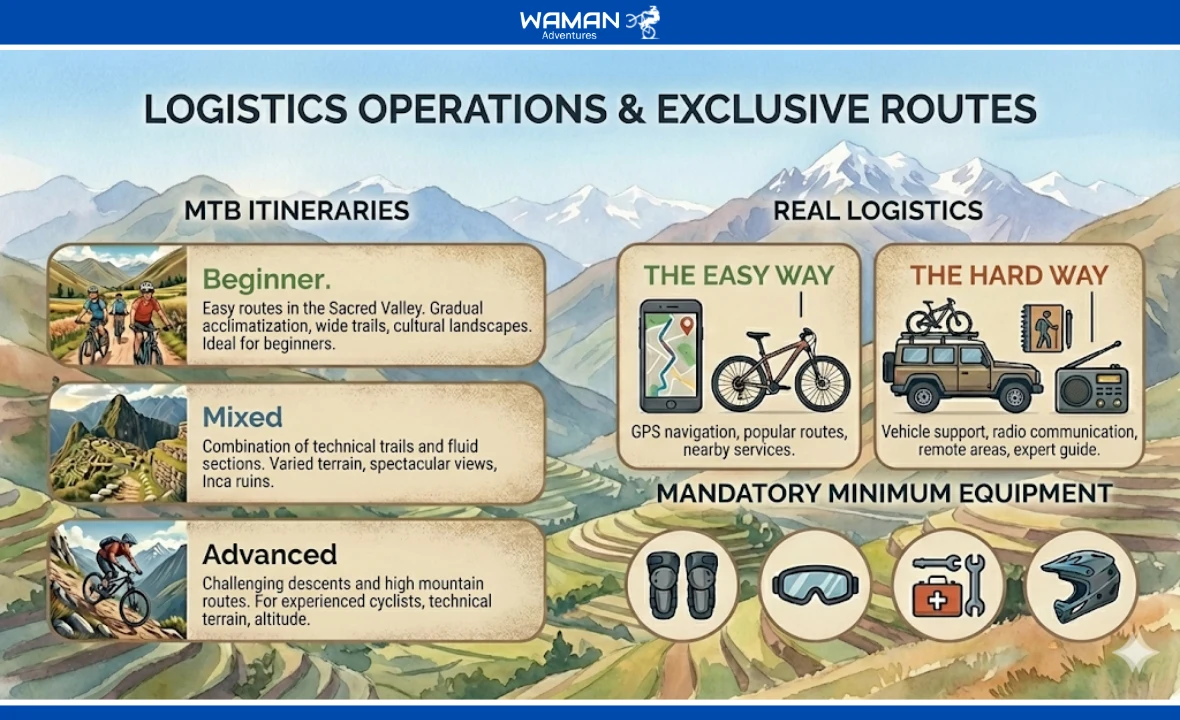
An informative diagram detailing mountain biking levels, logistical support, and mandatory equipment against an illustrated background.
Thousands of travelers have trusted Peru Biking Tours to live unforgettable experiences in the Andes.
Your safety first
Routes adapted to your level, expert local guides and full support at all times.
Without worrying about anything
We take care of all the logistics so you can just focus on enjoying the scenery.
Authentic routes in Cusco
Experience the Sacred Valley in a real way, at your own pace, with access to the best trails.
Quality equipment
High-end enduro bikes, helmets and protective gear for all levels.
Plan your MTB experience in Cusco
MTB Day Tours in Cusco
If you want to explore MTB routes with the right logistics, local support, and suitable trail selection, check out our MTB Day Tours in Cusco.
E-bikes Tours
Curious how altitude impacts your e-bike in Cusco? Our E-Bike tours are designed for riders who want authentic enduro adventures in the Andes.


