


Quick Answer:
Staying hydrated while mountain biking in Cusco goes far beyond simply quenching your thirst. The combination of high altitude, physical exertion, and dry Andean air accelerates dehydration unnoticed, making a constant intake of fluids and electrolytes vital to maintain your peak performance on the trail.
Staying hydrated while doing MTB in Cusco is extremely important when you are planning a high altitude route. It is not just about carrying a bottle of water, but about understanding how your body reacts to dry air, altitude, intense sun, and physical effort. If you are coming to ride through the Andes, knowing how to hydrate properly before, during, and after your ride can make a huge difference. This is your opportunity to learn more.
Riding at altitude requires more than technique. Discover how to stay hydrated in Cusco so you can enjoy your MTB routes with energy and confidence.
Why you dehydrate faster in Cusco than back home
When you go mountain biking in Cusco, your body works under very different conditions, since the city sits at 11,152 feet (3,399 meters).
One of the most important factors is altitude. The higher you go, the less oxygen the air contains, so you breathe faster and more deeply. That increase in breathing makes you lose more water vapor every time you exhale.
Another key factor is the dry Andean air. In high elevation areas like Cusco, humidity is usually low, especially during the dry season. On top of that, the sun is more intense at altitude. At higher elevations, the atmosphere filters less solar radiation, which increases your exposure to heat and UV rays.
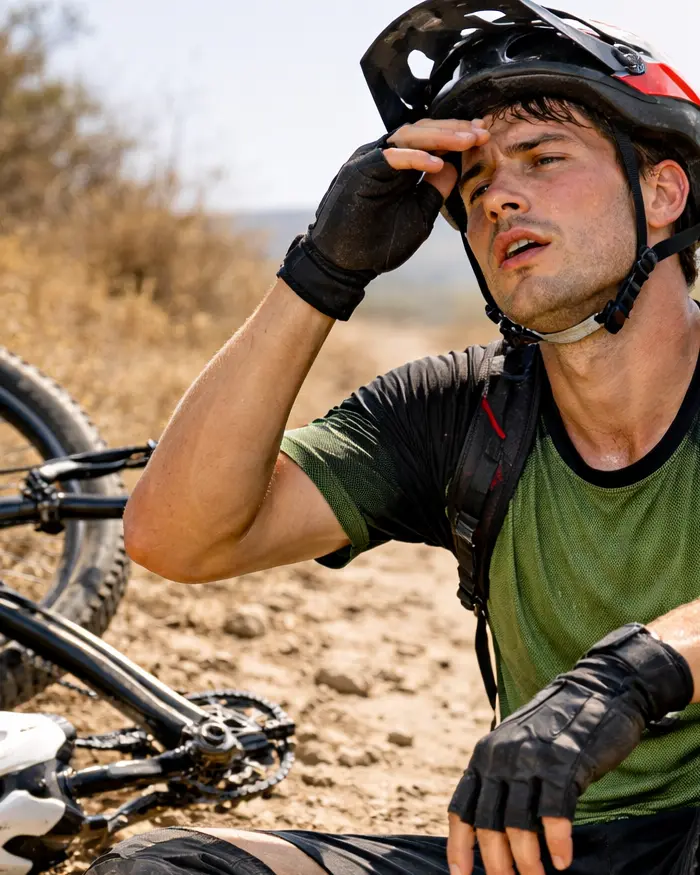
You can clearly see how the effort of the tour, combined with the strong sun, is taking a physical toll.
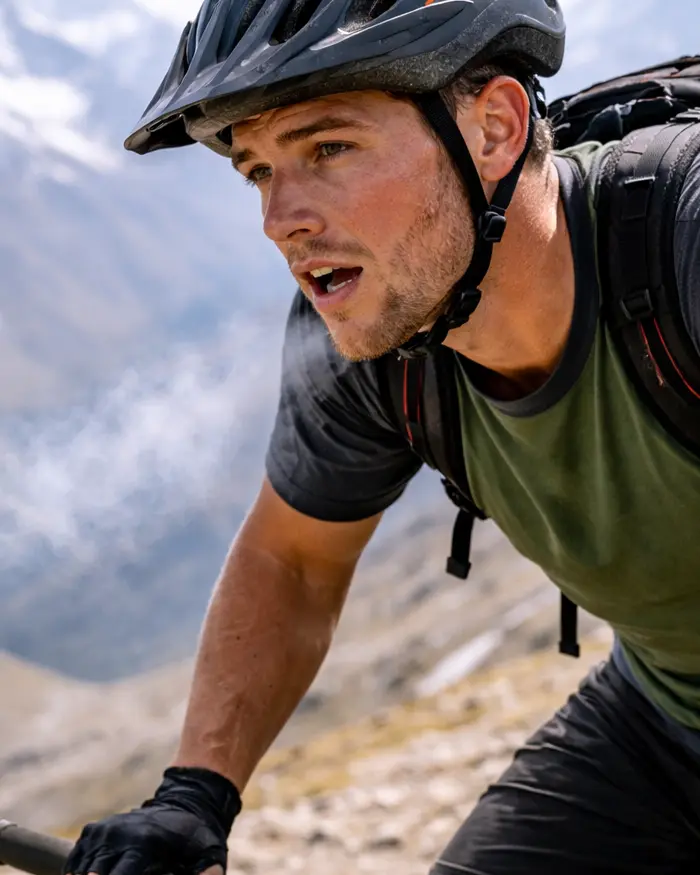
His posture leaning over the bike clearly shows physical effort.
Dehydration vs altitude sickness: how to tell the difference simply
Staying hydrated while mountain biking in Cusco is essential. During your first few days, you may feel some discomfort. The issue is that dehydration and altitude sickness can cause very similar symptoms, which creates confusion for many travelers.
What happens in your body when you become dehydrated
Dehydration happens when you lose more fluids than you consume. During a ride, staying hydrated while doing MTB in Cusco is key, because fluid loss can come from sweat, faster breathing, and the quick evaporation of sweat in the dry Andean air.
The most common signs you may notice are:
- Persistent thirst or dry mouth
- Darker urine than normal
- Early fatigue during effort
- Muscle cramps
- Mild dizziness or weakness
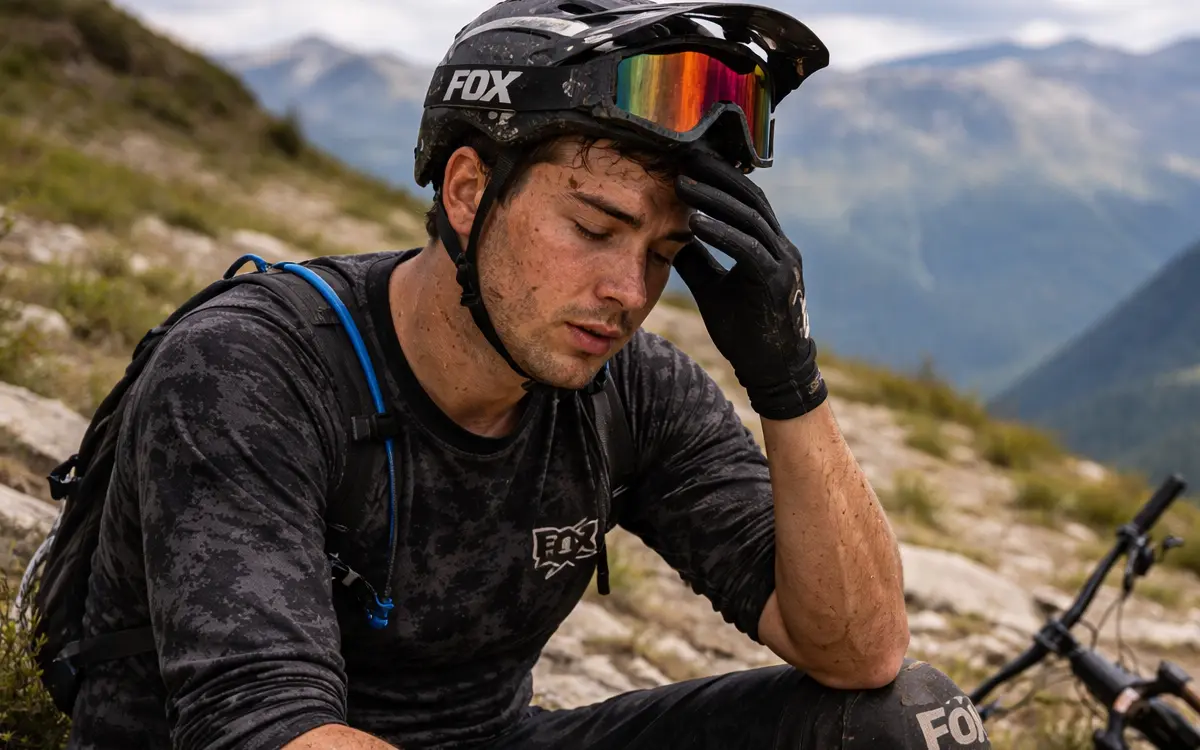
This scene clearly reflects how altitude can create a heavy headed feeling.
The easiest hydration rule while pedaling
When you go mountain biking in Cusco, one of the simplest ways to keep your energy up and avoid dehydration is to follow one clear rule: drink consistently throughout the ride.
A common recommendation in endurance sports is to start with around half a liter of water per hour during moderate activity, which equals about 17 ounces per hour.
To stay hydrated while doing MTB in Cusco, drinking a huge amount of water all at once is not ideal, since it can cause stomach discomfort or a heavy feeling while riding.
Drink by Habit, Not Just When You’re Thirsty
The dry Andean air makes sweat evaporate almost instantly. This reduces the feeling of dampness on your skin and can trick you into underestimating how much fluid you’re losing. At altitude, mild dehydration often sets in before you feel strong thirst, especially when you’re active outdoors.
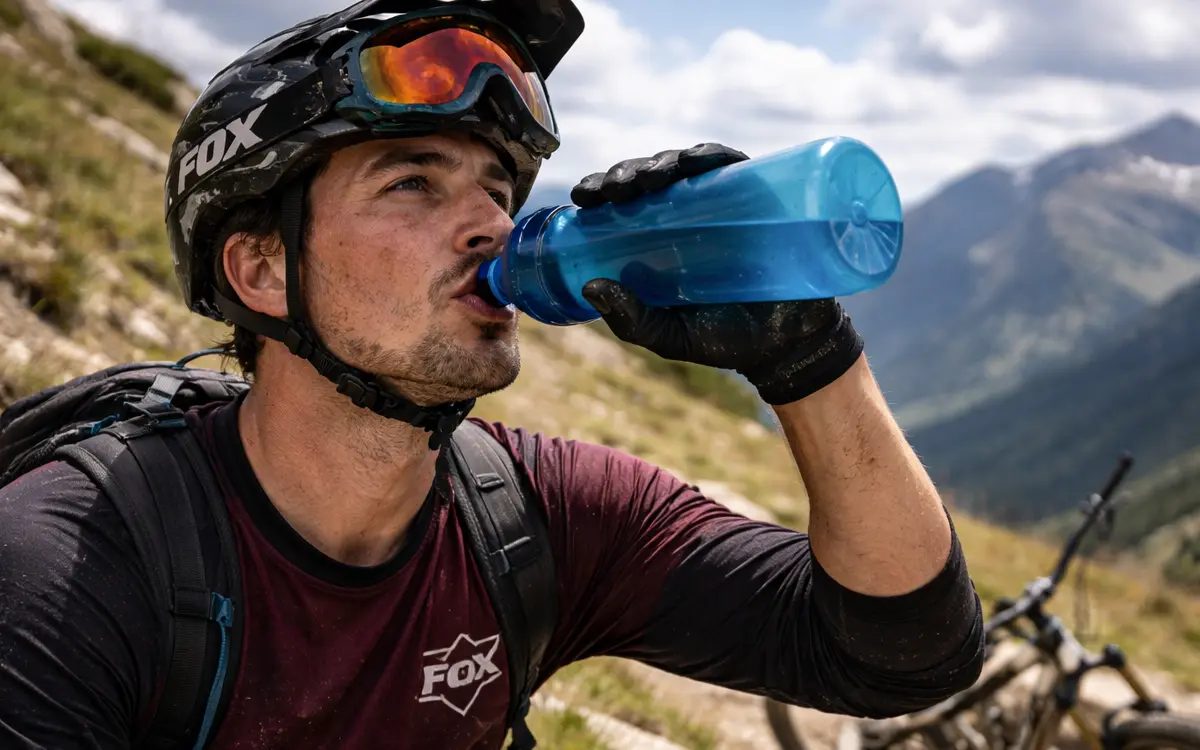
Ideal to take break in middle of mountain route to drink water.
How Much to Drink on a Ride in Cusco
Most cycling and exercise physiology experts recommend consuming about 14 to 27 ounces (400 to 800 milliliters) of fluid per hour during moderate to intense activity.
In Cusco and the Sacred Valley, several factors increase your hydration needs while mountain biking. Altitude speeds up your breathing and increases water loss with every exhale. At the same time, the dry air accelerates sweat evaporation, making it harder to notice how much fluid you’re losing.
Important note:
On long rides, plain water may not be enough without replacing electrolytes.
Hydration Plan Starting the Day Before
| When | What to Do (simple and realistic) | Why It Works in Cusco |
| Afternoon before | Sip fluids steadily throughout the afternoon. Don’t wait until evening. | At altitude you lose more water through breathing and acclimatization, so it’s easy to start the day already behind. |
| Night before | Take regular sips. Avoid chugging water before bed. | Drinking too much at once doesn’t hydrate better and can disrupt sleep with bathroom trips. |
| Dinner | Eat a normal meal with moderate salt. | Salt helps retain fluids, especially if you’ll be sweating and riding for hours. |
| First night at altitude | Prioritize rest. If you wake up, sip a little, not half a liter. | Salt helps retain fluids, especially if you’ll be sweating and riding for hours. |
Warning:
Poor hydration can reduce your reaction time on technical descents.
Bottles or Hydration Pack: What Works Best Here
Water Bottles: Simple and Effective for Short Rides
Frame-mounted bottles are the most common and straightforward option. They work well for short rides or routes where you know you’ll have frequent refill stops.
Their main advantages are simplicity and light weight. Bottles are easy to clean, don’t require extra gear, and let you see exactly how much fluid you have left.
Hydration Pack: More Capacity and Constant Access
Hydration packs are especially useful for mountain biking in Cusco. Popular in enduro and trail riding, they let you drink without stopping. A reservoir inside the pack connects to a hose that runs to your shoulder, making it easy to take small sips while pedaling.

Its design looks practical and durable, with several compartments that allow you to carry water and other essential items for the route.
Its design is practical and durable, with compartments for water and other trail essentials.
Safe Water in Cusco: Stay Hydrated Without Getting Sick
One of the most common mistakes travelers make is assuming all available water is safe to drink. In many parts of Peru, including Cusco, tap water is not recommended for direct consumption.
Commercial bottled water usually goes through purification processes that remove bacteria, viruses, and parasites that can cause gastrointestinal illness. Before buying, make sure the seal is intact.
Safe Options for Hydration on MTB Routes
Many riders stock up on bottled water the night before to ensure they start the ride with enough fluid.
Keep in mind that even if a mountain stream looks clean, it’s not always safe to drink directly from it.
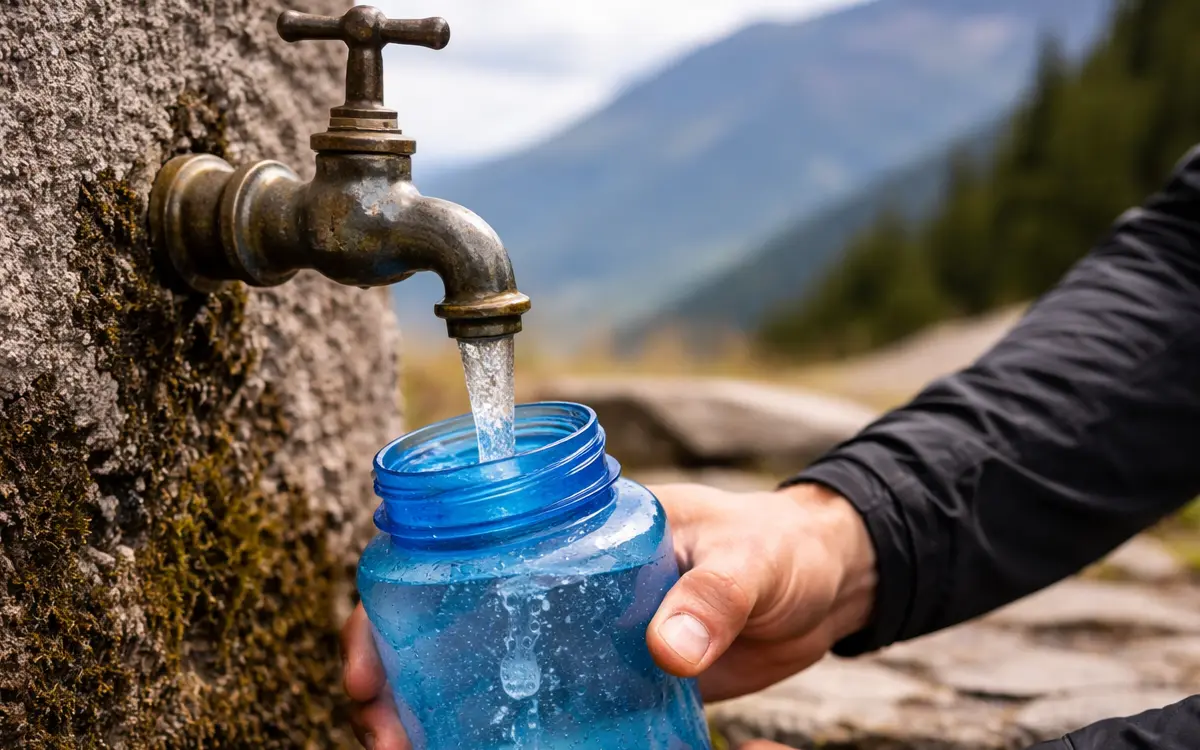
Remember that tap water is not always safe to drink.
During the Ride
Drink during easier moments: before a long climb, on a gentle stretch, or during a short break. Avoid gulping too much at once, which can feel heavy, especially at altitude. The most effective approach is to keep your body consistently hydrated throughout the ride.
Post Ride: How to Rehydrate So Tomorrow Feels Better
After riding, keep drinking fluids for the next hour and include something salty with your meal. If you finish completely “dry,” recovery can make the difference between enjoying the next day or waking up with a headache and no energy. This is especially important if you have several consecutive days of activity.
When You Must Stop
⚠️ Warning Signs:
Confusion, severe dizziness, difficulty walking or breathing → stop immediately. Do not ignore these symptoms at altitude.
Staying hydrated while mountain biking in Cusco is worth it. It helps you ride with more safety, energy, and confidence in an environment where altitude, dry air, and sun can demand more than you expect. Once you understand how to hydrate properly, you’ll enjoy every route more and reduce the risk of feeling unwell mid-ride. At Peru Biking Tours, we guide you to choose the best experience for your level. Contact us at +51 946 459 491 and get ready to explore Cusco to the fullest.
Thousands of travelers have trusted Peru Biking Tours for unforgettable adventures in the Andes.
Your Safety First
Routes tailored to your level, expert local guides, and full support at all times.
No Worries
We handle all logistics so you can focus on enjoying the scenery.
Authentic Cusco Routes
Experience the Sacred Valley at your own pace with access to the best trails.
Quality Gear
High end enduro bikes, helmets, and protective gear for every level.
Plan Your MTB Experience in Cusco
MTB Day Tours in Cusco
If you want to ride trails like Lamay Sapacto with the right logistics, local support, and carefully selected routes, check out our MTB Day Tours in Cusco.
Multi-Day MTB Tours
For more complete adventures that connect multiple valleys and high mountain routes, explore our Multi-Day MTB Tours.


