


Quick Answer
For mountain biking in Cusco, the right bike depends on the kind of ride you plan to do. If your route focuses on technical descents and Enduro, a Full Suspension bike is the safer option for traction and control. If your day is mostly long climbs and XC style pedaling, a Hardtail is the better pick for efficiency at altitude. Not sure which one to choose? When in doubt in the Cusco valleys, go with Full Suspension.
If you’re planning to go mountain biking in Cusco and you’re torn between a Full Suspension and a Hardtail, the best choice comes down to your route and your technical level. In Cusco’s high altitude zone, the ground is loose and uneven, and the thin air forces you to manage your energy more carefully.
Wondering which bike setup is best for Cusco’s altitude? Our day tours are designed for riders deciding between full suspension comfort or hardtail efficiency, while still enjoying authentic enduro adventures in the Andes.
A Full Suspension gives you more control on technical descents and reduces fatigue on longer rides over loose rock. A Hardtail is more efficient on climbs and is simpler to maintain. In this post, I’ll show you when each one makes sense for your mountain biking trip in Cusco based on terrain, ride length, and your experience.
What is the Best Option: Full Suspension or Hardtail?
Choosing the right setup for Mountain Biking in Cusco should be based on the terrain profile, the thin air at altitude, and how each system absorbs impacts. Below is how each one performs in high altitude conditions.

Comparative graphic: Hardtail vs Full Suspension Mountain Biking.
Full Suspension
This setup adds a rear shock connected through pivots. In the Cusco mountains, its main job is keeping your rear wheel planted over high frequency chatter (loose rock) and bigger hits (stone steps), which maximizes traction and braking control.
Use Profile
Long downhill descents (Downhill), Enduro riding, and terrain packed with natural rock obstacles (volcanic rock, granite).
| TECHNICAL ADVANTAGES | TRADE OFFS |
|
|
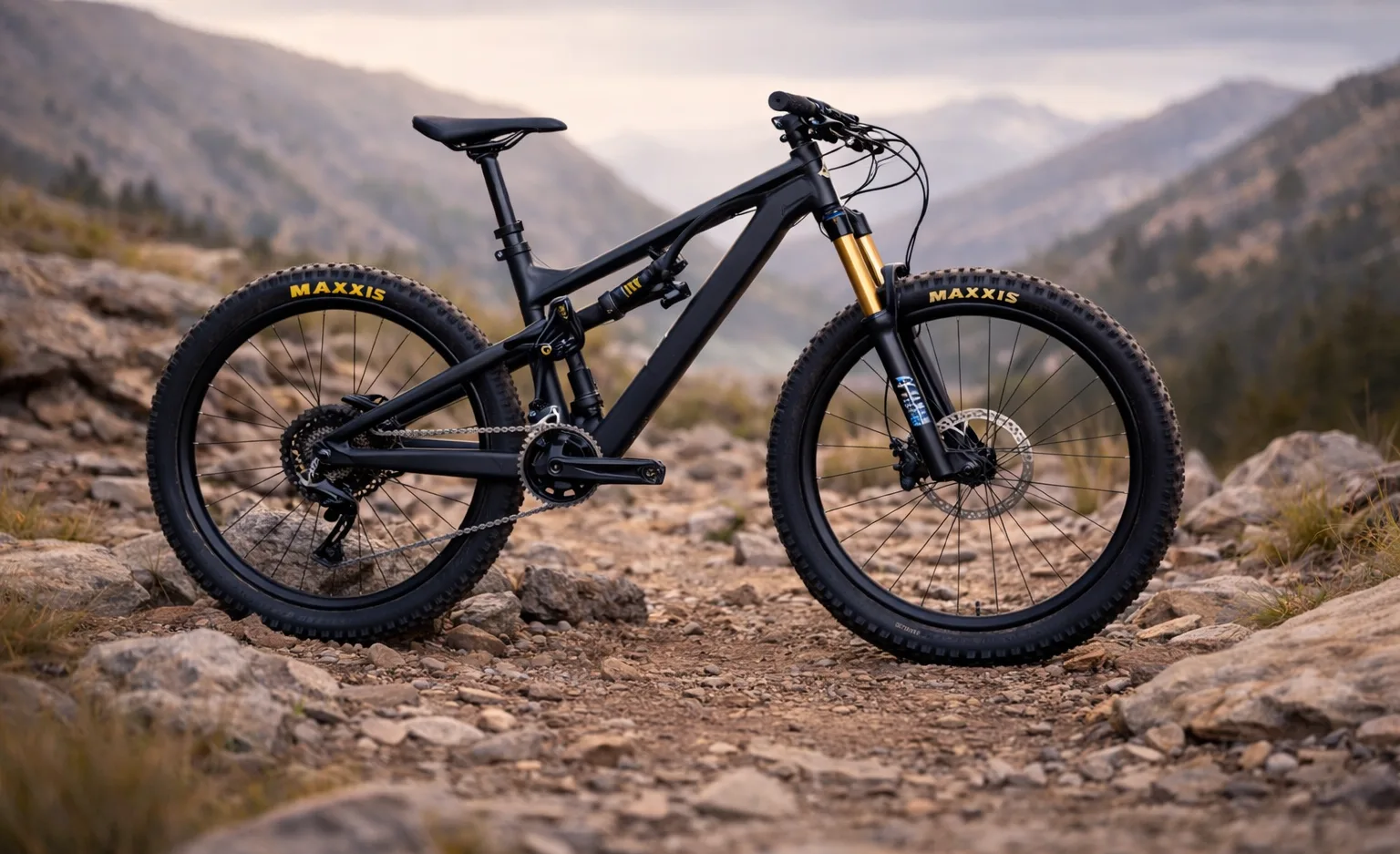
Full Suspension Bike for technical downhill and Enduro.
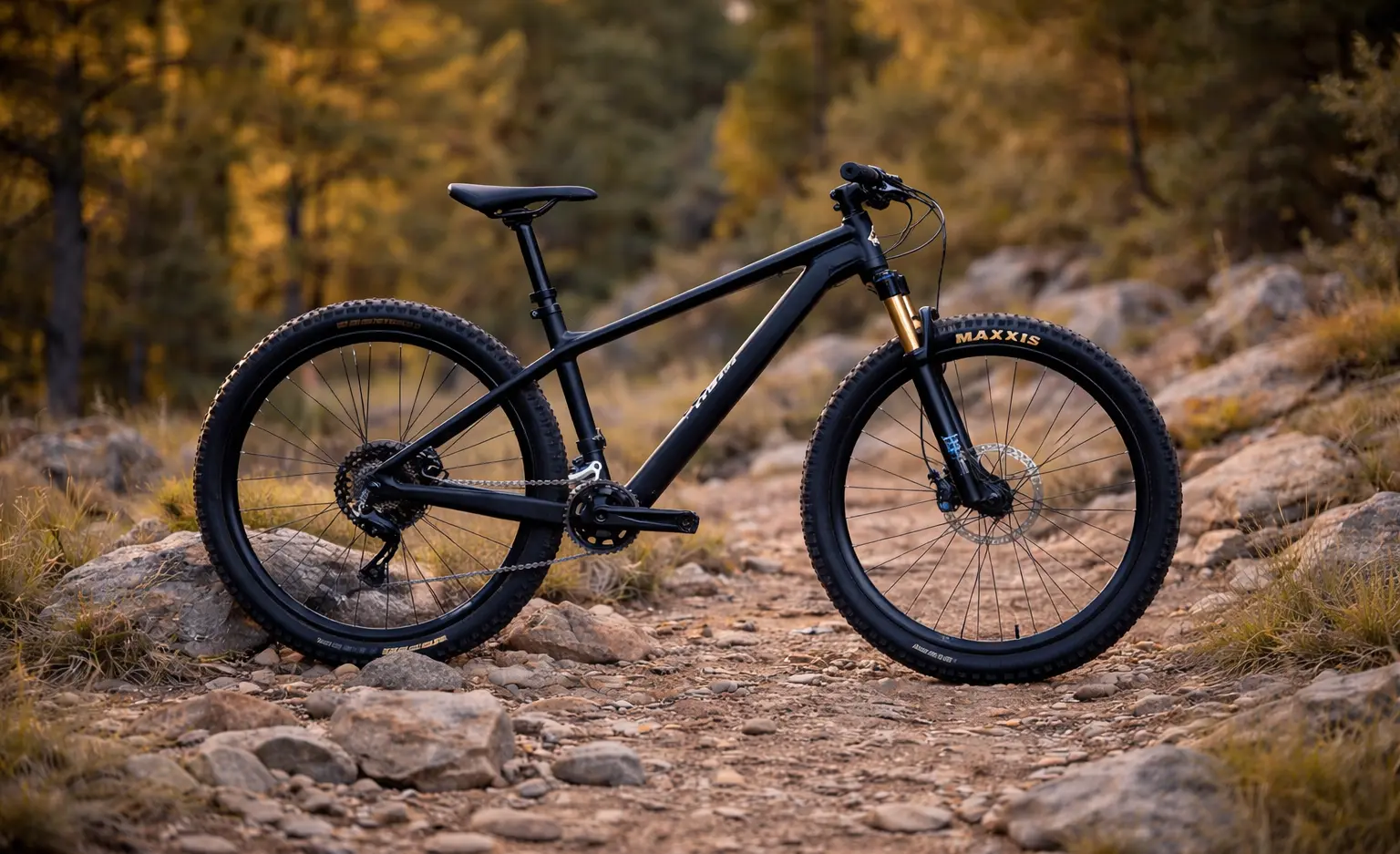
Hardtail Mountain Bike ideal for Cross Country (XC) and climbing.
Hardtail
A hardtail uses suspension only in the front fork, with a rigid rear triangle. It delivers direct power transfer from your pedals to the rear wheel, without energy getting absorbed by a rear shock.
Use Profile
Cross Country (XC), mixed routes with more climbing, bikepacking, and for riders with advanced handling skills.
| TECHNICAL ADVANTAGES | TRADE OFFS |
|
|
When to Choose Each Setup
Your final decision should come down to two variables: the technical profile of your planned route and your ability to manage the bike on uneven terrain.
Based on Route Type in Cusco
Below, you’ll see how each riding style lines up with the most efficient choice for that terrain.
| Route type | Terrain characteristics | Technical recommendation | Examples in Cusco |
| XC Routes(Cross Country) | Mostly pedaling, big elevation gain totals (cumulative climbing), and mixed surfaces (farm roads and compact singletrack). | Efficient energy transfer and reduced weight to handle thin air. |
|
| Mixed Routes(Trail) | A blend of road or flowy connectors with short sections of rock, roots, or steep descents. | If technical descents make up more than 30% of the route, rear suspension is worth the extra weight. |
|
| Enduro | Natural singletracks with higher technical difficulty: ruts, stone steps, and tight turns. | Essential for keeping stable geometry on steep descents and rough terrain. |
|
| Downhill / Bike Park | You climb only by vehicle (shuttle). Descents are fast, with larger features and impacts. | Non negotiable. A rigid rear end compromises safety and braking performance here. |
|
Based on Rider Skill Level
Your experience level determines how well you can absorb impacts with your body instead of relying on the bike’s mechanics.
Beginner Level
- Analysis: You are still developing precise line choice.
- Choice: Full Suspension. It forgives mistakes and keeps traction when your weight distribution is not dialed. A Hardtail can work, but it can speed up fatigue and make learning feel punishing because impacts feel harsher.
Intermediate Level
- Analysis: You have basic control and fitness, but very rough trails wear you down.
- Choice: Depends on ride length. For shorter rides (under 2 hours), a Hardtail helps you sharpen technique. For longer days (over 4 hours) in the Cusco high altitude zone, a Full Suspension is better for reducing cumulative fatigue from vibration.
Expert Level
- Analysis: You read terrain at a high level and use your body to “float” over obstacles.
- Choice: Strategic. Choose a Hardtail when you want precision, instant acceleration, and a technical challenge. Choose a Full Suspension when you want to maximize average speed on very rough terrain or in competition.

Infographic: The Route Decides Your Machine – Hardtail vs. Full Suspension.
Choose Your Ideal Bike
Here’s the direct answer based on your riding style in Cusco:
- For technical descents, Enduro, and Downhill, the best choice is a Full Suspension, because you need traction and safety on rough terrain.
- For long climbs, XC, and exploration, you need a Hardtail, because saving weight and gaining pedaling efficiency is key for mountain passes without burning out.
- For mixed routes (all mountain), it depends on skill: for beginners, choose a Full Suspension (prioritize comfort); for experts, choose a Hardtail (prioritize agility and technique).
Ready to ride the valleys and high altitude zones around Cusco?
Thousands of travelers have trusted Peru Biking Tours to live unforgettable experiences in the Andes.
Your safety first
Routes adapted to your level, expert local guides and full support at all times.
Without worrying about anything
We take care of all the logistics so you can just focus on enjoying the scenery.
Authentic routes in Cusco
Experience the Sacred Valley in a real way, at your own pace, with access to the best trails.
Quality equipment
High-end enduro bikes, helmets and protective gear for all levels.
Plan your MTB experience in Cusco
MTB Day Tours in Cusco
If you want to explore MTB routes with the right logistics, local support, and suitable trail selection, check out our MTB Day Tours in Cusco.
Multi-Day MTB Tours
For more comprehensive experiences that connect several valleys and high mountain routes, discover our multi-day MTB Tours.


