


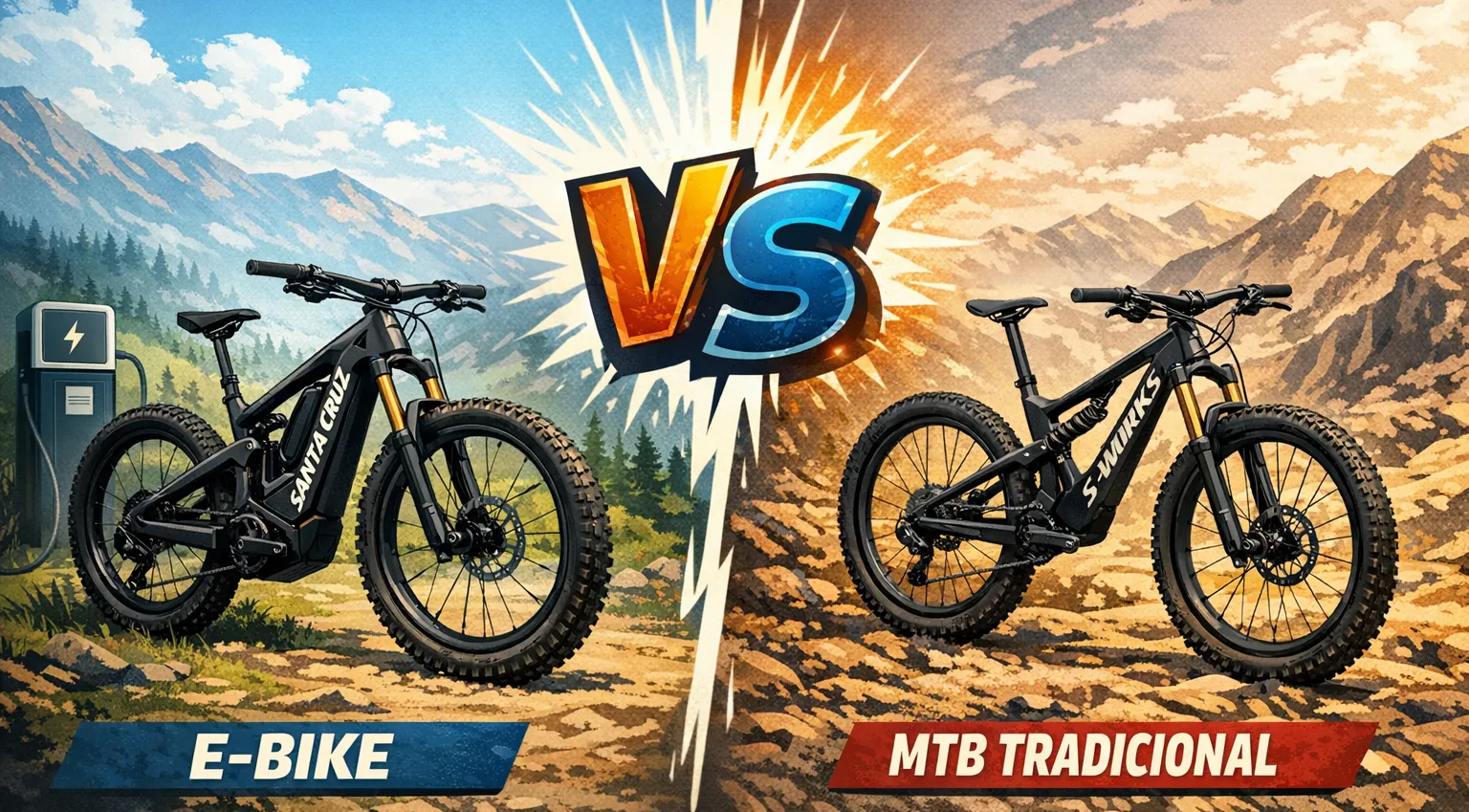
Quick Answer:
In Cusco, E-Bikes are the best option for riders who want to manage altitude better, explore more terrain in less time, and enjoy mixed group rides with less physical wear. Traditional MTB is the better choice for riders who want a real physical challenge, lighter handling, and more precise control on technical descents. The best option depends on whether you prioritize exploration or pure riding performance.
If you’re planning mountain biking in Cusco and don’t know whether to choose an electric bike or traditional MTB, everything depends on your physical endurance and the experience you seek. E-Bike tours are perfect for enjoying the landscape without exhausting yourself from altitude, while traditional MTB is ideal if you seek a real physical and technical challenge on Andean descents.
Want to tackle one of the most technical trails in the Sacred Valley? Discover our day tours in Cusco designed for riders seeking real enduro in the Andes.
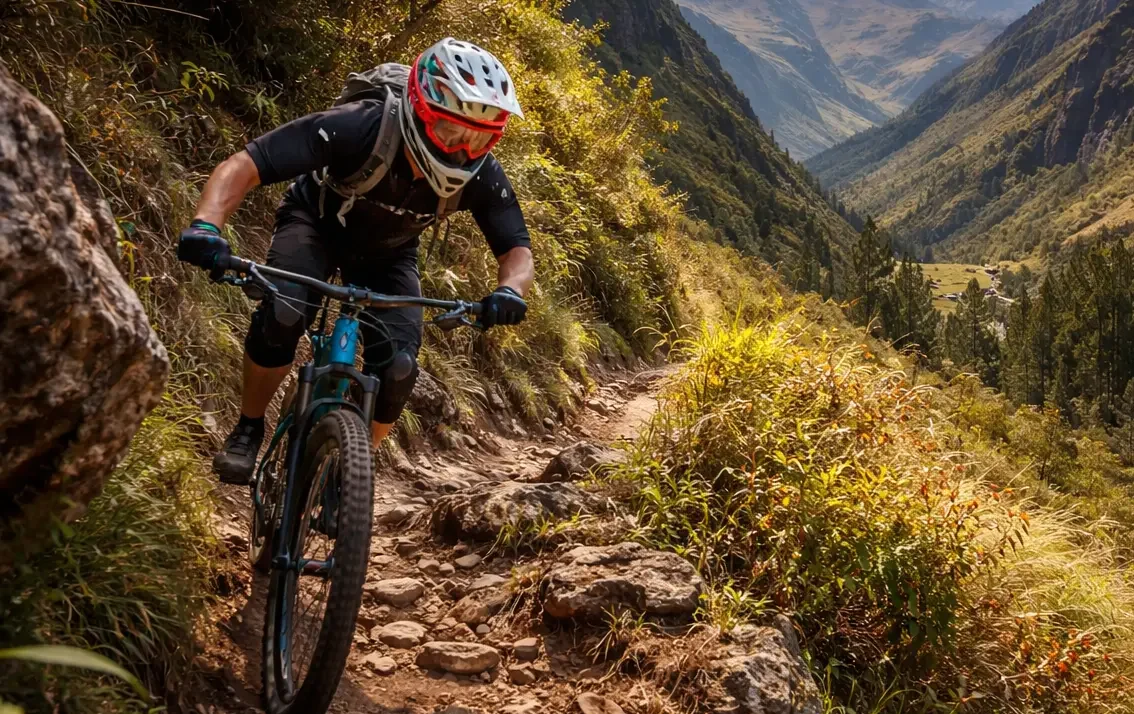
Rock steps demand precision, smooth braking, and full control.
E-Bike vs Traditional MTB Cusco: Which One Is Better for Your Ride?
1. The Altitude Challenge
The fundamental difference lies in how you manage your energy at more than 11,155 feet (3,400 meters) above sea level.
| Modality | What it offers | Ideal for | Key point in Cusco |
| Traditional MTB | Offers satisfaction of conquering mountain passes at altitude only with your leg power. It’s a physical and mental challenge creating direct connection with mountain and rewarding each climb with real effort. | Cross-Country or Enduro cyclists with good physical condition seeking more demanding and authentic experience. | Requires optimal acclimatization, ideally at least 3 days, plus very good endurance to enjoy route to maximum. |
| E-Bike | Electric assist helps face altitude better, facilitates long and steep climbs, and allows saving energy to enjoy landscape and descents more. | Riders with few days to acclimatize, groups with different fitness levels or travelers prioritizing exploring more without exhausting themselves. | It’s a great ally against altitude wear and a very practical option to better use time on demanding routes. |
2. Agility vs. Stability on Descent
When gravity takes over and trail points downward, bike weight transforms sensations.
| Modality | Trail behavior | Main advantage | To keep in mind |
| Traditional MTB | At 31–33 pounds (14–15 kg), an enduro MTB feels agile, reactive and easy to maneuver on tight curves, obstacles and rock gardens. | If your priority is technique, flow and feeling every inch of trail, conventional bike offers hard to match agility. | Demands more overall physical effort and less help margin on long or high altitude sections. |
| E-Bike | At 51–55 pounds (23–25 kg) and low center of gravity, E-MTB feels very planted on terrain, especially on loose rock and fast descents. | Offers great stability, better absorbs terrain imperfections and transmits lots of confidence at high speed. | Demands more arm strength on very slow curves and feels less agile in tight maneuvers. |
3. Technique vs Exploration
| Modality | Experience focus | Main advantage | Ideal for |
| Traditional MTB | Experience focuses more on quality of one or two high level descents per day, with more specialized and technical approach. | Allows studying a line, repeating sections and working technique more precisely, squeezing every curve, jump and trail detail. | Riders seeking to perfect their handling and focus on mastering specific trail. |
| E-Bike | Electric assist completely changes route reach and allows connecting several epic sections in less time and with less wear. | Makes possible covering long circuits and chaining several sections in single outing, something that on traditional MTB would demand much greater physical condition or constant logistical support. | Travelers wanting to explore more terrain in less time and riders prioritizing variety, efficiency and route volume in single day. |
Who should choose E-Bike in Cusco?
Electric mountain bikes have changed the game rules, especially at altitudes above 11,155 feet (3,400 m above sea level). It’s not about “cheating,” but maximizing fun and reach.
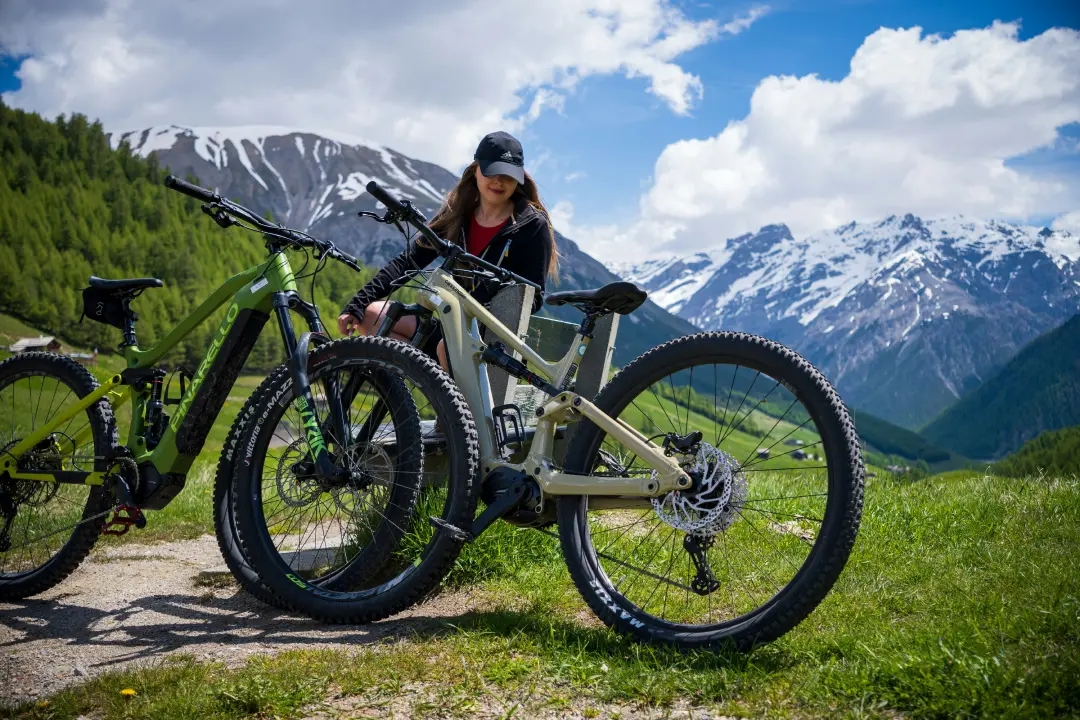
E-Mountain Bikes in a Scenic Alpine Valley
Who should choose Traditional MTB in Cusco?
For lovers of classic enduro and downhill, nothing beats the feeling of a mechanical bike responding purely to your effort and technical skill.
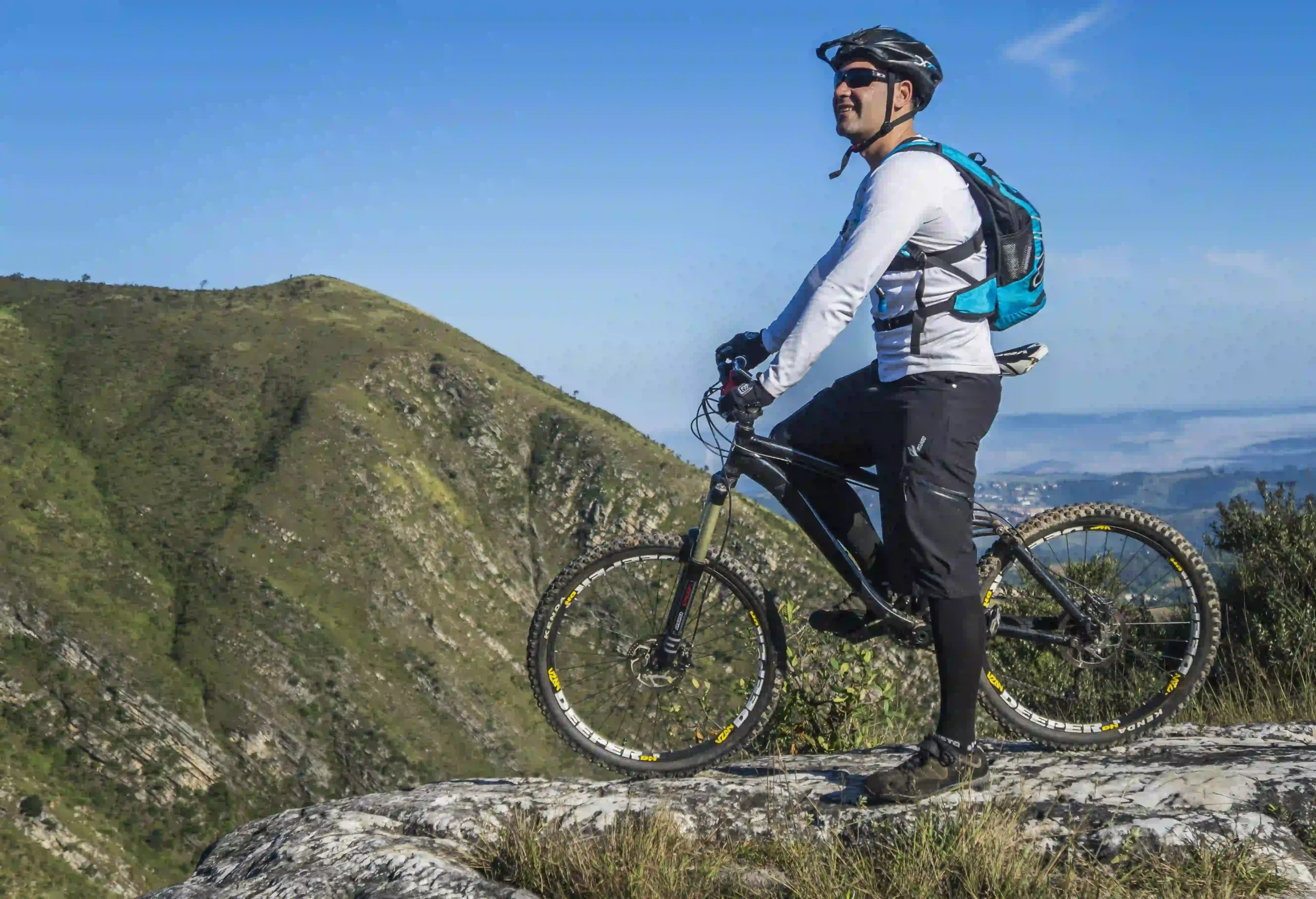
Admiring the vastness of the Andes before conquering the ancient stone trails.
E-Bike vs Traditional MTB Comparison: Quick Summary
| Factor | E-Bike Tours Cusco | Traditional MTB in Cusco |
| Physical effort | Lower, electric assist on climbs | Higher, requires endurance and technique |
| Altitude (9,843–16,404 ft / 3,000–5,000 m) | Reduces altitude sickness impact | Demands prior acclimatization |
| Sacred Valley MTB experience | Ideal for beginners and families | Better for experienced cyclists |
| Technical descent in Cusco | Limited, less control in rock gardens | Greater control on natural descents |
| Typical tour duration | 4–6 hours with less wear | 4–6 hours with greater demand |
| Approximate cost | $80–180 USD per person | $60–150 USD per person |
| Recommended profile | Tourists seeking to explore without exhausting themselves | Riders seeking adrenaline and technical challenge |
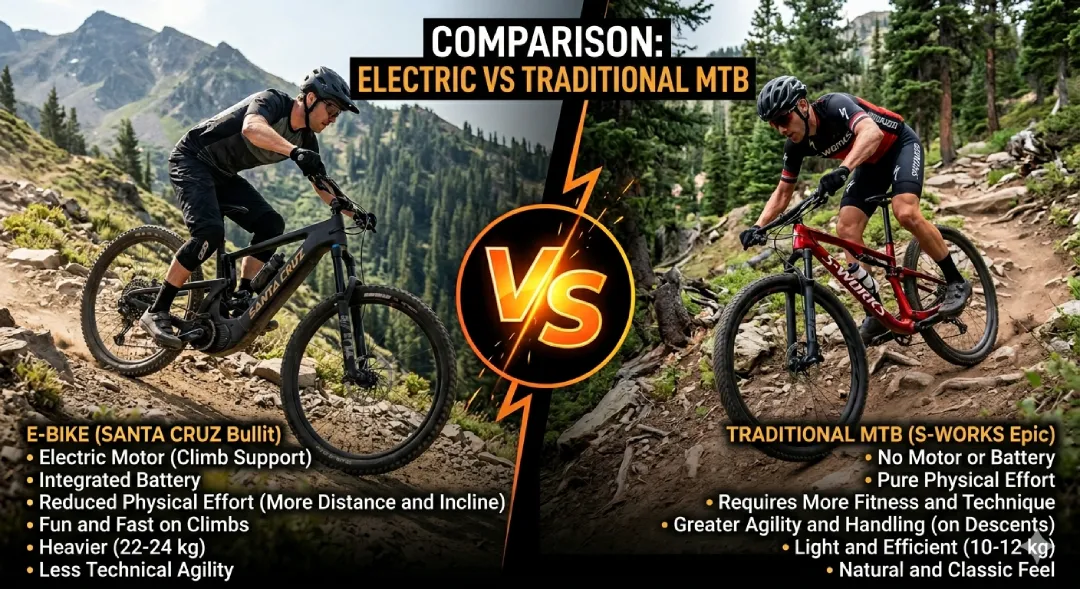
E-Bike vs Traditional MTB Cusco
Available routes for each format
E-Bike routes
Although most operators offer E-Bikes on their most accessible tours, there are routes especially suited for electric assist:
- Archaeological city tour: Saqsayhuaman, Qenqo, Pucapucara and Tambomachay. Variable elevation makes E-Bike almost essential to enjoy it without suffering.
- Extended Sacred Valley: Routes like Tiobamba and Maras Salt Mines, with accumulated elevations of more than 4,265 feet (1,300 meters), are perfect for E-Bike.
- Multi-day crossings: There are 3-day E-Bike packages covering 62 miles (100 km) with 7,218 feet (2,200 meters) of ascent and 15,748 feet (4,800 meters) of descent, combining Sacred Valley’s best routes.
Traditional MTB routes
The traditional MTB route catalog is very extensive and covers all levels:
| Route | Difficulty | Elevation drop | Feature |
| Maras – Moray | Easy | -3,628 ft (-1,106 m) | Classic, visit salt mines and Moray |
| Lares Trail | Intermediate | -4,265 ft (-1,300 m) | Inca road, llamas, spectacular landscapes |
| Inca Avalanche | Advanced | -5,075 ft (-1,547 m) | Ramps, drops, wallrides, rock gardens |
| La Máxima | Advanced | -5,745 ft (-1,751 m) | Technical enduro, tight curves, stairs |
| Yuncaypata | Intermediate | -3,609 ft (-1,100 m) | Local favorite, variety of lines |
| El Brujo | Advanced | -2,625 ft (-800 m) | Inca road, stairs, pure technique |

Steep high mountain descent with snow peaks in sight.
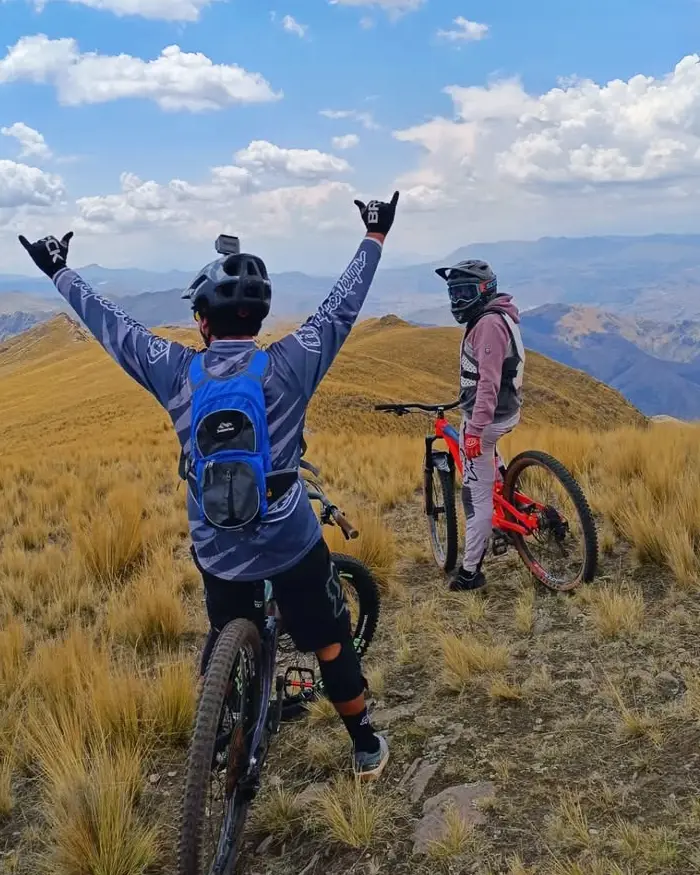
Two riders, one summit, and the Andes wide open.
Quick summary
Traditional MTB gives you access to much broader route catalog, including most technical and demanding. E-Bike concentrates on easy to intermediate level routes.
What bike suits you according to your profile?
| If you are… | Best option |
| You have few days to acclimatize | E-Bike |
| You want to explore more in less time | E-Bike |
| You seek real physical challenge | Traditional MTB |
| You’re more interested in technical descents | Traditional MTB |
| You travel with mixed group | E-Bike |
| You have advanced enduro experience | Traditional MTB |
Common mistakes choosing between E-Bike and traditional MTB in Cusco
- Choosing traditional MTB without being acclimatized
- Thinking E-Bike does everything itself
- Underestimating E-Bike weight on technical descents
- Choosing bike by ego not by route type
- Booking route too difficult for chosen format
Quick facts
- E-Bike: less physical wear, more reach
- Traditional MTB: more agility, more physical challenge
- Better for altitude: E-Bike
- Better for pure technique: Traditional MTB
- Ideal for beginners: E-Bike or gentle routes
- Ideal for advanced riders: Traditional MTB or E-Bike depending on objective
Thousands of travelers have trusted Peru Biking Tours to enjoy unforgettable experiences in the Andes.
Your safety comes first
Routes adapted to your level, expert local guides, and full support at every stage.
No need to worry about a thing
We take care of all the logistics so you can focus entirely on enjoying the scenery.
Authentic routes in Cusco
Experience the Sacred Valley in a real way, at your own pace, with access to the best trails.
High quality gear
High end enduro bikes, helmets, and protective gear for every level.
Plan your MTB experience in Cusco
MTB Day Tours in Cusco
If you want to explore MTB routes with the right logistics, local support, and suitable trail selection, check out our MTB Day Tours in Cusco.
E-bikes Tours
Curious how altitude impacts your e-bike in Cusco? Our E-Bike tours are designed for riders who want authentic enduro adventures in the Andes.


