



Quick Answer
If you are trying to choose between Lares vs Lamay for MTB, start by thinking about how you handle altitude and what kind of ride feels manageable for you. If your priority is flow, a more continuous descent, and wide open scenery, Lares tends to fit better. If what you want is a more technical day with broken terrain and a more enduro feel, Lamay is often the right call.
If you are planning an MTB trip in Cusco, understanding the difference between Lares vs Lamay is vital for your itinerary. Choosing between the smooth flow of one and the technical demands of the other depends on your skill level and how well you are acclimatized. That is why this guide breaks down the terrain using real ranges, since the starting altitude varies based on each operator’s logistics.
Deciding between Lares and Lamay for your MTB adventure in Cusco? Our day tours are designed for riders who want authentic enduro experiences in the Andes, always smoother when you choose your route based on altitude, technical difficulty, and your riding experience.
| Criteria | Lares | Lamay |
| Altitude and acclimatization | High and demanding (starts around 13,825 ft (4,214 m)). | High and demanding (starts around 14,219 ft (4,334 m)). |
| Terrain and style | Open, smooth (flow), and very fast. Dirt and dust. | Technical, rock gardens, and tight corners. Pure enduro. |
| Main challenge | Physical endurance (long descent) and oxygen management. | Line precision and control on broken terrain. |
| Best for | Riders who want speed, huge scenery, and smooth flow. | Riders who want technical adrenaline and to work the bike hard. |
| Protection | Knee pads are mandatory. An open face helmet can work. | A full face helmet is strongly recommended + extra protection. |
Lares vs Lamay MTB: Detailed breakdown
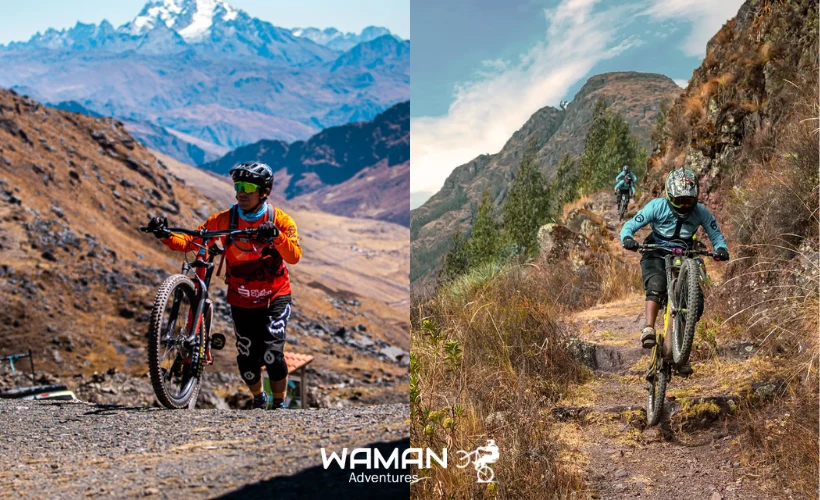
MTB contrasts in the Andes: the Lares vs Lamay route.
The Lares route: flow, vast landscapes, and Andean scenery
Lares is defined by its rhythm and the wide open feeling of the Sacred Valley, pushing you to manage your energy on a long, sustained descent where the priority is keeping momentum and staying in control of what is coming next.
Location and altitude
This route connects high Andean mountain passes with the Sacred Valley. On the standard itinerary, the drop in point sits around 13,825 ft (4,214 m), then you descend toward areas like Calca. That creates a noticeable temperature shift and an open environment that helps you read the terrain without the closed in feeling you get in other zones.
Terrain and technique
You will mostly ride wide, smooth tracks over dirt, dust, and loose rock that allow fast lines, putting the difficulty on high speed control and physical endurance through a continuous descent more than on stone obstacles that force constant braking.
The experience
This is the logical choice if you want to let the brakes go and rack up a huge vertical drop without nonstop technical interruptions, but you will need prior acclimatization and a bike setup tuned for traction on loose terrain and stability at speed.
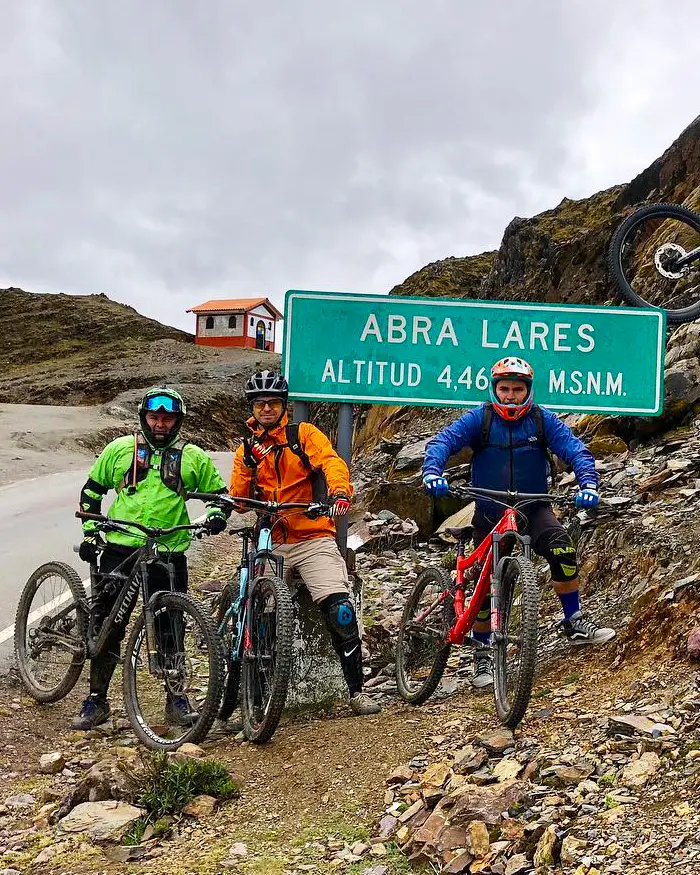
From Abra Lares, riders begin a mountain biking experience that links the high Andean puna with the lower valleys.

Scenic break by the high Andes lagoon, where the quiet view resets you before the next descent.
The Lamay route: technique, rock gardens, and character
Lamay stands out for its technical demands and the need for constant, precise control, forcing you to work every meter of the descent with active terrain reading that prioritizes line choice over pure speed.
Location and altitude
Access varies depending on the line you choose before dropping to the town of Lamay in the Sacred Valley, which changes the feel and the true technical profile of the route.
Terrain and technique
The terrain includes natural steps, rock gardens, and loose stone sections that alternate with tight switchback turns, demanding constant physical management to absorb impacts and reposition the bike after hard braking without losing traction.
The experience
This MTB route prioritizes active handling and technical challenge over smooth flow, requiring solid protection and brakes in excellent condition to respond to the constant demands of broken terrain and shifting rhythm.
Lares vs Lamay: Which one should you choose based on your profile?

Technical stone steps in Lares Trail.
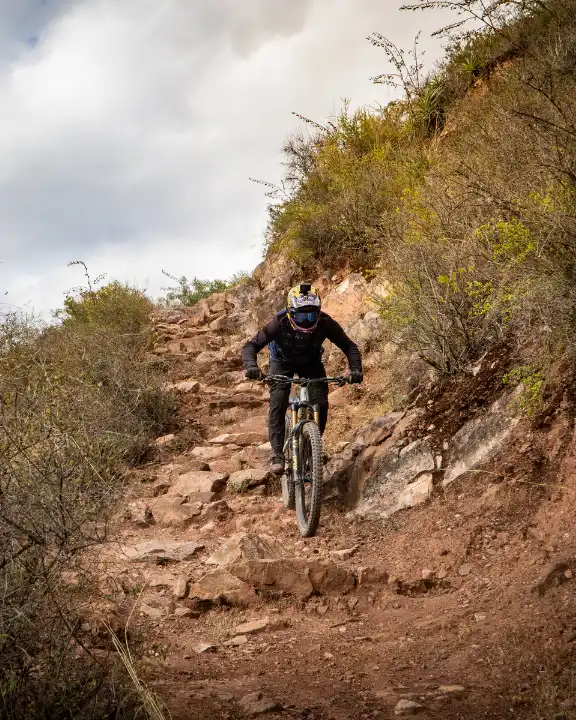
Rough rocky section in Lamay, where the bike stays lively and the speed builds.
Altitude and acclimatization
When you compare Lares vs Lamay, both rides start high. On the standard itineraries, Lares drops in around 13,825 ft (4,214 m), while Lamay starts around 14,219 ft (4,334 m). Lares can feel more demanding because the descent is longer and more sustained, while Lamay concentrates the effort into repeated impacts, braking, and line choices. A 24 to 48 hour acclimatization window is essential if you plan to start above 13,780 ft (4,200 m).
Logistics and access
Lamay maximizes actual riding time with shorter transfers from Cusco or the Sacred Valley, while Lares typically requires a longer drive. If you care about efficiency and fitting more riding into the day, logistics often favor Lamay.

Downhill riding blends into the Andean landscape, combining big elevation loss, technical terrain, and spectacular views.
Recommendations for MTB on Lares vs Lamay
Best season
The dry season between May and October brings more stable, predictable terrain despite loose dust, unlike the rainy months between November and March when mud and reduced traction significantly increase risk on technical sections.
Weather and wind exposure
Keep in mind that Lares starts in open puna that is highly exposed to cold wind, so it can feel much colder at the top. Bringing a windbreaker or a packable vest that is easy to stash is essential. Lamay can still start high, but it is often more protected by the valley’s geography and it drops faster into milder zones.
Underestimating technical difficulty
Underestimating Lamay’s technical density because it is shorter is a common mistake, since it demands more precision and physical work than Lares’s flow, where high speed severely punishes any lapse in focus or overconfidence.
Recommended gear
Knee pads and a certified helmet are the minimum standard for MTB on both routes. A full face helmet and reinforced tire casing are strongly recommended on Lamay due to the prevalence of exposed rock and aggressive rock gardens.
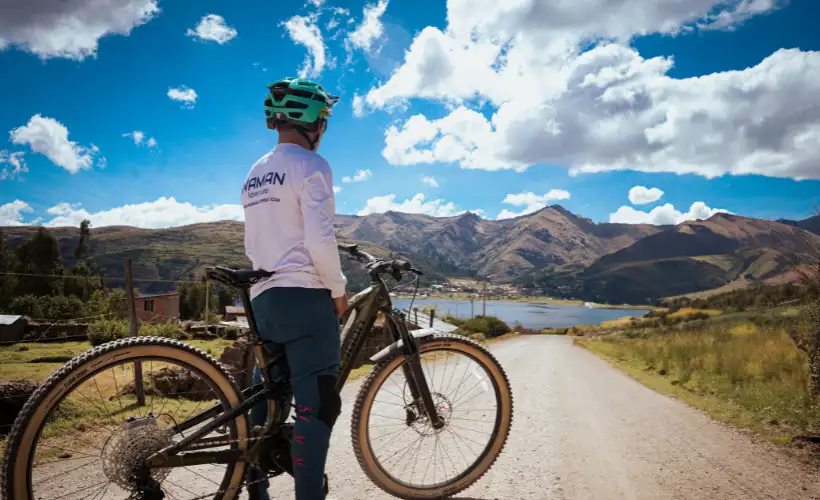
The start point near Laguna Sapacto sets the tone, high altitude air, wide views, and a long descent ahead.
Thousands of travelers have trusted Peru Biking Tours to live unforgettable experiences in the Andes.
Your safety first
Routes adapted to your level, expert local guides and full support at all times.
Without worrying about anything
We take care of all the logistics so you can just focus on enjoying the scenery.
Authentic routes in Cusco
Experience the Sacred Valley in a real way, at your own pace, with access to the best trails.
Quality equipment
High-end enduro bikes, helmets and protective gear for all levels.
Plan your MTB experience in Cusco
MTB Day Tours in Cusco
If you want to explore MTB routes with the right logistics, local support, and suitable trail selection, check out our MTB Day Tours in Cusco.
E-bikes Tours
Curious how altitude impacts your e-bike in Cusco? Our E-Bike tours are designed for riders who want authentic enduro adventures in the Andes.


