


Quick Answer:
On your first e-MTB ride, the most common mistakes usually stem from poor speed management, using assistance without a strategy, failing to anticipate the terrain, and relying too heavily on the battery or motor. Understanding these points from the start will help you ride with more control, safety, and confidence.
Knowing common mistakes on your first E-MTB route will make your experience much safer, smoother and more fun from start. Often, problem isn’t in physical condition, but in not understanding how terrain changes or how speed influences on real mountain route. In this guide you’ll discover what common mistakes are and what you can do to avoid them.
First time on E-MTB? Avoid most common mistakes and learn how to ride better on Cusco routes. Discover our Day Tours in Cusco designed for riders seeking E-Bike adventures.
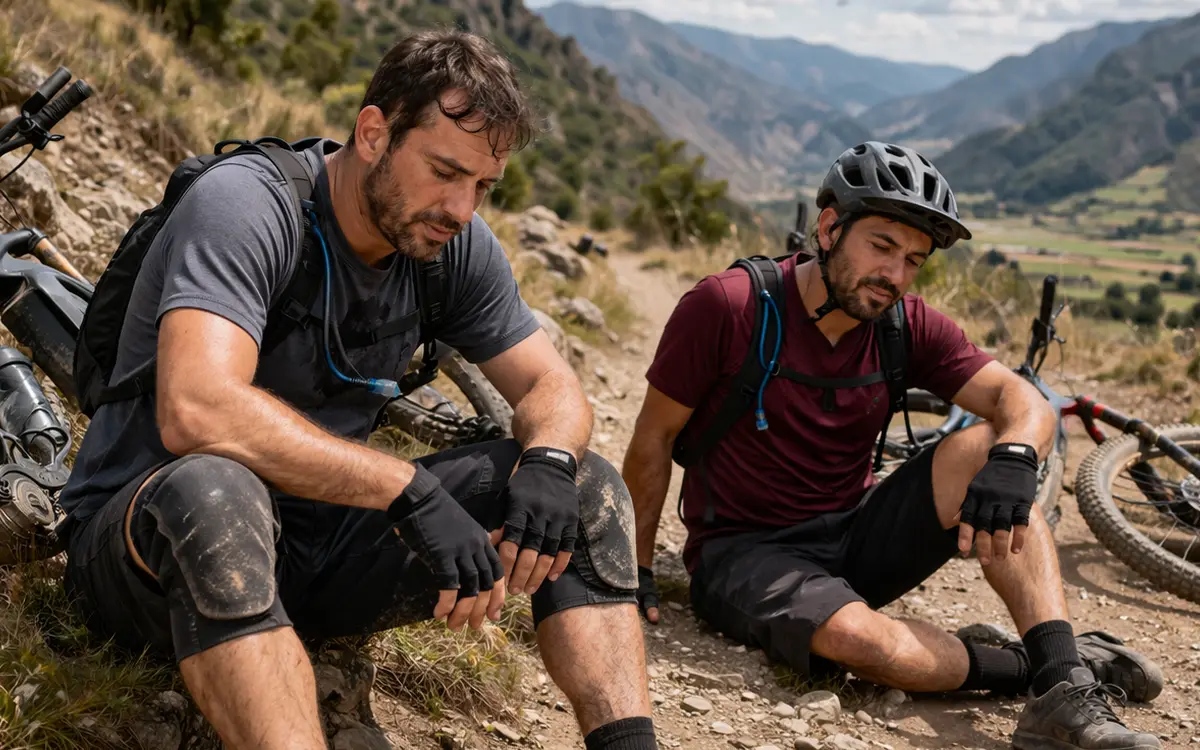
Seated on rocky ground, cyclists reflect typical fatigue after demanding descent in Andes.
Using assist modes without strategy
One of first common mistakes on your first E-MTB route is using most powerful mode from start. That makes you waste battery ahead of time and in some cases, bike responds with more force than you really need. Normal thing is more balanced use of modes helps you maintain better control and better take advantage of range throughout entire route.
Each mode has different function:
- Eco: gives you low and more natural assistance. Usually works well to conserve battery.
- Trail or Tour: offers balance between power and control. Normally most versatile.
- Turbo: delivers maximum assistance and is useful on demanding climbs or specific moments.
What happens when you don’t use them well
If you always use Turbo, bike can become more abrupt in its response. That makes you accelerate too much, lose traction on loose terrain or go off line in technical zone.
Remember that:
Safety depends more on your control than on technology.
Going too fast without realizing
Electric assistance makes you gain speed very easily, even without feeling you’re going that fast. That’s why, this is one of most common mistakes on first E-MTB route.
What usually happens when you don’t control speed well
- You enter curve too hard.
- You brake late.
- You arrive overdone to technical zone.
- You lose ideal trail line.
- Why it becomes problem in mountains
Problem isn’t speed, but how you manage it
Problem isn’t speed itself, but how you manage it. Going fast isn’t always mistake; what really works against you is not adapting your speed to terrain, to visibility and to control level you have at that moment.
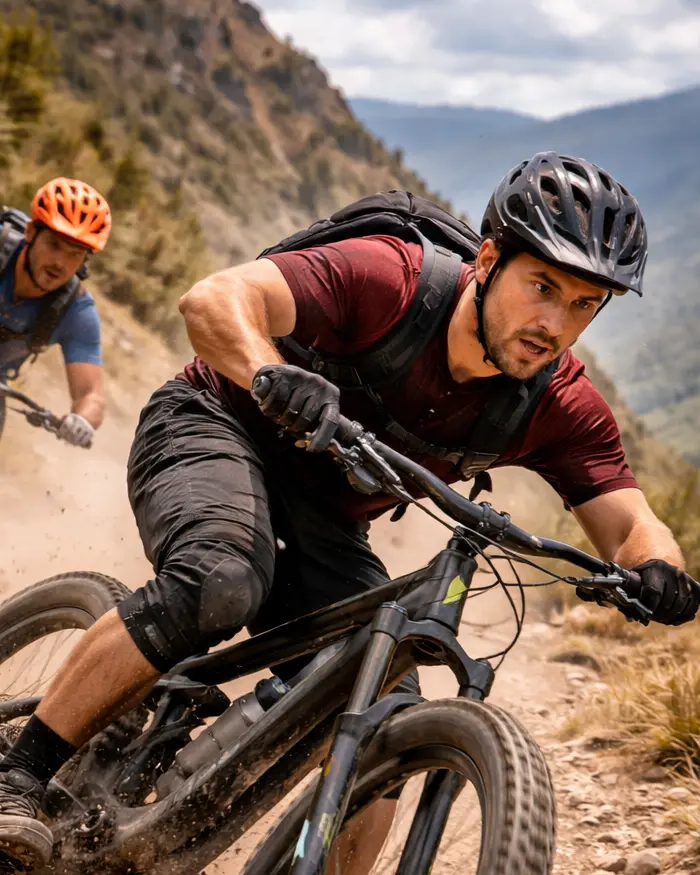
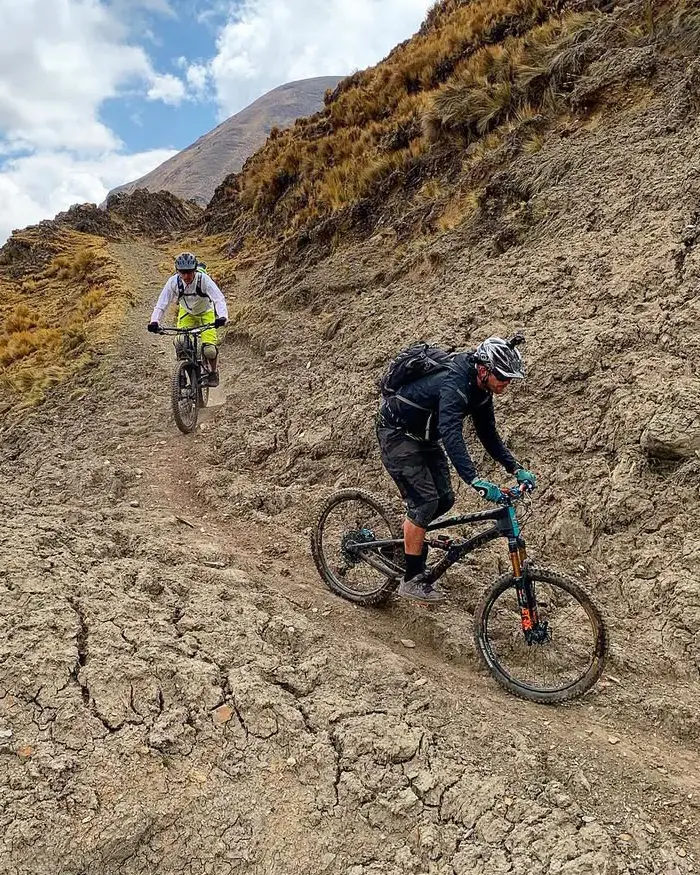
Both cyclists seem focused, carefully reading terrain before each curve.
Braking as if it were normal bike
Why braking feels different
Extra weight generates more inertia. That makes bike need more distance to brake and weight transfer feels more marked, especially on descents or curve entries.
What happens when you brake as if it were lighter bike
- You lose traction on loose terrain.
- You lock wheel.
- Bike gets disorganized in curve or on slope.
- You arrive poorly positioned to technical section.
Not reading terrain in advance
This is one of common mistakes on your first E-MTB route, becomes even more critical because speed increases faster and reduces your reaction time. If you don’t anticipate what’s coming:
- You react late.
- You brake abruptly.
- You lose line.
- Fall risk increases.
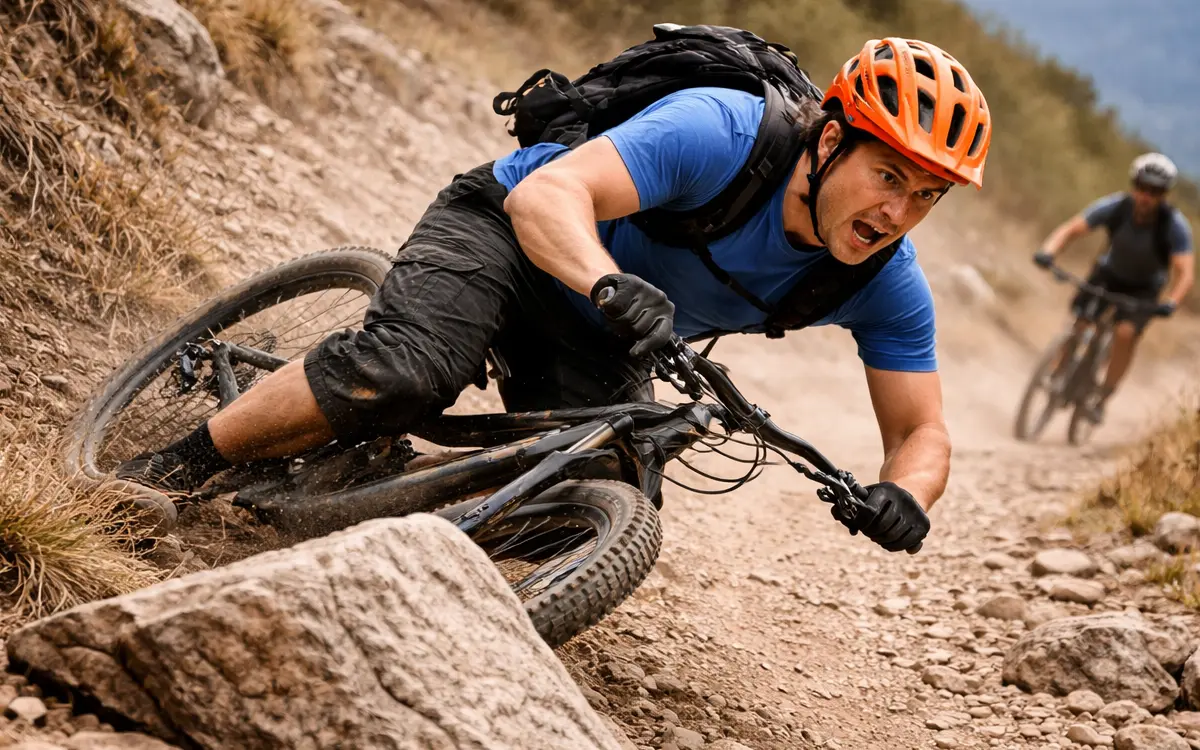
The dust kicked up and the tilt of the bicycle convey a feeling of momentary loss of control.
Dust raised and bike tilt convey sensation of momentary loss of control.
Not managing battery well
Battery doesn’t drain same on all routes, and this is one of common mistakes on your first E-MTB route. Reasons why battery doesn’t always last same:
- Accumulated elevation gain: more you climb, more energy motor consumes.
- Assist mode: Turbo drains much more than Eco or Trail.
- Total weight: rider + gear directly influence consumption.
- Terrain type: loose or technical surfaces require more power.
- Temperature: cold can reduce battery performance.
Important note:
Battery consumption directly depends on how you use bike.
Thinking you won’t get tired
This is one of common mistakes on your first E-MTB route: believing that because you have motor, route will feel light from start to finish. Why E-MTB also tires:
- Greater load on arms and hands during long descents.
- More leg work on technical or sustained sections.
- Constant effort to maintain balance and control.

Daylight and clear environment contrast with rider’s exhaustion gesture.
Choosing route above your level
Many bad first experiences start even before pedaling: with poor route choice.
If you choose route too technical, long or exposed for your level, most likely ride becomes more stressful than fun. On first outing, route where you can adapt to bike without feeling you’re always at limit usually works better.
Not carrying proper gear
On natural routes, environment isn’t predictable. You can encounter climate changes, technical terrain and long descents where any mistake is amplified.
Having proper gear allows you to:
- Maintain bike control.
- Reduce injury risk.
- Adapt to climate changes.
- Complete route without setbacks.
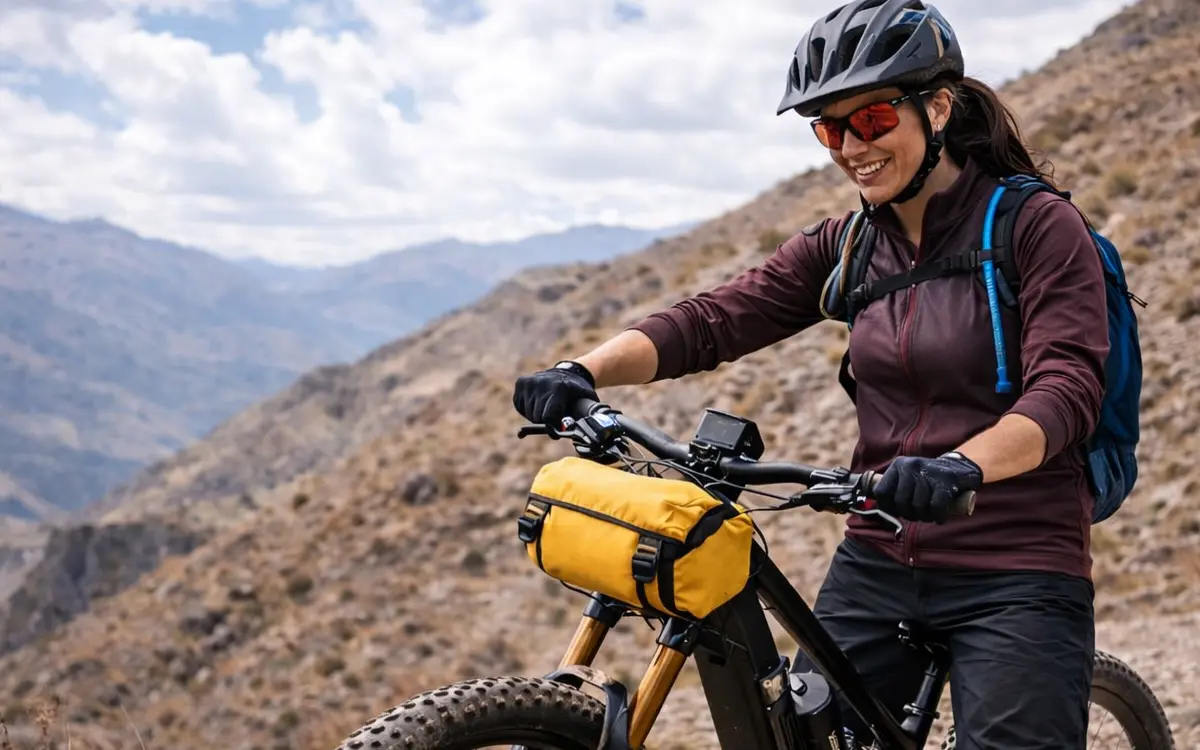
Cyclist seems to enjoy moment, combining technique with more recreational trail experience.
Not considering route logistics
Unlike bike park, many mountain E-MTB routes aren’t circular or marked. That means you need to plan before leaving:
- How you get to starting point.
- Where route ends.
- How much real time journey will take.
How to avoid these mistakes on your first E-MTB route
To avoid common mistakes on your first E-MTB route, more than advanced technique, what makes difference is how you make decisions during route.
Most recommended is:
- Start on easy or intermediate level routes.
- Avoid very technical or long descents from start.
- Prioritize trails where you can adapt to bike behavior.
Understanding common mistakes on your first E-MTB route helps you have more control and better enjoy experience from start. Most of these mistakes have to do with speed, terrain reading and battery management. If you want well-organized, safe first outing adapted to your level, Peru Biking Tours can help you.
Thousands of travelers have trusted Peru Biking Tours to experience unforgettable experiences in Andes.
Your safety first
Routes adapted to your level, expert local guides and complete support at all times.
Without worrying about anything
We handle all logistics so you only focus on enjoying landscape.
Authentic routes in Cusco
Experience Sacred Valley authentically, at your pace, with access to best trails.
Quality equipment
High-end enduro bikes, helmets and protective gear for all levels.
Plan your MTB experience in Cusco
MTB Day Tours in Cusco
If you want to ride routes like Lamay Sapacto with correct logistics, local support and proper trail selection, check out our MTB Day Tours in Cusco.
Multi-Day MTB Tours
For more complete experiences connecting several valleys and high mountain routes, discover our Multi-day MTB Tours.


