


Quick Answer:
The downhill trails near Ollantaytambo combine natural descents, Andean scenery, and authentic cultural context. Patacancha often feels longer and more demanding, while Pumamarca is more compact and easier to integrate into a Sacred Valley trip. The season, acclimatization, and logistical support greatly influence the experience.
Doing downhill near Ollantaytambo is different way to experience Sacred Valley, combining adrenaline with landscape and culture. Here you don’t just descend mountain trails, but cross routes with history, altitude and own character. Additionally, its location allows easily integrating broader trip through Cusco and Machu Picchu. That’s why, in this blog we show you ideal option.
Want to ride one of Sacred Valley’s most technical trails? Discover our Day Tours in Cusco designed for riders seeking real enduro in Andes.
What is Ollantaytambo and why it’s ideal base for this experience
Ollantaytambo is very well located between main tourist axis of Sacred Valley and ravines and high communities where several mountain experiences begin or connect.
Works very well as base for downhill because it brings together four uncommon advantages in single place: real cultural value, quick access to high areas, sufficient services for comfortable experience and very good connection with Machu Picchu and rest of Sacred Valley.
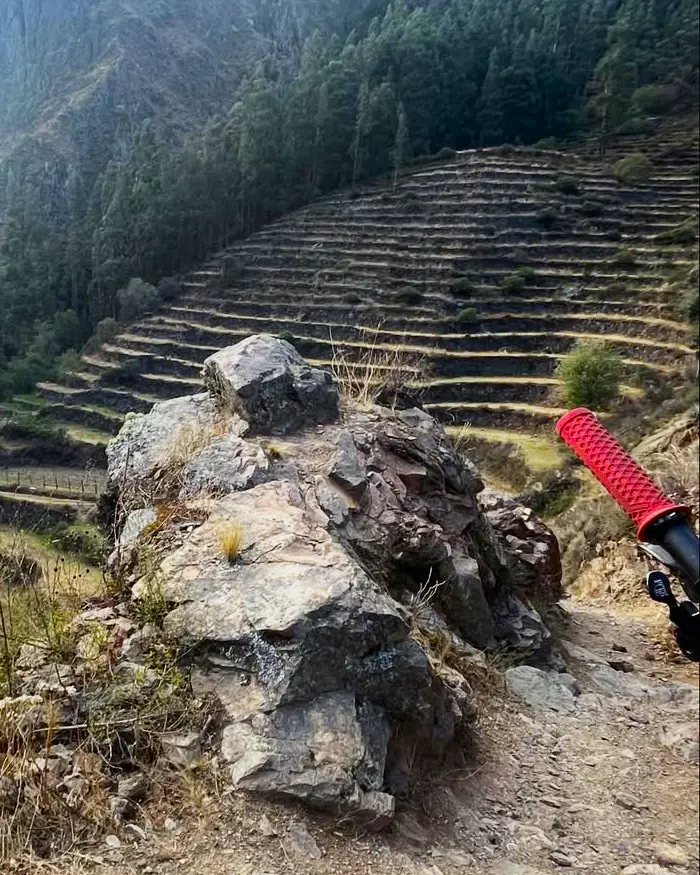
Environment combines nature, Inca culture and technical difficulty in single mountain setting.
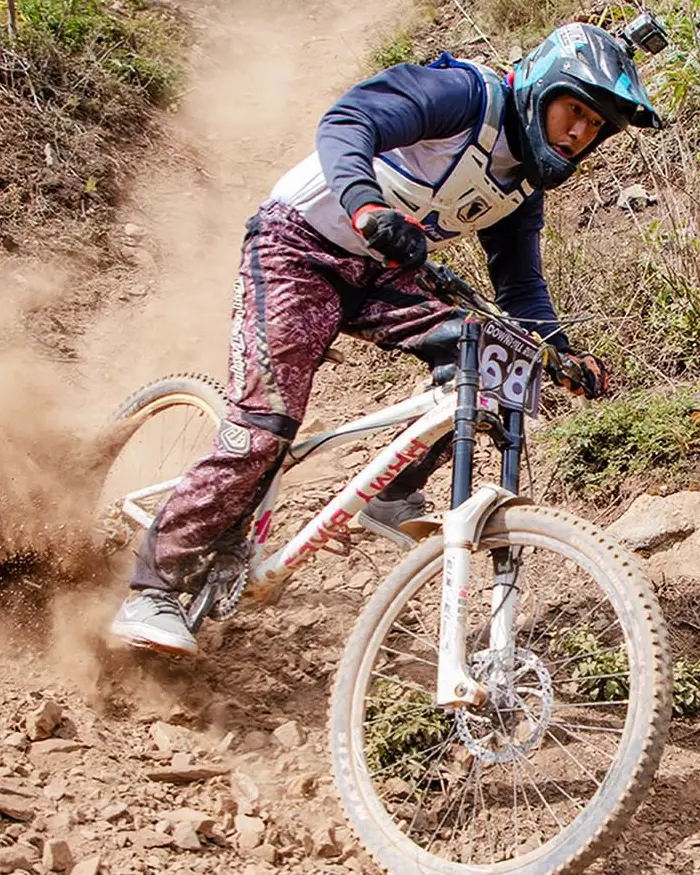
Rider leans body with precision while navigating section filled with small rocks.
What downhill experience in this area is really like
Normally you drive up to high part of valley, to sectors like Patacancha, Willoc or Pumamarca access points.
What’s special about this area is descent never feels same from start to finish. There are fast sections where bike runs very well, but also loose rock, sectors with moss or mud in wet season, small steps, curves where you have to choose line well and zones where terrain forces you to read better the line.
Did you know…?
Many trails you ride in Ollantaytambo weren’t designed for bikes, but have ancestral origin.
What makes downhill near Ollantaytambo different?
In Ollantaytambo, experience is heavily marked by cultural environment. As you advance through mountains, you not only enjoy trails with character, but also feel you’re crossing living part of Peruvian Andes.
Another detail making downhill in this area unique is landscape contrast. Descents can start in high and open sectors, with feeling of wide and silent mountain, and gradually transform into roads closer to rural areas, terraces and slopes worked by generations.
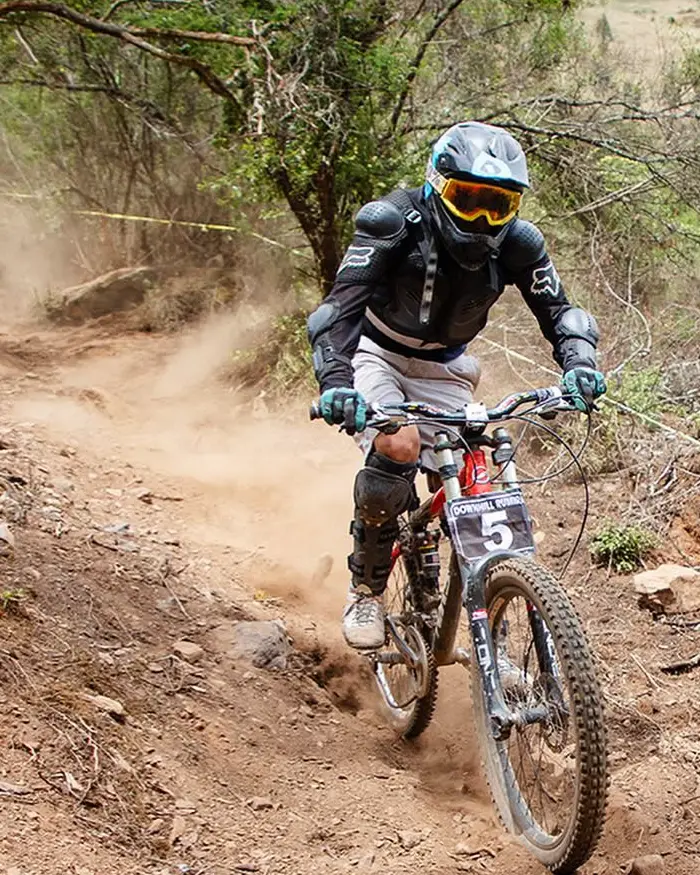
Rider’s full protective gear indicates this is demanding and technical section.
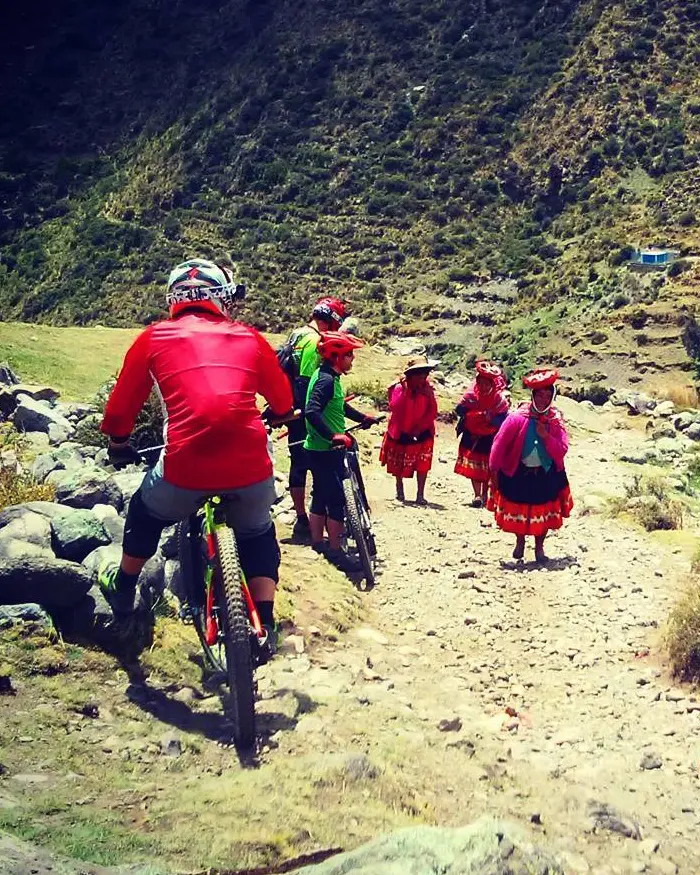
Stone trail reflects ancestral use that today is also part of MTB routes.
Most interesting routes and areas near Ollantaytambo
What’s interesting is environment offers you several routes, combinations and descent styles that can better adapt to your level, day’s weather and type of experience you seek within Sacred Valley.
Patacancha: one of sector’s best known descents
If there’s route that usually appears first when talking about downhill above Ollantaytambo, that’s Patacancha. For many riders, it’s one of sector’s most representative descents for its length and accumulated elevation drop.
What makes Patacancha special is it crosses open high altitude landscapes, rural areas, agricultural sectors and roads that feel alive, with own identity unlike track built exclusively for bikes.
There are fast parts where bike runs well, but also sections where terrain forces you to read line better, control body and maintain constant attention. That mix of fluidity and demand makes Patacancha not feel repetitive.
Pumamarca and other descents worth considering
It’s route many riders value because it offers intense experience in less time and maintains that special mix between natural terrain, cultural landscape and local history.
Pumamarca has different scale. Feels shorter, more direct and easier to integrate. There are sections with slope, loose dirt sectors, rock gardens and terrain reading demanding attention, but all within descent that also leaves you space to enjoy landscape.
Pumamarca is usually seen as great alternative to complement longer outing or for those wanting experience with character, but without entering directly into journey as extensive as Patacancha.
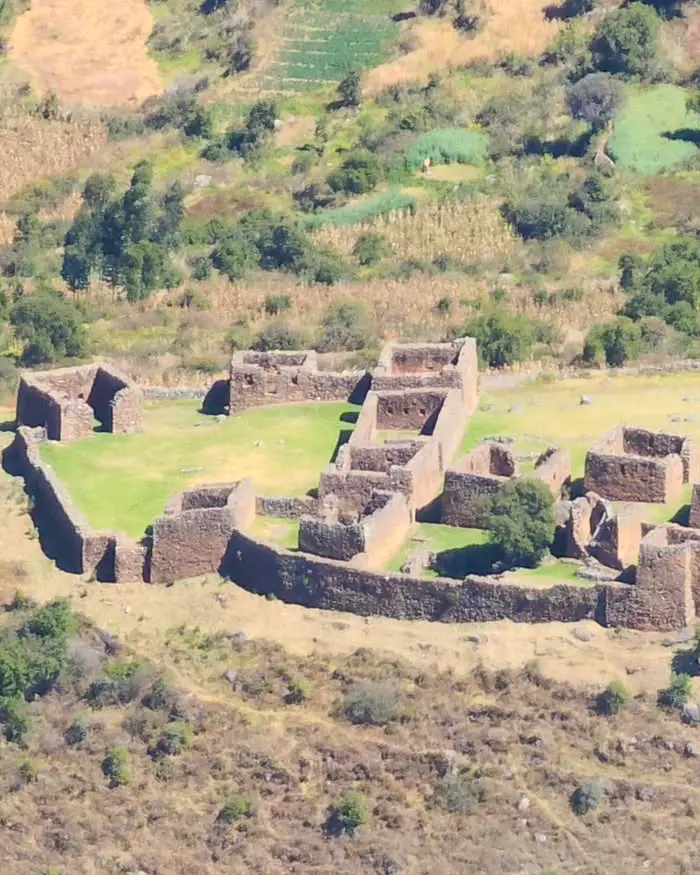
Image reveals archaeological remains surrounded by rural landscape full of vegetation and cultivated fields.
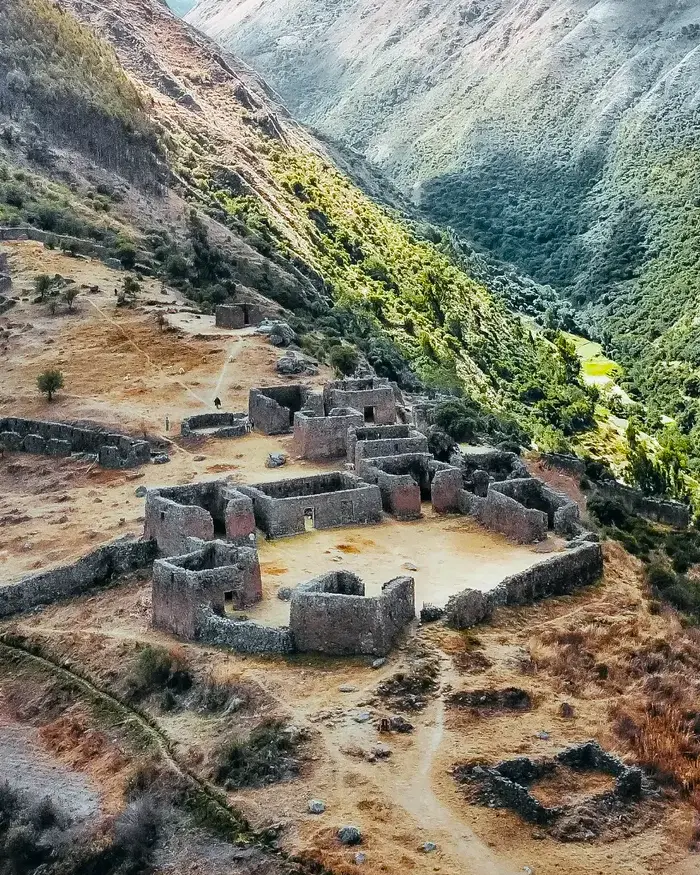
Ancient stone structures spread across different levels, adapting perfectly to uneven terrain.
Altitude of Patacancha and Pumamarca
| Aspect | Patacancha | Pumamarca |
| Approximate starting altitude | 14,108 ft (4,300 m) | 11,309 ft (3,447 m) |
| Approximate ending altitude | Near Ollantaytambo, around 9,160 ft (2,792 m) | Near Ollantaytambo, between 9,160–9,186 ft (2,792–2,800 m) |
| Descent elevation drop | Very wide, with marked height loss and long journey feeling | Shorter and more compact, with about 2,297 ft (700 m) descent |
| Duration and ride scale | Long route, normally 17.4–18.6 mi (28–30 km) | Shorter route, around 5 mi (8 km) |
| Altitude feeling | Real high mountain: colder, less oxygen and greater exposure | Still high altitude route, but more manageable than Patacancha |
| Body impact | Can generate more fatigue, shortness of breath and effort feeling even in brief maneuvers | Demands adaptation, but usually gentler than Patacancha |
Did you know…?
Sacred Valley offers some of South America’s longest and most continuous descents.
Why it’s wise to acclimatize before descending?
Downhill here is truly experienced from geography. Ollantaytambo is quite lower than many sector lines.
And that difference is precisely what makes these descents so good: you start high, cross enormous landscape and finish in valley. Using Ollantaytambo as base allows you to sleep lower, move more calmly and enter downhill more intelligently. Instead of fighting from start with altitude, you arrive better prepared to enjoy what makes this area special which are long descents and Andean terrain.

Daylight and clear environment contrast with rider’s exhaustion gesture.
Best time of year for downhill near Ollantaytambo
| Time of year | Months | How terrain usually is | How downhill feels |
| Full dry season | May to September | Firmer trails, less mud and more stable conditions. | Best time to enjoy more fluid descents, with better control, more visibility and more predictable lines |
| Dry transition | April and October | Relatively stable terrain, though with more variation than full dry season | Very good option to ride if seeking good balance between landscape, weather and less risk of heavy rain |
| Rainy season | November to March | More mud, humidity, wet stone and slippery sections | Experience becomes slower, more technical and less predictable, especially on natural routes |
How does experience change in rainy season?
In Patacancha, change can be quite evident. Route sheet itself indicates that from December to May it usually rains and that sometimes precipitation is so heavy small rivers form that flood trail parts.
In Pumamarca, same source points out that between December and May rains are frequent and recommends leaving as early as possible, avoiding afternoon. That doesn’t mean route stops working, but that day becomes more delicate, more variable and more dependent on time of day.
How technical is terrain really?
Near Ollantaytambo you’ll encounter loose rock, natural curves, narrow trails and sections where mountain rules. But there’s also rhythm and moments when bike simply runs.
It’s not domesticated downhill; it’s downhill adapting to Andean landscape. And when you understand that, you stop fighting terrain and start enjoying it for what it is: one of most authentic ways to ride in Sacred Valley.
Why guided outing is usually best option?
Doing downhill near Ollantaytambo on your own may sound tempting, but in practice, guided outing usually makes enormous difference.
Guided outing starts adding value even before getting on bike. Access to routes like Patacancha or Pumamarca normally requires vehicle shuttle, schedule coordination and knowledge of starting points, which often aren’t obvious or marked.
Additionally, terrain conditions can change quickly. In rainy season, for example, some sections can be more delicate, with mud or water running over trail.
Guide and agency will help you manage all that naturally:
- Anticipate sensitive zones.
- Adjust group pace.
- Avoid conflicts with local environment.
- Maintain fluidity without losing safety.

Group of riders stops in front of Inca doorway during downhill ride near Ollantaytambo.
What to do in Ollantaytambo after downhill
Visit Ollantaytambo fortress
If you still have energy, one of best plans is climbing to Ollantaytambo fortress, one of Sacred Valley’s most important archaeological complexes. From above you have complete view of valley, town and mountains where you were probably riding few hours earlier.
Eat well and recover energy
After long descent, body asks for it. Ollantaytambo has good offering of restaurants and cafés where you can recover energy with local or international food.
Connect with next leg of trip
After downhill, Ollantaytambo isn’t ending, but transition. From here you can:
- Go to Machu Picchu by train.
- Continue exploring Sacred Valley.
- Return to Cusco more calmly.
Downhill near Ollantaytambo stands out for landscape, culture and Sacred Valley pace. When you choose route, season and support level you need well, it’s much easier to enjoy.
Thousands of travelers have trusted Peru Biking Tours to experience unforgettable experiences in Andes.
Your safety first
Routes adapted to your level, expert local guides and complete support at all times.
Without worrying about anything
We handle all logistics so you only focus on enjoying landscape.
Authentic routes in Cusco
Experience Sacred Valley authentically, at your pace, with access to best trails.
Quality equipment
High-end enduro bikes, helmets and protective gear for all levels.
Plan your MTB experience in Cusco
MTB Day Tours in Cusco
If you want to ride routes like Lamay Sapacto with correct logistics, local support and proper trail selection, check out our MTB Day Tours in Cusco.
Multi-Day MTB Tours
For more complete experiences connecting several valleys and high mountain routes, discover our Multi-day MTB Tours.


