


Quick Answer:
The Sacred Valley’s cycling climate is mostly sunny and stable for much of the year, but it can change quickly. Mornings are generally the best time to ride, while afternoons can bring clouds, wind, or rain, especially during the rainy season.
If you’re thinking about riding through Andes, understanding climate can help you plan much better experience. Although this area usually offers pleasant temperatures, sunny days and spectacular landscapes, Sacred Valley climate for cycling can also change rapidly depending on time of day, season and altitude of route. That’s why, in this blog you’ll know what conditions you can encounter, what clothing to wear and how to prepare.
Want to ride one of Sacred Valley’s most technical descents? Discover our Day Tours in Cusco designed for riders seeking real enduro in Andes.
What you should know first about Sacred Valley climate?
During large part of year, days in Sacred Valley are usually sunny with good visibility, something you’ll appreciate if you ride panoramic routes between mountains, agricultural terraces and small Andean villages.
However, Sacred Valley climate for cycling is still mountain climate, so it can change relatively quickly. It’s common for morning to begin with completely clear sky and for clouds, wind or even light rain to appear in afternoon, depending on season.
Another important aspect is solar radiation at altitude. Although temperatures may feel pleasant, sun can be more intense due to altitude.
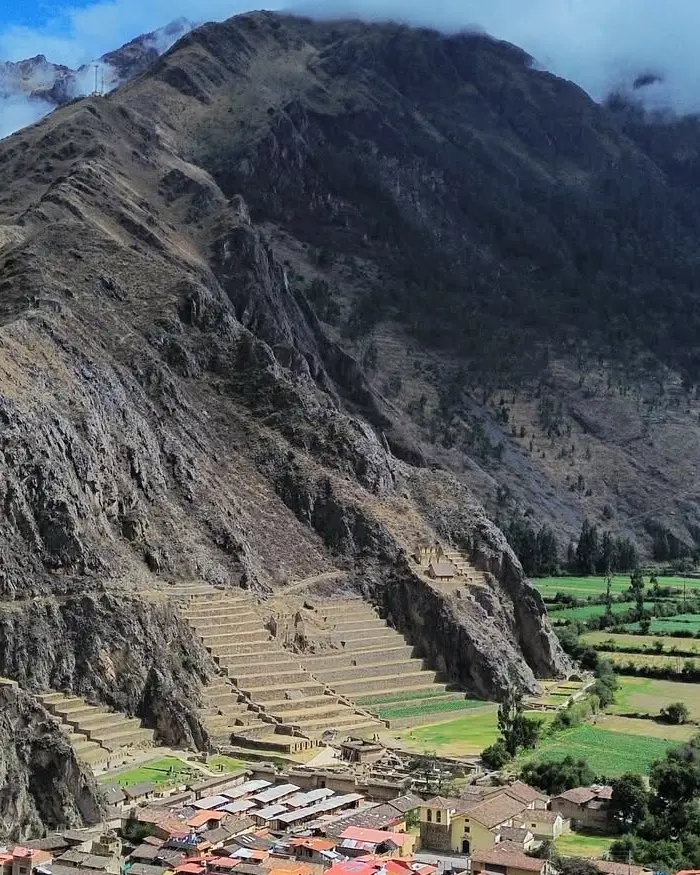
Town stretches along valley base with reddish rooftops contrasting against green of cultivated fields.
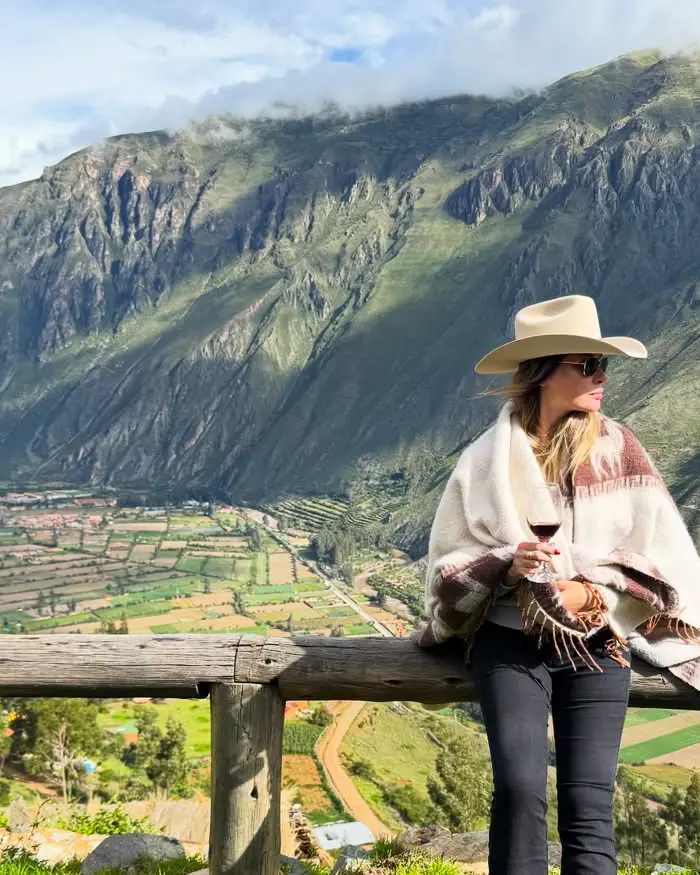
Andean landscape stretches into background with farmland forming mosaic of green tones.
What Sacred Valley climate for cycling is like throughout year
Sacred Valley climate for cycling is characterized by sunny days, good visibility and moderate temperatures during large part of year.
Important characteristic of Sacred Valley climate for cycling is amount of sun hours region usually has. Even in months close to rainy season, it’s common to find clear mornings before clouds appear in afternoon.
It’s also important you keep in mind that climate can vary slightly between different valley sectors. For example, areas near Urubamba, Ollantaytambo or Pisac usually feel warmer due to their relatively lower altitude.
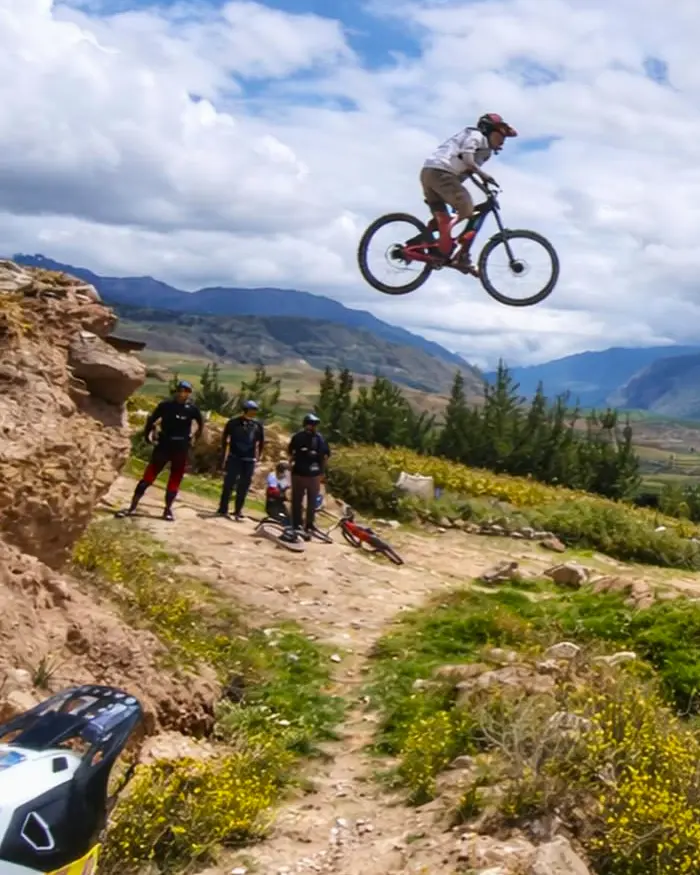
Scene captures exact moment bike is suspended in air, conveying adrenaline and control in Sacred Valley.
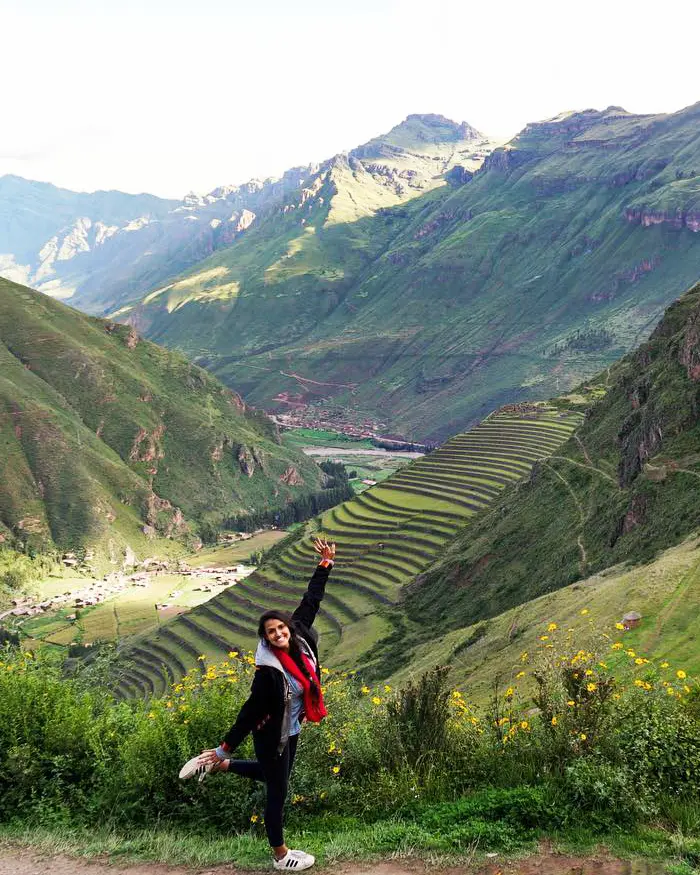
Traveler poses enthusiastically in front of stunning Andean valley filled with agricultural terraces.
Dry season and rainy season in Sacred Valley climate for cycling
Sacred Valley climate for cycling is mainly marked by two seasons: dry season and rainy season.
Dry season usually extends from April to October. During these months, rains are infrequent and trails stay firmer and more predictable. Additionally, clear skies allow you to enjoy spectacular views of mountains and Andean landscape.
Rainy season, on other hand, generally occurs between November and March. During this period more frequent rains can occur, making some roads wet or muddy. Although you can still pedal, terrain can be more slippery and demand greater caution.
Warning:
Rains can make roads that seemed easy slippery.
Best months according to Sacred Valley climate for cycling
How does Sacred Valley climate for cycling change throughout day?
Mornings are usually most stable time of day. In many Sacred Valley areas, sunrise offers you clear skies, cool temperatures and excellent landscape visibility.
On many occasions, especially during certain times of year, clouds begin forming in afternoon. This can generate more wind in open areas or cloud appearance on nearby mountains.
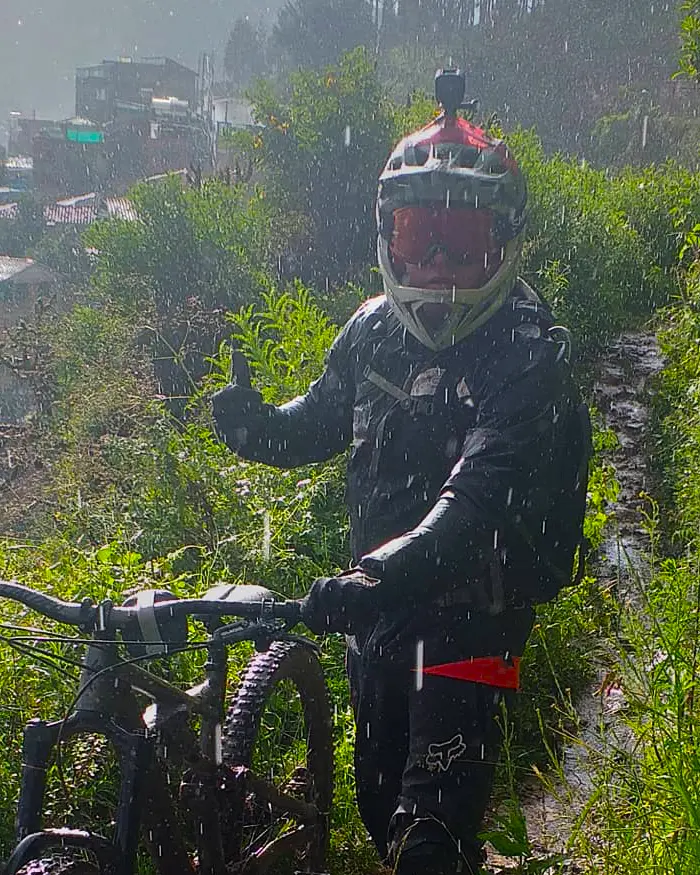
Wet and slippery terrain reflects demanding conditions of rainy season.
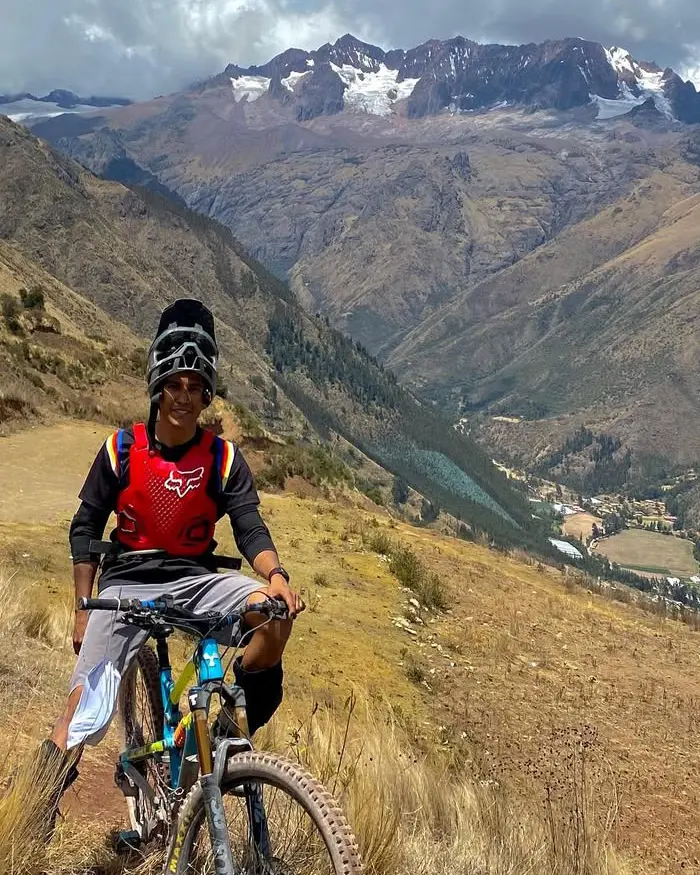
Panoramic view reveals deep valley crossed by river disappearing into distance.
What clothing to wear according to Sacred Valley climate for cycling
Breathable cycling shirt or jersey
You should wear cycling shirts made with technical materials, as they help evacuate sweat and keep your body dry during physical effort. This is especially useful when pedaling for several hours under sun.
Comfortable cycling shorts or pants
Many cyclists prefer wearing mountain bike shorts with chamois or inner padding, because they help reduce saddle pressure and improve your comfort on long routes.
Light jacket against wind
In Sacred Valley climate for cycling, wind can feel more intense in high areas or during descents. Light jacket can protect you from cold without taking up too much space.
Cycling gloves
Gloves help you improve handlebar grip, reduce terrain vibration and protect your hands in case of fall.
Cycling glasses or sunglasses
They protect your eyes from dust, wind and intense solar radiation at altitude, something common on many Sacred Valley routes.
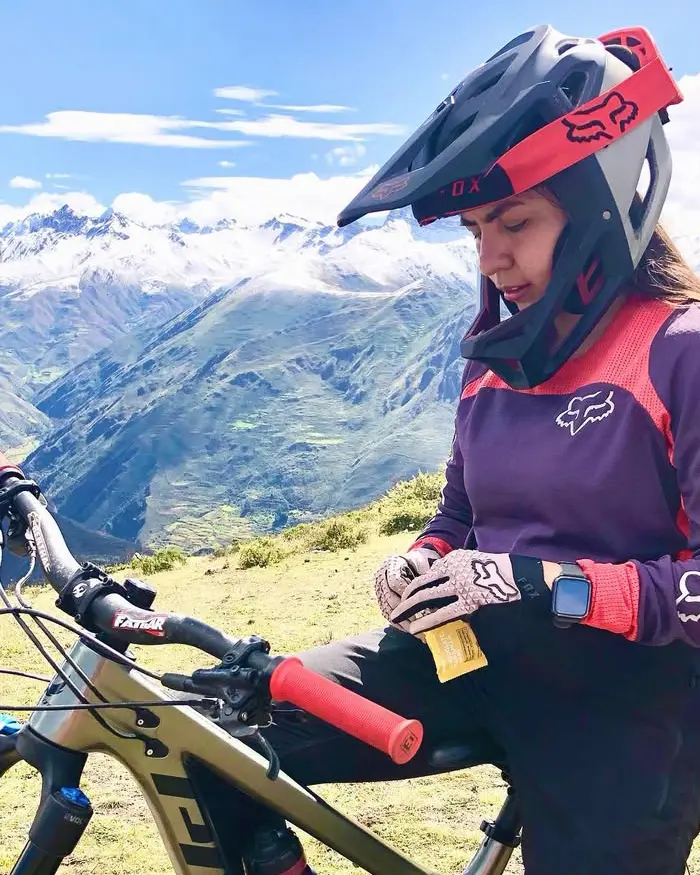
She wears full face helmet and technical gear, ready for demanding descents in high mountain terrain.
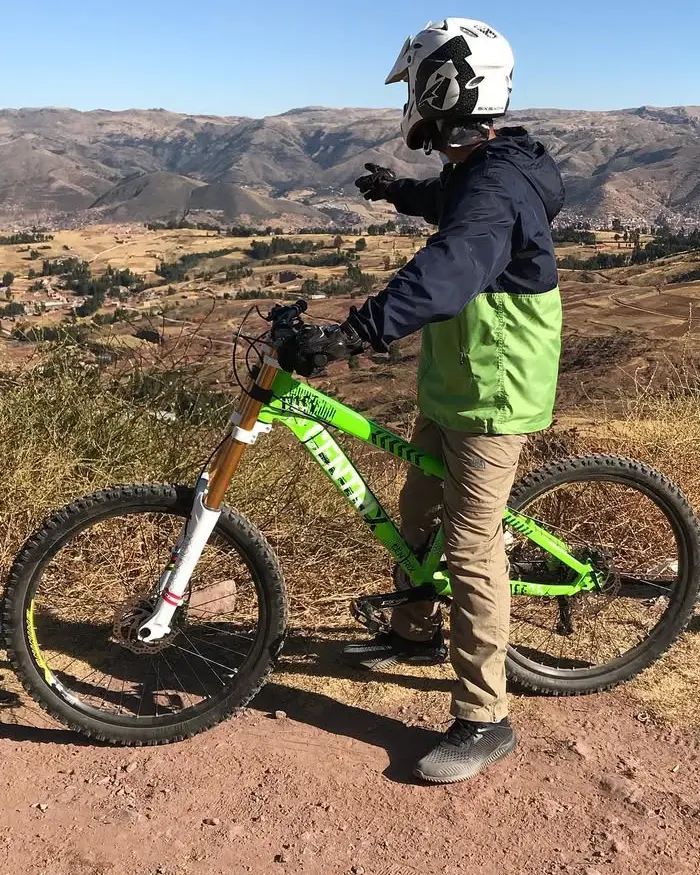
He wears full face helmet and light jacket, ready for changing conditions at high altitude.
How does altitude influence Sacred Valley climate for cycling?
Although Sacred Valley is at lower altitude than Cusco city, altitude is still important factor when practicing cycling in this region. Valley is located approximately between 8,858–9,514 feet (2,700–2,900 m).
Another important aspect of Sacred Valley climate for cycling is drier air and lower oxygen level, characteristic of mountain areas. This can make physical effort feel more intense.
It’s also important you keep in mind that altitude can influence your body’s hydration. In mountain environments, your body can lose fluids more quickly, especially during exercise.
Warning:
Wind on descents can affect your stability if you’re not prepared.
Routes where Sacred Valley climate for cycling is usually ideal
There are several popular routes where Sacred Valley climate for cycling usually offers you very pleasant conditions for pedaling.
One of best known routes is route between Maras and Moray. This area is characterized by dirt roads crossing agricultural fields and Andean hills with panoramic valley views.
Another very popular area for cycling is area near Urubamba, considered heart of Sacred Valley. There, climate usually feels warmer due to its slightly lower altitude.
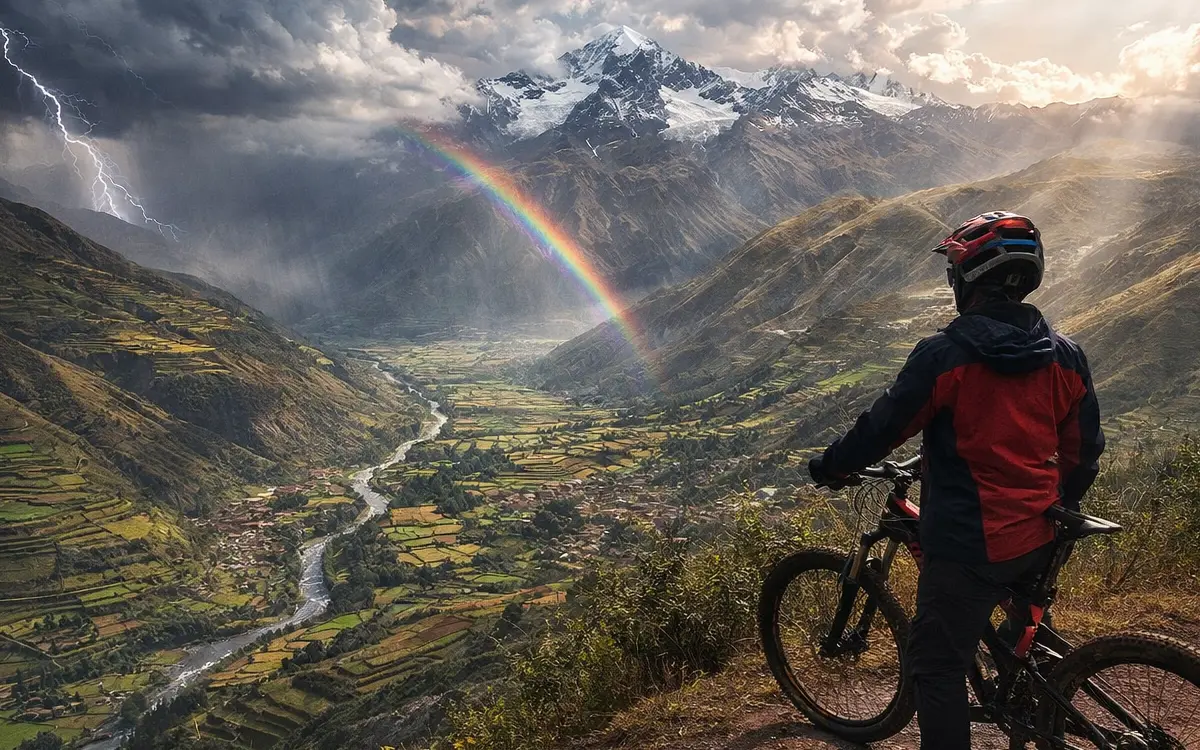
Un rider observa el paisaje desde lo alto mientras el Clima del Valle Sagrado.
How to better plan your outing according to Sacred Valley climate for cycling
To better take advantage of Sacred Valley climate for cycling, you should plan your outing in advance. Checking weather forecast before starting route can help you choose best time to pedal.
It’s also recommended you start early in morning, carry enough water and wear sun protection. Due to climate changes typical of mountain areas, it’s always good idea to carry light jacket or additional layer.
✓ Essentials before going out to ride
- Check day’s weather (not just month’s)
- Leave early to avoid afternoon changes
- Carry enough water (altitude = rapid dehydration)
- Include light layer against wind or rain
- Mandatory sun protection
Knowing Sacred Valley climate for cycling better gives you comfort, safety and confidence when you understand how day’s conditions change. Knowing which season to choose, how to dress and what time to start makes your complete Andes experience unique. If you want everything organized, safe and adapted to your level, Peru Biking Tours is your best ally. Contact us at +51 946 459 491 and start preparing your next adventure.
Thousands of travelers have trusted Peru Biking Tours to experience unforgettable experiences in Andes.
Your safety first
Routes adapted to your level, expert local guides and complete support at all times.
Without worrying about anything
We handle all logistics so you only focus on enjoying landscape.
Authentic routes in Cusco
Experience Sacred Valley authentically, at your pace, with access to best trails.
Quality equipment
High-end enduro bikes, helmets and protective gear for all levels.
Plan your MTB experience in Cusco
MTB Day Tours in Cusco
If you want to ride routes like Lamay Sapacto with correct logistics, local support and proper trail selection, check out our MTB Day Tours in Cusco.
Multi-Day MTB Tours
For more complete experiences connecting several valleys and high mountain routes, discover our Multi-day MTB Tours.


