


Respuesta Rápido:
Riding the ancient Inca trails by bike combines historic stone steps, narrow singletracks, and rich culture. It demands an intermediate to advanced technical skill level, and the safest, most enjoyable time to ride these ancient routes is during the dry season from May to September.
If the idea of Inca trails by bike in Cusco appeals to you, this is one of those unforgettable experiences. Here you don’t just come to “do MTB”: you come to ride real sections of Qhapaq Ñan, feel stone under wheels and understand, in motion, why this road network was so important for the Andes. Throughout this content you’ll find what terrain is like, what level you need, how altitude influences, what’s best time to go, what to bring and how to adjust your bike for cobblestone.
Explore ancient Inca trails by bike: a unique MTB experience combining history, culture and adventure in Cusco.
What are Inca trails and why Cusco is ideal place
Inca trails form part of monumental road system called Qhapaq Ñan, meaning “Royal Road” in Quechua. It was most extensive and advanced transportation and communication network in South America.
From Cusco’s Main Plaza, main routes departed toward empire’s four regions. That’s why many of best preserved and most accessible roads are still found in surroundings and toward Sacred Valley.
Additionally, these roads had social and symbolic function: they connected not only geographic points, but also cultural, ceremonial and productive spaces, integrating different peoples, resources and knowledge into single organization.
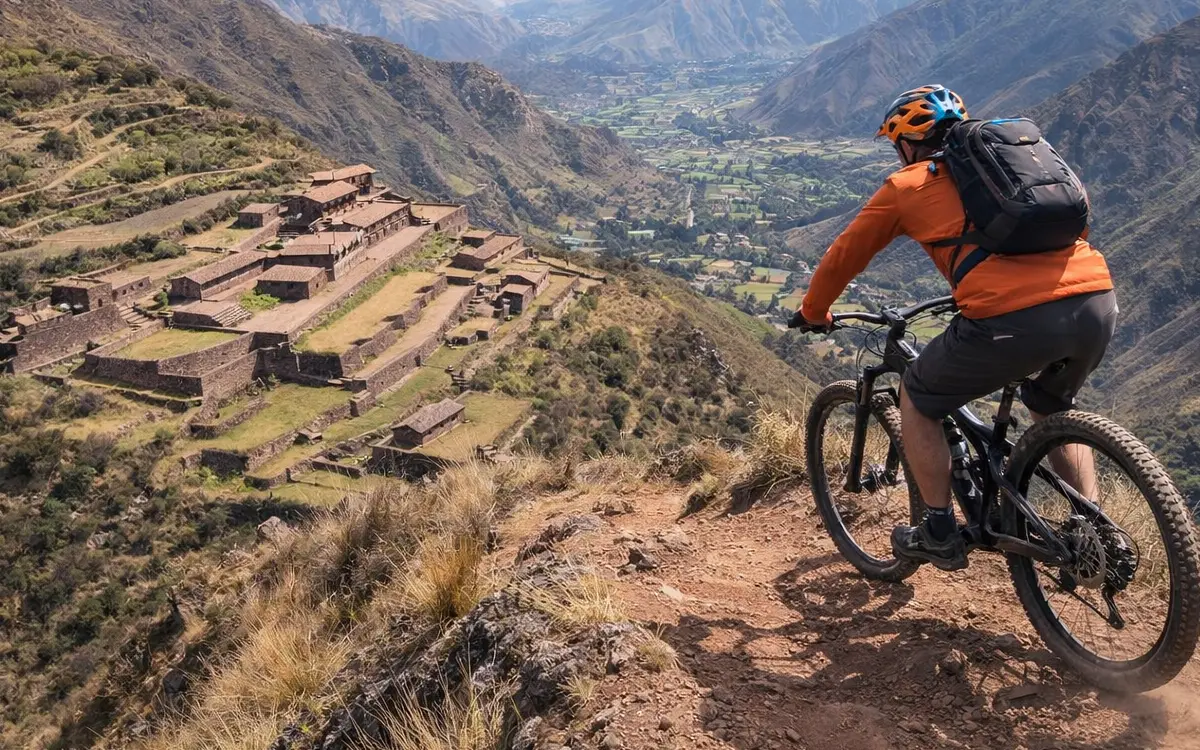
Huchuy Qosqo takes you through ancestral roads surrounded by terraces and Inca architecture.
What route is like in practice
When you ride Inca trails by bike in Cusco, you encounter varied and authentic terrain, reflecting how Qhapaq Ñan was built, the extensive Inca road network that connected entire empire and is still preserved in many rural sections.
On bike, especially on MTB or with adequate suspension, you learn to read stone, choose best line and modulate speed to maintain stability on irregular surfaces.
Landscape around these roads adds extraordinary sensory component: you advance through wide Andean valleys and imposing mountains, cross small watercourses and often pass near local communities.
💡 Pro Tip — How to ride Andean stone
On Inca cobblestone, speed isn’t objective: line reading is what rules. Before each section, look 3–4 meters ahead to anticipate stone type. Flatter and drier slabs offer better grip; loose round stones are most treacherous. On cobbled curves, brake before entering, not inside curve.
✓ Look 3–4 m ahead
✓ Seek flat and dry stone
✓ Relaxed body to absorb vibration
Difficulty level, altitude and real physical demand
When doing route on Inca trails by bike in Cusco, difficulty level can vary depending on trail type, distance and altitude. However, many of most recommended routes are designed for cyclists with moderate experience.
| Aspect | What it means on route | Implication for traveler |
| Recommended level | Ideal for intermediate cyclists, but adaptable depending on section. | If you already handle loose rock and irregular terrain, you’ll enjoy it more; beginners should choose gentle routes or E-Bike. |
| Terrain type | Irregular cobblestone, loose rock, possible stairs and constant vibration. | It’s not about speed: control, line and technique rule. |
| Typical altitude | Between 10,500–12,500 ft (3,200–3,800 m) | Less oxygen = you tire faster, even if you’re fit |
| Real physical demand | Moderate to high, depending on distance + elevation drop + altitude | Feels harder than at sea level; wise to ration energy |
Did you know…?
At altitude your reaction time can slightly decrease even though you don’t feel exhausted.
Best time of year to ride Inca trails by bike
| Season | How trail is | Recommendation |
| May–September (dry) | Drier stone, better traction and control | Best season to ride Inca trails by bike |
| October and April (transition) | Mixed conditions; sometimes rains, but usually manageable | Good option if you want fewer people |
| November–March (rainy) | Slippery stone, mud, more technical and fall risk | Avoid if average tourist; only with good guide |
What to bring for bike route on Inca trails in Cusco
- Certified cycling helmet.
- Cycling gloves (protection against vibration and cold).
- Protection glasses with UV filter.
- Sunscreen SPF 50 or higher.
- Breathable technical shirt (base layer).
- Light thermal layer (depending on season).
- Compact windbreaker or waterproof jacket.
- Comfortable and flexible cycling shorts or pants.
- Suitable cycling footwear with good grip.
- Breathable technical socks.
- Light backpack or hydration system.
- Minimum 2 liters of water.
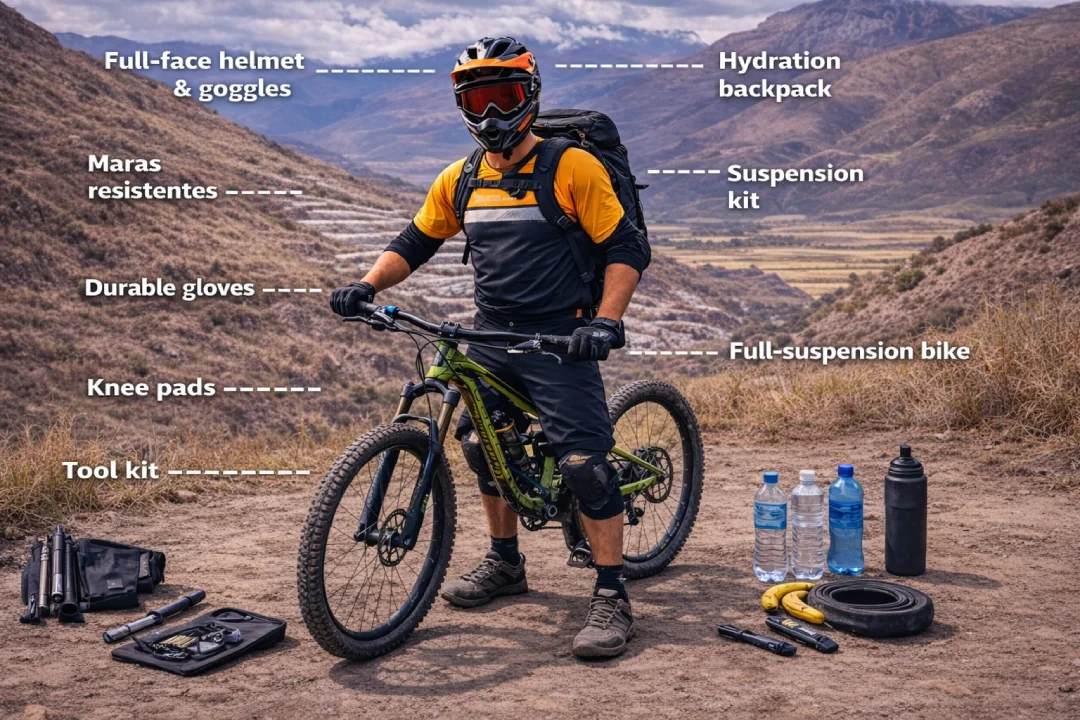
He wears a full face helmet, protective goggles, and a hydration pack, ready for a demanding ride.
Proper bike setup for cobblestone terrain
Brakes
On irregular cobblestone and sections with steps, most important thing is having disc brakes with good feel and power. Check that pads have enough material and rotors are clean, because contamination from grease or dust greatly reduces braking.
Suspension: less vibration and more control
Ancient stone transmits constant vibration; that’s why well-adjusted suspension reduces fatigue and improves grip. As baseline, adjust SAG (sag) to find balance between comfort and support: many guides recommend around 20–25% on fork as starting point.
Tires: real grip
On stone, lateral grip in curves matters as much as braking. Prioritize tires with pronounced side knobs and resistant casing if there’s risk of hard impacts. On technical routes, more robust tire with good compound gives you stability.
Tire pressure: the fine point
If you lower pressure a bit, you usually gain traction and comfort on rock; but if you overdo it, you increase risk of pinch flats and cuts. As reference, there are ranges by modality (trail, enduro, DH) and then you adjust according to your weight and terrain.
Full suspension
On cobblestone, full suspension greatly improves comfort and control because it keeps rear wheel more “stuck” to ground and reduces bouncing on steps. Not mandatory, but highly recommended.
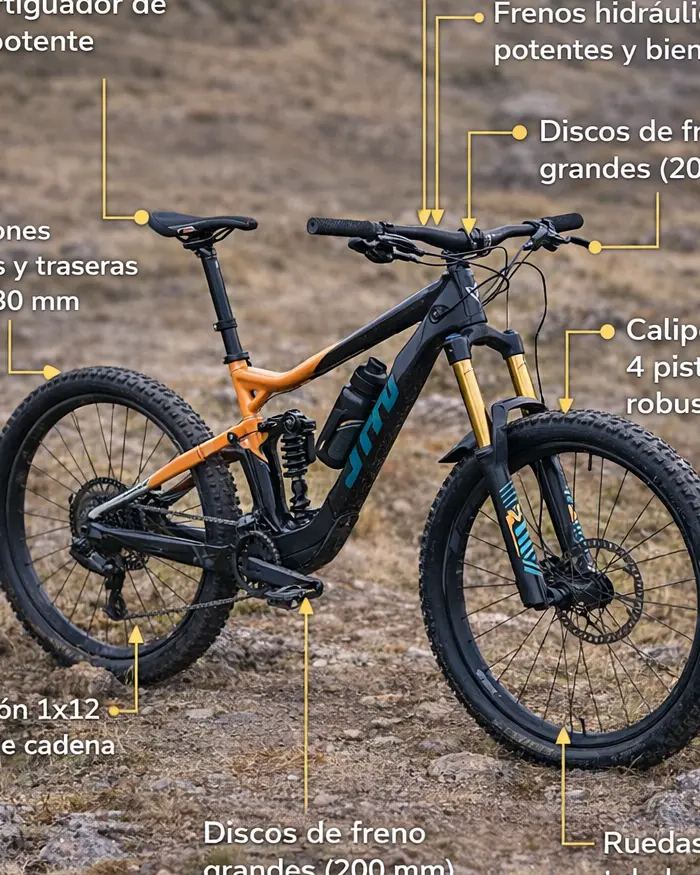
This setup allows tackling high mountain descent routes with confidence, precision and efficient terrain handling.
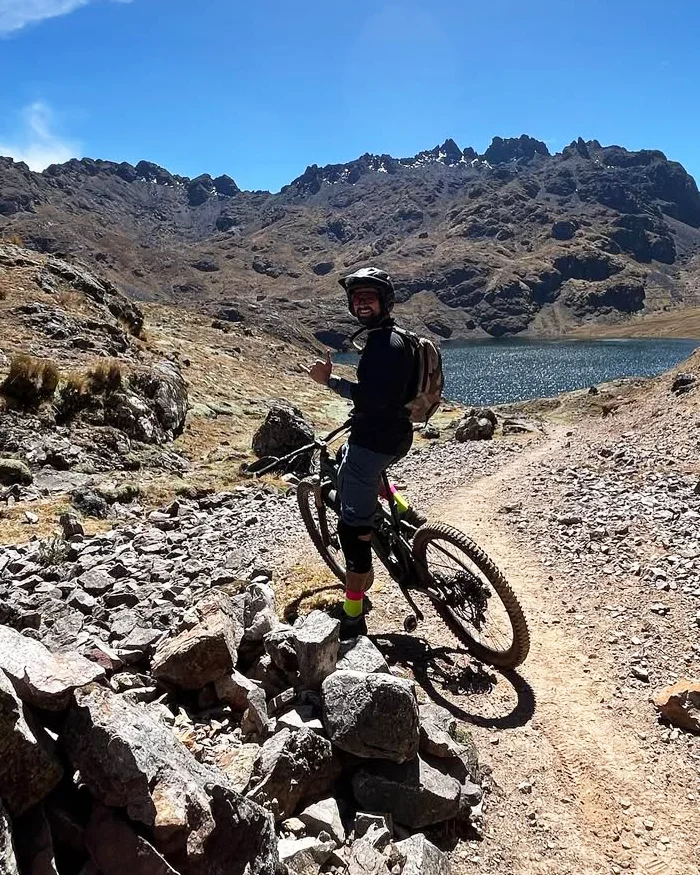
High altitude trails, raw terrain, Cusco riding at its boldest.
Cultural respect and responsible tourism on historic trails
| Aspect | Inca Trail to Machu Picchu | Inca trails suitable for biking |
| Activity type | Hiking exclusively | Mountain biking on permitted sections |
| Regulation | Highly regulated route by Peruvian State | Depends on section and local jurisdiction |
| Permits | Requires official permit and reservation months in advance | Doesn’t always require special permit, but does need responsible planning |
| Access | Only with authorized guide | Can be done with specialized local operator |
| Main objective | Reach Machu Picchu via historic route | Ride rural sections of Inca road system |
| Surface | Very high | Cobblestones, rural roads and passable historic sections |
Difference between Inca Trail to Machu Picchu and Inca trails
Inca Trail to Machu Picchu is one of best known sections of vast Qhapaq Ñan road network, ancient Inca road network spanning over 18,641 miles (30,000 km) and connecting various regions of Inca Empire throughout South America. This specific route, ending at Machu Picchu, is famous for its landscapes, archaeological sites and its value as historical heritage.
That’s why it’s essential to properly identify route you’ll ride before planning bike experience. Not all Inca trails are equal nor have same restrictions; some, like Inca Trail to Machu Picchu, require permits and can only be done on foot with guide.
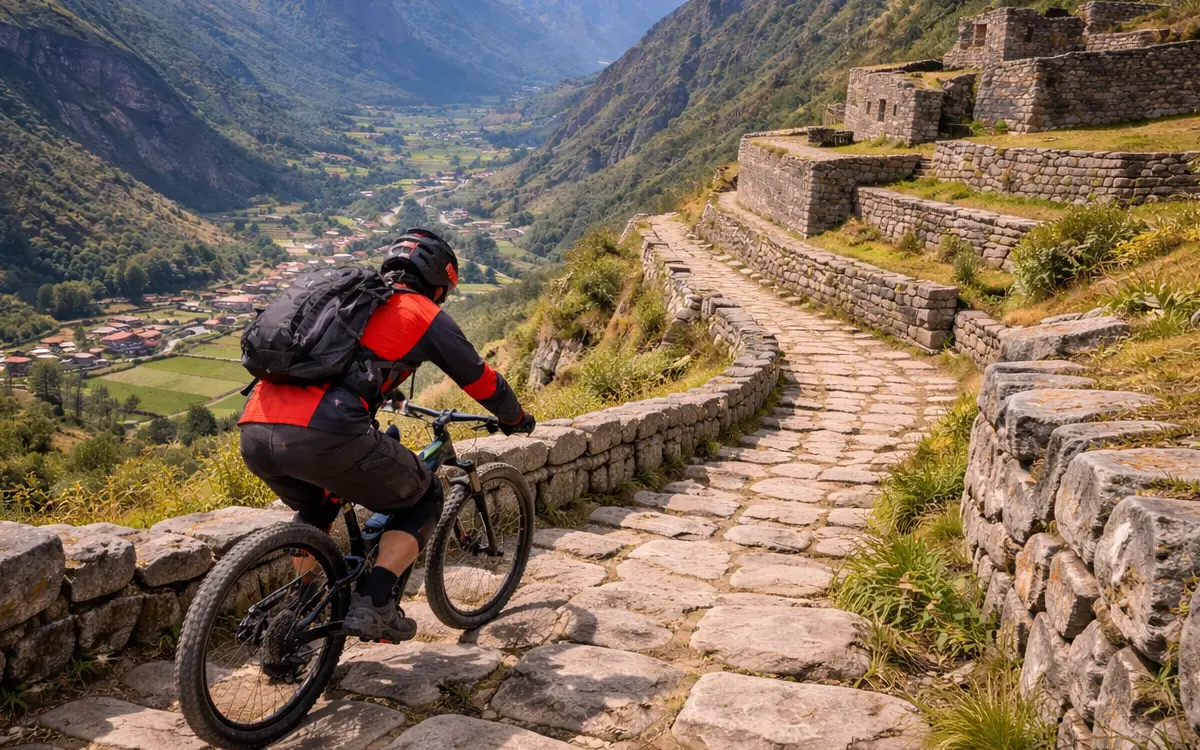
Riding Inca trails by bike in Cusco is feeling Andean legacy in motion, with altitude air and wide Sacred Valley views.
Is bike route on Inca trails worth it
When doing bike route on Inca trails, you combine three dimensions hard to find together in single experience: physical activity at altitude, real historical heritage and authentic Andean landscape. Inca road system, known as Qhapaq Ñan, was recognized as World Heritage by UNESCO in 2014.
Ready to ride Qhapaq Ñan?
We organize right route, correct bike and cultural context so this experience is authentic and safe.
Bike-enabled sections · Specialized guide · Guaranteed cultural respect
Plan your MTB experience in Cusco
MTB Day Tours in Cusco
If you want to ride routes like Lamay Sapacto with correct logistics, local support and proper trail selection, check out our MTB Day Tours in Cusco.
Multi-Day MTB Tours
For more complete experiences connecting several valleys and high mountain routes, discover our Multi-day MTB Tours.


