


Quick Answer
An Inca stairs MTB descent is a technical downhill feature made up of continuous steps of solid rock. To ride this rugged terrain safely, you need a full suspension bike and precise, pulsed braking to manage repeated impacts without losing your line.
When your local guide warns you about sections like this, they are telling you to bring your best skills and dial in your suspension settings. This is aggressive terrain that demands total control on every descent.
Understanding what it really means to tackle an Inca stairs MTB descent can save you from hard crashes and blown tires on your way down through the Sacred Valley.
Curious about the legendary Inca Stairs in Cusco? Our day tours are designed for riders ready to master technical descents, learn how to ride ancient stone steps, and still enjoy authentic enduro adventures in the Andes.
What makes an Inca stairs MTB descent?
These are technical descents built from sequences of solid rocks set directly into a mountain trail. These stone stepped sections can completely change your pace and force you to stay fully focused, so you do not lose control of your bike as the impacts keep coming.
Where the name comes from and why it stuck
These paths originally served as rural foot trails, linking high elevation communities with the valleys below. Local riders adopted the nickname because these rugged routes, often tied to the ancient Qhapaq Ñan network, share a similar stepped geometry that puts serious wear on your bike.
Physical characteristics of this stone stepped terrain
The brutal irregularity is what makes this terrain so hard, with steps that vary in height and depth from one to the next. Square edged stones can slam into your rims, and the rock surface loses almost all traction when it is damp, and it can build up loose, slick dust during the dry months.
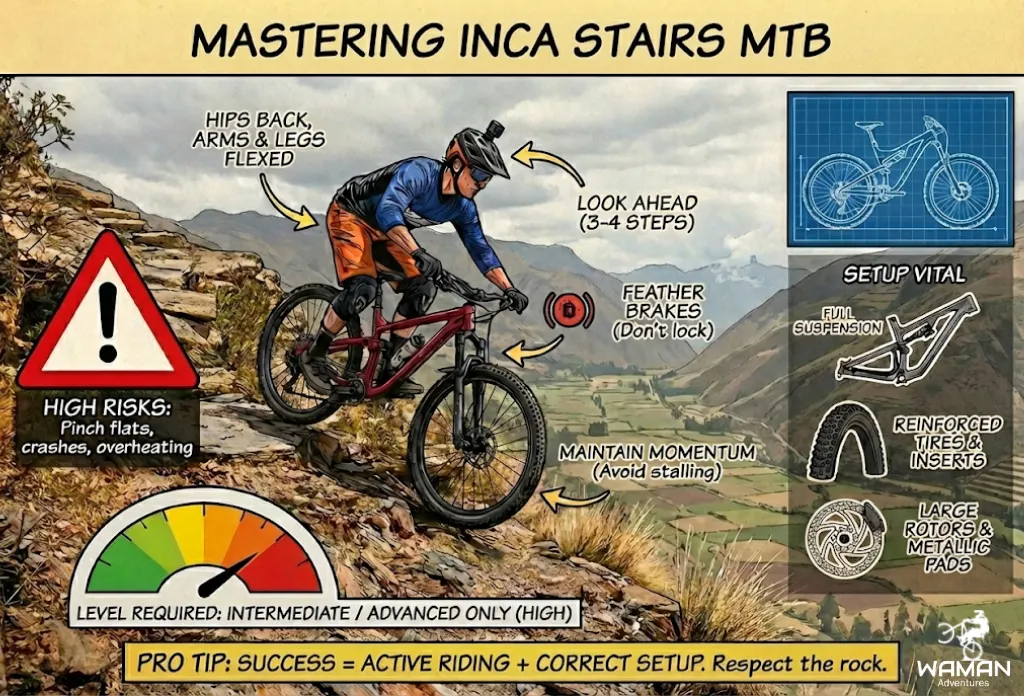
Essential technical guide to safely ride the challenging Inca stairs in the Cusco highlands.
How they differ from other MTB obstacles
These sections demand a very different line choice than what you use on modern trails or in standard bike parks. If you attack this stone stepped structure using the same approach you would use for common natural obstacles, you can make serious mistakes in how you judge your speed.
The key difference from rock gardens
A classic rock garden uses irregular rocks on a slope where you can keep some flow and carry momentum. Andean stone steps force you to hit successive horizontal blocks that sharply stop your forward progress as you drop from one level to the next.
Why they do not ride like drops
A standard drop is a single move where your bike leaves the ground and lands level so you can keep rolling down the trail. Stone steps make you absorb multiple consecutive drops without giving you enough room to reset your wheels between hits.
| Obstacle | Flow | Front impact |
| Rock Garden | Continuous (irregular stone) | Natural absorption |
| Drop | Pause in the air, clean landing | Single vertical impact |
| Inca Stairs | Progressive, hard braking | Multiple square edged impacts |
Real risks of descending these stone routes
Your margin for error is tiny on solid rock, and one bad call can mean serious damage to your gear or your body. Tires can take deep cuts from pinch flats from squared edges, and constant braking can overheat the system until it loses effectiveness. If you catch your front wheel on a deep step, you have a strong chance of getting sent over the handlebars.
Remember this
Scan the entire line before you drop in; the shape and spacing of the stone demand precision.
Technique to master Inca stairs MTB sections
To get through this section, you need to adjust your riding style to handle the nonstop punishment of the terrain. The main key is to keep the bike active under you without fighting every single hit on the trail.
Body position and weight distribution
Shift your hips back to lighten the front wheel and keep it from hanging up in holes along the line. Keep your arms and legs flexed the entire time so they work like extra suspension and absorb the hardest blows.
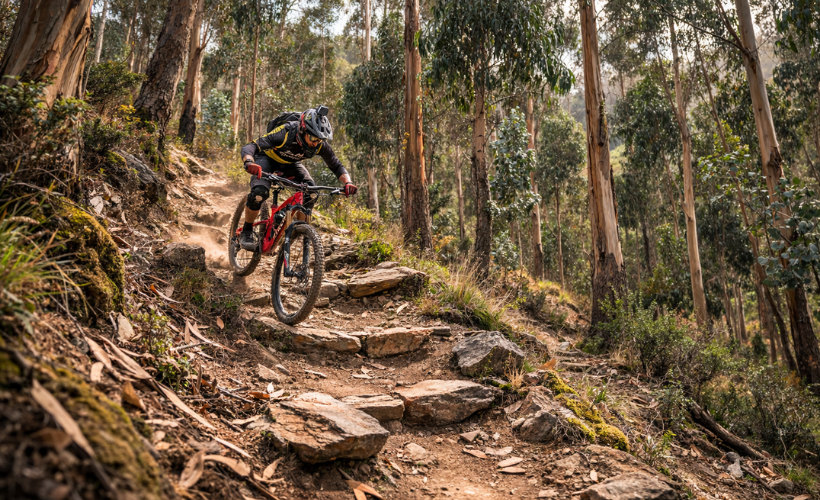
Mastering the technical descent through the woods and rugged stone trails of the Andes.
Smart brake control
If you fully lock up on ancient rock, you will slide instantly and lose directional traction. Use light, pulsed pressure on the levers to scrub speed gradually, then let the wheels roll freely as you move over the bigger steps.
Where to look and how to manage momentum
If you stare at your front tire, you set yourself up for a near certain crash because you cannot anticipate sudden changes in level. Keep your eyes three or four steps ahead and maintain the minimum speed your fork needs to absorb the terrain without stalling out.
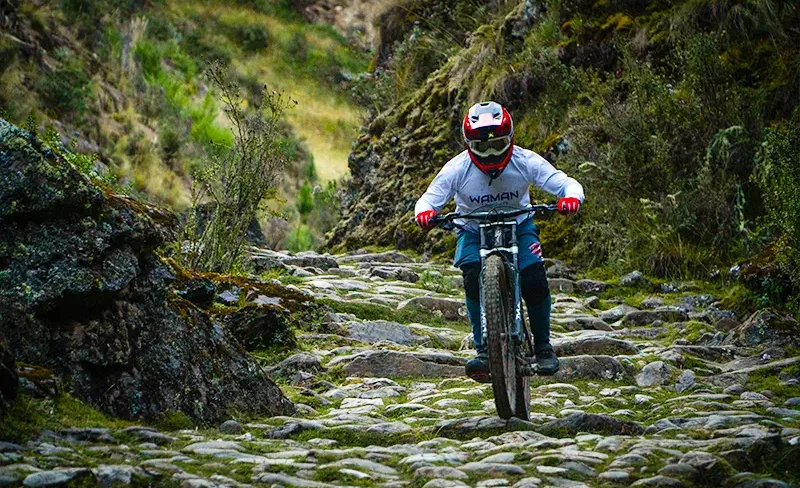
Conquering the ancient Inca stairs of the Andes with adrenaline and precision.
Ideal bike setup
Dialing in your bike matters if you want to handle repeated impacts without trashing your rims in the mountains. A poor setup can end your day fast, either from tire cuts or from sheer rider fatigue.
Recommended tires and pressures
Run enduro or downhill casing tires at slightly higher pressure than you would on a typical dirt trail to reduce pinch flats. Tire inserts come highly recommended to help protect your rims from square edged stone.
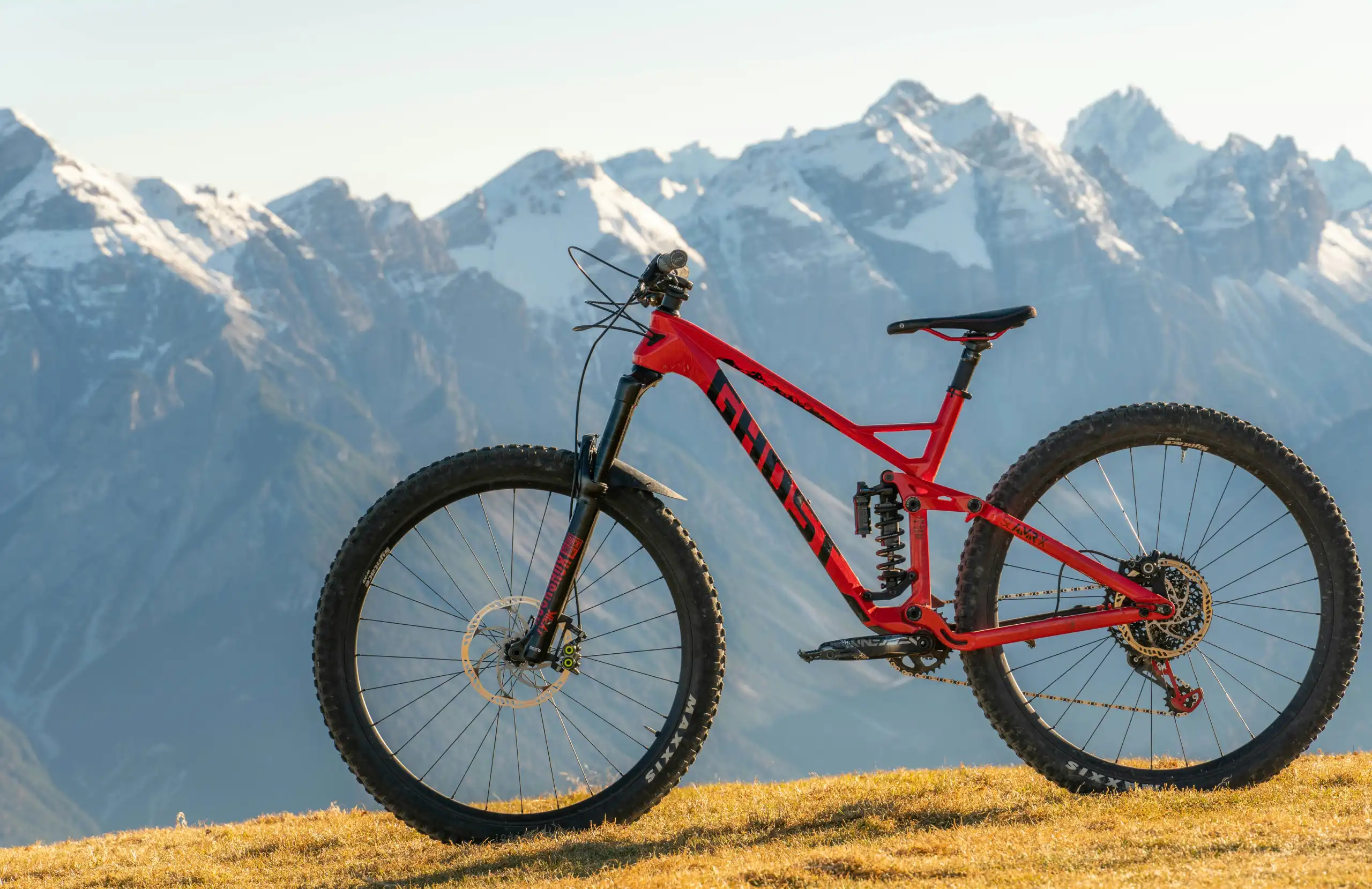
Enduro Mountain Bike with Alpine Mountain View
Suspension tuning
Set your fork rebound a bit faster so it can return to full travel between steps. If rebound is too slow, the fork will pack down and ride lower and lower, and you will lose most of your front end absorption.
Brakes and heat management
Use larger diameter rotors and metallic pads to handle the extreme heat of long descents. Heavy use on solid rock can overheat the system and even boil brake fluid if it is not properly bled.
☀️ Best time to ride in Cusco
Plan your ride during the dry season (April to October). Avoid descending these features during the rainy season, especially between January and March, when frequent rain can turn ancient stone into a dangerously slick surface.
Local routes with real Inca stone steps
Our descents in Cusco are built to test your true level against this kind of aggressive terrain. The route Enduro MTB through the Sacred Valley – The Other Side and Perolniyoc throws you straight into demanding stone steps.
Another highly technical option is the MTB route on the Inca Trail of Lares (a parallel variant to the traditional circuit) in a single day. This extreme loop combines pure physical endurance with descents packed with old stairways of solid stone.
For a fast, demanding run, choose Downhill in Maras. This route puts your bike through steep drops on solid rock where brake control is absolutely critical.
If you want the ultimate limit, go for the Lamay MTB route, considered the most technical descent in the entire region. These exclusive itineraries are designed only for intermediate and advanced riders chasing real challenges.
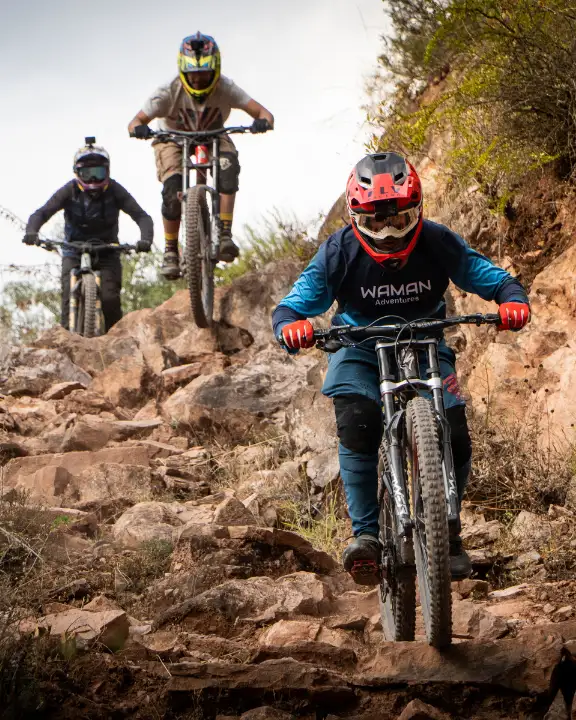
Inca stairs descent in Lamay.

Technical Inca stairs in Lares – control, commitment, and pure downhill flow.
Thousands of travelers have trusted Peru Biking Tours to live unforgettable experiences in the Andes.
Your safety first
Routes adapted to your level, expert local guides and full support at all times.
Without worrying about anything
We take care of all the logistics so you can just focus on enjoying the scenery.
Authentic routes in Cusco
Experience the Sacred Valley in a real way, at your own pace, with access to the best trails.
Quality equipment
High-end enduro bikes, helmets and protective gear for all levels.
Plan your MTB experience in Cusco
MTB Day Tours in Cusco
If you want to explore MTB routes with the right logistics, local support, and suitable trail selection, check out our MTB Day Tours in Cusco.
Multi-Day MTB Tours
For more comprehensive experiences that connect several valleys and high mountain routes, discover our multi-day MTB Tours.


