
• ES
  • EN
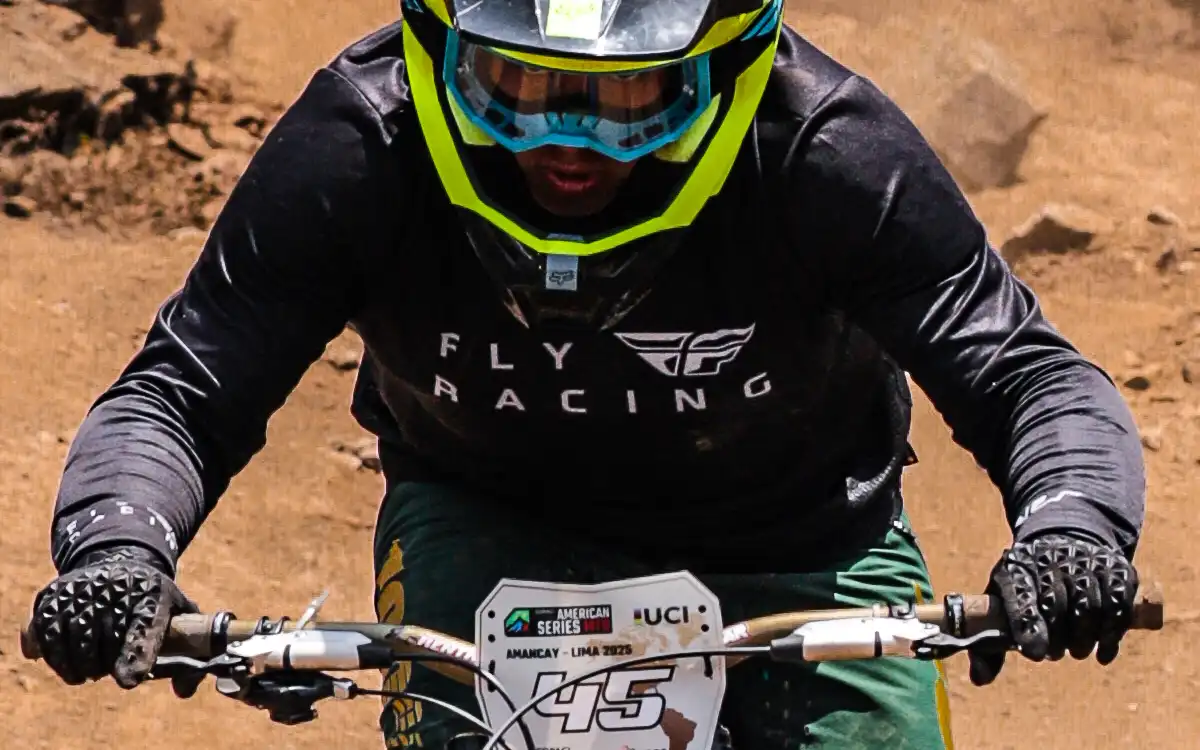
Mountain biker wearing full-face helmet, protective goggles, and riding armor focuses on a rough downhill section in Cusco, Peru.

Cusco Downhill MTB Common Mistakes: How to Stay in Control at Altitude

Quick Answer

Downhill in Cusco is not a bike park. You ride down shared rural community roads with pedestrians, animals, and sudden terrain changes. The most critical mistakes are:

  • Driving too much speed on unfamiliar trails.
  • Underestimating the altitude.
  • Ignoring fast changing traction and surface conditions.
  • Riding without a local guide.

Downhill in Cusco is part of everyday life in the Andes. You are not riding closed bike parks here. You are dropping into shared rural roads and local routes that people use daily, so you may cross paths with pedestrians, animals, and farm access points. On top of that, the surface can change fast because of fine dust, loose rock, water ruts, and small eroded sections that show up within a few yards.

That is why downhill in Cusco is more fun when you prioritize control and safety. In this guide to Cusco Downhill MTB Common Mistakes, you will learn what is different here and how to avoid the errors that catch most visitors off guard.

Want to avoid the most common downhill mistakes in Cusco? Our day tours are designed for riders who aim to stay in control at altitude while still enjoying authentic enduro adventures in the Andes.
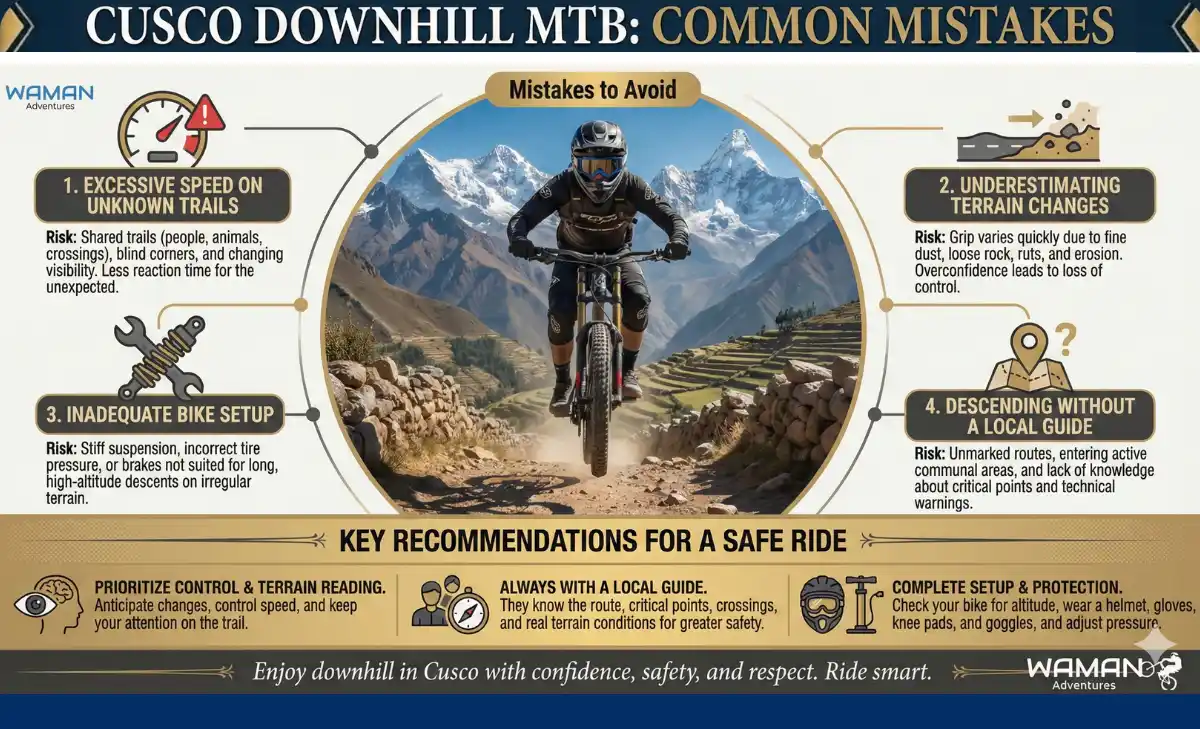
Infographic Cusco Downhill MTB Common Mistakes, highlighting braking control, body position, cornering technique, line choice, and trail safety tips.

Fix the common mistakes, ride faster with more control, better lines, smarter braking, and safer downhill in the Andes.

Why downhill in Cusco is not like other destinations

Downhill in Cusco happens in a very different setting than most popular riding destinations. You are not riding a closed bike park or purpose built bike only trails. You are descending in open Andean landscapes, at high altitude, on rural roads that are part of local daily life.

And yes, altitude matters even on the way down. Riding above 9,842 ft (3,000 m) can affect your performance and focus. Fatigue shows up sooner, and your reflexes may feel slower if you are not properly acclimated.

Remember:
Cusco downhill routes are shared community roads used every day.

Understand the real impact of altitude on downhill

Altitude affects you even on descents

Here is what changes in real life

🫁
IN YOUR BODY
  • • You breathe faster
  • • Less mental clarity
  • • Earlier fatigue
  • • Slower recovery
💪
ARMS AND HANDS
  • • More forearm pump
  • • Grip fatigue
  • • Less precision
  • • Braking feels less effective
🧠
WITHOUT ACCLIMATION
  • • Slower reactions
  • • Harder to read the trail
  • • Bad line choices
  • • Braking too late

Warning:
The combination of physical fatigue + reduced focus + constantly changing traction is where most crashes happen. It is not a skill issue. Your body simply performs differently at 11,483 ft (3,500 m).
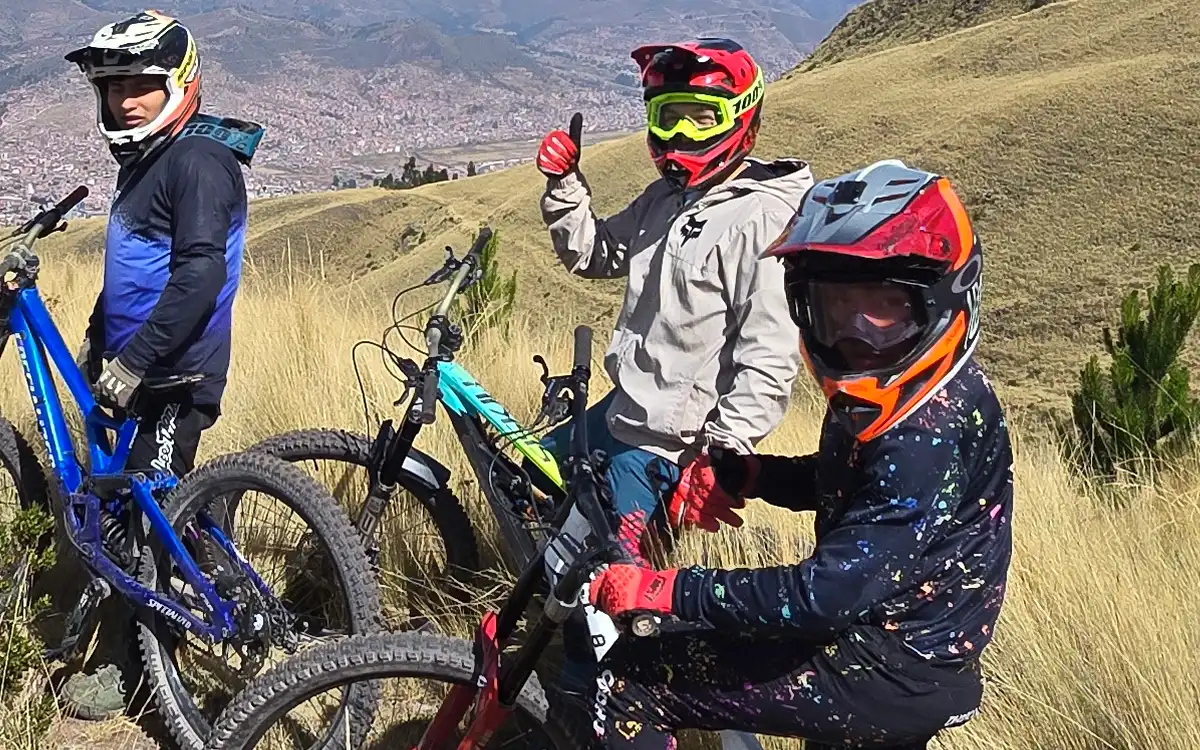
Mountain bikers ride through dry grass sections in Cusco, Peru, where traction changes fast and line choice matters.

Dry grass lies read the trail or lose the grip.

Downhill – Sacred Valley

Want to ride downhill in the Sacred Valley without worrying about logistics, access points, or safety?

At Peru Biking Tours, we run downhill routes with expert local guides, quality enduro bikes, and full mechanical support.

1. Riding too fast on trails you do not know

One of the most common Cusco Downhill MTB Common Mistakes is assuming the route is “empty” like a bike park or a closed course. In reality, you are riding public rural roads, so speed has to match what you can actually see and react to.

Why excessive speed is a real risk here

  • These roads are shared with pedestrians, farmers, kids, and animals such as sheep, cows, and donkeys.
  • You can run into farm crossings, driveways, and access points with no signs.
  • Visibility changes fast because of blind corners, stone walls, vegetation, and sudden dips.

What you miss when you are going too fast

  • Animals stepping into the road unexpectedly.
  • People walking or working while carrying loads.
  • Sudden surface changes: loose rock, sand, water ruts, or eroded sections.

How it impacts control and safety

  • Braking late increases the chance of sliding or running wide.
  • Entering corners too hot reduces your reaction time.
  • Altitude fatigue makes small mistakes feel much bigger.
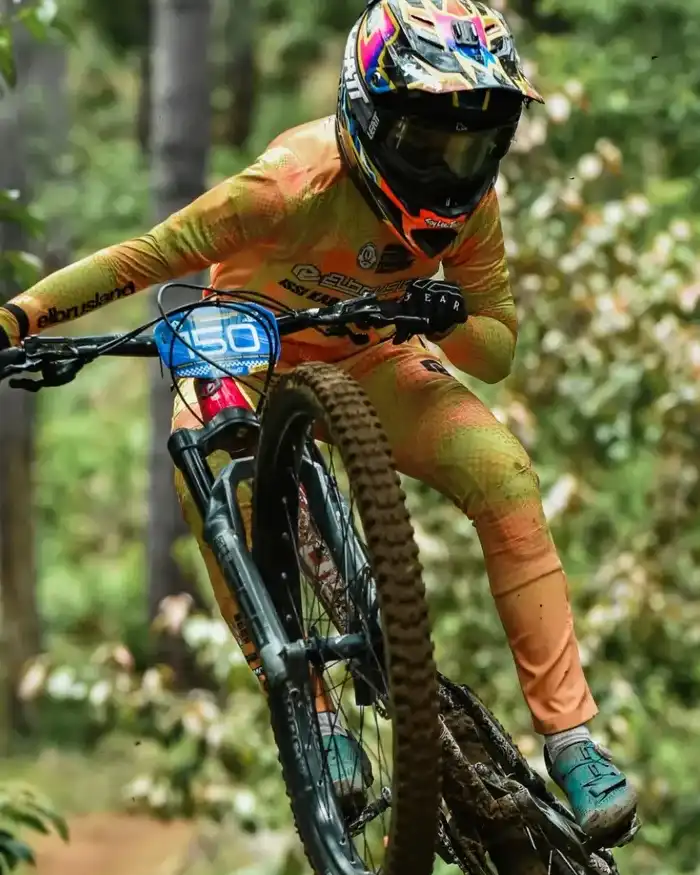
Mountain biker lands a small jump with bike slightly tilted, showing body control on a forested trail near Cusco, Peru.

Tilt, lift, land control the jump like it’s second nature.
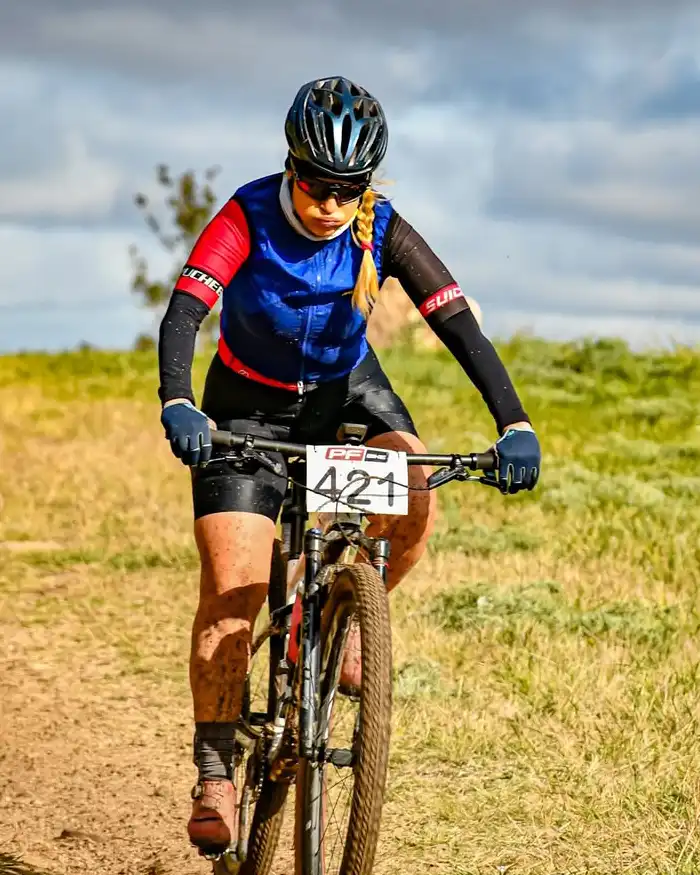
Mountain biker in helmet, sport sunglasses, and gloves leans forward while pedaling an open Andean trail near Cusco, Peru.

Focus forward, legs burning Cusco climbs reward the determined.

2. Underestimating how quickly the terrain changes

Another common downhill mistake in Cusco is thinking the surface will feel the same for the whole descent. In the Andes, traction can change multiple times in minutes, so you have to stay switched on and keep scanning ahead.

Why the trail changes so fast in Cusco

  • Fine dust: in the dry season, wind and traffic lift dust that reduces grip, especially in corners.
  • Loose rock: rural roads often have gravel and rocks that move under your tires.
  • Andean wind: it can dry one section, then push dust or sand into your line a few yards later.

The classic visitor mistake

Riders feel great because the first section has decent grip, then assume the whole descent will ride the same. That confidence makes you carry more speed into a corner or braking zone right when the surface has already changed. That is when unexpected slides and loss of control show up.

Warning:
Blind corners can hide rocks, people, or animals in seconds.

3. Running a bike setup that does not fit the Andes

One of the most common downhill mistakes in Cusco is showing up with a setup that is not built for the Andean environment. Many riders use the same settings they run in bike parks style tracks or short, compact descents, without realizing Cusco riding happens on open rural roads that are rough, unpredictable, and at high altitude.

Suspension set too firm for rough terrain

Cusco descents often include loose rock, natural ledges and step ups, eroded sections, and constant chatter.

Tire pressure that kills traction

A common mistake is running tire pressure too high “to avoid flats.” On loose dirt and rock, that reduces grip and makes the bike bounce and slide more easily.

Brakes not dialed for long descents

Many Cusco descents are long and continuous, not short and intense. If your brakes are not properly bled or your pads are not the right compound, power can fade with constant use.
Why this mistake is so common in Cusco
Most visitors set up their bike “like always”, without thinking about altitude, longer descents, and constantly changing traction.

The fix:
A good Cusco downhill setup is about control and efficiency, not top speed.
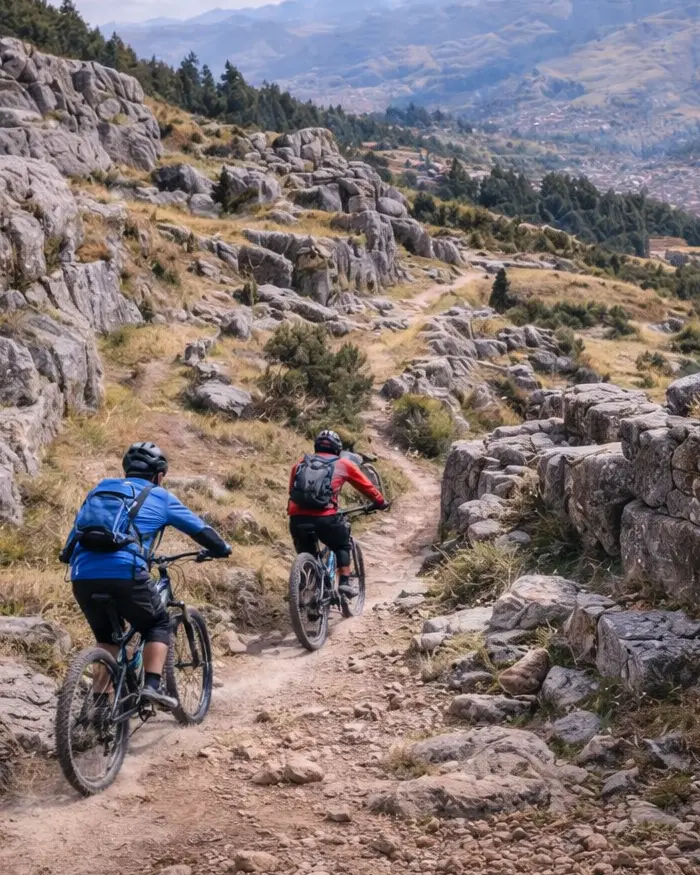
Mountain bikers descending a rocky trail in Cusco, Peru, riding between stone walls and boulders in dry Andean terrain.

Descent comes down to trust and timing, two riders reading the same rocky line between old stone walls.
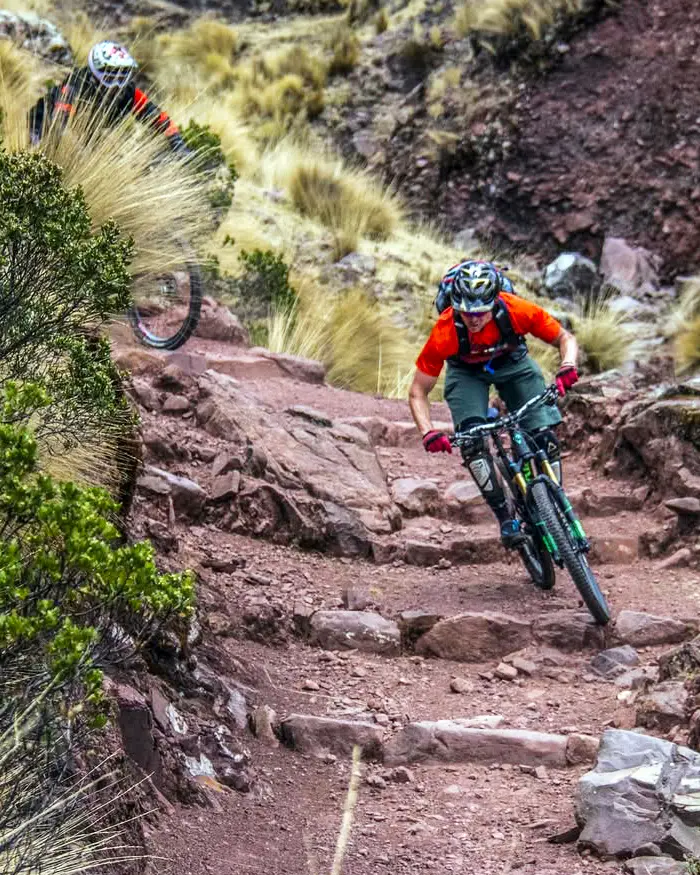
Mountain biker on a technical rocky trail in Cusco, Peru, rolling natural step ups and loose rocks with ichu grass and shrubs along the track.

Precision over speed, rock step ups and loose stones that test your line choice on an Andean trail.

Key protection points

Common protection and technique mistakes

Factor MISTAKE 1
Underpacking protection
MISTAKE 2
Poor stance and braking
What happens on the trail You ride with only a helmet and get overconfident You get stiff and descend “defensive”
Typical error You skip pads because “it is not extreme” You drag brakes nonstop, loading your arms and shoulders
What you forget Gloves, glasses, knee pads; depending on the route, elbow pads or a back protector Neutral stance, eyes up, brake in short pulses
Why it is a problem in Cusco Open roads: dust, loose rock, changing surfaces, and unexpected crossings Long descents create fatigue; constant braking reduces traction and reaction time
Direct outcome More impacts and injuries even on “minor” crashes Less control, more fatigue, slower reactions, higher risk
How to fix it Minimum: helmet, gloves, glasses, knee pads (elbow pads if needed) Technique: stay loose, brake before corners, use short pulses

4. Trying to ride downhill without a local guide

Another one of the Cusco Downhill MTB Common Mistakes is dropping into a descent without local support. Unlike destinations with marked bike parks and trails closed to the public, Cusco descents often happen on active rural roads that are shared with locals.

Why it is risky What a local guide adds
Routes with no clear signage and no technical warnings. Safe navigation: knows entrances, exits, and critical spots.
Abrupt changes: a fast section can suddenly become an active village zone. Calls out active areas and tells you when to slow down.
Livestock, pedestrians, and local vehicles can appear with no warning. Manages group pace and improves your reaction margin.
Variable traction: dust, loose rock, or moisture can change grip fast. Chooses the right route based on season and real trail conditions.
You might pick a descent that does not match your real skill level. Matches the trail to your technique and guides safer lines.

How to avoid the most common downhill mistakes in Cusco

Follow your guide’s calls

Local guides know the critical points on each route: where you must slow down, where hidden technical sections start, and which parts of the road are active community zones.

Stay alert and scan ahead

Do not assume traction will stay consistent. In Cusco, grip can change within a few yards because of wind, dust, shade, or moisture.

Choose control over speed

A controlled descent is more enjoyable, preserves energy, and reduces costly mistakes.

Manage speed like it is a shared road

Cusco is not a closed course. Ride at a speed that gives you time to react to pedestrians, animals, farm crossings, and sudden surface changes.

Dial your bike for the conditions

Before dropping in, check suspension, tire pressure, and brakes based on whether it is dry and dusty, wet, or loose and rocky. The right setup improves control, reduces arm fatigue, and helps you brake with more precision on long descents.

What kind of rider actually enjoys downhill in Cusco

Downhill in Cusco is best for riders with prior experience, solid bike control, and a responsible mindset. Unlike destinations with closed tracks and controlled conditions, you are descending on open roads at high altitude, sharing space with people, animals, and local daily life.

Downhill in Cusco is not just about speed. It is a way to take in massive landscapes and ride terrain that changes constantly.
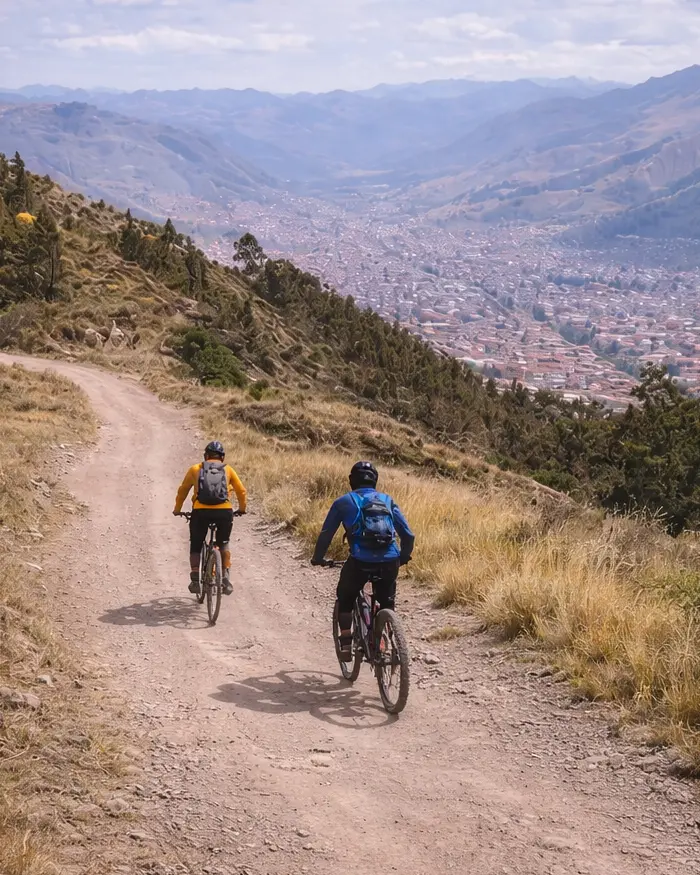
Rider practicing basic mountain bike skills on a smooth dirt trail in Cusco, Peru, with open Andean hillsides, ichu grass, and clear skies.

Smooth and predictable singletrack, the perfect place to build confidence and dial in your MTB basics in the Andes.

Mountain biker on a technical rocky trail in Cusco, Peru, rolling natural step ups and loose rocks with ichu grass and shrubs along the track.

Precision over speed, rock step ups and loose stones that test your line choice on an Andean trail.

Thousands of travelers have trusted Peru Biking Tours to live unforgettable experiences in the Andes.

1

Your safety first

Routes adapted to your level, expert local guides and full support at all times.

2

Without worrying about anything

We take care of all the logistics so you can just focus on enjoying the scenery.

3

Authentic routes in Cusco

Experience the Sacred Valley in a real way, at your own pace, with access to the best trails.

4

Quality equipment

High-end enduro bikes, helmets and protective gear for all levels.

View Routes

WhatsApp · +51 946 459 491

Plan your MTB experience in Cusco

🚵

MTB Day Tours in Cusco

If you want to explore MTB routes with the right logistics, local support, and suitable trail selection, check out our MTB Day Tours in Cusco.

⛰️

Multi-Day MTB Tours

For more comprehensive experiences that connect several valleys and high mountain routes, discover our multi-day MTB Tours.

FAQs about Cusco Downhill MTB common mistakes

Is downhill in Cusco recommended for beginners?

In general, it is not the best option if you do not have prior MTB experience. Downhill in Cusco happens on open roads, at high altitude, with constantly changing traction, so you need solid bike control and quick reactions.

Does altitude affect you even when you are descending?

Yes. Even on descents, altitude can affect breathing, focus, and muscular endurance. Many riders notice slower reactions, quicker forearm fatigue, and less recovery between runs, especially without proper acclimation.

Are Cusco downhill routes like bike parks?

No. Cusco is not a closed course destination. Routes are shared rural and community roads used daily, where you can encounter pedestrians, animals, farm crossings, and sudden surface changes.

What is the most common mistake visitors make in Cusco downhill?

The biggest mistake is riding too fast on an unfamiliar route. Many riders assume the road is empty or predictable, but it requires constant scanning and smart speed management.

Do I need a downhill bike or a full suspension bike?

Not always. A full suspension bike is recommended on many Cusco routes because of rough terrain and longer descents, but it is not required for every trail. The most important thing is having your bike properly set up for the conditions.

Is it safe to ride downhill without a local guide?

It depends, but in most cases it is not the safest choice. Without a guide, it is easy to take the wrong turn, enter active community zones where you must slow down, or get surprised by crossings and changing traction.

What time of year leads to more downhill mistakes in Cusco?

Mistakes increase in both seasons. In the rainy season, mud and moisture reduce grip. In the dry season, dust and loose rock can change traction quickly, especially in corners.

How should I prepare before riding downhill in Cusco?

Ideally, acclimate for one or two days, check and adjust your bike, wear appropriate protection, and choose trails that match your skill. It also helps to check day of conditions and follow your guide’s briefing before you drop in.

Autores

  • My path has been forged through art, language, and the constant movement of travel. Creative training and stage experience have honed my ability to observe, listen, and tell stories, while my interest in languages ​​allows me to connect cultures through words.

  • Me apasiona cantar y bailar, y me encanta explorar nuevos lugares, especialmente alrededor de mi querido Cusco, un lugar que conozco bien. Disfruto manteniéndome activa practicando deportes como la natación y el voleibol. La salsa es mi género musical favorito, y no hay nada como un día soleado rodeado de hermosos paisajes. Me encanta compartir experiencias reales y experiencias inspiradoras.

Table of Contents