


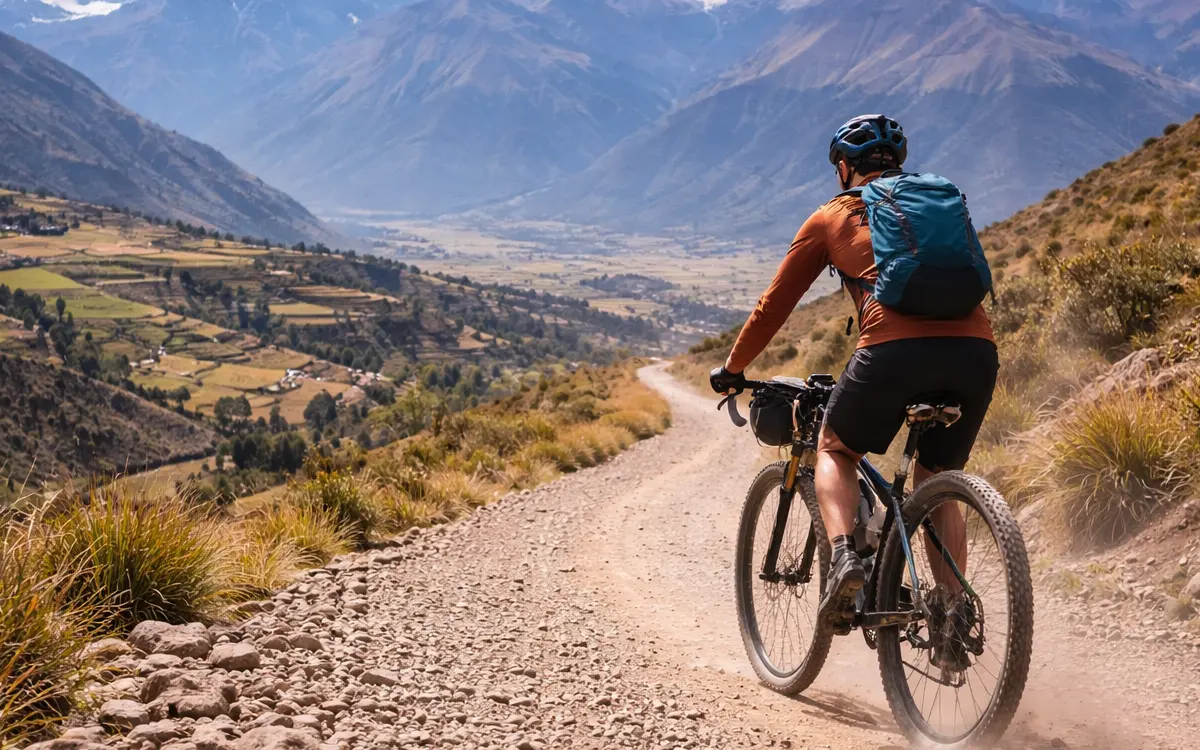
Quick Answer:
The dry season transforms the Sacred Valley into an ultimate downhill paradise. From May to September, the lack of rain leaves the trails incredibly fast, dry, and coated in that signature fine dust, demanding precise braking control and top-tier cornering skills at high speeds.
If you’re looking for best time to ride, in dry season you find more stable climate, firmer trails and more predictable conditions to descend with confidence. In this blog I explain essentials about dry season for downhill in Sacred Valley: how climate behaves, how terrain changes, what happens with altitude and which are best known areas to ride.
Want to ride one of Sacred Valley’s most technical descents? Discover our Day Tours in Cusco designed for riders seeking real enduro in Andes.
Climate during dry season in Sacred Valley
During dry season in Sacred Valley, which usually runs approximately from April or May to October, you find more stable and predictable climate than in rainy season.
During day, average temperatures usually range between 41°F–68°F (5°C–20°C), depending on time and specific altitude of each sector. Morning is usually cooler and sky is generally clearer; that’s why you should leave early if you’re going to practice downhill or other adventure activities.

Rider wears full face helmet and protective gear, ready for technical trail section.

Mountain biker makes small jump over rock on high Andean trail overlooking Sacred Valley.
How terrain changes in dry season for downhill in Sacred Valley
During dry season in Sacred Valley, which runs approximately from May to September, you notice clear change in terrain due to little rain and sunnier days with clear skies.
Since ground is drier and firmer, descent sections become more predictable and you have fewer surprises in braking and curves. That said, that same lack of humidity can leave loose dust on hard base, especially on lightly traveled trails or very exposed to sun.
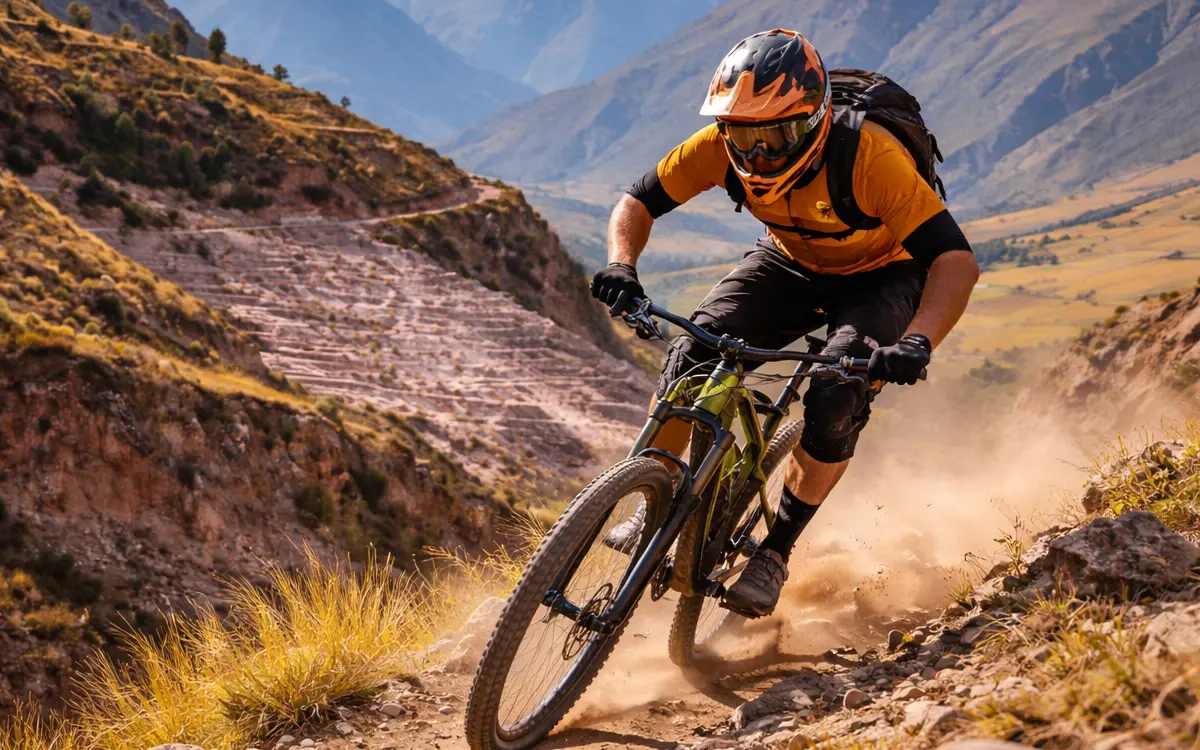
Scenic enduro routes through Maras offer long technical descents with spectacular views.
Altitude and performance in Sacred Valley
| Key point | What happens in Sacred Valley | What you should do |
| Altitude range | Approximately 9,186–12,467 ft (2,800–3,800 m), depending on sector | Check altitude of area where you’ll ride before choosing route |
| Less oxygen | At higher altitude there’s less oxygen availability, so effort feels stronger | Lower pace, breathe controlled and avoid “going all out” first day |
| How it feels in your body | You may notice faster fatigue and accelerated breathing even with good physical condition | Take short breaks, hydrate and maintain constant effort |
| Altitude sickness risk | Symptoms like headache, nausea or lack of energy can appear if you ascend quickly | Prioritize rest, hydration and avoid alcohol first day |
| Recommended acclimatization | It’s better to adapt body before demanding routes | Spend 1–2 days in Cusco or Valley before doing hard descents |
Best areas for downhill during dry season
In Sacred Valley of Incas, between Pisac and Ollantaytambo following Urubamba river, you find many trails mountain bikers use, including ideal sections for downhill during dry season.
Urubamba and surroundings
In Urubamba you usually have more open and fluid descents, with quite firm terrain when climate is dry. Here you can do long routes with landscape changes, from agricultural fields to Andean mountain views.
Ollantaytambo and technical sectors
Near Ollantaytambo you encounter more technical lines, with rocky sections, steeper slopes and sections where you need greater control on curves and descents.
Maras and Moray: intense downhill
Around Maras and in surroundings of Moray you find routes with continuous descent and landscape changes, often with views of traditional salt mines.
Pisac, Lamay and other villages
Villages like Pisac, Lamay and Calca also serve as base for downhill and enduro routes combining technical descents with more fluid sectors.

Mountain biker descends decisively down narrow trail of red dirt and loose rock.

Scene showcases technical enduro routes in Cusco in purest form, where rider combines skill and balance to clear narrow crossing.
What to bring during dry season
- Breathable base layer
- Light mid layer
- Light windbreaker or waterproof jacket
- SPF 50 or higher sunscreen
- Sports glasses or goggles with UV filter
- Buff or light face protection
- Hydration system or backpack with water
- Cycling gloves
- Certified helmet
- Lip balm with sun protection
Safety during dry season for downhill in Sacred Valley
During dry season in Sacred Valley (approx. May to September), terrain is usually firmer and more stable than in rainy season, so you reduce risk of mud and landslides.
In open valley areas, especially in afternoon, Andean wind can intensify and generate lateral gusts affecting your balance, especially in exposed sectors or on ridges. Keep in mind that many Sacred Valley trails are not exclusive for bikes: they’re rural routes you can share with locals, livestock, shepherd dogs or agricultural activities.
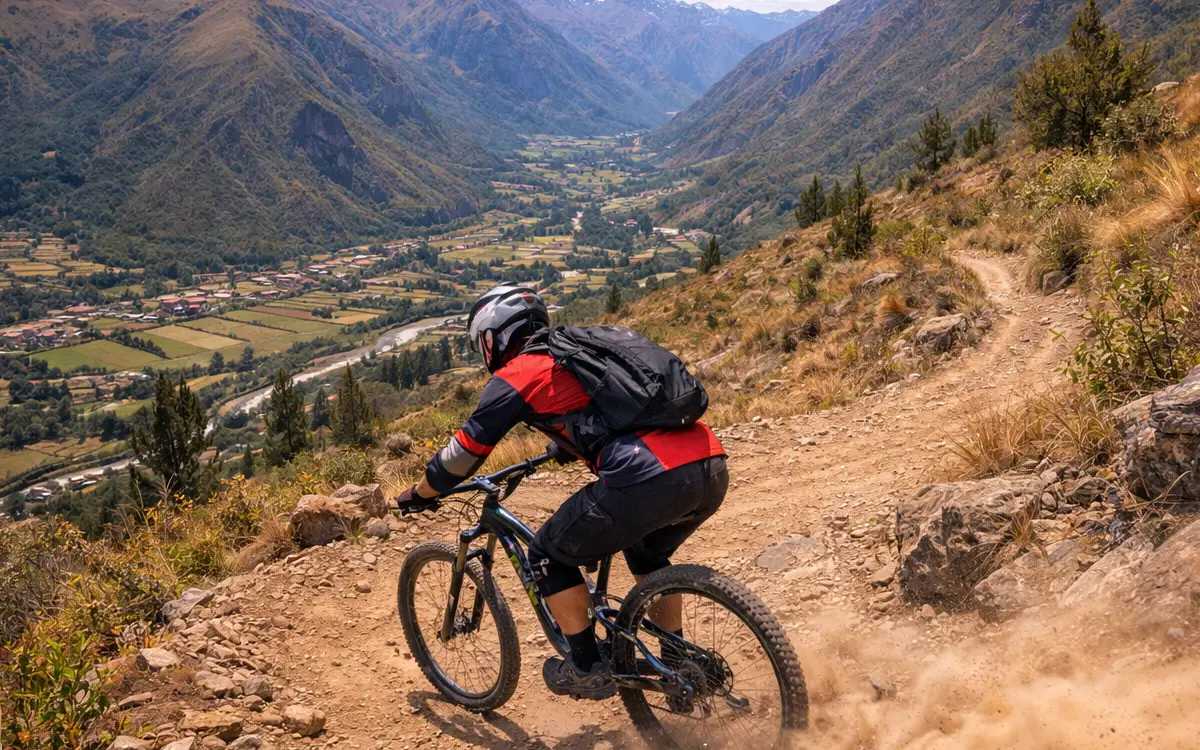
Dry season for downhill in Sacred Valley gives you firmer trails and more predictable terrain to descend with confidence.
Is dry season always better for downhill in Sacred Valley?
In terms of stability and traction, dry season (approx. May to September) is usually best option for you if you want to do downhill in Sacred Valley. In these months, rains decrease quite a bit compared to rainy season.
Between November and March, precipitation is more frequent, so you can encounter mud, slippery areas and sudden changes in terrain condition. Climate-wise, during dry season you usually have more sunny days and clear skies; in contrast, in wet season variable cloudiness and regular rains are more common.
Cultural respect when riding in Sacred Valley
Many trails you use for downhill or MTB cross communal lands, crop fields and old roads still serving local functions. That’s why it’s key you’re clear you’re riding in active cultural space, not in private circuit.
Dry season for downhill in Sacred Valley allows you to ride with more control, safety and confidence when you choose route well and understand terrain you’ll face. Preparing well, leaving early, acclimatizing, adjusting your gear and respecting communities makes difference between just descending and experiencing complete Andes adventure. If you want everything organized, safe and adapted to your level, Peru Biking Tours is your best ally. Contact us at +51 946 459 491 and start preparing your next adventure.
Thousands of travelers have trusted Peru Biking Tours to experience unforgettable experiences in Andes.
Your safety first
Routes adapted to your level, expert local guides and complete support at all times.
Without worrying about anything
We handle all logistics so you only focus on enjoying landscape.
Authentic routes in Cusco
Experience Sacred Valley authentically, at your pace, with access to best trails.
Quality equipment
High-end enduro bikes, helmets and protective gear for all levels.
Plan your MTB experience in Cusco
MTB Day Tours in Cusco
If you want to ride routes like Lamay Sapacto with correct logistics, local support and proper trail selection, check out our MTB Day Tours in Cusco.
Multi-Day MTB Tours
For more complete experiences connecting several valleys and high mountain routes, discover our Multi-day MTB Tours.


