


Quick Answer
Cusco sits at about 11,200 ft (3,400 m), so altitude can hit fast because there is less oxygen available. For your first 48 hours, focus on acclimatizing with steady hydration, solid sleep, and no alcohol, and ideally start riding in the Sacred Valley at a lower elevation. If you develop persistent nausea or dizziness even while resting, stop and descend right away. Put safety first with Cusco MTB altitude sickness.
If you are concerned about Cusco MTB Altitude Sickness, altitude is the one factor that can most shape how you feel and how much you enjoy the ride. It happens when your body does not acclimate fast enough to thinner air, and it can show up sooner on a bike because the effort is steady, especially on climbs and longer sections. In this guide you will learn what causes it, what to do during your first 24 to 48 hours, how to plan routes intelligently, and which symptoms you should never ignore.
Worried about altitude sickness while riding in Cusco? Our day tours are designed for riders who want to acclimate properly, ride smarter, and still enjoy authentic enduro adventures in the Andes safely.
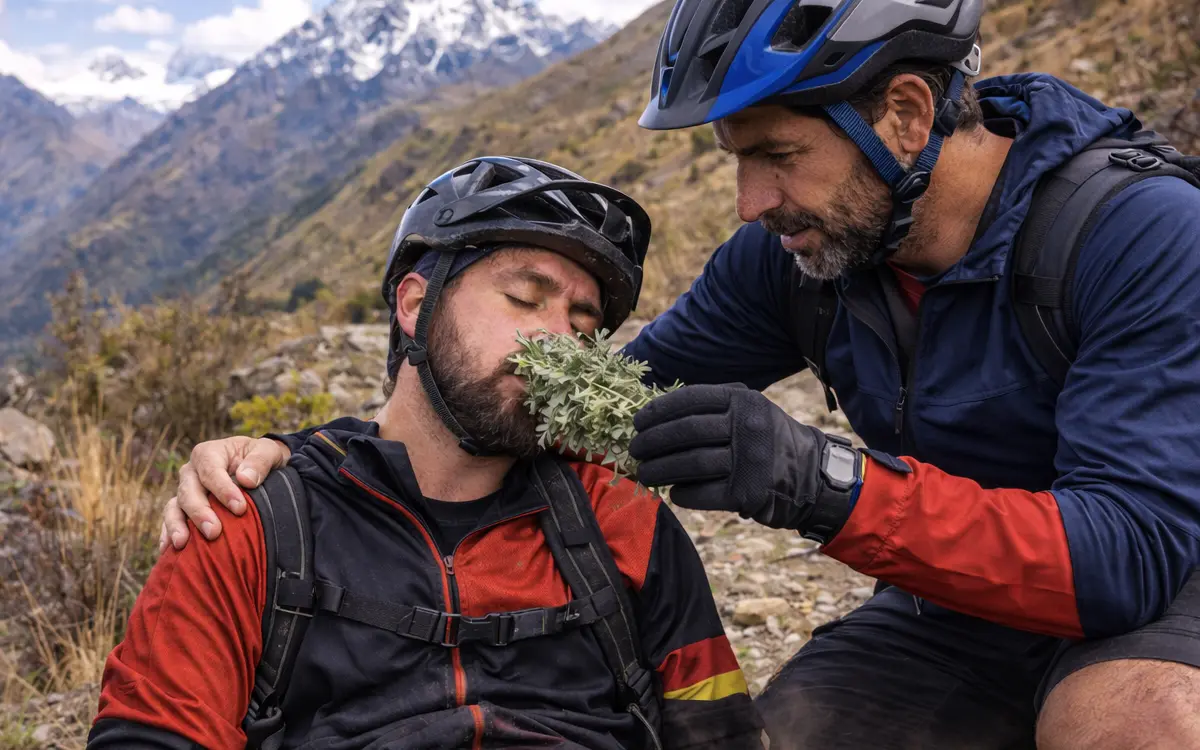
High altitude in Cusco can hit hard, acclimatize first so your MTB day stays strong.
What altitude sickness is and why MTB can make it feel stronger
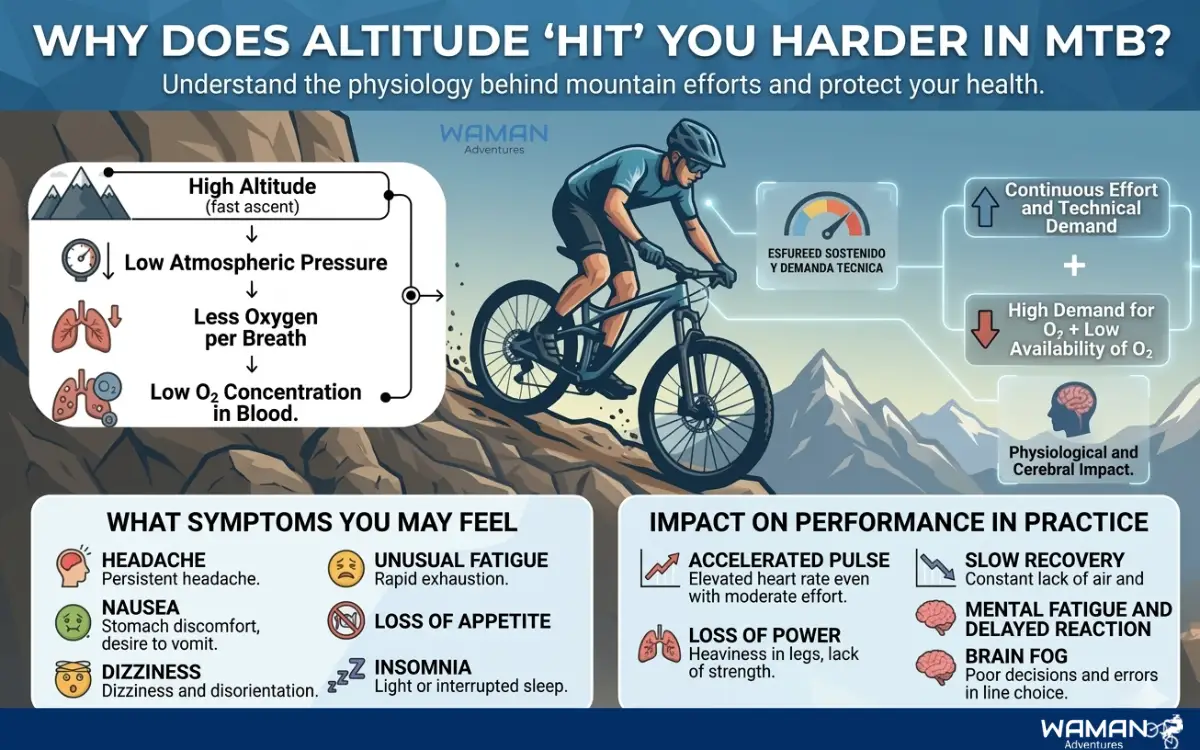
Altitude sickness can happen when you gain elevation quickly and your body has not adjusted yet. It is not only feeling out of breath. At higher elevation, air pressure drops, so every breath delivers less oxygen. That means less oxygen reaches your blood, which can affect your muscles and your brain.
With mountain biking, those effects can feel sharper because MTB demands steady cardiovascular work plus frequent changes in intensity. When Cusco MTB Altitude Sickness shows up, it is not just about power output. Your focus can dip too, and that usually translates into slower reactions, less precise line choice, and a ride that feels harder to control.
Common symptoms you might feel
- Headache
- Nausea or stomach discomfort
- Dizziness
- Unusual fatigue
- Loss of appetite
- Light or interrupted sleep
Why it feels stronger on an MTB ride
- Heart rate rises even with moderate effort
- Shortness of breath on climbs and slower recovery
- Legs load up faster and power drops
- Lower concentration and slower reactions
- Mental fatigue and less precise decisions
Your first 24 to 48 hours
Your first 24 to 48 hours in Cusco matter more than most riders expect. Ideally, do not plan a demanding ride on arrival day. A slow walk around town or light activity helps your body begin acclimatizing.
Prioritize a solid first night of sleep, steady hydration, and skip alcohol and heavy meals. Pushing a hard ride too soon is one of the fastest ways to trigger Cusco MTB Altitude Sickness, even if you normally feel strong at sea level.
Warning:
Do not mix alcohol with hard effort during your first 48 hours.
Hydration and food tips for Cusco MTB altitude sickness
On arrival day, keep it light. Walk at an easy pace, stay gently active, and avoid demanding MTB routes. Even if you feel fine, your body is still adjusting its breathing and heart rate.
At altitude, your body compensates by breathing faster and raising heart rate slightly to deal with less available oxygen. This is not instant. It can take about 24 to 72 hours for things to feel more stable.
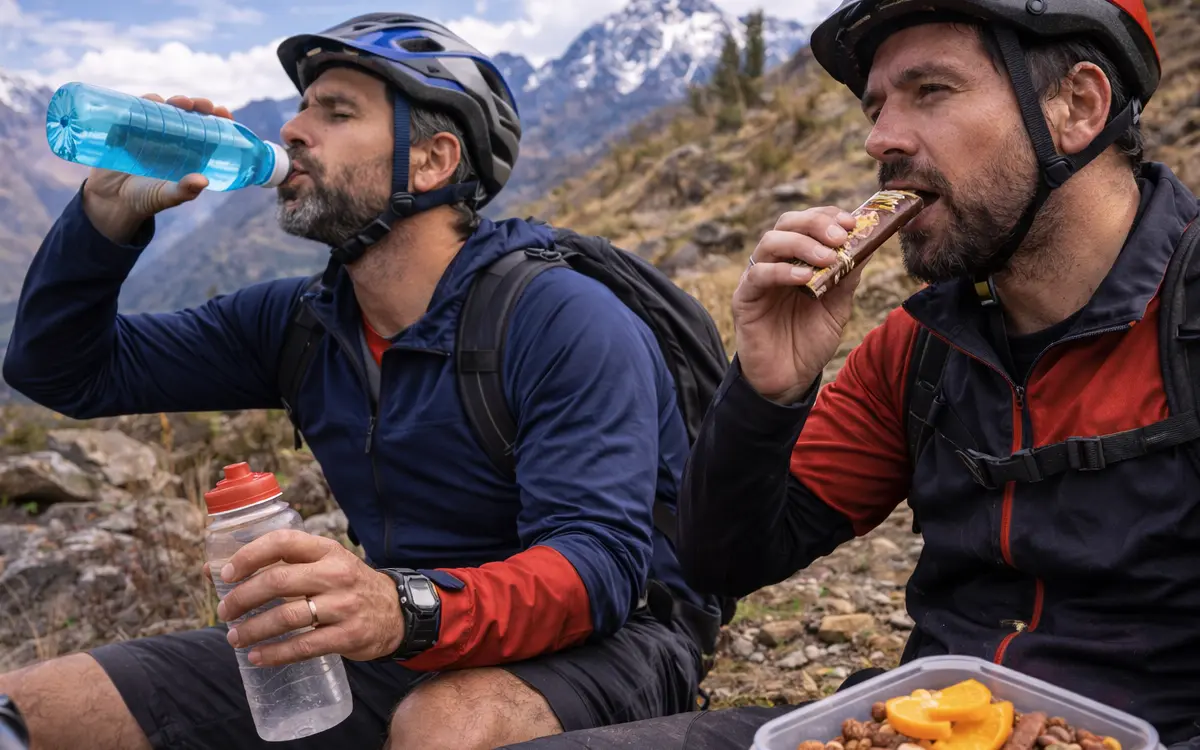
A sip of water and a quick snack, the simplest reset before the next section.
Smarter route planning starts lower, go higher later
| Phase | Approx elevation | What to do |
|---|---|---|
| Day 1 | Cusco at about 11,200 ft (3,400 m) | Light activity, easy walks, avoid demanding MTB routes |
| Day 1 to 2 | Sacred Valley at about 9,200 to 9,800 ft (2,800 to 3,000 m) | Moderate routes, controlled pace, focus on smooth riding over intensity |
| Day 2 to 3 and beyond | Higher zones at about 10,500 to 12,500 ft (3,200 to 3,800 m) | More technical or demanding routes only if you have no symptoms |
Symptoms you should not ignore while riding MTB in Cusco
- Persistent headache
- Nausea or stomach discomfort
- Dizziness or unsteadiness
- Extreme fatigue or unusual weakness
- Loss of appetite
- Trouble sleeping
- Fast breathing even at rest
- Shortness of breath that feels out of proportion to effort
- Confusion or trouble focusing
- Poor coordination or difficulty walking in a straight line
Medication and traditional remedies, what to consider
Acetazolamide (Diamox)
Acetazolamide is commonly used for preventing and treating acute mountain sickness. It supports acclimatization by encouraging breathing and helping your body adjust faster to lower oxygen availability. Talk with a clinician before using it.
Ibuprofen
Some research suggests ibuprofen may reduce headache from mild altitude symptoms. It does not fix the cause, but it can ease early discomfort. Use it responsibly and check with a clinician if you have any contraindications.
Coca tea
Coca tea is a common Andean tradition in Cusco. Many travelers use it for fatigue and mild discomfort at altitude. Some riders feel relief, but it is best viewed as support, not a replacement for gradual acclimatization.
Coca leaves (traditional chewing)
In Andean communities, chewing coca leaves is an ancestral practice linked to energy and coping with altitude. For visitors, it is often more cultural than medical.
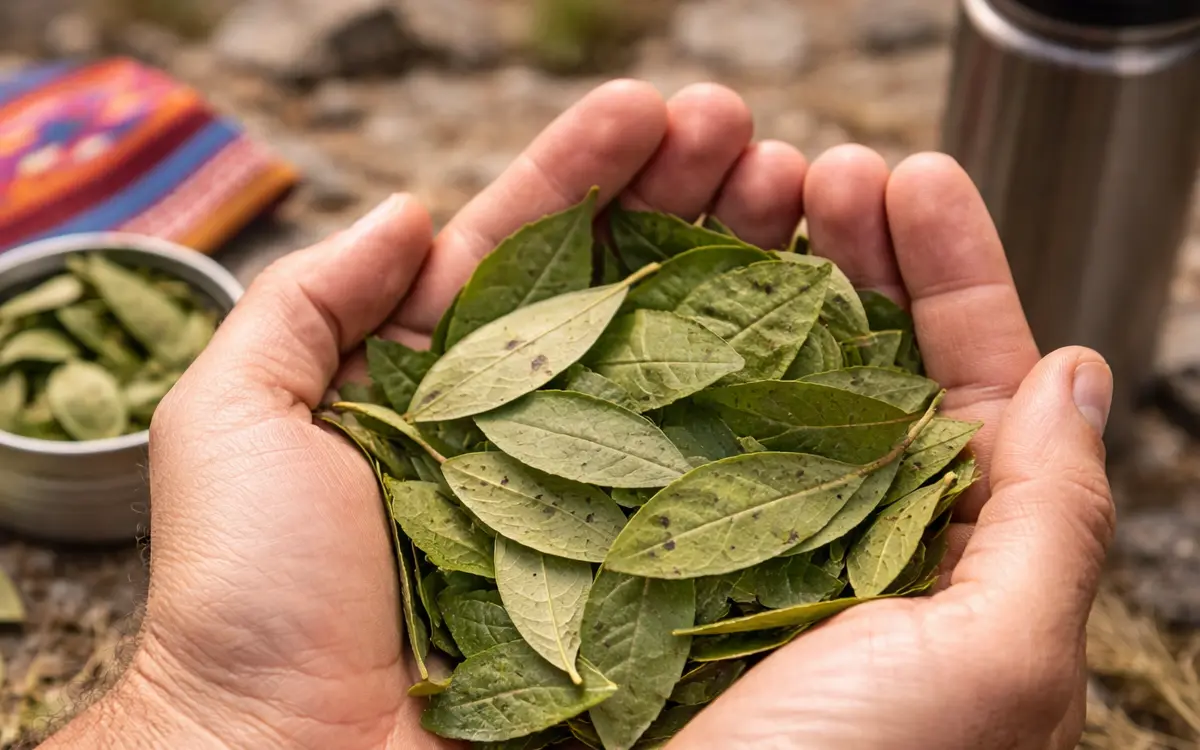
Coca leaves in the Andes, a traditional support many travelers use at altitude.
Its use is tied to historical customs and local knowledge.
Does being fit prevent Cusco MTB altitude sickness
Not necessarily. You can be in excellent shape and still experience symptoms. Fitness does not prevent acute mountain sickness because the issue is physiological, not muscular.
Altitude does not discriminate between athletes and casual riders. In fact, strong riders often push too hard on day one, which can increase the chance of Cusco MTB Altitude Sickness. Fitness helps you manage effort and pace, but it does not remove the effects of thinner air.
Did you know?
Dehydration after a long flight can make altitude symptoms worse on day one.
Best season and how it relates to Cusco MTB altitude sickness
Thousands of travelers have trusted Peru Biking Tours to live unforgettable experiences in the Andes.
Your safety first
Routes adapted to your level, expert local guides and full support at all times.
Without worrying about anything
We take care of all the logistics so you can just focus on enjoying the scenery.
Authentic routes in Cusco
Experience the Sacred Valley in a real way, at your own pace, with access to the best trails.
Quality equipment
High-end enduro bikes, helmets and protective gear for all levels.
Why a local guide can help reduce Cusco MTB altitude sickness risk
A local guide does more than handle logistics. They add a key layer of safety when you ride at elevation. Around Cusco and the Sacred Valley, many routes sit above 9,800 ft (3,000 m).
A good guide can help you keep effort steady and appropriate for the altitude, which lowers the chance of triggering symptoms and helps you manage Cusco MTB Altitude Sickness risk in real time.
If you book with a specialized team, you also get smarter planning around elevation exposure, route timing, and your group’s real level.
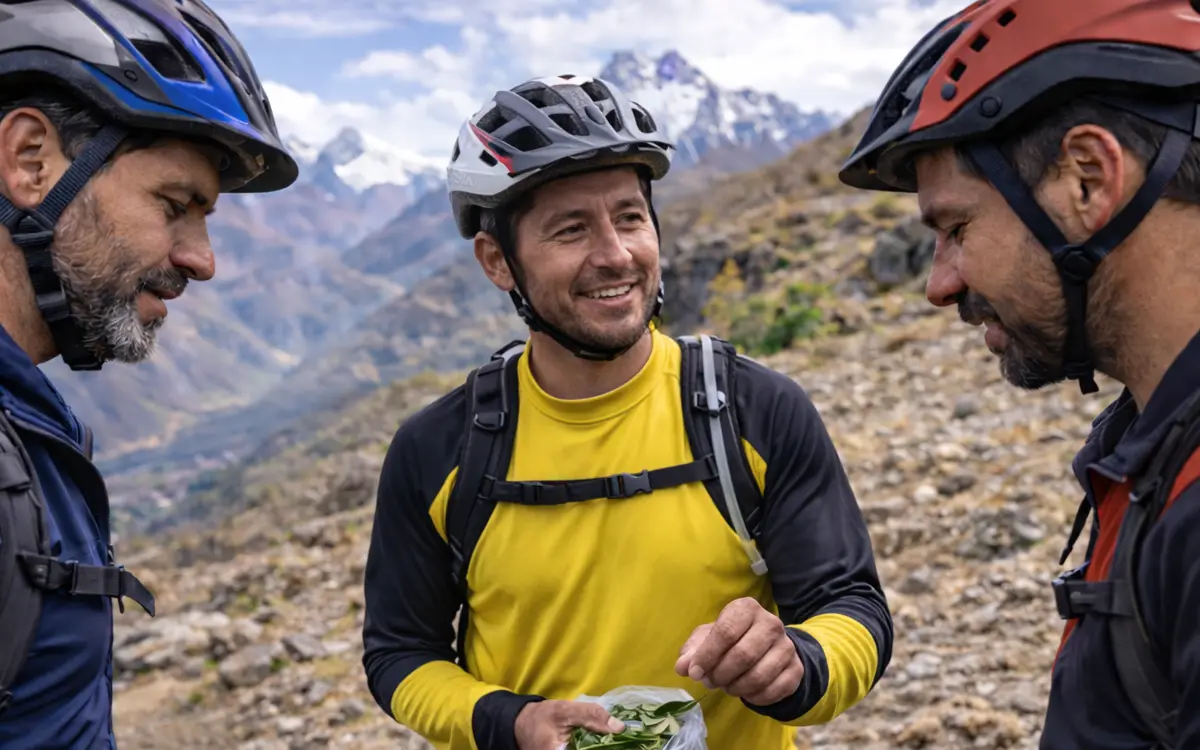
A good guide keeps the group safer by spotting altitude issues early and pacing the day right.
Preventing Cusco MTB Altitude Sickness helps you ride with more control, safety, and confidence when you give yourself time to acclimate and learn how your body responds at elevation. Preparation is the difference between simply pedaling and having a full Andes riding experience. If you want everything organized in a way that matches your level, Peru Biking Tours can help.
Plan your MTB experience in Cusco
MTB Day Tours in Cusco
If you want to explore MTB routes with the right logistics, local support, and suitable trail selection, check out our MTB Day Tours in Cusco.
Multi-Day MTB Tours
For more comprehensive experiences that connect several valleys and high mountain routes, discover our multi-day MTB Tours.


