


Quick Answer:
MTB footwear is the primary contact point between rider and bike, defining control, power transfer, and safety on technical terrain. Choosing the right shoe involves understanding sole stiffness, the choice between flat and clipless pedals, and the necessary foot protection for aggressive trails
If you are traveling, choosing the right MTB footwear is not a minor detail. It directly affects your control, your safety, and how much you enjoy the ride. In a new destination, terrain can change within minutes: dust, gravel, rock, mud. In this guide, you will learn why proper footwear matters, what happens if you ride with regular sneakers, how to choose based on pedals and terrain, and what details to look for so you can travel more comfortably and ride with confidence.
Choose your MTB footwear wisely: avoid common mistakes and ensure comfort, control, and performance on Cusco trails. Discover our Day Tours in Cusco designed for riders looking for real enduro in the Andes.
🥾 What you will find in this guide
Why footwear matters
Control, safety, and fatigue on unfamiliar terrain
Flat pedals vs clipless
What works best for your experience and route
Based on terrain
Dust, gravel, mud, wet rock
What to look for
The features that truly matter
Common mistakes
What most travelers get wrong
Why proper MTB footwear matters when you travel
If you are planning a mountain biking trip, one of the most important factors to consider is the footwear you will use, along with the type of terrain you will ride on. In a new destination, the ground can change from one section to the next, and you do not always have room for mistakes.
MTB specific shoes are designed to keep your foot stable on the pedal, transfer power more efficiently, and prevent unexpected slips, which becomes critical on sudden descents or technical sections.
In addition, proper MTB footwear helps reduce fatigue. By distributing pedaling pressure more evenly, it lowers strain on your feet and legs and prevents your muscles from overcompensating for unstable support.
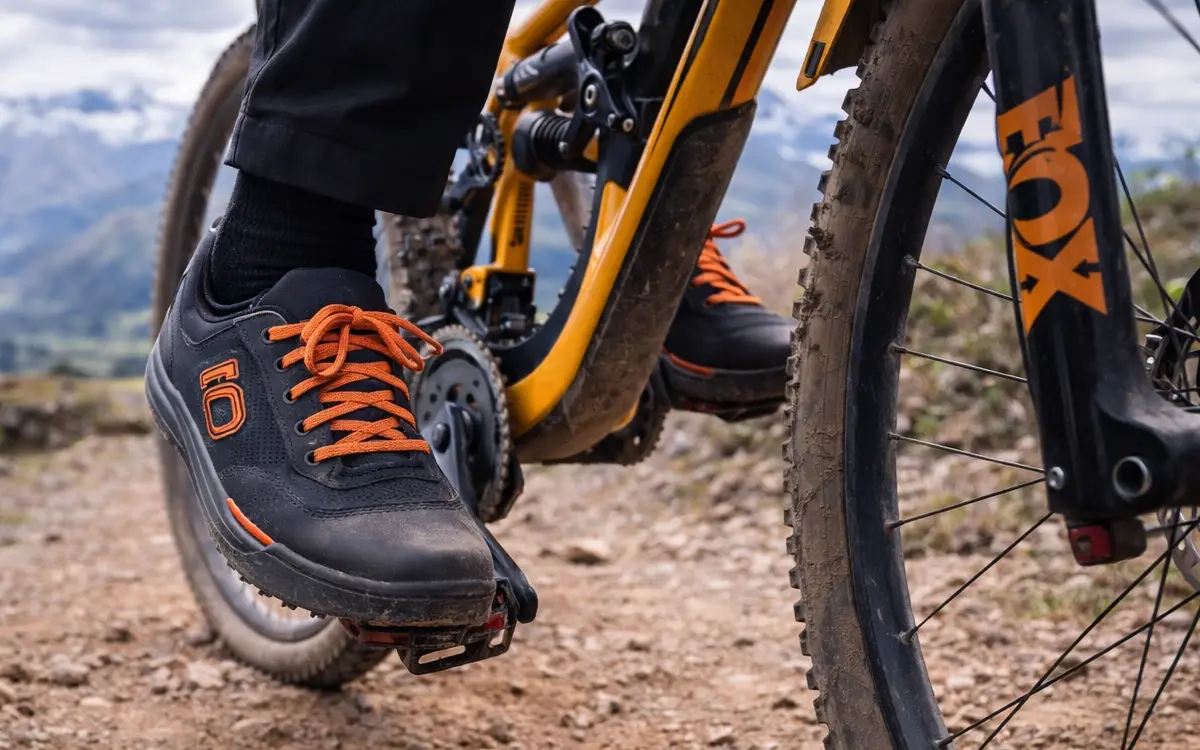
The rider’s posture shows confidence, supported by solid grip that improves control on technical descents.
Why you should not travel with regular sneakers
- Regular sneakers are not recommended for MTB because their soft soles deform on the pedal, reducing stability and increasing fatigue on long rides.
- They do not provide good pedal grip, so your foot can slip easily, especially on dusty, muddy, or high vibration terrain.
- They lack reinforced toe protection, leaving your feet exposed to impacts from rocks, roots, or even the bike frame.
- Without proper foot support, you lose control on uneven descents and sudden braking, increasing the risk of crashes.
- When your foot slips off the pedal, it is common to hit your shin on the pins, causing cuts or bruises.
- Regular shoes offer limited traction when walking, which becomes noticeable when you need to get off the bike and push it on steep or rocky trails.
- They wear out quickly due to constant friction with pedals and terrain, shortening their lifespan during your trip.
- They can cause discomfort such as blisters or foot pain, affecting your comfort and performance from the very first days.
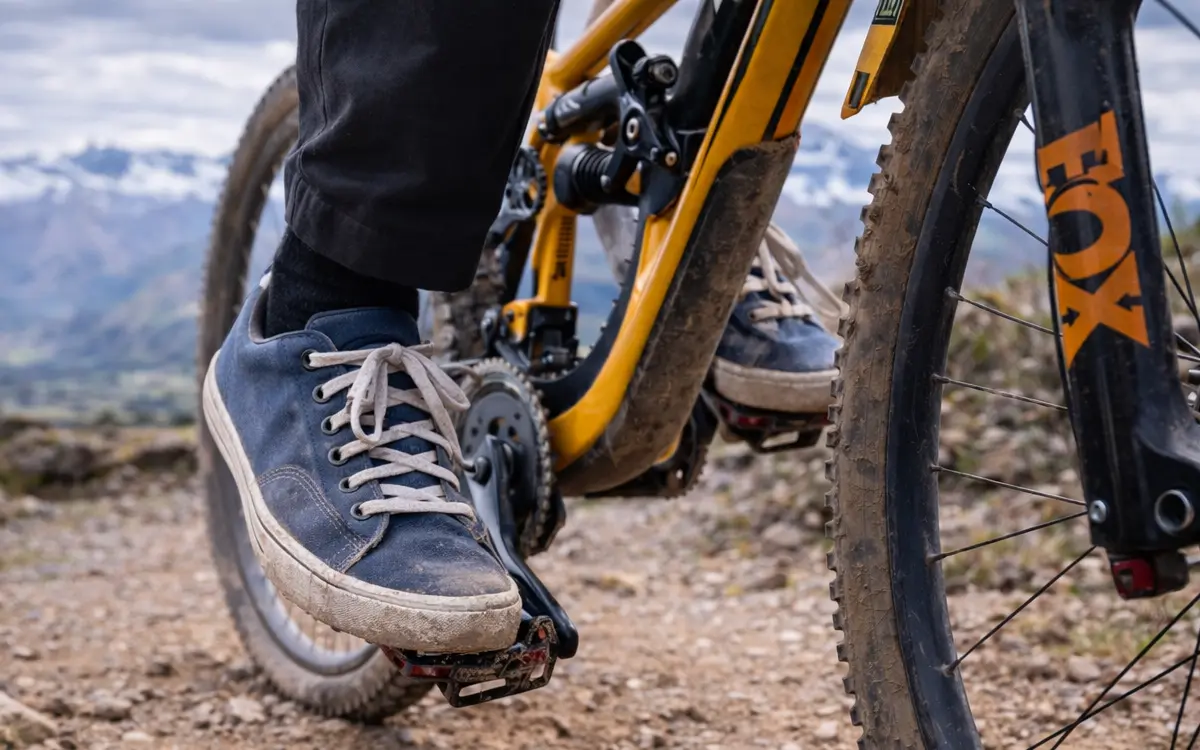
On uneven terrain, the limited grip of regular footwear can lead to unexpected slips.
Proper MTB footwear for flat pedals
The most important factor is the sole. It must have a design that grips the pedal well, with enough traction to prevent slipping, even with vibration, dust, or uneven terrain.
Another key point is protection. Proper MTB footwear usually includes reinforced toe boxes and more durable side panels, helping protect your feet from impacts with rocks, roots, or even the pedals themselves. On natural trails, this is not a minor detail.
In addition, these shoes provide better traction when walking, which is especially useful when you need to get off the bike, push it, or walk on steep or rocky terrain.
Proper MTB footwear for clipless pedals
If you already have MTB experience and are used to riding with clipless pedals, you can travel with them without a problem, but you should carefully evaluate the type of route you will ride.
The main advantage is power transfer. Being clipped into the pedal allows you to make better use of each stroke, which is very useful on long climbs, high altitude sections, or routes where continuous pedaling is essential.
Another important factor is walking comfort. Clipless shoes are designed primarily for pedaling, not walking. If your route requires getting off the bike, pushing it, or walking on rocks and dirt, they tend to be less stable and more slippery than good flat pedal shoes.
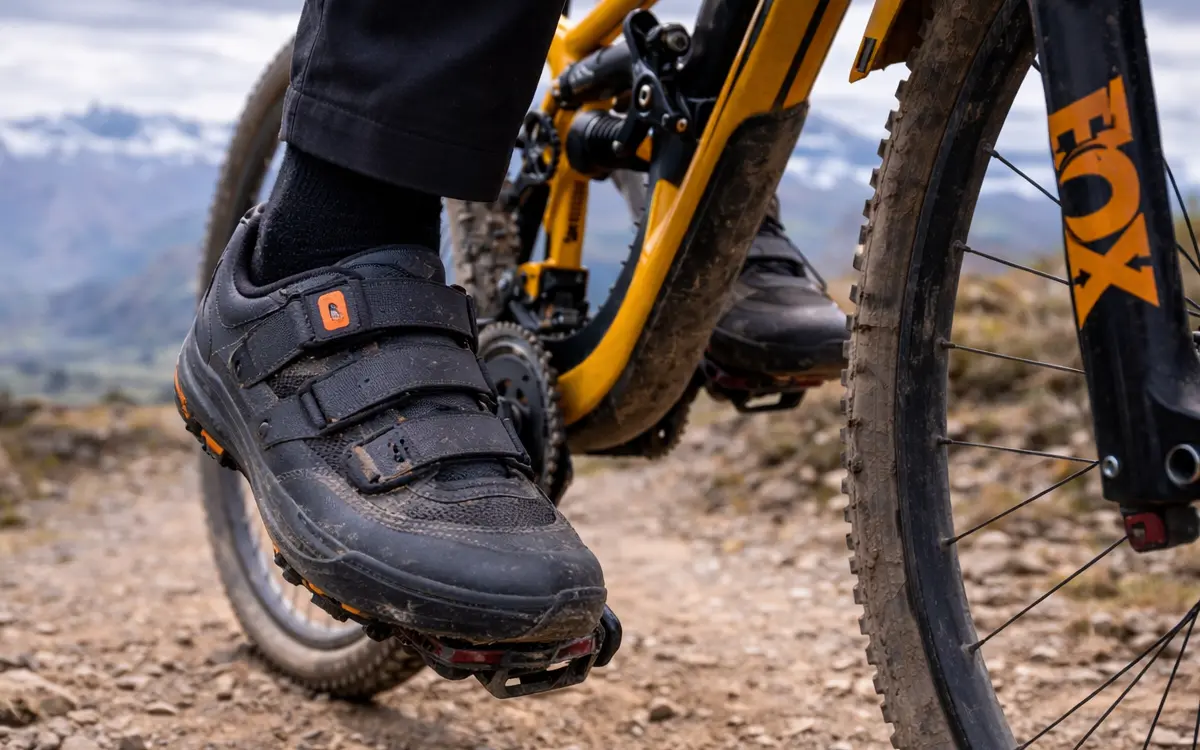
The stiff sole improves power transfer, optimizing performance on demanding routes.
How to choose proper MTB footwear based on terrain
A key factor is to honestly assess the type of terrain you will ride. For example:
On dry routes with dust, gravel, or loose rock, lateral grip is essential. A sticky rubber compound helps keep your foot stable on the pedal, especially in corners, long descents, or uneven sections. In these conditions, a flatter sole with strong grip works best.
If you will ride in wet areas with mud or slick rock, you need not only pedal grip but also traction when walking. In this case, a shoe with deeper tread and the right compound reduces the risk of slipping when you get off the bike.
Expert tip:
Bring technical socks that help reduce moisture and internal friction.
What proper MTB footwear should have when you travel
| Key feature | Why it matters for MTB travel |
| Good pedal grip | A grippy rubber sole prevents your foot from slipping on descents, vibrations, or loose terrain, which is common on unfamiliar routes. |
| Balanced sole stiffness | A sole that is too soft tires your foot, while one that is too stiff is uncomfortable for walking. For travel, you need a balance between pedaling efficiency and off bike comfort. |
| Toe protection | Reinforced toe areas protect your feet from impacts with rocks, roots, or the frame, which are common on natural trails. |
| Secure fit | A good closure system such as laces, velcro, or BOA keeps your foot stable and prevents internal movement that can cause blisters or loss of control. |
| Walking traction | On MTB trips, it is common to push your bike, walk technical sections, or move around viewpoints and towns. The sole must provide traction off the bike. |
| Durable materials | MTB shoes must handle dust, moisture, impacts, and heavy use without losing structure or support within a few days. |
Common mistakes travelers make when choosing MTB footwear
- Breaking in new shoes during the trip often leads to blisters, pain, and discomfort, especially on long rides.
- Choosing footwear based only on looks or brand does not guarantee grip or control on mountain terrain.
- Using overly soft shoes reduces pedaling efficiency and increases foot fatigue on long descents.
- Riding with casual or running shoes reduces stability and increases the risk of slipping.
- Ignoring toe and side protection leaves your feet exposed to impacts from rocks or roots.
Warning:
Avoid models with very smooth soles if you plan to ride on dust or loose gravel.
Do you know what footwear to bring but not where to start in Cusco?
Tell us your level and travel dates. We will guide you on gear, routes, and logistics so you arrive fully prepared.
How proper MTB footwear helps you ride longer
When you use proper MTB footwear, the benefit goes far beyond initial comfort.
A secure fit prevents your foot from moving inside the shoe. Less micro movement means less muscle strain and reduced fatigue, which is essential when you are traveling and riding multiple days in a row.
When you feel solid grip and stability, you ride more relaxed. You maintain better posture, brake with more control, and spend less energy compensating for unstable terrain.
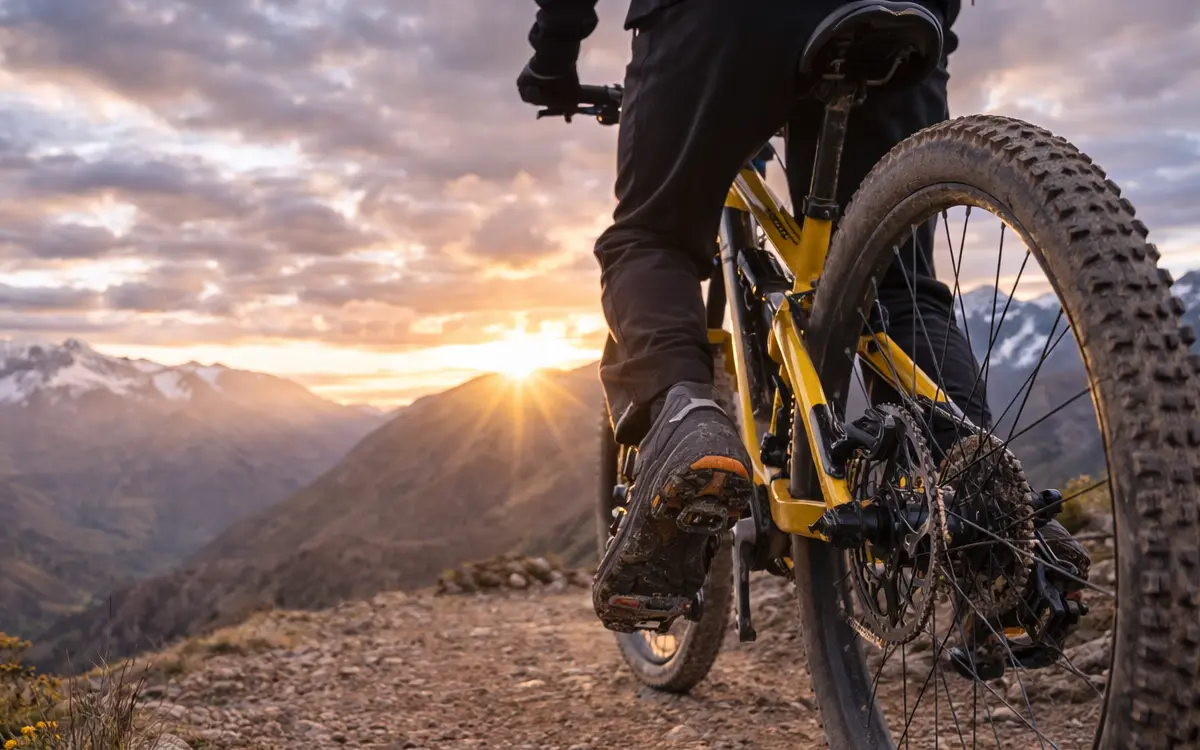
The open landscape highlights the sense of altitude and exposure to the valley below.
Proper MTB footwear if you are a beginner or traveling for the first time
If this is your first MTB trip, prioritize safety and confidence. Proper MTB footwear for beginners is usually designed for flat pedals, offering comfort and reliable grip. You do not need clipless systems or highly technical models. What matters most is feeling stable and confident from the start.
Choosing proper MTB footwear before your trip helps you avoid slips, reduce fatigue, and gives you more control and safety when terrain becomes irregular. If you want to travel and ride with everything well planned, safe, and adapted to your level, Peru Biking Tours is your best ally: we guide you with the right gear and practical advice so you can enjoy the experience without worries.
Thousands of travelers have trusted Peru Biking Tours to enjoy unforgettable experiences in the Andes.
Your safety first
Routes adapted to your level, expert local guides, and full support at all times.
No worries at all
We take care of all logistics so you can focus only on enjoying the landscape.
Authentic routes in Cusco
Experience the Sacred Valley for real, at your own pace, with access to the best trails.
High quality gear
High end enduro bikes, helmets, and protective gear for all levels.
Plan your MTB experience in Cusco
MTB Day Tours in Cusco
If you want to ride routes like Lamay Sapacto with proper logistics and support, check out our MTB Day Tours in Cusco.
Multi-Day MTB Tours
For more complete experiences across valleys and high mountain routes, explore our Multi-Day MTB Tours.


