


Quick Answer:
European riders choose Peru for MTB because it offers something hard to find in the Alps or Pyrenees: bigger vertical descents, higher altitude, natural and ancestral trails, and a stronger mix of riding, culture, and landscape. In Cusco and the Sacred Valley, the experience feels more raw, more physical, and more memorable than a standard bike park trip.
Why do European riders choose Peru for MTB? Because they find in Cusco and Sacred Valley a unique combination of technical descents, Inca culture and high mountain landscapes. Legendary routes like La Máxima, Urquillos Flow and international event Inca Avalanche have made it one of the most recognizable of Peruvian MTB.
Elevation drops that completely change the experience
In Europe, a 3,280 foot (1,000 meter) vertical descent is considered an epic full day route. On Peru MTB routes, that’s barely the warmup.
- Andean Altitude: In regions like Cusco, it’s common to start a descent in Cusco at 14,764 feet (4,500 m above sea level) and finish in valley at 9,186 feet (2,800 m above sea level). We’re talking about continuous descents of more than 4,921 feet (1,500 meters) of pure singletrack.
- The Oxygen Factor: For a cyclist accustomed to low altitude European routes, challenge of managing effort at altitude adds a layer of technical and physical difficulty that’s very different at other latitudes. Andean cycling expeditions are trial by fire for any enduro athlete.
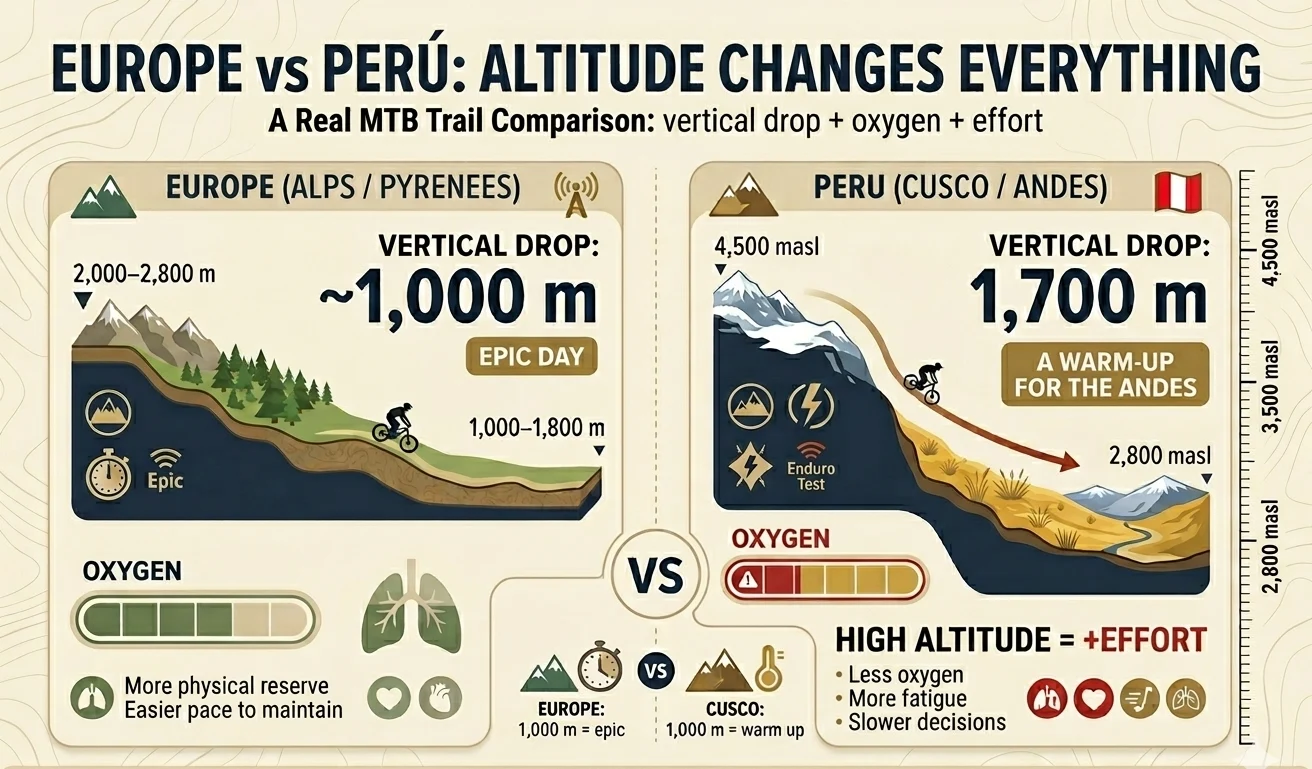
Europe vs Peru, Altitude Changes Everything (MTB)
Trails with History: Pedaling on Inca Roads
For European rider accustomed to artificial trails or machine-built “flow trails,” experience in Peru is visceral and authentic. Here you don’t pedal on recently packed dirt; you roll on living history.
MTB in Ollantaytambo and surroundings uses, in many cases, ancient Inca roads (Qhapaq Ñan) or pre-Columbian trails that have been used by locals for centuries. Sensation of descending carved stone stairs and crossing archaeological ruins while doing descent in Cusco adds mystical layer that simply doesn’t exist in Alps or Pyrenees.

Maras gets technical fast, where rock lines and quick decisions keep you smooth and controlled.

Steep high mountain descent with snow peaks in sight.
Routes that have Europeans hooked
Obsession also feeds on competition. Events like Inca Avalanche have put Peru on international map. This mass descent race, which begins in frigid Abra Málaga and ends in lower jungle, attracts pros and amateurs from around world. Here’s description of some routes generating obsession:
General comparison: how MTB changes between Europe and Peru
| Feature | Alps / Pyrenees (Europe) | Andes (Peru) |
| Maximum altitude | ~9,186 ft (2,800 m above sea level) | 15,748+ ft (4,800+ m above sea level) |
| Trail type | Built / Forest | Ancestral / Inca Stone |
| Negative elevation | Moderate (1,640–3,280 ft / 500–1,000 m) | Extreme (4,921–6,562+ ft / 1,500–2,000+ m) |
| Season | June – September | April – November |
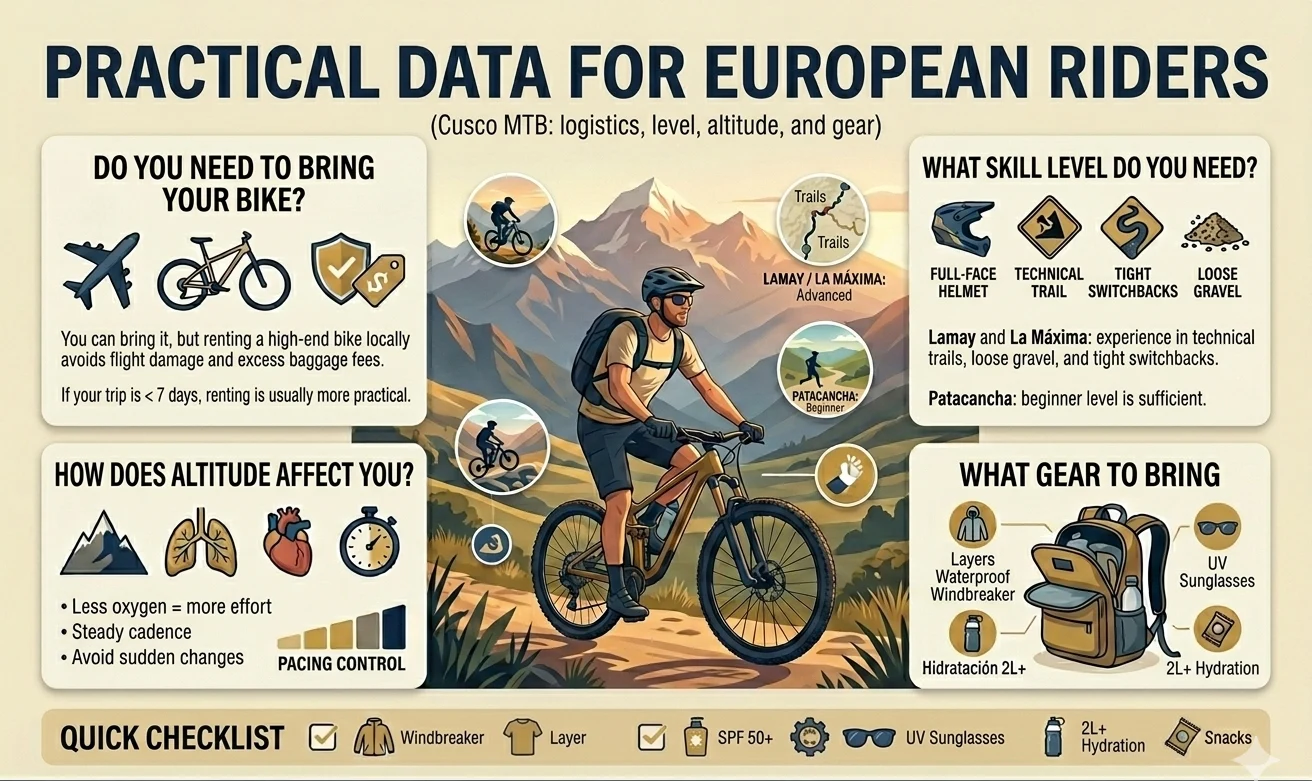
Practical Data for European Riders (Cusco MTB)
Culture, Gastronomy and Hospitality
Finally, an MTB trip is never just about bicycle. After a brutal day of MTB in Peru, riders can enjoy one of world’s best cuisines. Swapping energy bar for lomo saltado or ceviche, and resting in local communities rich in tradition, turns sports trip into complete cultural experience.
Why does trip feel more complete in Peru?
What really makes you feel fulfilled is contrast between intensely riding ancestral trails at over 13,123 feet (4,000 meters) and rich cultural experience awaiting you upon descending mountain. It’s not only about pedaling; it’s like crossing living history reflected in each stone and in contact with local communities preserving their traditions. At end of day, that physical fatigue is rewarded in best way with food enjoyed after route, transforming each kilometer traveled into story of achievement, flavor and wonder that’s hard to find in another corner of world.
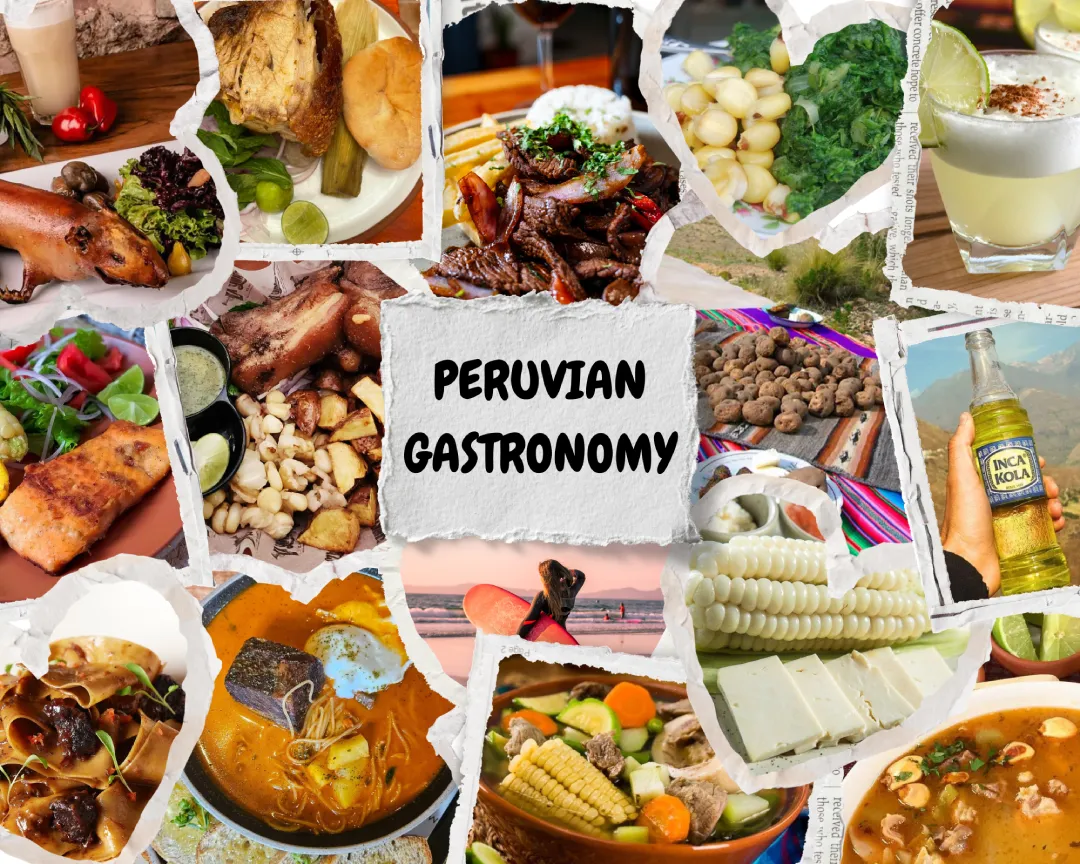
Peruvian Gastronomy
What should European rider know before doing MTB in Peru?
- Altitude changes experience
- Not all routes are “Bike Park friendly”
- Acclimatization matters
- Terrain demands more reading
- Local logistics add a lot
MTB in Peru has become magnet for European riders because it offers what few destinations achieve, such as extreme high altitude descents and stunning views. From Sacred Valley to Machu Picchu, each route is blend of sport and tradition turning rider’s vacation into unforgettable experience.
Frequently Asked Questions – Why do European riders choose Peru for MTB?


