


Quick Answer
The Perolniyoc Trail is a technical route for enduro in Cusco in the Sacred Valley. This natural circuit gives you up to two hours of descending, starting at 12,293 feet (3,747 meters). The 5 miles (8 kilometers) line demands strong bike handling on loose dirt and rock. It also stands out for skirting the Inca archaeological complex of Raqaypata and rolling past a waterfall that drops roughly 328 feet (100 meters).
This enduro in Cusco descent delivers a serious technical challenge, because it requires precise control of your bike. You will drop into rugged terrain packed with history and dramatic, wide open views. Planning this ride means understanding what the mountains demand, so you avoid logistical surprises along the way. Next, we break down the riding level you need, the ideal setup for your gear, and the logistics that help you stay smooth and consistent on the Perolniyoc Trail.
Location and Relevance of the Perolniyoc Trail
Location
The Perolniyoc Trail is located in the Sacred Valley of the Incas within the Ollantaytambo district. Our route sets your exact starting point at 12,293 feet (3,747 meters) at the top of the mountain. From there, your 5 miles (8 kilometers) descent follows the natural contours of the landscape and finishes down in the valley at 9,632 feet (2,936 meters).
Vehicle Access Logistics
Getting to the trailhead requires transport from the Sacred Valley or the city of Cusco, so we plan the day around a private vehicle. This logistics plan lets us bring all your gear straight to the start at 12,293 feet (3,747 meters), so you can spend your energy riding, not dealing with transportation details.
Historic and Geographic Value of the Area
The route follows old footpaths along the Perolniyoc Trail, so it demands strict speed control and a respectful approach. On the way down, you will ride alongside the archaeological complex of Raqaypata and then reach the area’s famous waterfall. This combines historic and natural elements into the same enduro in Cusco experience.
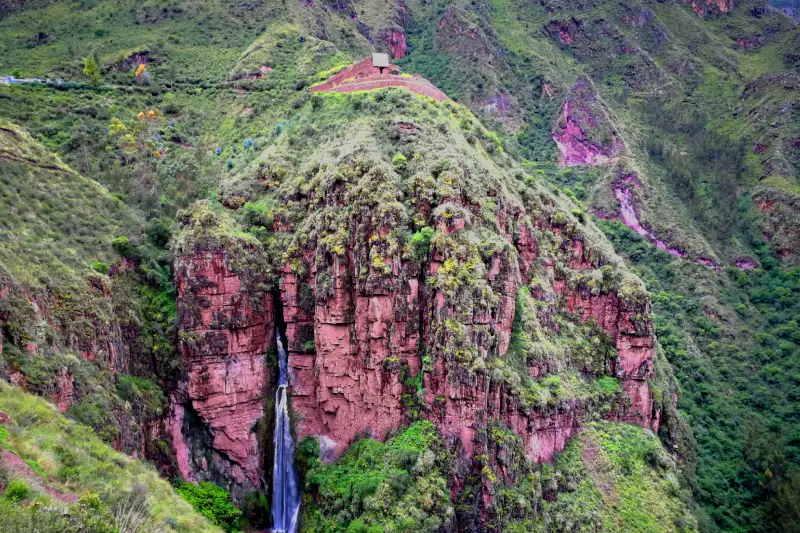
Feel the energy of the waterfall and discover the Raqaypata ruins crowning the mountain during your descent.
Main Highlights During the Perolniyoc Trail Descent
Perolniyoc Waterfall
This roughly 328 foot (100 meter) drop creates a distinct microclimate with cooler air and higher humidity. The view alone will make you stop and take it in. That pause doubles as a perfect reset after the demanding opening sections of the Perolniyoc Trail.
During the stop, the cold air and mist lower your body temperature and cool your bike’s brakes. Keep your body moving and check your setup before you drop back in to continue your adventure.
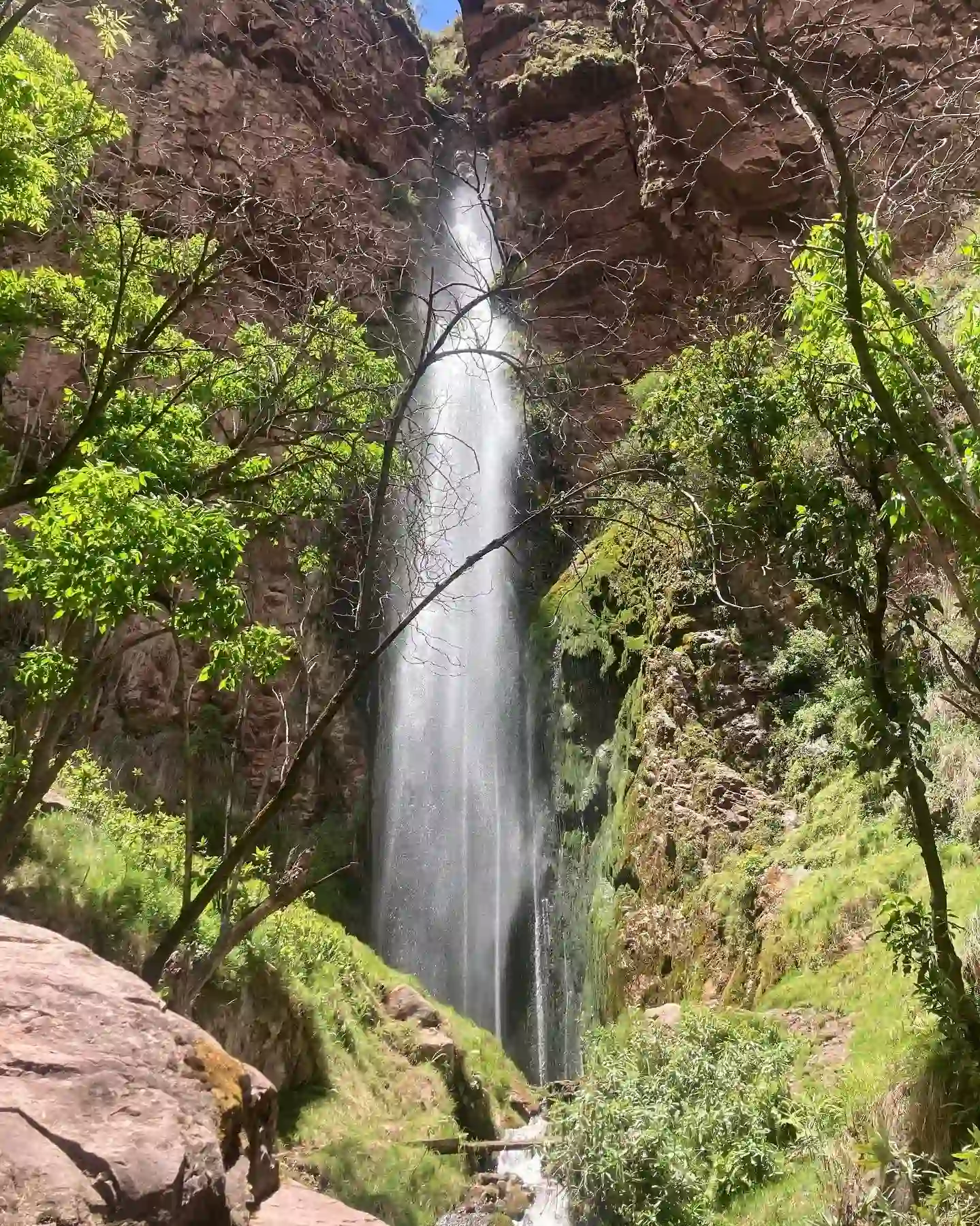
The sheer force of nature hidden within the canyons along the route.
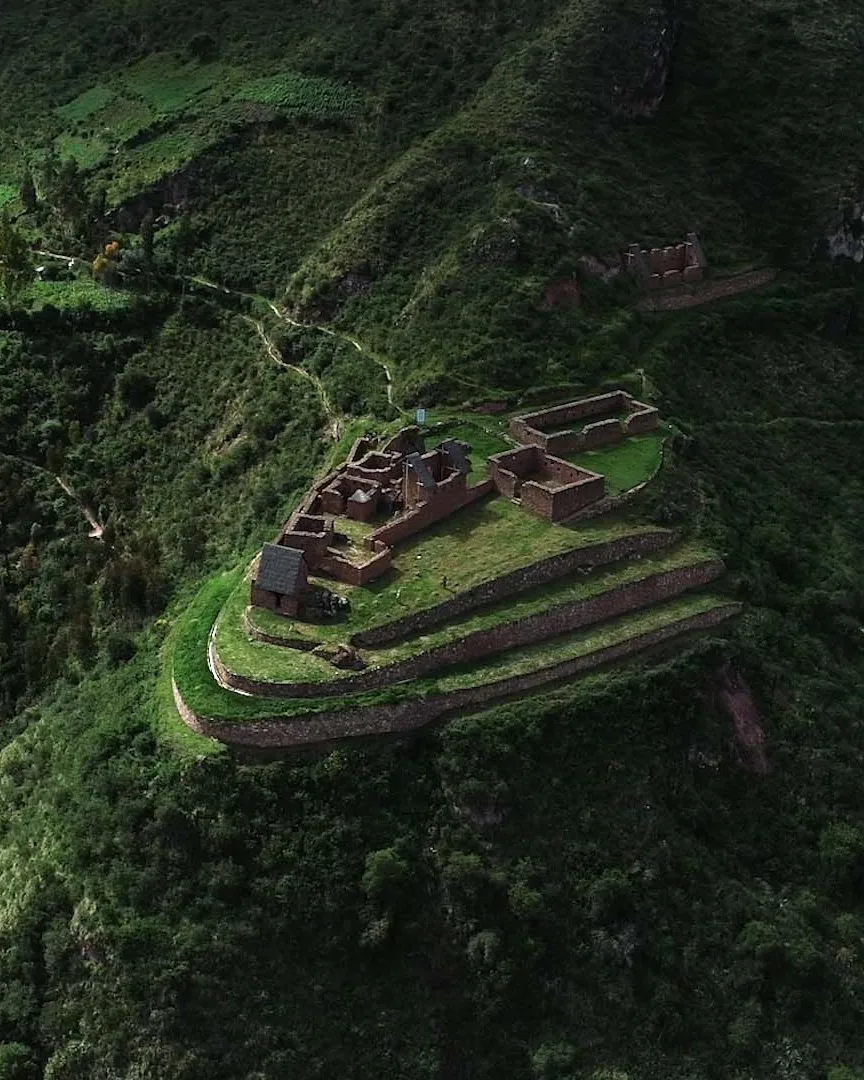
The imposing Inca architecture of the Complejo Arqueológico de Raqaypata crowning the summit among the Andean mountains.
Raqaypata Archaeological Complex
Set above the waterfall, the Perolniyoc Trail runs along the edges of Raqaypata. This historic site adds real cultural weight to your route and requires you to slow down so you can take in the stonework safely.
Staying close to the walls demands respect, since you cannot ride over the structures or scar the surrounding soil. When the path narrows near the archaeological area, you must dismount and walk your bike through the tight sections.
Technical Demands of the Perolniyoc Trail

Perolniyoc brings the real test: tight lines, rocky walls, and a descent that rewards calm technique.
Terrain
The terrain delivers a rough, uneven surface made up of loose dirt, fixed rock, and pronounced steps that constantly change how your tires bite. Tight corners force you to read the Perolniyoc Trail fast and commit to the right line. You need a stable stance with elbows bent to absorb impacts and modulate your brakes consistently.
Required Skill Level for enduro in Cusco
This route demands a riding level that is intermediate technical to advanced for enduro in Cusco. You must control progressive braking on steep pitches, since the circuit has no built berms or shaped flow lines. You will also need to handle uneven rock steps and corners without side support.
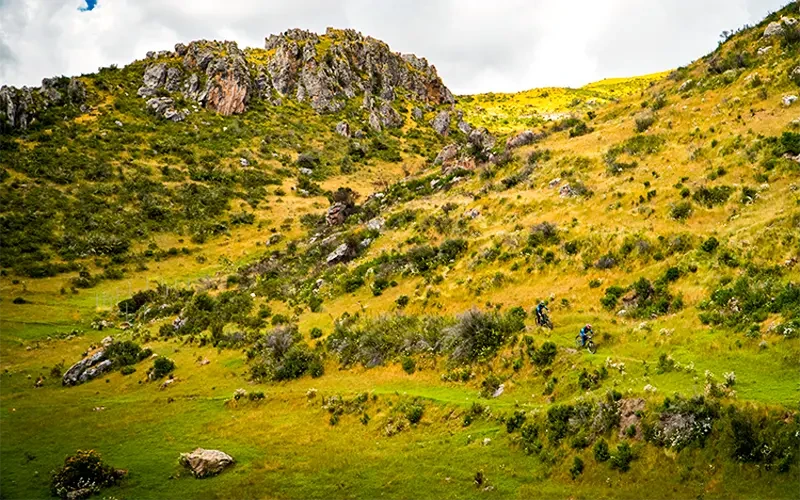
Feeling the adrenaline of the descent in the vastness of the Andean landscapes.
Descent Breakdown
Your ride starts at 12,293 feet (3,747 meters), so expect a quick adjustment to altitude and traction before the main technical section begins. This sector features tight turns and rock steps. Slow down before each obstacle to keep directional control and prevent your suspension from bouncing off line. The final section opens up and lets you increase your pace across the full 5 miles (8 kilometers) of the Perolniyoc Trail.
Technical Preparation for the Perolniyoc Trail
Recommended Gear Setup
Your bike components should prioritize traction on rugged ground and handle the constant impacts of the route. The chart below outlines the required technical setup for your safety.
| Component | Required Technical Specification |
| Bike | Enduro geometry or an aggressive trail setup to keep you stable on steep pitches. |
| Tires | Reinforced casing to resist sidewall cuts and a tread pattern that grips well in loose dirt. |
| Brakes | Hydraulic brakes with a recent bleed and pads with a strong bite. |
| Suspension | Controlled rebound to keep traction on uneven terrain and prevent harsh kickback. |
| Protection | Required: full face helmet, impact rated knee pads, and full finger gloves. |
How Altitude Impacts Your Performance
Your enduro in Cusco ride starts at 12,293 feet (3,747 meters). At this altitude, oxygen availability drops and fatigue builds faster, especially when technical sections push your heart rate higher.
How Conditions Change by Season
Traction shifts throughout the year. The dry season from April to October often leaves a thick layer of loose dust over a solid base, which reduces grip and forces you to brake earlier. The rainy season from November to March brings steady moisture that turns loose dirt into slick mud and reduces traction on rocks.
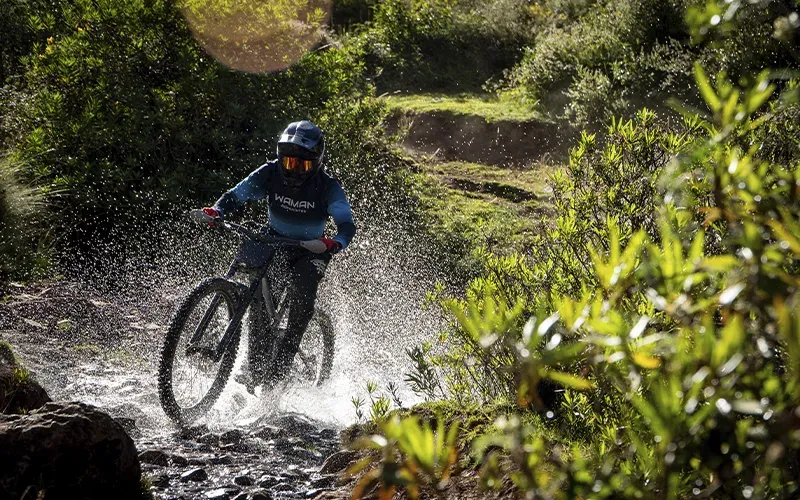
Mountain biker wearing a full-face helmet and goggles splashing through a water crossing at speed on a dirt trail.
Tour Operations for enduro in Cusco
Why Guided Riding Matters
Riding the Perolniyoc Trail takes precision because of its technical difficulty and remote setting. Hiring a certified guide boosts your safety and helps you stay on schedule without surprises during your enduro in Cusco trip.
- Safer line choices based on the day’s real traction.
- Pacing support to prevent early arm fatigue.
- On the spot mechanical help to keep your ride moving.
- Shuttle coordination straight to the exact start at 12,293 feet (3,747 meters).
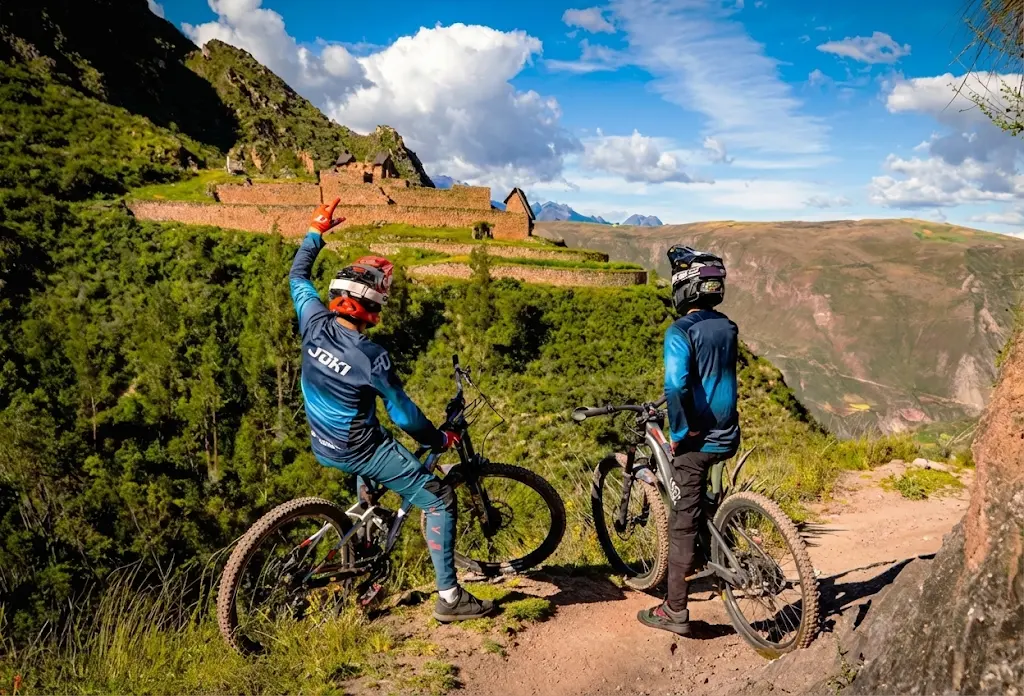
Taking in the history of the mountains before dropping into the Perolniyoc Trail.
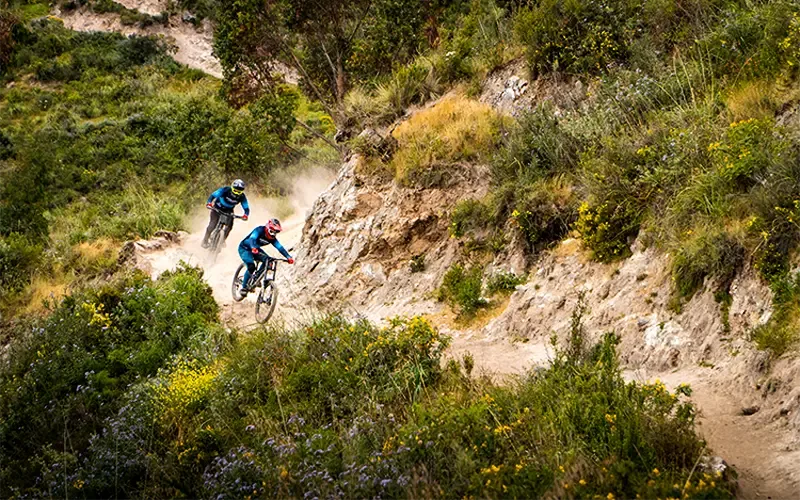
Adrenaline and speed kicking up dust on the mountain descent.
Operational Services Breakdown
Our package lays out the technical logistics clearly for you. The chart below details what is included during your descent and what remains your responsibility as a visiting rider.
| Included in the Rate | Not Included |
| Professional guide with mechanics certification and a dual suspension enduro bike. | Personal travel insurance policies or medical coverage for your riding activities. |
| Private vehicle transport from your hotel to the exact start at 12,293 feet (3,747 meters). | Unexpected extra costs or personal purchases during the route. |
| A full local lunch plus easy to digest energy snacks. | Optional tips for the field team or driver. |
| Professional protective gear, a first aid kit, and immediate mechanical support. | Strictly personal components and services not specified in our program. |
Required Personal Gear
You must carry a hydration pack or vest with a minimum capacity of 34 oz (1 liter) of water, plus strict use of high protection sunscreen and dark sunglasses with UV protection to protect your vision. You also need a lightweight waterproof windbreaker for the temperature shift near the waterfall, and we recommend bringing cash in local currency for unexpected expenses.
Itinerary Options
Our trip planning lets you match the experience to your fitness and your available time. We typically run this route as part of a full day combo to maximize your time on the bike for enduro in Cusco.
| Operating Format | Itinerary Description |
| Full Day Combo Circuit | Combines the Perolniyoc Trail with “The Other Side” so you can stack 10.4 miles (16.8 km) of descending and take on the Sacred Valley’s ultimate challenge. |
| Classic Perolniyoc Trail | Focuses exclusively on this technical descent with direct shuttle logistics and a steady pace. |
| Two Day Skills Progression | Day one focuses on altitude adjustment on intermediate routes, and day two targets the main trail with maximum safety. |
This adventure combines serious riding with travel through areas of high historic value. Completing this descent requires strong bike control and strict respect for archaeological heritage. Our operation keeps you on track with safer lines and full logistical support. If you want to ride this route, contact us through the website or via WhatsApp +51 979858544.


