


Quick Answer:
Choosing the right type of e-MTB, whether it’s a nimble, lightly assisted model or a high-powered, large-battery version, is crucial for conquering Cusco’s rugged terrain without getting stuck halfway. Understanding the differences in suspension travel, motor torque, and battery capacity is key to ensuring a smooth and powerful ride across the Andean slopes.
If you’re thinking about doing MTB with electric bike in Cusco, choosing your e-MTB well can completely change your experience, because you’ll find long routes, sustained elevation gain and natural terrain that changes from one section to another. In this guide you’ll learn about Types of electric bikes for MTB in Cusco, what makes riding in this region different, which suits you according to route and how to manage autonomy and assist modes.
Want to ride one of most technical descents in Sacred Valley? Discover our Day Tours in Cusco designed for riders seeking real enduro in Andes.
⚡ At a glance — MTB in Urubamba
📍 Location
Sacred Valley
between Pisac and Ollantaytambo
🏔️ Base altitude
8,858–9,514 ft
lower than Cusco
🥾 Levels
All
beginner to advanced
📅 Best time
April–October
dry season
🌡️ Day temperature
64–72°F
warmer than Cusco
🚂 To Machu Picchu
~30–40 min
to Ollantaytambo (train)
Why choosing your electric bike well in Cusco changes your experience
Cusco is located at approximately 10,826 ft (3,300 m), and many MTB routes in Sacred Valley and high Andean areas develop between 9,842–13,779 ft (3,000–4,200 m). At that altitude, oxygen pressure is lower than at sea level, and that reduces your aerobic performance.
Electric mountain bike doesn’t eliminate effort, but does help you reduce load on long and constant climbs, very common in Andean environment. On Sacred Valley routes, for example, it’s normal to accumulate progressive elevation gains during several kilometers before reaching viewpoints or high areas.
Additionally, terrain in Cusco is usually natural and variable: loose gravel, embedded stone and rural roads with sustained slopes. That’s why, proper e-MTB, especially if it has mid-drive motor and sufficient battery, allows you to better manage effort on these surfaces, where losing momentum on climb sometimes means having to get off and push.
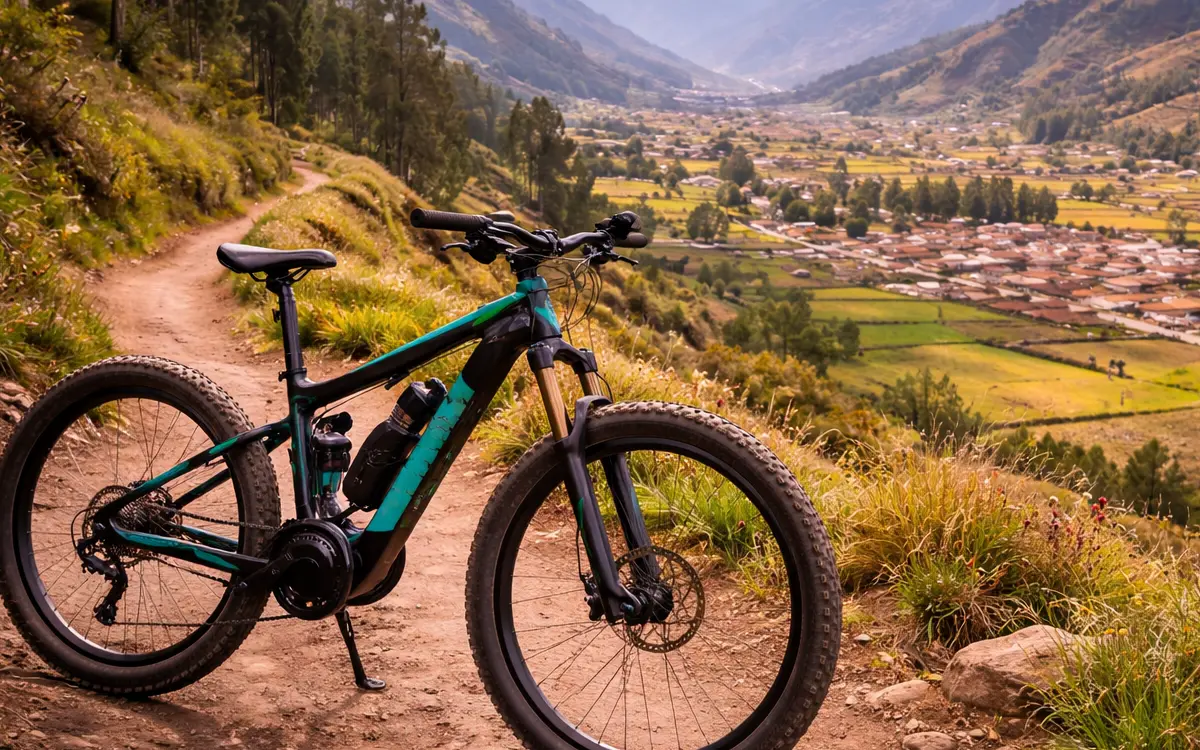
Electric bike rests on rural dirt trail in mountains of Cusco.
What makes MTB in Cusco different from riding in your country
In Cusco you won’t find bike parks with color-coded signage, built jumps or artificial berms. Most routes develop on real roads, like:
- Rural roads shared with communities.
- Natural gravel tracks.
- Traditional agricultural trails.
- Long descents toward Sacred Valley.
Terrain is natural and changes constantly. On same route you can encounter loose gravel, embedded Andean stone, sections eroded by rains and surface changes in few meters.
You should also consider Andean geography: long and sustained slopes, accumulated elevation gain and descents that can last several kilometers in row. In these conditions, most important thing is stability, brake control and choosing bike appropriate for terrain.
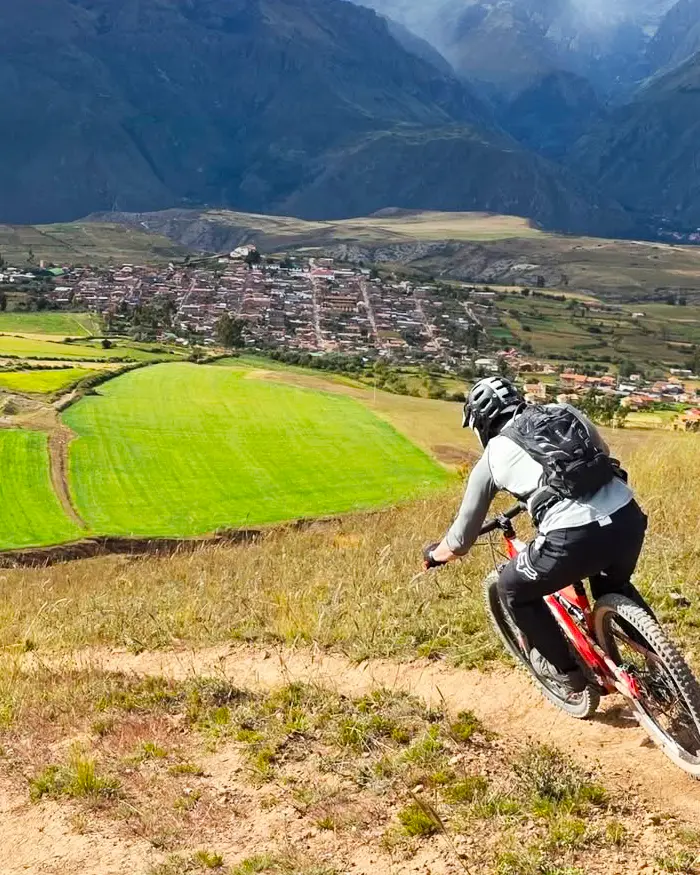
Dusty speed, smooth corners, and pure flow when the trail opens up.
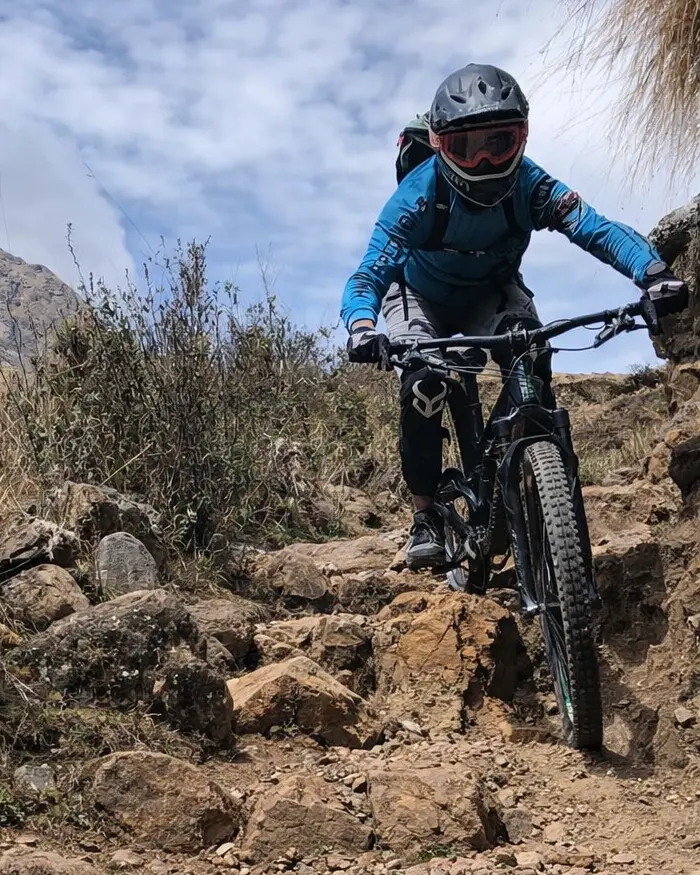
Real downhill, no bike park, just raw terrain.
Types of electric bikes for MTB in Cusco
Hardtail electric bike (front suspension)
Hardtail electric bike has suspension only on front wheel and rigid rear. That’s why, it’s usually lighter and more efficient at pedaling than full suspension. In Cusco and Sacred Valley, that efficiency helps you, especially when you do routes with climbs or long sections.
Electric hardtail works very well if you’re going to ride on:
- Wide and compact rural roads.
- Panoramic routes of Sacred Valley.
- Terrain with low technical level and little presence of loose rock.
- Routes where you prioritize landscape and distance, more than aggressive descent.
Full suspension electric bike
Full suspension electric bike has cushioning on both front and rear wheel. In Andean environment of Cusco, this helps you a lot, because terrain is usually irregular and natural, with embedded stone, loose gravel and sections eroded by rain.
On Sacred Valley routes and in high Andean sectors, full suspension gives you more stability on long descents and better absorbs impacts on irregular roads. That not only makes outing more comfortable, also helps you have more control when ground changes quickly between compact and loose in few meters.
Trail type electric bike
Trail type electric bike is designed to give you real balance between uphill efficiency and downhill control. It’s not as light or as focused on pure performance as XC, but not as aggressive and heavy as Enduro.
Generally, it has intermediate suspension travel (approximately between 120 and 150 mm), enough so you can absorb irregularities like embedded Andean stone, small erosion channels and loose gravel sections.
Enduro type electric bike
Enduro type electric bike is designed so you can face more technical descents and demanding terrain, without losing climbing ability thanks to electric assistance.
In Cusco and Sacred Valley, this bike type suits you when route has:
- Long descents with sustained elevation drop.
- Sections with loose rock or irregular stone.
- Sectors where downhill stability is most important.
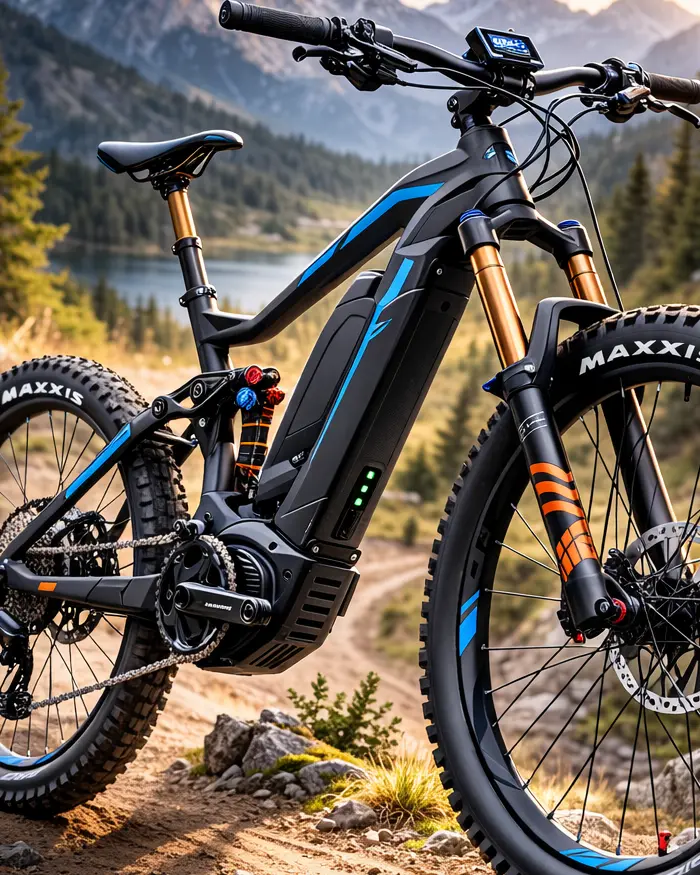
Full suspension electric mountain bike on rocky trail, ready for enduro riding with mid-drive motor and aggressive tires.
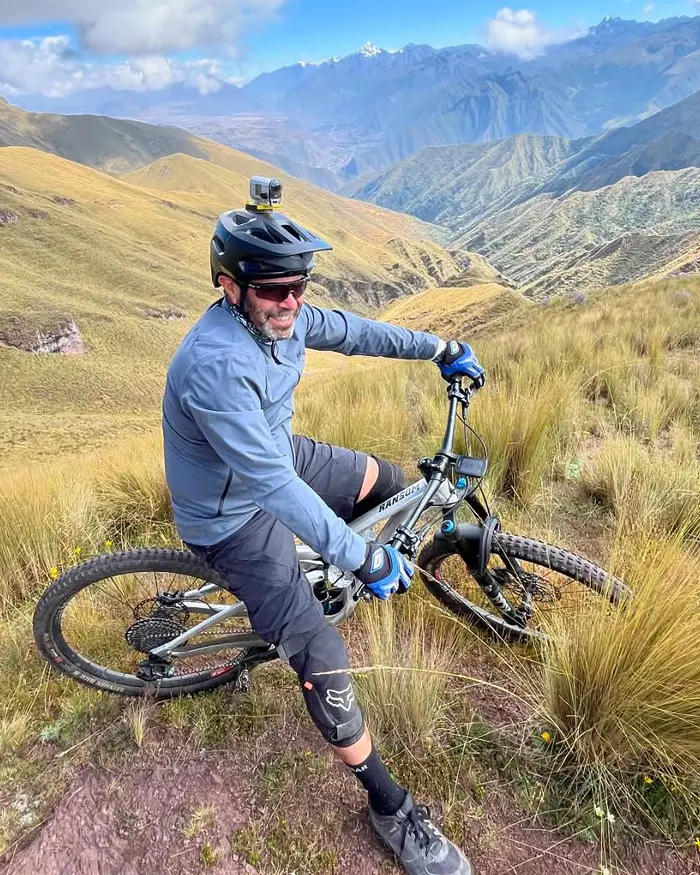
Most sought after types of electric mountain bikes for MTB are Trail models because they combine climbing comfort with downhill control.
Full suspension electric bikes
You have front and rear suspension, which greatly improves absorption on irregular terrain. That gives you real advantage in Cusco:
- Better traction on loose gravel.
- Greater stability on Andean rock.
- More comfort on prolonged descents.
- Greater control on irregular sections.
- Better absorb constant vibrations of natural terrain.
- Maintain more wheel contact with ground on climbs and descents.
- Give you more security on curves over variable surfaces.
- Reduce physical fatigue on long routes.
Did you know…?
Electric assistance doesn’t improve your technique on loose gravel if you don’t have good body control.
Enduro type electric bikes
These bikes are designed for more technical descents and steep slopes. They usually have greater suspension travel, which helps you better handle demanding terrain. They make sense if:
- You already have previous experience in technical MTB.
- You plan to ride sectors with loose rock, irregular stone or greater accumulated elevation gain.
- You seek more sporty experience focused on descent.
- Better absorption on natural steps and eroded sections.
- More powerful brakes to control sustained slopes.
- More robust frame and wheels for demanding terrain.
- Geometry that favors control on technical sections.
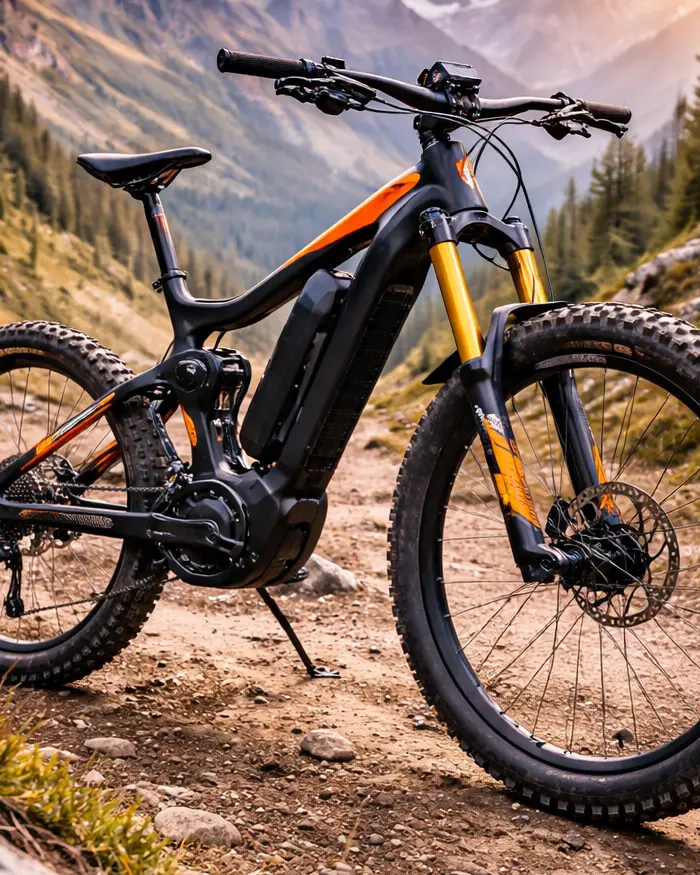
Electric enduro bike with modern frame and integrated battery, ready for high mountain adventure.
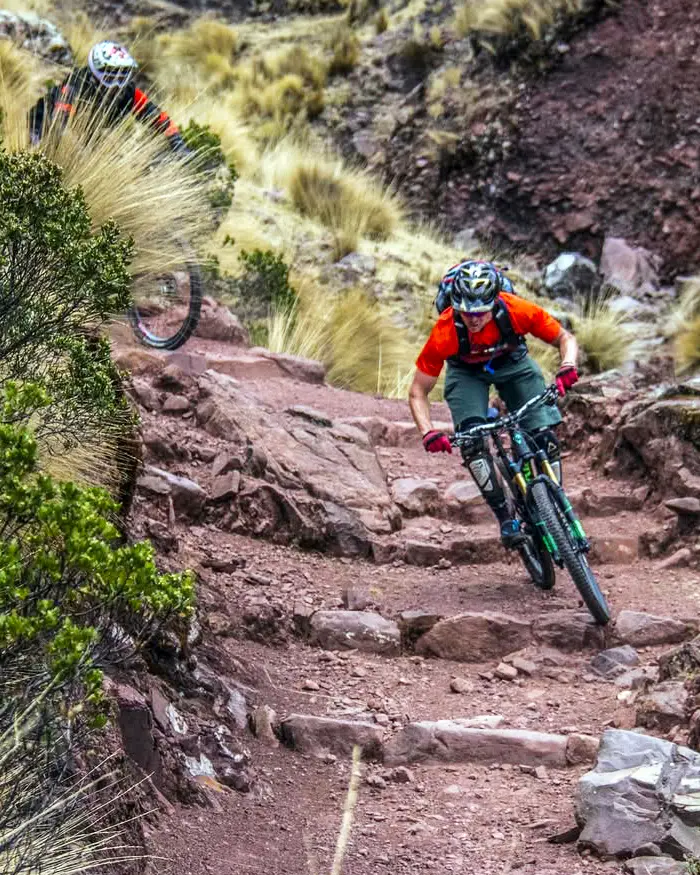
Precision over speed, rock step ups and loose stones that test your line choice on an Andean trail.
Motor type and autonomy at altitude: what you must understand
Most electric mountain bikes used in Cusco employ mid-drive motor. This motor type is located in bottom bracket area and works together with shifting system, which allows better taking advantage of gears on long and technical climbs.
Mid-drive motor also offers:
- Greater traction on steep climbs.
- More natural pedaling sensation
- Better performance on technical and variable terrain.
- Factors that influence real autonomy in Cusco
Expert tip:
Maintain medium-high cadence on long climbs to optimize mid-drive motor efficiency.
How to use assist modes in Cusco
E-MTBs have assistance levels that determine how much help motor gives you while pedaling.
Eco mode: lower assistance, greater autonomy.
- Flat sections or with light slope.
- Compact rural roads of Sacred Valley.
- At route start, to warm up and adapt to altitude.
Trail mode: balance between power and consumption.
- Constant climbs, without being extreme.
- Mixed terrain with slope changes.
- Full day routes, when you need to maintain stable pace.
Boost mode: maximum assistance for demanding climbs.
- Short and steep climbs.
- Technical sectors where you need to maintain traction.
- Specific moments when altitude feels harder.
How to choose electric bike according to route you want to do
| Route type | Recommended bike | Why it’s best option |
| Panoramic routes of Sacred Valley | Hardtail or light full suspension | Terrain mostly compact and less technical; you prioritize uphill efficiency and landscape enjoyment. |
| High Andean lagoons with variable terrain | Full suspension | Better absorption on loose gravel, Andean stone and frequent surface changes; more stability at altitude. |
| Technical sectors with prolonged descents | Electric enduro | Greater suspension travel, better control on steep slopes and irregular rock. |
Is it better to rent or bring your own electric bike?
Yes, renting is better in most cases.
- E-MTB batteries usually exceed limits allowed by many airlines, and that complicates carrying them on international flights. Additionally, bringing your bike normally implies extra costs, packaging and damage risk during transport.
- In contrast, renting in Cusco or Sacred Valley simplifies everything: you have bike adapted to terrain, size adjustment and basic mechanical check included.
- It would only make sense to bring yours if you’re going to ride several days and already have battery logistics and transport resolved.
Altitude and physical condition: real expectations
| Factor at altitude | What happens in your body | How to manage it on e-MTB route |
| Less available oxygen | Decreases aerobic performance and you fatigue faster. | Start at moderate pace and avoid explosive efforts first day. |
| Higher heart rate | Pulse rises earlier than usual. | Control intensity and use intermediate assist modes. |
| Greater sensation of effort | Climbs feel longer and more demanding. | Maintain constant cadence and alternate Eco / Trail. |
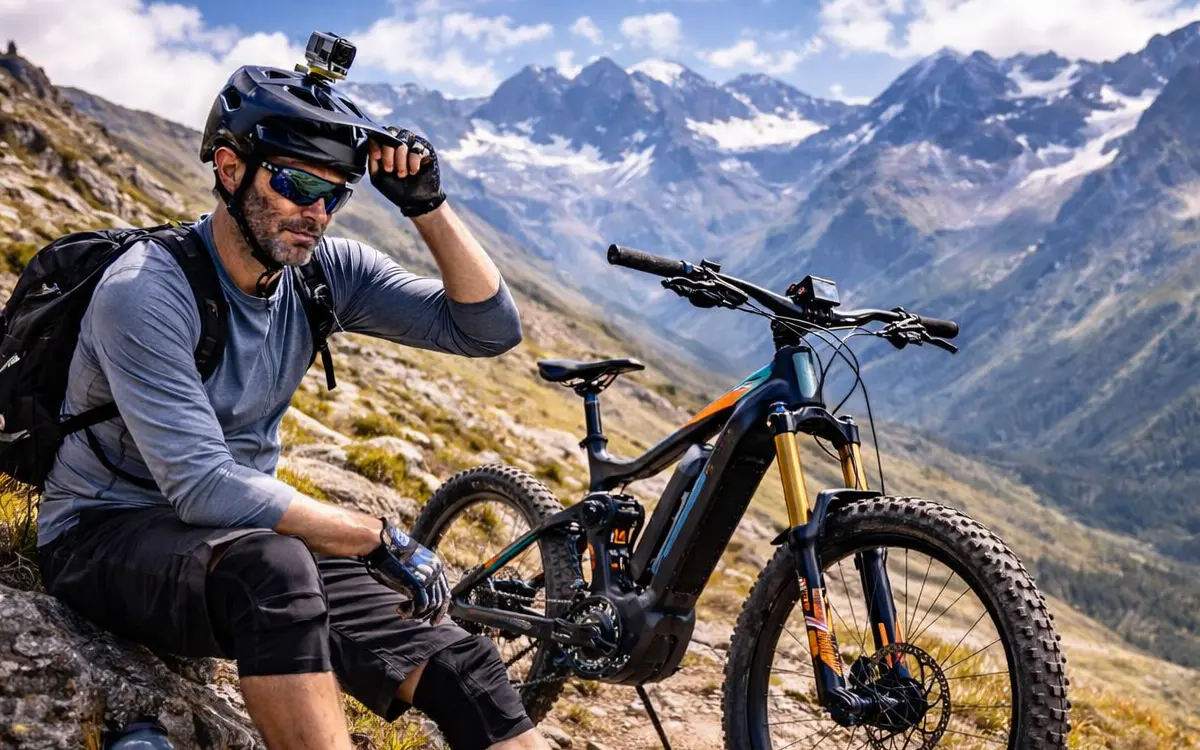
Cyclist on an Andean trail resting after a long climb, showing the relationship between altitude and fatigue.
💡 Pro Tip — Most common error on e-MTB in Cusco
Electric assistance can mask real fatigue. At altitude, your body works harder than you perceive because motor compensates part of that effort. Result: many riders reach most demanding section of route already dehydrated and with lower physical reserves than they thought. Hydrate proactively, take breaks even if you don’t “need” them and always start in Eco mode first kilometers even if you feel good.
Best time to use electric bike in Cusco
| Aspect | Dry season (April – October) | Rainy season (November – March) |
| Precipitation | Very low, infrequent rains | Regular rains, especially January and February |
| Terrain condition | Firm and compact ground | Mud in rural sectors and agricultural trails |
| Traction | More predictable on gravel and stone | Variable; greater slip risk |
| Descents | More stable and safe | More technical due to moisture and erosion |
| Landscape | Drier tones, intensely blue skies | Greener vegetation and more vibrant landscape |
What to bring for electric bike route in Cusco
- Bring layering system to adapt to thermal variation: cold mornings and intense sun at midday.
- Use high SPF sunscreen, because radiation at altitude is strong.
- Bring between 1.5 and 2 liters of water minimum to maintain constant hydration.
- Use gloves with good grip and protective glasses against dust and UV radiation.
- Don’t forget basic repair kit (multitool, pump or CO₂ and spare).
- Bring energy snacks to maintain energy level on long routes.
Cusco allows you to experience complete experience choose among Types of electric bikes for MTB one that best fits terrain and your level. Manage battery well, give yourself time to acclimatize and ride with judgment on natural routes that don’t feel like bike park. And if you want everything well planned, safe and adapted to your level, Peru Biking Tours is your best ally: we guide you with ideal bike, logistics and correct equipment.
Thousands of travelers have trusted Peru Biking Tours to experience unforgettable experiences in Andes.
Your safety first
Routes adapted to your level, expert local guides and complete support at all times.
Without worrying about anything
We handle all logistics so you only focus on enjoying landscape.
Authentic routes in Cusco
Experience Sacred Valley authentically, at your pace, with access to best trails.
Quality equipment
High-end enduro bikes, helmets and protective gear for all levels.
Plan your MTB experience in Cusco
MTB Day Tours in Cusco
If you want to explore MTB routes with proper logistics, local support and appropriate trail selection, check out our MTB Day Tours in Cusco.
E-bikes Tours
Curious about how altitude affects your electric bike in Cusco? Our electric bike tours are designed for cyclists seeking authentic enduro adventures in Andes.


