


Quick Answer:
Scenic enduro routes through Maras combine the physical challenge of high-altitude pedaling with thrilling technical descents, all surrounded by the Sacred Valley’s most breathtaking landscapes. It is an experience that demands stamina, solid handling on ancient terrain, and well-planned logistics.
If you are planning to ride enduro or MTB on the Scenic Enduro Routes in Maras, altitude is part of the experience, and it is worth taking into account from the very beginning. Here, your body works differently. Climbs feel more intense, your heart rate rises earlier than usual, and recovery takes longer, even if you are in good shape. Understanding how your body responds to lower oxygen availability helps you plan your day more effectively, pace your effort, and enjoy the Scenic Enduro Routes in Maras with more control and confidence.
Want to ride one of the most technical descents in the Sacred Valley? Explore our Day Tours in Cusco designed for riders looking for real enduro in the Andes.
Why ride enduro in Maras during your trip to Peru?
Maras is not just a point on the map. It is a recognized destination within the Sacred Valley of the Incas for cycling activities that combine adventure, culture, and scenery. If you are traveling through the area, you will find several active tourism operators offering bike tours that start in Maras or explore the surrounding area.
The routes, with technical and scenic descents from the high plateau down into the valley, make use of natural roads, old agricultural tracks, and trails shared with rural communities. That gives you an authentic MTB experience, very different from riding in an urban or rebuilt bike park.
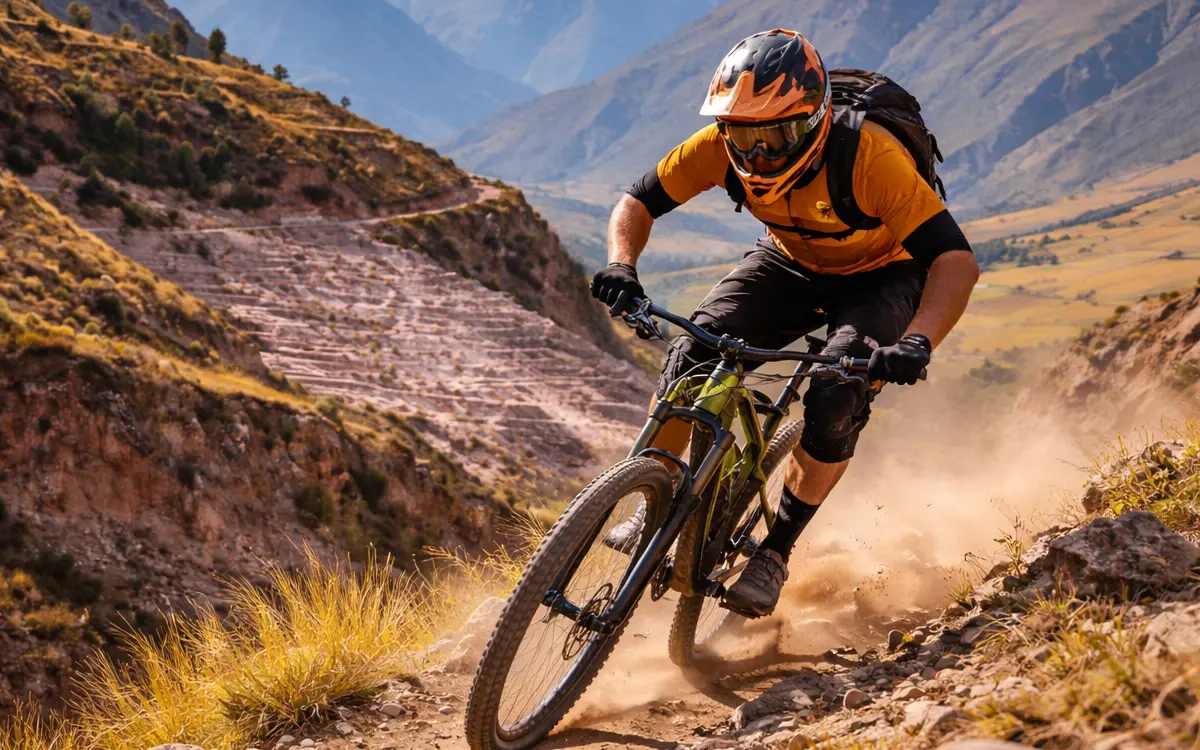
These places combine downhill adrenaline with unique panoramic views of agricultural terraces.
Where Maras is and how to organize the logistics without wasting time
Maras is located in the Sacred Valley of the Incas, in the province of Urubamba, Cusco. This area is part of a corridor between Cusco and Machu Picchu filled with traditional villages, agricultural landscapes, and archaeological sites, which makes it a strategic base for enjoying enduro riding and other outdoor experiences.
The distance between Maras and Cusco is approximately 25 to 26 miles (40 to 42 km), and the drive from Cusco by car or taxi usually takes between 1 hour and 1 hour 15 minutes, depending on traffic and the route you take.
If you plan to combine your enduro rides with cultural visits or the train to Machu Picchu, many people prefer to stay in the Sacred Valley, for example in Urubamba or Ollantaytambo, before continuing on to Machu Picchu.
Did you know…?
The Inca Trail is made up of a series of impressive stone structures, bridges, and tunnels adapted to the rugged mountain terrain of the Andes, crossing different Inca sites.
What is the terrain in Maras really like?
Here, you will ride on traditional roads and trails that communities have used for generations, so the terrain changes constantly and demands attention and technique.
Some important terrain features:
- Loose gravel over a hard base: on many descents, you will find small rocks and gravel that reduce traction, so you need good balance and solid brake control.
- Embedded Andean stone: the trails pass through areas with natural rock that creates more vibration and forces you to choose careful lines.
- Sections with loose rock: there are stretches where the rocks move under your wheels, especially after rain or on fast descents.
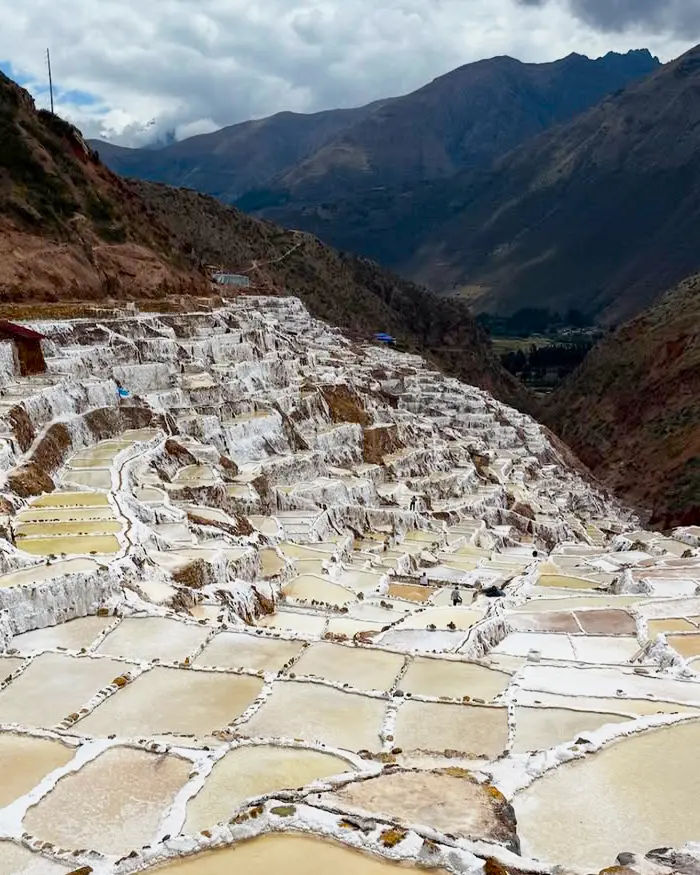
Each pond reflects beige and golden tones, creating a unique natural mosaic in the Sacred Valley.
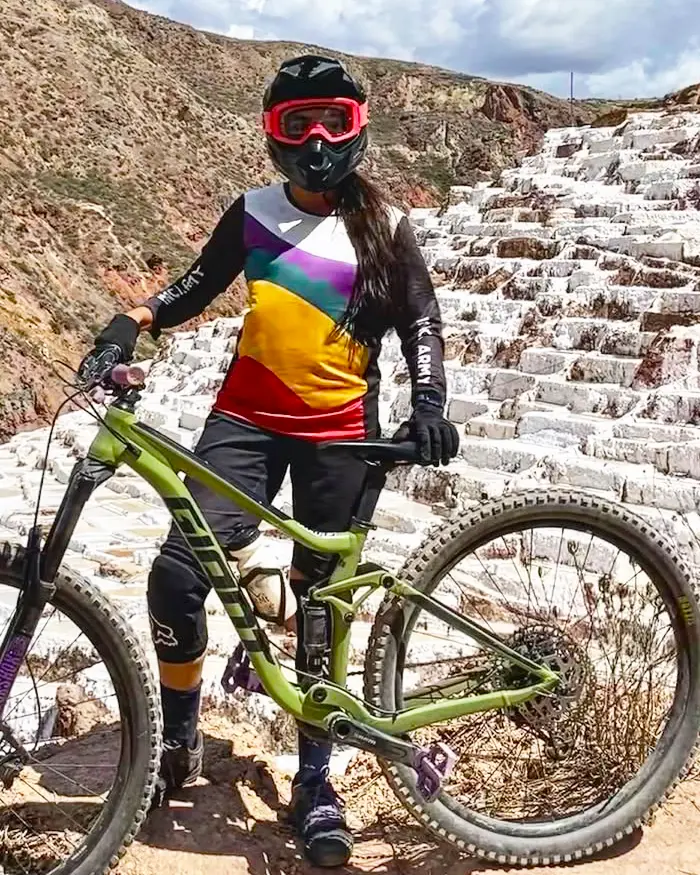
The rider shows confidence and preparation for technical descents at altitude.
Is it right for your skill level?
The Scenic Enduro Routes in Maras are ideal for intermediate riders who already have experience on natural descents. If you know how to control your bike on loose terrain and maintain stability on moderate slopes, you can enjoy much of these routes.
Intermediate riders (recommended)
These routes are ideal for you if you already have experience on natural descents and feel comfortable on changing terrain. You will enjoy them more if you can control your bike on loose gravel, stay stable on moderate slopes, and brake smoothly without losing traction.
Advanced riders (best experience)
If you already have solid technique, you will find more demanding sections: irregular Andean rock, natural steps, and stretches where the surface changes quickly. At this level, line choice and body control make the difference, especially on long descents.
Beginners (only on selected routes)
If you are just getting started, you can ride in more open and rural sectors, with wider roads and less technical terrain. Even so, it is not recommended to enter technical descents without a guide, because the terrain is natural.
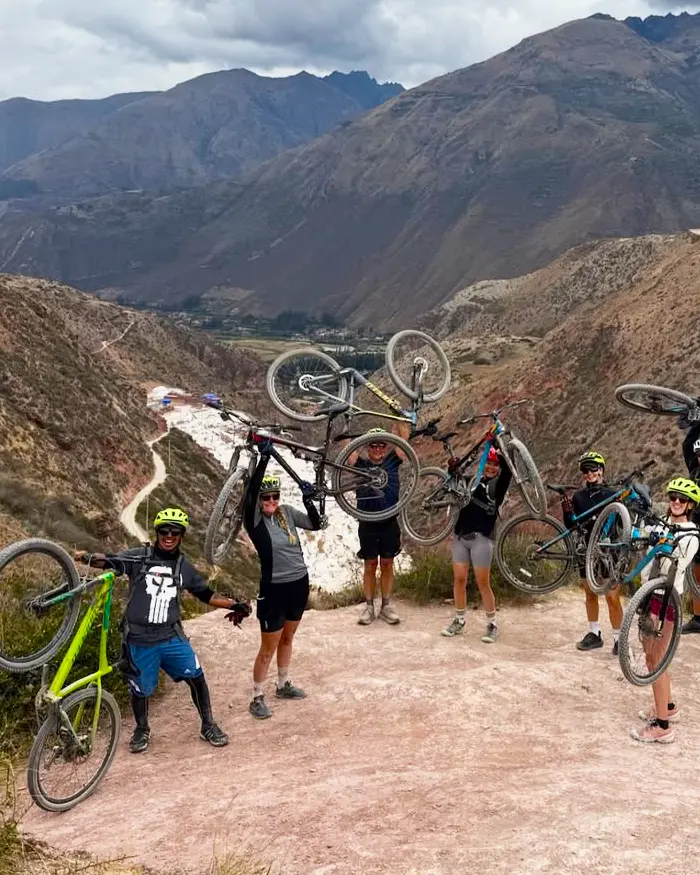
The helmets and protective gear show that this is an organized and safe outing.
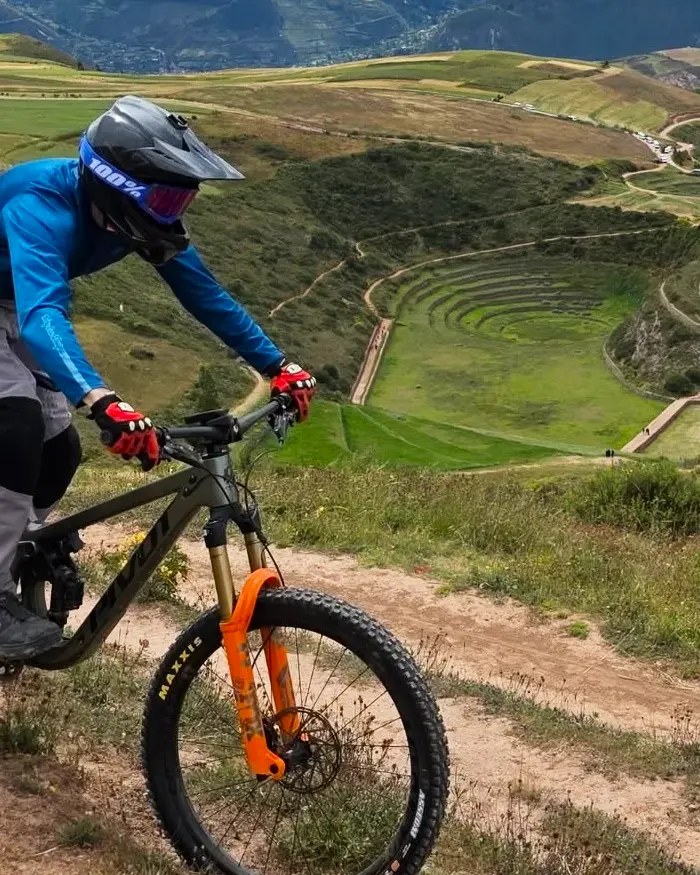
From this elevation, the valley looks broad and deep, showing rural roads and cultivated fields.
Altitude and performance: how it really affects you
The routes usually unfold between 9,842 and 12,467 feet (3,000 and 3,800 meters). At that elevation, your body goes through physiological changes because of the lower amount of oxygen available.
As a result of this lower oxygen availability:
- Climbs feel more demanding than they would at sea level because your muscles receive less oxygen to produce energy.
- Your heart rate rises faster, even at the same effort, because your body tries to compensate by sending more blood to the muscles.
- Recovery between efforts is slower, since your body takes longer to recover with less oxygen available.
- On top of that, this combination of less oxygen and higher physical demand keeps your breathing and heart rate higher than normal for the same workload compared with sea level.
Warning:
Do not ignore mild altitude sickness symptoms such as headache or dizziness.
Best time of year to ride in Maras
| Season | Months | Weather and trail conditions |
| Dry season | April – October, especially May – September | Mostly clear skies, rare rain, firmer terrain, and stable traction. |
| Shoulder months (transition season) | April / October – November | Occasional rain, but with long periods of stable weather. |
| Rainy season | November – March | Frequent rain, trails can become slippery, and drainage channels form naturally. |
⚠️ If you plan to go between November and March
Rain can create mud, channels, and wet rock that significantly reduce traction. Descents become more technical, and braking distances get longer. Check trail conditions in advance because they can change from day to day. For beginners and intermediate riders, the dry season (April – October) is the more predictable option.
What to bring for a day of enduro in Maras
- A helmet suited to the route difficulty, full face for technical descents or open face for trail riding.
- Gloves with good grip and palm protection.
- Glasses with UV400 protection for sun and dust.
- Layered clothing, including a light thermal layer and a windbreaker.
- SPF 50+ sunscreen because of the strong radiation at altitude.
- At least 1.5 to 2 liters of water.
- Electrolytes to support hydration on longer rides.
- A basic repair kit with a multi tool, pump or CO₂, and a spare.
- Energy snacks to maintain your energy level.
- A light waterproof jacket if there is a chance of wind or rain.
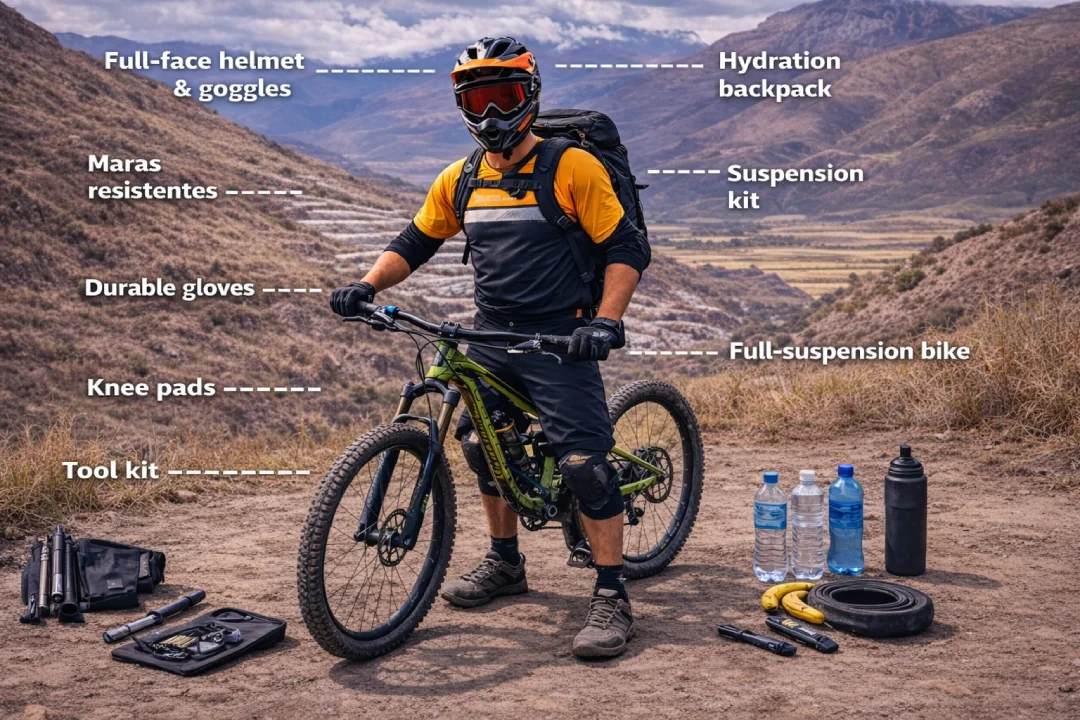
He wears a full face helmet, protective goggles, and a hydration pack, ready for a demanding ride.
Real safety on the routes
| Safety factor | What it means in practice | How to manage it as a traveler |
| Shared rural roads | These routes are used by local residents, motorcycles, agricultural vehicles, and livestock. | Slow down in inhabited areas and anticipate unexpected crossings. |
| Presence of livestock | Cows, sheep, and donkeys may be loose on the road, especially in higher areas. | Keep your distance, brake early, and avoid sudden maneuvers. |
| Lack of technical signage | There are no green, blue, or black trail ratings like in bike parks. | Learn the difficulty in advance and use a validated GPS track. |
| Terrain changes after rain | Rain can create erosion, channels, and move gravel around. | Check the weather before heading out and adjust your speed to the conditions. |
How can you combine the Enduro Routes in Maras with Machu Picchu?
The combination is practical. You can:
- Ride half a day in Maras and then transfer to Ollantaytambo to catch the train.
- Do a full day of enduro and visit Machu Picchu the next day.
- Stay in the Sacred Valley to optimize transfers and get better rest.
Maras is one of those incredible stops. If you choose the right season, arrive with at least some acclimatization, and prepare your gear well, you will enjoy the Scenic Enduro Routes in Maras: demanding, but highly rewarding, with long descents and varied terrain. Make your trip easier with Peru Biking Tours. We will guide you with the ideal route, the right gear, and practical advice so you can enjoy the experience without stress. Contact us at +51 946 459 491 and start planning your next bike adventure.
Thousands of travelers have trusted Peru Biking Tours to enjoy unforgettable experiences in the Andes.
Your safety comes first
Routes adapted to your level, expert local guides, and full support at every stage.
No worries at all
We take care of all the logistics so you can focus on enjoying the scenery.
Authentic routes in Cusco
Experience the Sacred Valley in a real way, at your own pace, with access to the best trails.
High quality gear
High end enduro bikes, helmets, and protective gear for all levels.
Plan your MTB experience in Cusco
MTB Day Tours in Cusco
If you want to ride routes like Lamay Sapacto with the right logistics, local support, and the right trail selection, check out our MTB Day Tours in Cusco.
Multi-Day MTB Tours
For more complete experiences that connect multiple valleys and high mountain routes, explore our Multi-Day MTB Tours.


