


Quick answer:
The ideal helmet for high-altitude enduro riding should combine good ventilation, a secure fit, and greater coverage. On routes like Cusco, where the terrain is technical and the sun is more intense, a well-ventilated enduro helmet is highly recommended, or a full-face helmet if you’ll be riding more aggressive descents.
Choosing Ideal helmet for enduro riding gives you safety and mountain performance. If you’re going to ride in places like Cusco or Andes mountain range, you need helmet that adapts well to long routes, technical descents, climate changes and greater sun exposure. In this blog we’ll help you understand what characteristics really matter, what type of helmet can work better for you.
Ready to ride at altitude? Discover which enduro helmet offers you best protection and comfort in Cusco. Discover our Day Tours in Cusco designed for riders seeking real enduro in Andes.
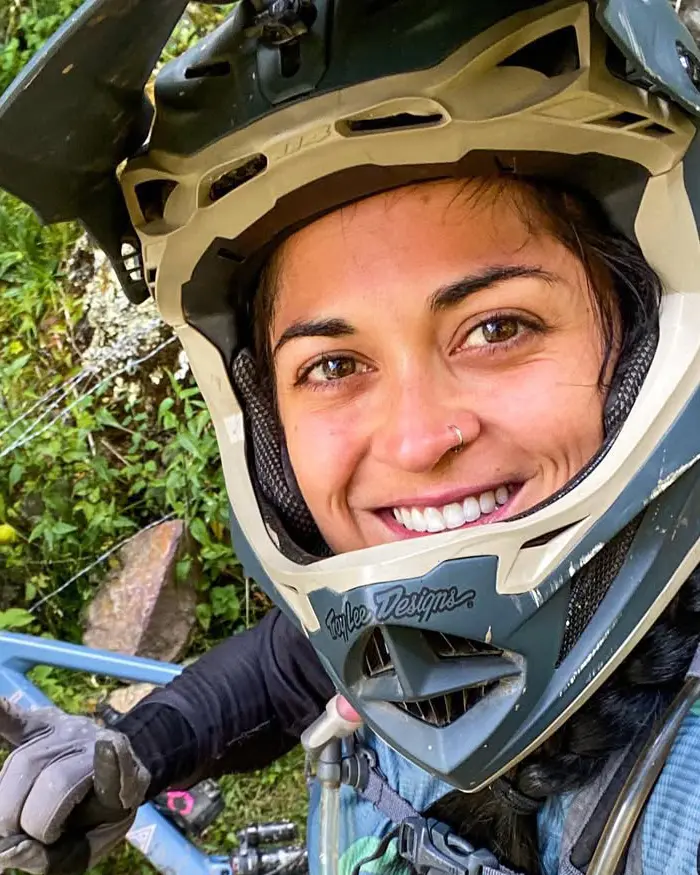
The cyclist is prepared to practice MTB in nature.
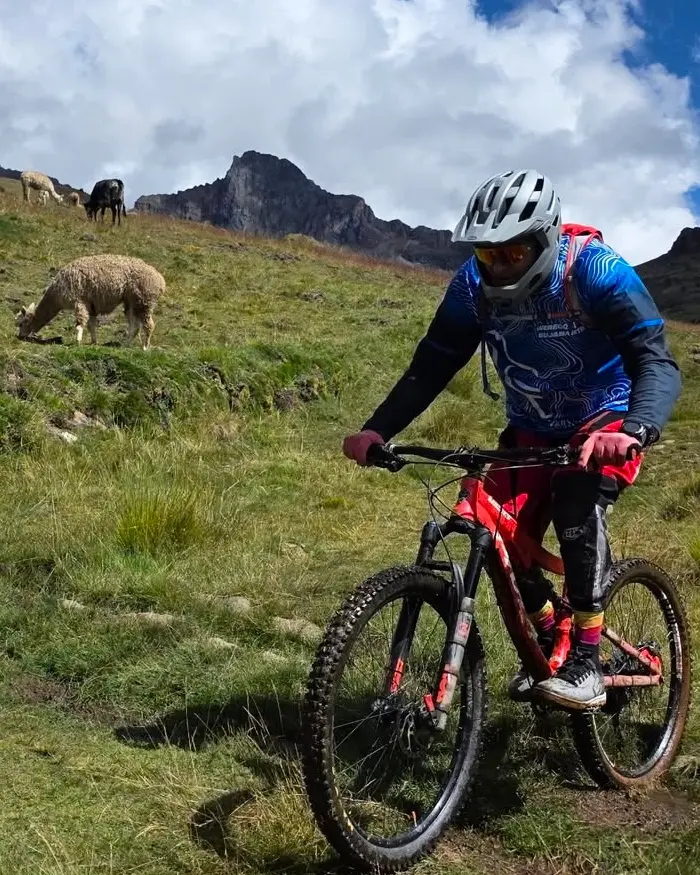
The mountains in the background present an imposing relief, with rocky peaks that dominate the landscape.
How it feels to ride enduro at high altitude
Riding enduro in places like Cusco or Andes mountain range can feel very different if you come from cities near sea level. Large part of that difference is because, at higher altitude, atmospheric pressure decreases and there’s less oxygen available in each breath.
Besides oxygen, there are other environmental factors that also influence how it feels to ride in Andes:
More intense solar radiation
At higher altitude, atmosphere is thinner and filters less ultraviolet radiation. That’s why, sun can feel stronger than at sea level, even when temperature is cool. On open mountain routes, it’s common to feel direct heat on helmet.
Drier air
High Andean areas usually have low humidity. This can make you dehydrate faster during effort, since sweat evaporates quickly and you often don’t notice how much water you’re losing.
Accumulated effort on long routes
In mountain enduro, many routes combine short climbs, pedaling links and long descents. At altitude, that sum of efforts can feel more demanding, especially if you’re not yet acclimatized.

In the background, a valley stretches between the mountains, adding depth and a sense of elevation.
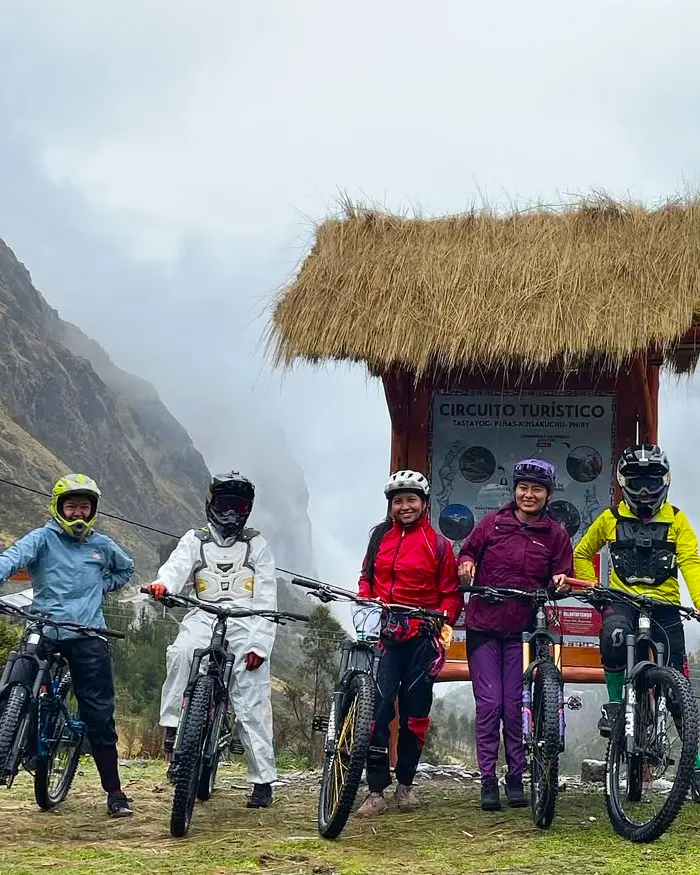
The bicycles feature tires with good tread, suitable for wet and slippery terrain.
Characteristics ideal helmet for high altitude enduro must have
Choosing proper helmet for enduro is especially important when you ride in high altitude areas, like Andes. On this type of terrain you not only face technical descents and variable surfaces. That’s why, your helmet must offer good balance between protection, ventilation, stability and comfort, since you’ll use it during several hours of pedaling and long descents.
Good ventilation for long routes
Modern enduro helmets usually incorporate internal ventilation channels and several front and top openings that allow air to circulate over your head while you pedal. This helps you:
- Reduce heat accumulation.
- Keep head cooler during long climbs.
- Avoid excess sweat on technical descents.
Greater coverage at back of head
Back of head is especially vulnerable in backward falls, something relatively common on technical terrain, rocky sections or steep descents. That’s why, enduro helmets usually have:
- Deeper shell
- Greater side protection
- Wraparound design that better protects skull
Firm and comfortable adjustment system
Helmet only protects you well if it’s correctly adjusted to your head. That’s why, many current models include adjustment systems with wheel or dial, which allow you to regulate it with greater precision. This helps you:
- Keep helmet stable on irregular terrain.
- Avoid movements during fast descents.
- Adjust helmet easily even with gloves.
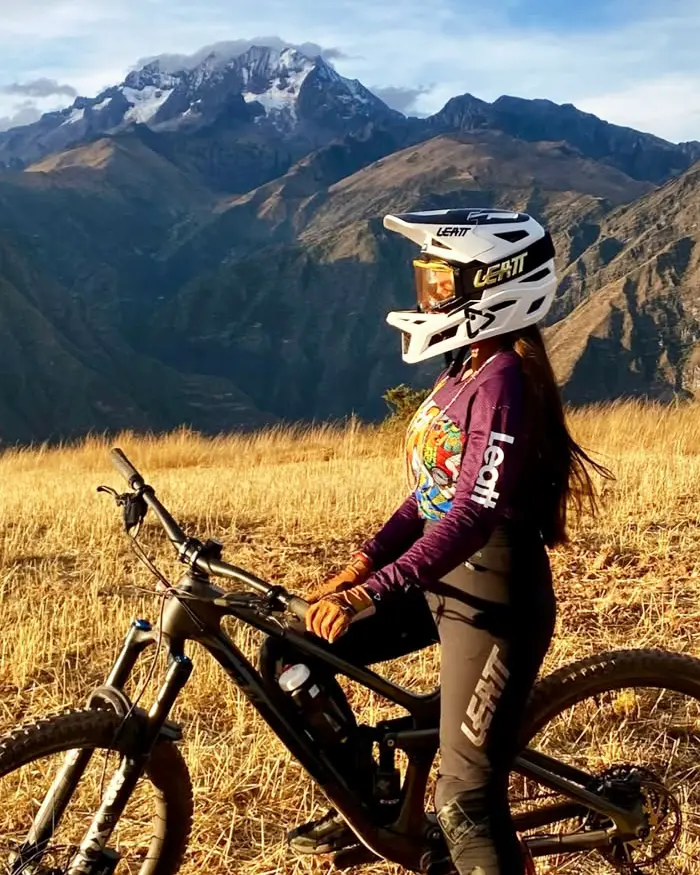
The landscape shows varied terrain, ideal for enduro routes with technical descents and panoramic views.
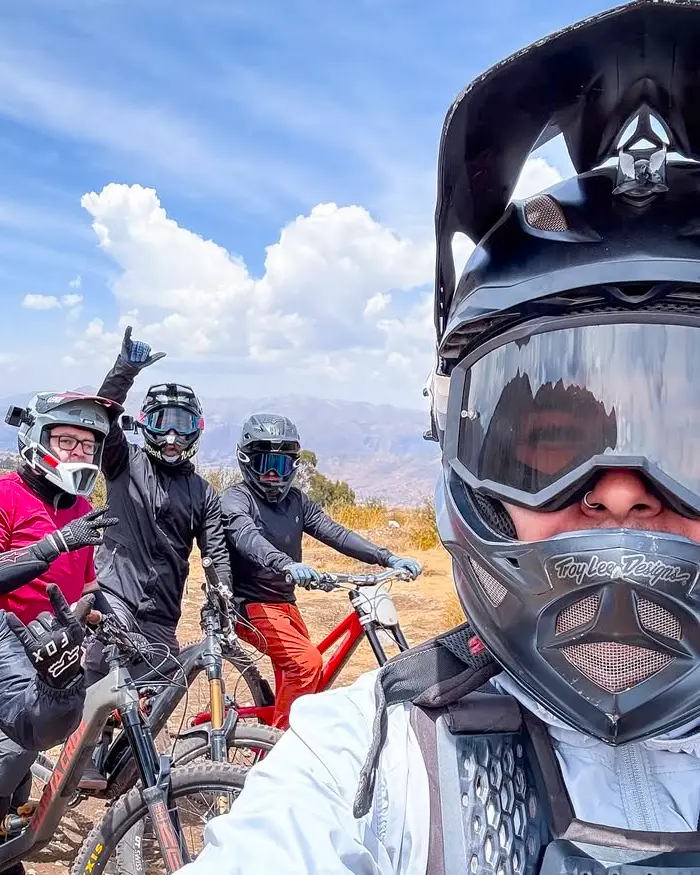
The cyclists behind them display a relaxed and fun attitude.
Full face or open helmet: which is better
Warning:
Choosing wrong size can make helmet move on technical descents.
How climate and altitude influence helmet comfort
When you do mountain biking in high mountain areas, like Cusco or Sacred Valley, helmet comfort doesn’t depend only on its design. Climate and altitude directly influence how it feels during route.
More intense solar radiation at altitude
In places like Cusco, which is at about 11,152 ft (3,400 m) above sea level, sun can feel much stronger than in coastal cities. This means that:
- Helmet receives more direct radiation.
- Head can heat up faster during pedaling.
- Sweat increases during prolonged climbs.
Dry air and sweat evaporation
In these conditions, helmets with breathable interior padding and materials that absorb moisture usually feel more comfortable, because they help you:
- Avoid sweat accumulation on forehead.
- Maintain helmet’s internal ventilation.
- Reduce heat sensation during long routes.
Features
- Wide ventilation channels
- Breathable padding
- Quick-drying materials
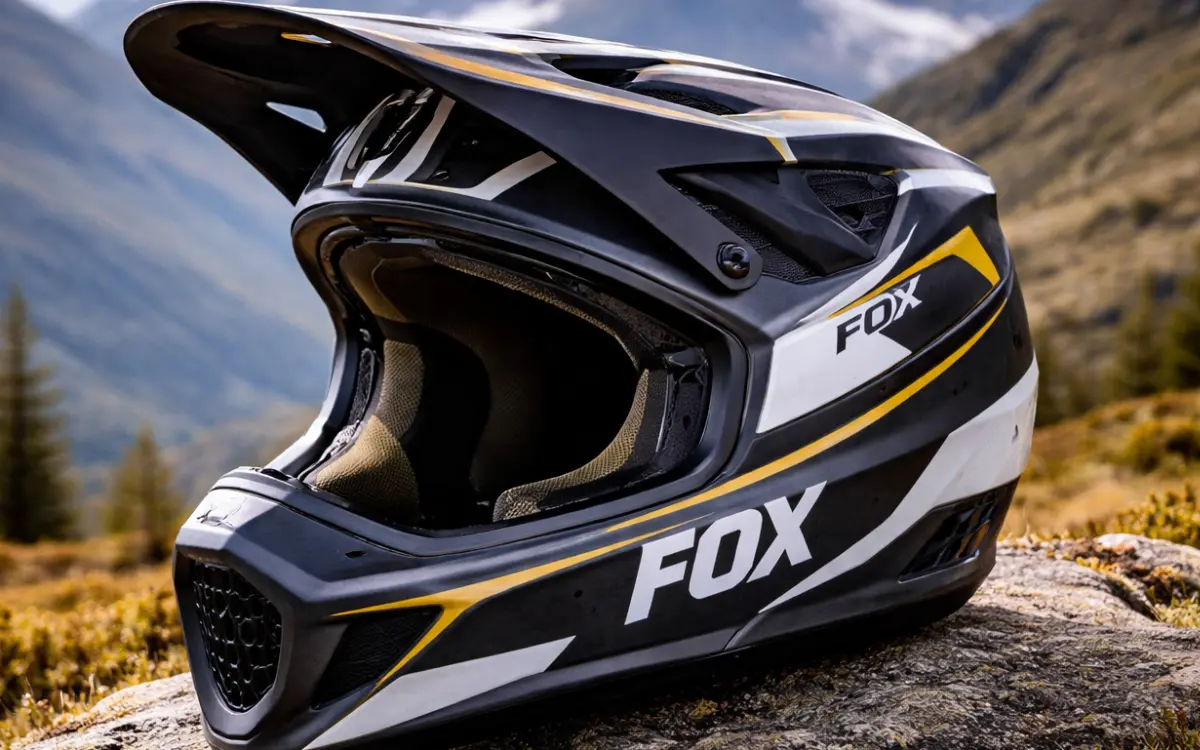
The helmet features multiple vents, allowing for good air circulation even at high altitudes.
Safety certifications MTB helmet must have
Below, I show you some of most important certifications MTB helmet can have:
CPSC (Consumer Product Safety Commission)
Is mandatory standard for cycling helmets sold in United States. This certification guarantees helmet has passed impact, stability and retention system resistance tests, to help you protect head in falls or accidents.
CE EN 1078
Is European standard used in cycling, skateboarding and skating helmets. This certification indicates helmet meets safety requirements established in Europe, including impact absorption tests, field of vision and strap resistance.
ASTM F1952
This standard is common in helmets designed for higher impact disciplines, like downhill or aggressive enduro. Its tests are more demanding in terms of structural resistance and frontal protection, especially in full face helmets.
AS/NZS 2063
Is certification used in Australia and New Zealand for cycling helmets. Evaluates helmet’s ability to absorb impacts, as well as fastening system resistance and stability during accident.
Snell B90 or B95
Developed by Snell Memorial Foundation, this standard applies stricter tests than some basic certifications. Helmets that have it usually offer additional safety level against strong impacts.

The terrain is rocky and uneven, typical of natural trails in Andean areas.
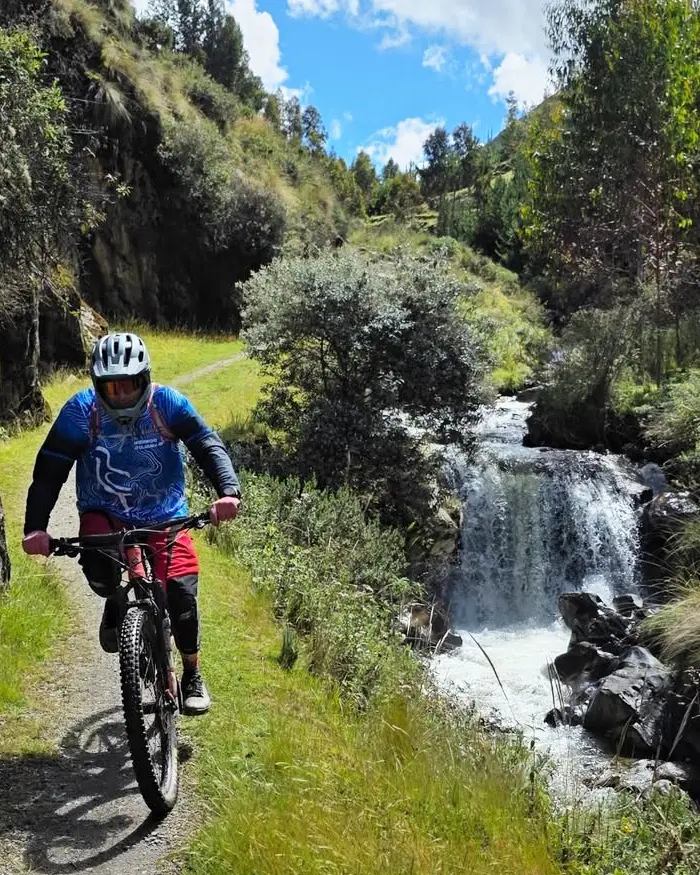
The cyclist maintains a stable posture, focused on controlling the bicycle.
Additional features that can improve your experience
Besides basic protection, many MTB helmets incorporate details that improve your comfort, practicality and performance during long routes. Among most useful are following:
Adjustable visor
Visor helps you block sun, improve vision on exposed trails and offer certain protection against branches, dust or small rocks.
Goggles and glasses compatibility
In enduro and trail, helmet that integrates well with your cycling glasses or goggles can make real difference in comfort.
Removable and washable interior padding
This detail makes helmet cleaning easier and helps you keep it fresher and more hygienic after each route.
Remember that:
Ventilation is as important as protection on several-hour routes.
Common mistakes travelers make when choosing MTB helmet
- Using road cycling helmet instead of one designed for mountain biking.
- Choosing helmet with poor ventilation for long routes or warm climates.
- Using helmet that’s too old or with already degraded materials.
- Continuing to use helmet that already suffered strong impact.
- Choosing helmet without recognized safety certifications.
- Buying helmet of incorrect size.
- Poorly adjusting straps or rear adjustment system.
- Prioritizing design or price before protection and quality.
- Not considering route type, whether trail, enduro or downhill, when choosing helmet.
- Not checking helmet condition before starting your route.
Choosing ideal helmet for high altitude enduro especially on mountain terrain, where physical effort, intense sun and climate changes are felt more, wearing proper helmet can make big difference. Don’t know what type of helmet suits you best for your next adventure in Cusco? At Peru Biking Tours we can guide you to better choose your gear and enjoy experience with more safety.
Thousands of travelers have trusted Peru Biking Tours to experience unforgettable experiences in Andes.
Your safety first
Routes adapted to your level, expert local guides and complete support at all times.
Without worrying about anything
We handle all logistics so you only focus on enjoying landscape.
Authentic routes in Cusco
Experience Sacred Valley authentically, at your pace, with access to best trails.
Quality equipment
High-end enduro bikes, helmets and protective gear for all levels.
Plan your MTB experience in Cusco
MTB Day Tours in Cusco
If you want to ride routes like Lamay Sapacto with correct logistics, local support and proper trail selection, check out our MTB Day Tours in Cusco.
Multi-Day MTB Tours
For more complete experiences connecting several valleys and high mountain routes, discover our Multi-day MTB Tours.


