


Quick Summary
Riding gravel in Cusco is different from other destinations: the terrain changes constantly, traction varies, and control depends more on your technique than on speed. Learning how to read the terrain, brake properly, and adapt to the environment makes a noticeable difference from your very first ride.
Learning how to ride gravel in Cusco may not always be what you expect. That is why, if this is your first time riding gravel in the Andes, understanding how the road behaves, which techniques can help you most, and which mistakes to avoid can make a big difference. In this blog, you will find the essentials to adapt better to the terrain and enjoy the experience with greater control and confidence.
How to ride gravel in Cusco from your first experience
Unlike other destinations where roads are prepared or marked, in Cusco you will ride on natural routes: rural roads, Andean trails, and old paths that are still used by local communities. That means the terrain is neither uniform nor predictable.
On the same descent, you may encounter:
- Loose gravel over a compact base, which can cause sliding.
- Fine dust, especially during the dry season, which reduces traction.
- Medium or large rocks that affect wheel stability.
- Sudden changes in gradient or unbanked turns.
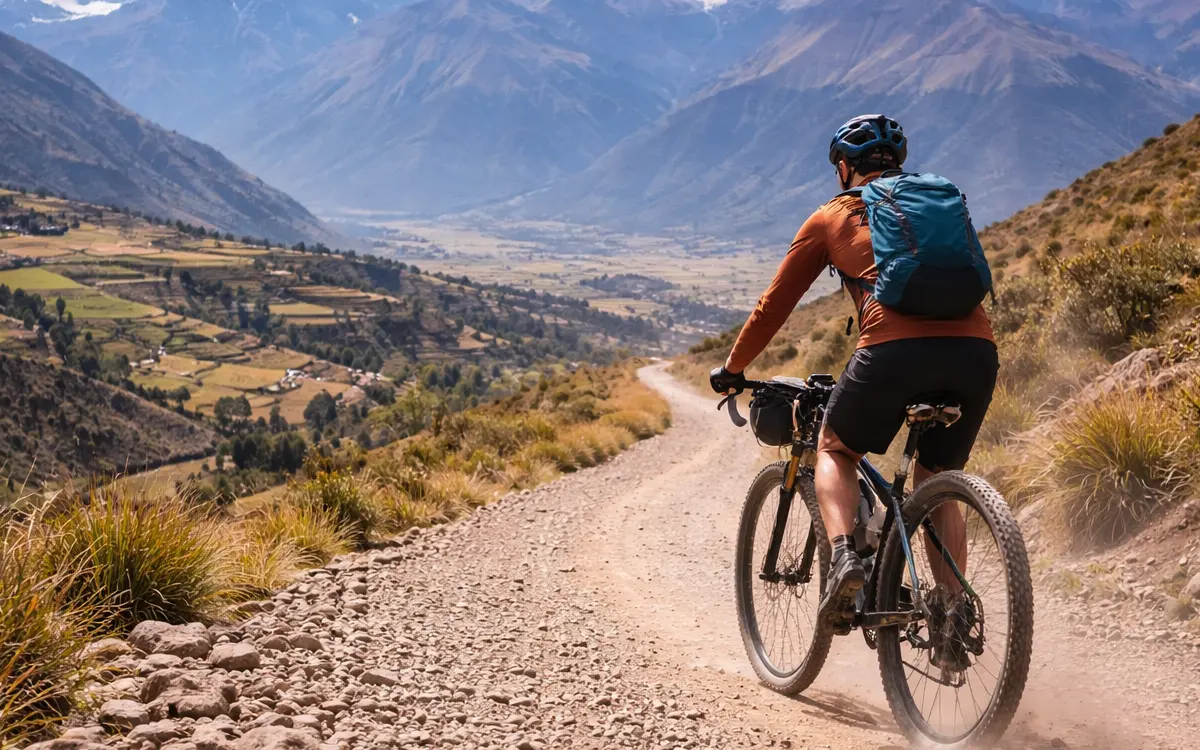
The contrast between the gravel trail and the cultivated fields in the background is highly representative of rural Cusco.
What the terrain is like when riding gravel in Cusco
In Cusco, gravel is not as uniform or predictable as it is in many destinations in the U.S. or Europe. Here, you ride in a natural Andean environment where each section can change without warning.
Loose gravel over a compact base
This is one of the most common combinations. The upper layer moves beneath the tires while the base remains hard. This creates a constant sense of sliding, especially in turns or under braking.
Fine dust
It is very common between May and September. This dust builds up on the surface and reduces traction, making the bike feel slightly more floaty. It can also reduce visibility when riding in a group.
Loose stones and irregular rock
They are not always fixed in place. Many move as you ride over them, which can deflect the wheel or push you off your line if you are not paying attention. On descents, this type of terrain demands more control and better trail reading.
Exposed rock and natural steps
On some sections, especially on older routes or paths of Inca origin, you may encounter fixed rock or stepped sections. Here, stability depends more on technique than speed.
Natural trails without maintenance
There are no berms, signs, or marked lines. Turns are often tight, and the terrain was not designed for bicycles, so you need to adapt constantly.

Sparse vegetation reflects the altitude and climate typical of the area.

Dense green vegetation lines one side of the mountain trail.
How to ride gravel in Cusco: key techniques for staying in control
To handle this terrain, there are a few basic principles that can help from the start. On loose gravel, control depends much more on technique than strength.
Keep your weight centered and your body relaxed
- Keep your weight centered over the bike.
- Keep your arms and legs slightly bent.
- Stay relaxed so your body can absorb the terrain more effectively.
- Brake before turns, not during them.
On gravel, braking in the middle of a turn can make you lose traction more easily.
- Reduce your speed before entering.
- Brake progressively.
- Avoid locking the wheels.

Rocks and uneven ground require constant trail reading on every section of the route.
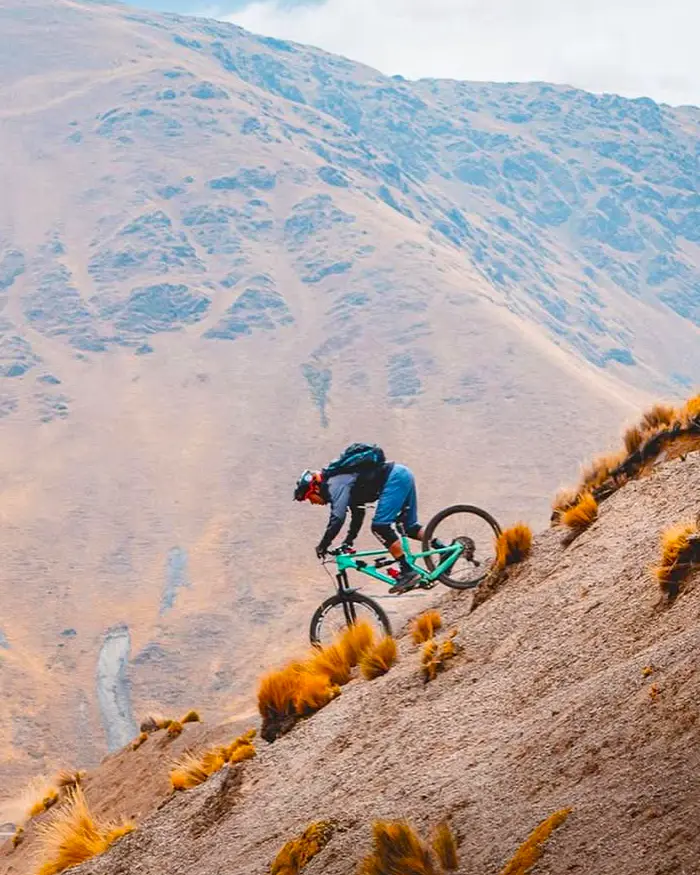
The wide, nearly empty Andean landscape creates a strong sense of isolation and adventure.
How to ride gravel in Cusco on technical descents
Reduce speed before technical sections
One of the most common mistakes is arriving too fast. On this type of terrain, it is better to reduce your speed before entering the difficult section rather than trying to slow down once you are already in it.
Brake smoothly and early
On loose gravel, hard braking can make you lose traction more easily. The best approach is to brake progressively and avoid locking the wheels, especially the front wheel.
Keep a stable and low riding position
Your position on the bike also has a major impact on control. A stable posture with bent arms and legs, and a body ready to absorb the terrain, will help the most.
Choose your line carefully
On technical descents, not every part of the trail offers the same grip. Choosing more compact or cleaner sections will give you more stability and make the descent feel smoother.
Common mistakes when learning how to ride gravel in Cusco
- Riding too fast without real control.
- Braking hard on loose gravel.
- Looking only at the front wheel.
- Failing to anticipate surface changes.
- Underestimating the altitude.
- Keeping a rigid body position.
- Choosing the wrong line.
- Trying to control every movement of the bike.
- Not adjusting speed to the terrain.
- Becoming overconfident on sections that look easy.
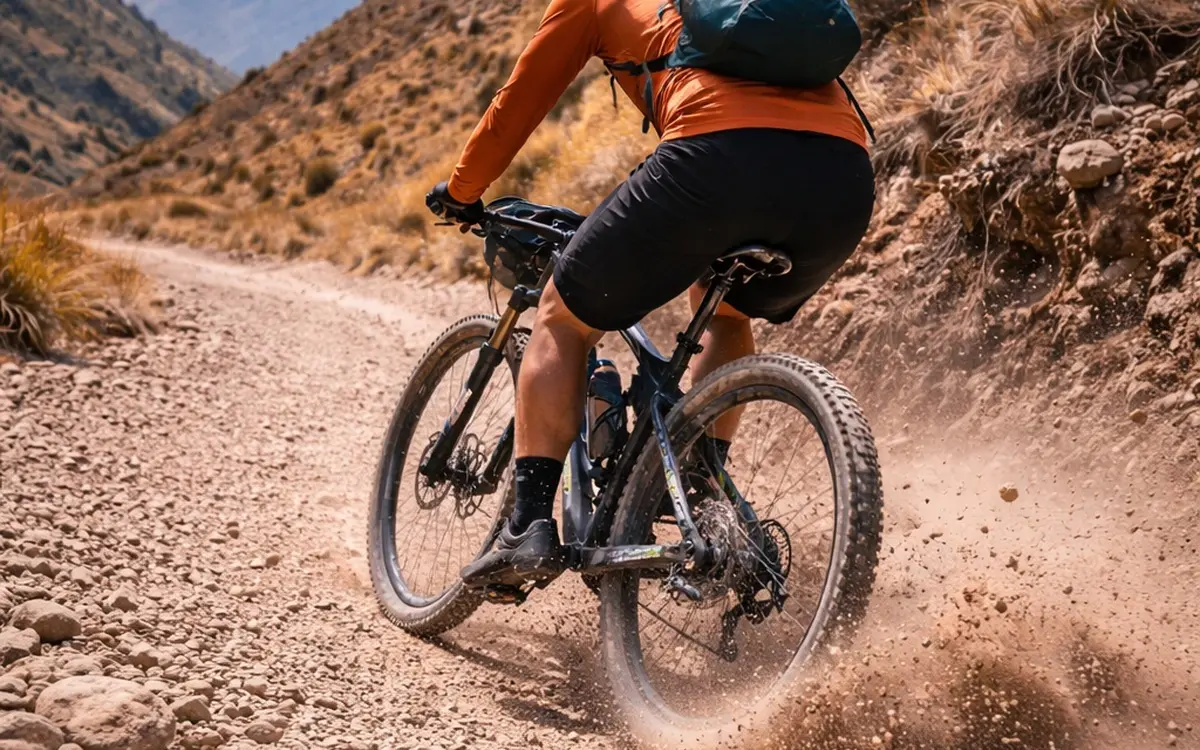
The wide, dry road may look easy at first, but the surface texture adds another layer of difficulty.
Where to practice how to ride gravel in Cusco if you are a beginner
Chinchero
- Open, visible terrain that is easier to read.
- Moderate gradients without aggressive descents.
- Varied but progressive surfaces with gravel, compact dirt, and some rock.
Sacred Valley
- Lower altitude, between 2,800 and 3,000 m (9,100–9,800 ft).
- Wider and less technical roads.
- A better balance between control and flow.
Rural routes
- Less traffic and more space to ride at your own pace.
- Natural surfaces that are less aggressive.
- A good environment for learning how to read the terrain.
What you need to ride gravel in Cusco safely
- Layered clothing so you can adapt to temperature changes.
- A helmet as essential basic protection.
- Gloves to improve grip and reduce fatigue.
- Eye protection against dust, sun, and stones.
- Consistent hydration throughout the route.
- Electrolytes for longer or more demanding rides.
- Light snacks to maintain your energy.
- Sunscreen because of the strong UV exposure at altitude.
- A basic repair kit, such as a tube, pump, or CO₂ inflator.
- A multi-tool for quick adjustments.
- A lightweight backpack to keep your gear organized.
- Awareness of the altitude and how it may affect your performance.
When to ride gravel in Cusco by season
Knowing how to ride gravel in Cusco helps you choose the right route and make better decisions from the start. If you want to experience this adventure in an organized, safe way adapted to your level, Peru Biking Tours can help you. Contact us at +51 946 459 491 and start planning your next adventure.


