


If you are thinking about doing downhill in Cusco, choosing the right season matters. Here, you are not riding in a bike park, but on natural trails where the terrain changes with rain, moisture, dust, and altitude. That is why understanding the dry vs rainy season for downhill in Cusco will help you plan better and ride with more control. In this blog, you will see how the weather affects the trails, what to expect in each season, which one may suit your skill level, and the best time of day to ride. Keep reading to learn more.
🏔️ Key facts — Downhill in Cusco by season
How Andean weather affects downhill in Cusco
Cusco sits in the Andes at more than 3,300 m (10,800 feet) above sea level, and that completely changes what downhill feels like. At this altitude, the weather is not as stable or predictable as in other destinations: temperatures can shift significantly within a few hours, and when it rains, the terrain can change quickly.
In Cusco, most downhill routes follow natural trails, community roads, or descents adapted to the Andean landscape. You will not find daily maintenance, mechanical compaction, or artificial drainage like you would in a bike park, so trail conditions depend directly on the weather.
Keep in mind that altitude also affects your performance: reduced oxygen can make you tire faster and may affect concentration, which is especially important on technical descents.

Dry vegetation and golden ichu grass reflect the high-Andean climate of the area.

Rainy weather makes every turn demand smoother braking and more controlled movement.
What defines the dry season for downhill in Cusco
The dry season runs from May to September, which is why it is the most popular period for downhill. During these months, rainfall is minimal, days are generally clear, and the terrain tends to keep a firm and stable structure.
One of the most noticeable trail features during this period is fine dust over a hard base. This dust forms through a combination of continuous traffic, lack of rain, and intense solar radiation at altitude. The result is faster descents with clearer visibility of the line, making it easier to anticipate obstacles.
Another important advantage of the dry season is terrain predictability. Trails tend to change less from one day to the next, new ruts or unexpectedly soft sections are less common, and the rock is usually dry.
Expert tip:
During the dry season, enter corners with less lean to compensate for the loss of lateral grip caused by dust.
How downhill in Cusco changes during the rainy season
In Cusco, the rainy season runs approximately from November to March, and that changes the downhill experience significantly. The mountains turn greener and the scenery can look spectacular, but the terrain changes and requires a very different approach from the dry season.
The first major change is traction. Rain creates mud, leaves rocks wet, and forms ruts on trails that were previously firm. This reduces grip, especially in corners and on sloped sections, and makes braking less effective.
Another key point is that lines change constantly. A trail may be in good condition in the morning and become more difficult after a short afternoon rain. Because these are natural routes without drainage systems or regular maintenance, water follows its own path and reshapes the ground. This means you need to read the terrain continuously and ride with a more conservative margin.
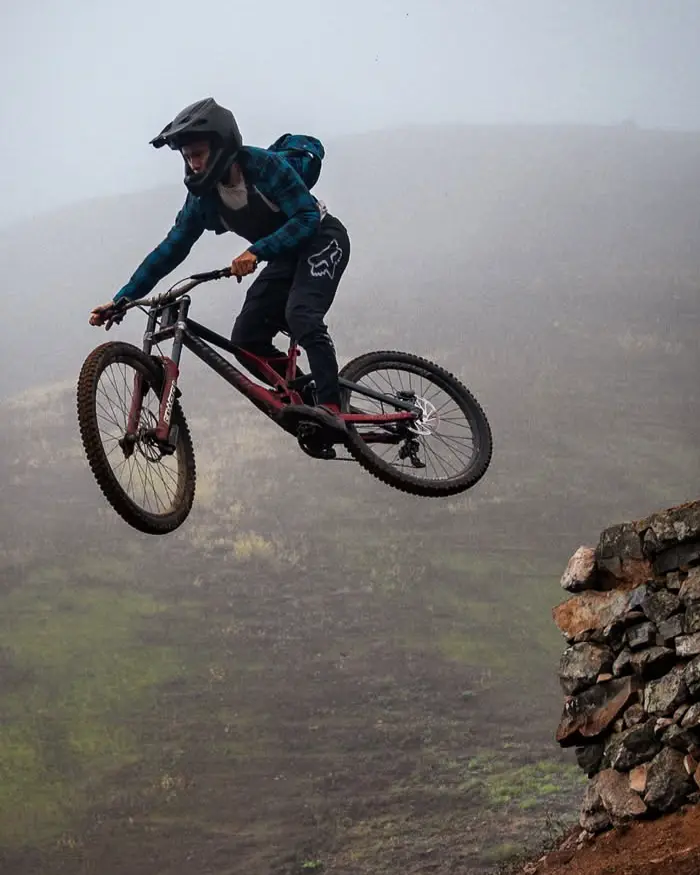
Mist covers the background, creating an intense and dramatic mountain atmosphere.
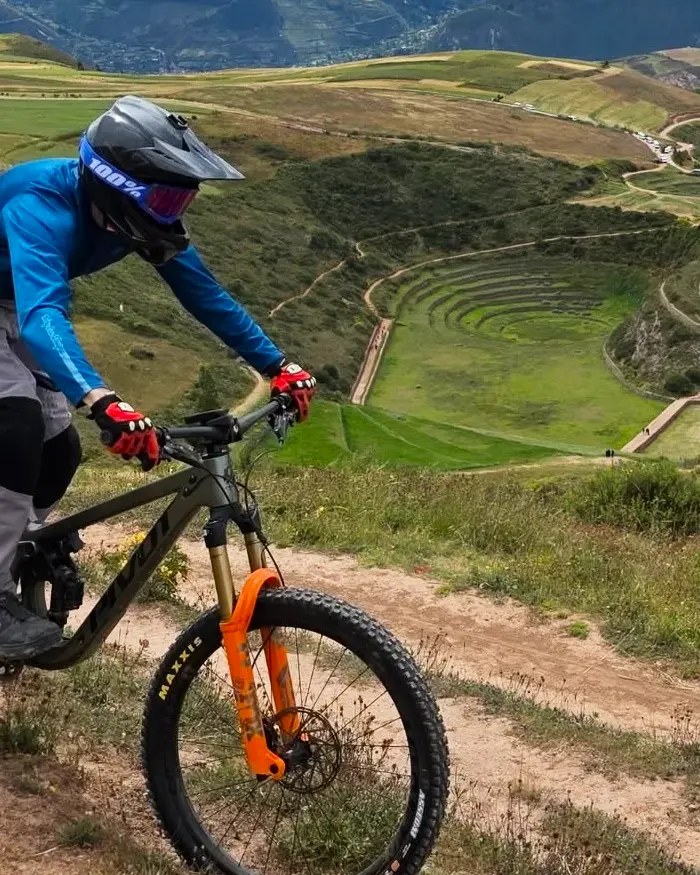
From this altitude, the valley looks broad and deep, with rural roads and cultivated fields visible below.
Dry vs rainy season for downhill in Cusco: which suits your level
If you are getting started in downhill or this is your first time riding in Cusco, the dry season is the better option. It lets you focus on basic technique, body position, and reading the terrain without adding mud or moisture.
If you already have experience and want a more technical challenge, the rainy season can be a good alternative, as long as you have solid bike control and are willing to ride slower, leave more margin, and pay closer attention.
💡 Pro Tip — The golden window
In both seasons, the safest and most efficient time to ride in Cusco is between 7:00 and 10:30 AM. During the rainy season, it is practically essential: showers are much more frequent in the afternoon and can transform the terrain within minutes. The dry season also benefits from an early start: less wind, less dust kicked up by other riders, and more energy before altitude and daytime heat begin to take a toll.
The best time of day for downhill in Cusco
In Cusco, the time you head out for downhill matters almost as much as the season. The most stable window of the day is usually between 7:00 and 10:30 a.m. During the rainy season, this schedule is almost essential: many mornings start clear or with light cloud cover, while rain and storms are more common in the afternoon.
During the dry season, riding early also works in your favor. The terrain is usually more compact, winds are lighter in higher areas, and less dust has been kicked up by other riders or hikers.
Altitude also matters. Above 3,300 m (10,800 feet), your body tires more quickly as the day goes on. Riding in the morning helps you make better use of your energy, maintain concentration, and read the terrain more clearly.
Did you know?
The temperature difference between morning and afternoon can exceed 15 °C (≈27 °F) in a single day.
How to adjust your gear by season
| Aspect | Dry season (May–September) | Rainy season (November–March) |
| Trail condition | Firm base with fine dust on top | Mud, wet rock, soft ground, and ruts |
| Main challenge | Dust reduces grip in corners | Lower traction and less effective braking |
| Tires | Tread with good lateral grip and properly adjusted pressure for dust. | Tread that clears mud and provides good grip on wet rock. |
| Brakes | Pads and rotors in good condition; smooth braking to avoid skidding | Full inspection; pads with good “bite”; brake earlier because traction is lower |
| Eye protection | Well-sealed goggles for dust | Goggles for rain, fog, and splashes |
| Clothing | Light layers (cold morning, sunny day) | Windbreaker/light rain jacket + thermal layers |
| Protective gear | Helmet and gloves at all times; knee pads recommended | Knee pads highly recommended; elbow pads optional depending on skill level |
| Hydration | Carry enough water (altitude increases dehydration) | Same: water + something warm if it is cold (optional) |
| Sun protection | Sunscreen (strong UV at altitude) | Sunscreen as well (UV is still present through clouds) |
Riding with a guide by season: when it makes a difference
Riding with a guide in Cusco is not only about convenience; in many cases, it is an important factor for safety and for getting more out of the route.
During the dry season, a local guide mainly improves the quality of the ride. A guide knows which lines flow better, which trails are in better condition, and where conflicts may occur on routes shared with hikers or local communities.
During the rainy season, a guide becomes even more important. Routes may change from week to week, or even from one day to the next. A guide knows which trails drain better, which ones collect mud or become slippery easily, and which sections may be better to avoid after recent rain.

The wet trail looks more slippery and technical, requiring smoother braking and better balance.
Downhill in Cusco feels different because of the contrast between the dry vs rainy season for downhill in Cusco. In the dry season, trails are firmer and more predictable, while the rainy season becomes more technical because of mud, wet rock, and ruts. Choose according to your skill level and preparation, and remember that at Peru Biking Tours we can help you plan a ride with greater safety and enjoy each descent with local support. Contact us at +51 946 459 491 and organize your Cusco experience with a local team.


